
Beech Mushroom
Fungi
- Age Suggestion
- 6 months
- Iron-Rich
- No
- Common Allergen
- No
When can babies eat beech mushrooms?
Beech mushrooms may be introduced as soon as baby is ready for solids, typically around 6 months of age. Avoid foraging mushrooms to share with baby unless you are an expert mycologist as there are plenty of poisonous look-a-like species in the wild.
How do you prepare beech mushrooms for babies with baby-led weaning?
Every baby develops on their own timeline, and the suggestions on how to cut or prepare particular foods are generalizations for a broad audience.
6 to 8 months old:
Mix finely chopped, cooked beech mushrooms (caps and stems) into foods that are easy for baby to pick up or scoop, such as congee, egg strips, mashed vegetables, noodles, or porridges.
9 to 17 months old:
Offer bite-sized pieces of cooked beech mushrooms, or finely chop and mix into other foods. To reduce the choking risk, slice the cooked beech mushrooms in half lengthwise so that both the cap and stem are no longer round. Serve the pieces scattered on a tray rather than piled in a bowl, which helps discourage the child from scooping up a large handful and shoveling into their mouth.
18 months old and up:
Serve cooked beech mushrooms as desired, on their own, mixed into the toddler’s food, or stirred into noodles, pho, or another dish to share with the child. At this age, you can serve a whole, cooked beech mushroom with cap and stem intact, just know that the texture can be challenging for toddlers to tear and chew.
Are beech mushrooms a common choking hazard for babies?
Yes. Beech mushrooms can be chewy and challenging for new eaters to break down in their mouths. To reduce the risk, finely chop the mushrooms (cap and stem) and cook fully. Dried mushrooms should be fully rehydrated in boiling water and chopped before serving. As always, make sure to create a safe eating environment and stay within an arm’s reach of a baby during mealtime. For more information, visit our section on gagging and choking and familiarize yourself with common choking hazards.
Are beech mushrooms a common allergen?
No. Mushroom allergy is rare, although not unheard of.[1] [2] [3] There have been reports of anaphylaxis, as well as rashes among those handling mushrooms.[4] [5] [6] Mushrooms also contain chitin, a common carbohydrate found in crustaceans and insects that may contribute to an allergic response in certain individuals.[7]
Individuals with Oral Allergy Syndrome (also called pollen food allergy syndrome), particularly those with sensitivity to mold, may also be sensitive to mushrooms.[2] [8] Oral Allergy Syndrome typically results in short-lived itching in the mouth and is unlikely to result in a dangerous reaction. Cooking mushrooms can help minimize and even eliminate the reaction.[9] [10]
Dried beech mushrooms may be preserved with sulfites. While sulfites are not a common allergen, certain individuals, particularly those with asthma, can have allergy-like reactions to added sulfites.[11] If sulfites are a concern, avoid ingredients such as sulfur dioxide, potassium bisulfate, potassium metabisulfite, sodium bisulfite, sodium metabisulfite, and sodium sulfite to name a few.[11]
As you would when introducing any new food, start by offering a small quantity for the first few servings. If there is no adverse reaction, gradually increase the amount over future meals.
Are beech mushrooms healthy for babies?
Yes. Beech mushrooms are a good source of fiber and offer a dash of iron, as well as potassium. Fiber helps baby’s developing gut microbiome, while iron supports healthy red blood cells, and potassium strengthens heart health.
Make sure to buy beech mushrooms from a reputable source and avoid foraging your own mushrooms unless you are an expert mycologist, as there are many poisonous species growing in the wild.[12] [13]
Can beech mushrooms help babies poop?
Yes. Beech mushrooms are rich in fiber and fluid to support the gut’s microbiome, bulk up poop, and hydrate the intestines. Mushrooms also offer prebiotics, special carbohydrates that help friendly gut bacteria flourish.[14] Introduce high-fiber foods like beech mushrooms gradually and regularly in baby’s diet as tolerated; a little gassiness or a few blowouts is just a sign that baby’s digestive system is adjusting, so no need to remove the food from the diet.[15] Remember that pooping patterns can vary significantly from baby to baby. If you have concerns about baby’s pooping and digestive function, talk to your pediatric healthcare provider.
Where do beech mushrooms come from?
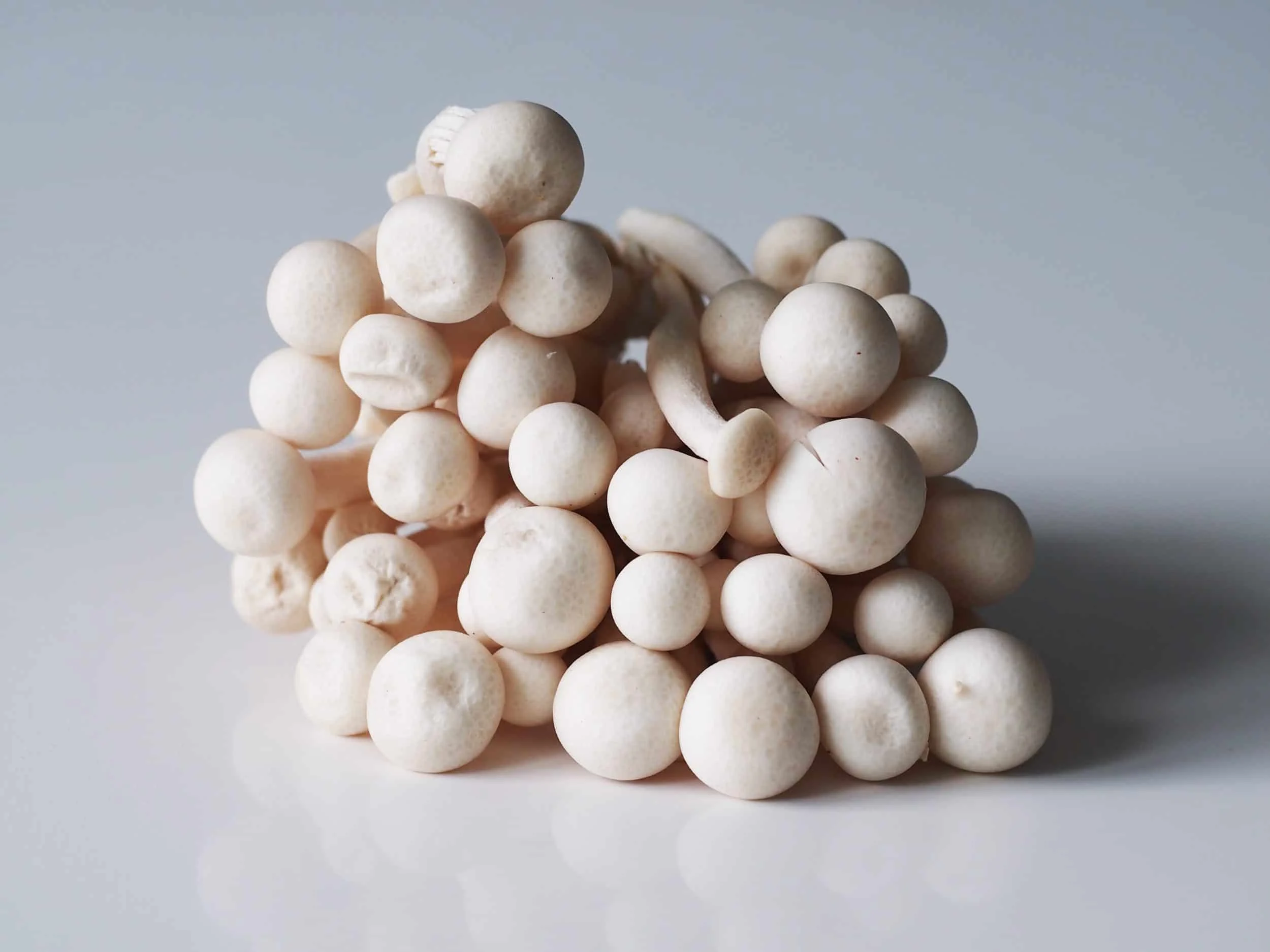
Beech mushrooms are native to East Asia, and Chinese, Japanese, and Korean immigrants introduced beech mushrooms to other parts of the world long ago. Today, most beech mushrooms come from farms that mimic their natural forest habitat, where fungi sprout from decaying trees, including their namesake, the beech. Two popular varieties are buna-shimeji (brown beech mushrooms) and hon-shimeji (pure white beech mushrooms). Beech mushrooms hold their shape and texture when exposed to longer periods of heat, as in dishes like buseot bokkeum, which features stir-fried beech, oyster, or shiitake mushrooms.
Can babies eat raw beech mushrooms?
Yes, although cooked beech mushrooms are easier for baby to digest. Cooking these mushrooms also helps lower the risk of foodborne illness.

Reference Material
Koivikko, A., Savolainen, J. (1988). Mushroom allergy. Allergy, 43(1), 1-10. DOI: 10.1111/j.1398-9995.1988.tb02037.x.
Dauby, P.A., Whisman, B.A., Hagan, L. (2002). Cross-reactivity between raw mushroom and molds in a patient with oral allergy syndrome. Annals of allergy, asthma & immunology: official publication of the American College of Allergy, Asthma, & Immunology, 89(3), 319–321. DOI:10.1016/S1081-1206(10)61962-X.
Start solids with confidence
- Guided Introduction to 100+ Foods
- Smart Tools to Simplify Mealtime
- Food Allergen 101
- 300+ Meal Ideas
- First Foods® Database
Start solids with confidence
- Guided Introduction to 100+ Foods
- Smart Tools to Simplify Mealtime
- Food Allergen 101
- 300+ Meal Ideas
- First Foods® Database
Expert Tips Delivered to Your Inbox
Sign up for weekly tips, recipes and more.