Choking Hazards for Babies
While a baby could choke on anything, it's important to avoid foods that are common choking hazards (see our list!) or modify them for safety.
Key Points
Common choking hazards include objects that are not food
Babies are more likely to choke on everyday household items like batteries, coins, magnets, pen caps, pills, and stickers. Check the floor and play areas often so baby can't pick up these common choking hazards and put them in their mouth when you’re not looking.
Certain food shapes and textures pose a high risk of choking
Some food qualities pose a high risk of choking: firm, round, rubbery, slippery, small, springy, sticky, and/or tapered. Foods with these characteristics are difficult to manage for babies who are learning how to eat, and they should be modified for safety. This includes foods like cherry tomatoes, grapes, hot dogs, raisins, shrimp, and string cheese.
The eating environment matters most for safety
Research shows that how baby eats—seated upright, focused, supervised, and free of distractions—is the single most important factor for preventing choking at mealtime, even more than which specific foods are offered.
Food shape and texture may increase the risk of choking, especially for babies who are still learning how to chew. Learn how to minimize risk at mealtime from our licensed pediatric pros.
What are choking hazards for babies?
Some foods and non-food objects (such as coins and small toys) pose a high risk of choking, especially when they are small and firm, round, rubbery, slippery, springy, sticky, and/or tapered.
To minimize the risk, be mindful of small objects around your home (especially on your floors) and modify foods to lower the risk of choking and make it easier for baby to practice chewing. Equally important is your meal setting: create a safe eating environment in which the child is safely seated with minimal distractions and supervised by an adult. The latest research and data show a child’s eating environment is the most important factor for mealtime safety.[1] [2]
What foods are choking hazards for babies?
The breathing tube of a young baby is about ¼ inch (⅔ cm) in diameter.[3] [4] While any food can block the ability to breathe if it becomes lodged in the breathing tube, certain foods come up again and again in conversations about choking, and they share some or all of the following characteristics:
Sizes, Shapes & Textures of High-Risk Foods |
|---|
Firm |
Round |
Rubbery |
Slippery |
Small |
Springy |
Sticky |
Tapered |
Common Food Choking Hazards for Babies
These foods often come in shapes or textures that increase the risk of choking, but good news: most can be modified to safely share with baby.
Food Choking Hazards |
|---|
Cheese Sticks & Cubes |
Chewing Gum |
Chips |
Cookies |
Fish Bones & Small Meat Bones |
Granola Bars |
Gummy Candy & Gummy Medicine |
Hard Candy |
Jelly Bean |
Large Seeds (e.g. Pumpkin Seeds) |
Marshmallow & Mochi |
Meat Cubes & Chunks |
Cantaloupe and Honeydew Cubes & Balls |
Nut Butter & Seed Butter |
Nuts (Chopped & Whole) & Nut Shells |
Olives and Other Small Round, Firm & Chewy Foods |
Orange & Other Citrus |
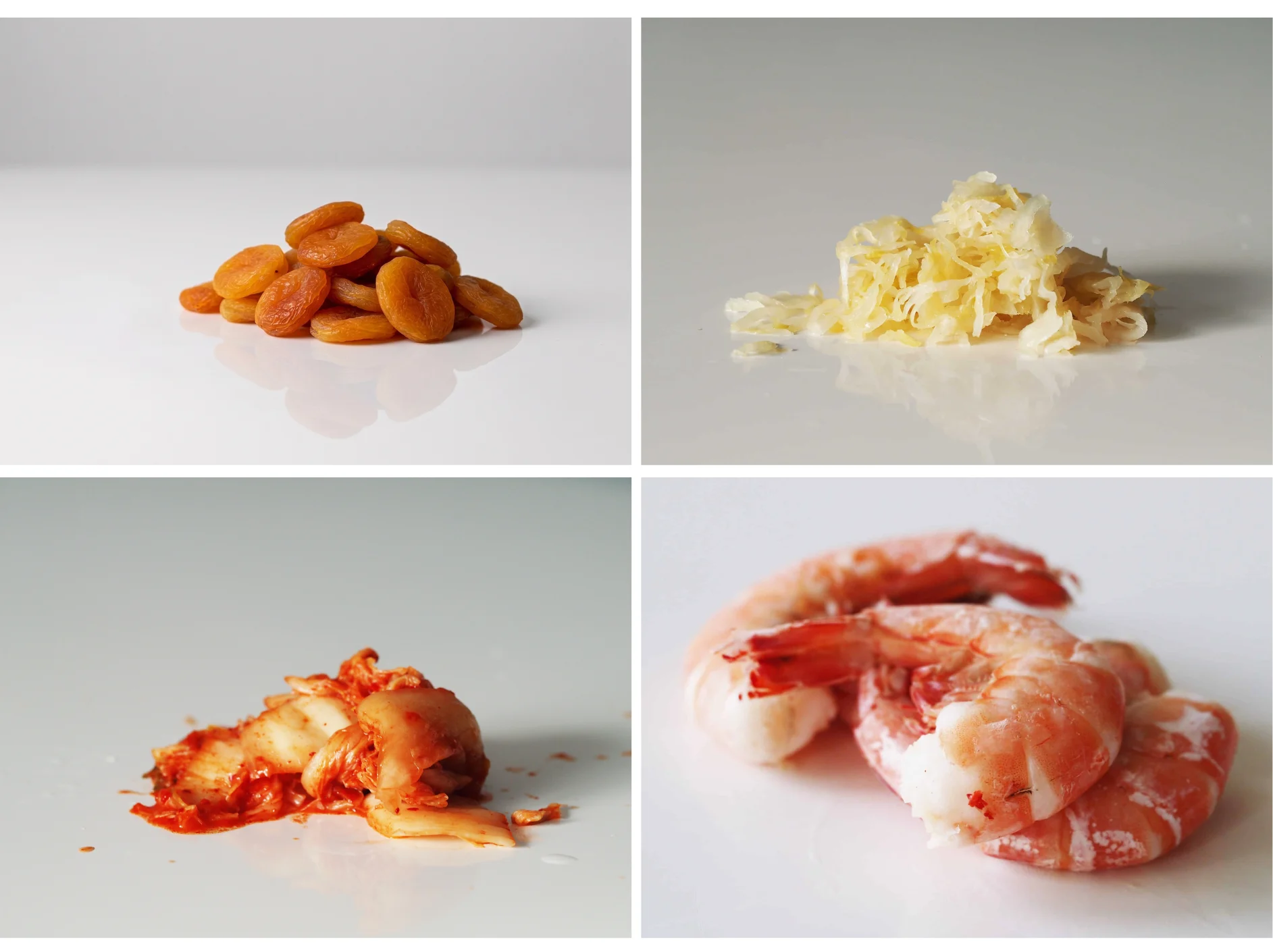
Raisins & Other Dried Fruit |
Shrimp & Other Shellfish |
Tomato (Grape & Cherry) |
This list is not exhaustive; it contains examples of foods that may pose a high risk of choking based on the evidence base and clinical experience of our multidisciplinary team of licensed pediatric professionals. It includes foods identified as choking hazards by the United States Centers for Disease Control and Prevention and the American Academy of Pediatrics, as well as foods identified as high-risk in the latest medical literature.[5] [6]
Non-Food Choking Hazards for Babies
Nearly half of all childhood choking fatalities involve objects that are not food.
Choking Hazards In The Kitchen |
|---|
Can Pop-Tops & Pull Tabs |
Condiment Caps & Wrappers |
Food Labels |
Food Packaging |
Foil Wrap |
Paper Straws |
Paper Wrap |
Plastic Wrap |
Sponge Parts |
Twist Ties, Rubber Bands, & Plastic Clips |
Water Bottle Caps |
Choking Hazards Around The House |
|---|
Batteries |
Buttons |
Chapstick Tubes & Caps |
Coins |
Cough Drop Paper Wraps |
Decorative Glass Beads |
Door Stop Caps & Springs |
Erasers |
Hair Accessories |
Loose Pieces of Paper & Stationery |
Magnets |
Packets |
Paper Confetti, Inflatable Plastic, Foam Polystyrene Packing |
Paper Clips |
Pens & Pen Caps |
Pills |
Rings, Earrings, & Other Jewelry |
Safety Pins |
Stickers |
Thumbtacks |
Choking Hazards In the Playroom |
|---|
Balloons (Deflated) |
Beads (Glass and Plastic) |
Charm Bracelets & Other Toy Jewelry with Beads |
Collectible Rocks |
Confetti |
Legos & Other Small Toy Pieces |
Magnetic Balls (e.g. Buckyballs) & Other Toy Magnets |
Toy Marbles and Small Balls |
Water Beads |
How to Prevent Baby Choking
Wait until you see all signs baby is ready before starting solids.
Learn how to set up a safe eating environment for baby.
Make sure baby is seated, properly positioned, and supervised when eating.
Learn how babies learn to chew real food.
Do not force food: the choking risk is lower when you let baby feed themselves.
Prepare safe food shapes and sizes for a child’s age and developmental ability.
Regularly offer foods to build chewing skills so baby can practice.
Understand the difference between gagging and choking and how to respond.
Regularly check the floor (and other surfaces where baby spends time) and remove small objects that baby can grab and put in the mouth.
Get trained in infant rescue in the unlikely event of an emergency.
As baby grows into toddlerhood, it is important to actively teach how to safely eat high-risk foods such as chewy foods, fruit with pits, and whole nuts.
How do I stop being scared of choking during meals with my baby?
First, know that you’re not alone. Introducing solid food feels overwhelming to many. To help calm anxiety, start by letting baby practice feeding themselves with a spoon dipped in a mash or puree. Next, move on to less challenging foods, such as food teethers that do not break apart as baby munches. Remember that letting baby feed themselves lowers the risk of choking.[7] [8] [9]
Even if not much (or any!) food makes its way into the belly, practicing with spoons and food teethers starts to teach baby what real food feels like and how it works. Many families gain confidence as they see how capable baby is at chewing, and more confidence can help ease your nerves once you feel ready to offer food that needs to be chewed.
Go at your own pace and remember: it is normal for baby to not consume much (or any!) solid food at first. Touching, grabbing, holding, munching, and exploring food are part of learning how to eat. If you feel so much fear that you are unable to start solids, talk to your pediatrician and ask for support in getting started.
This article is for informational purposes only and it is not a substitute for professional advice from or consultation with a pediatric healthcare professional. This information has been created with typically developing infants and children in mind. If your child has underlying medical or developmental differences, discuss your child's feeding plan with their primary medical provider. Please review our Terms and Conditions of Use.
Frequently Asked Questions
Some choking hazards can be made safe for babies if you prepare them in safe food shapes and sizes—like stewing grapes for babies who are just getting started, or quartering grapes into bite-sized pieces to help babies practice the pince grasp.
Other foods, like popcorn, are better to avoid until toddlerhood. Some toddlers are ready around 24 months, but others need more time to develop their chewing skills. When you do introduce popcorn, make sure they are in a safe eating environment and stay close in case you need to help them.
Gagging is normal and expected when babies start solids. The gagging reflex protects babies from choking. Gagging is typically loud and active. Baby coughs, retches, and sometimes throws up. Choking is typically silent because the airway is blocked. Learn more about gagging vs. choking and how to spot the difference.
Yes, though this is technically called “aspiration” as liquid does not typically block the airway (as in choking) but instead slips into it and continues down into the lungs. To lower the risk of aspiration or discomfort, feed baby sitting up, use the right bottle nipple for their age, and stay close when they practice drinking from a cup at mealtime.
Reference Material
Harris, C. S., Baker, S. P., Smith, G. A., et al. (1984). Childhood asphyxiation by food: A national analysis and overview. Journal of the American Medical Association, 251(17), 2231–2235.
Committee on Injury, Violence, and Poison Prevention. (2010). Prevention of choking among children. Pediatrics, 125(3), 601–607. https://doi.org/10.1542/peds.2009-2862
Arvedson J.C., Brodsky L., & Lefton-Greif M. (2019). Pediatric swallowing and feeding: Assessment and management. 3rd ed. Plural.
Start solids with confidence
- Guided Introduction to 100+ Foods
- Smart Tools to Simplify Mealtime
- Food Allergen 101
- 300+ Meal Ideas
- First Foods® Database

Start solids with confidence
- Guided Introduction to 100+ Foods
- Smart Tools to Simplify Mealtime
- Food Allergen 101
- 300+ Meal Ideas
- First Foods® Database