
Cheerios & "O" Cereals
Grain
- Age Suggestion
- 6 months
- Iron-Rich
- Yes
- Common Allergen
- No
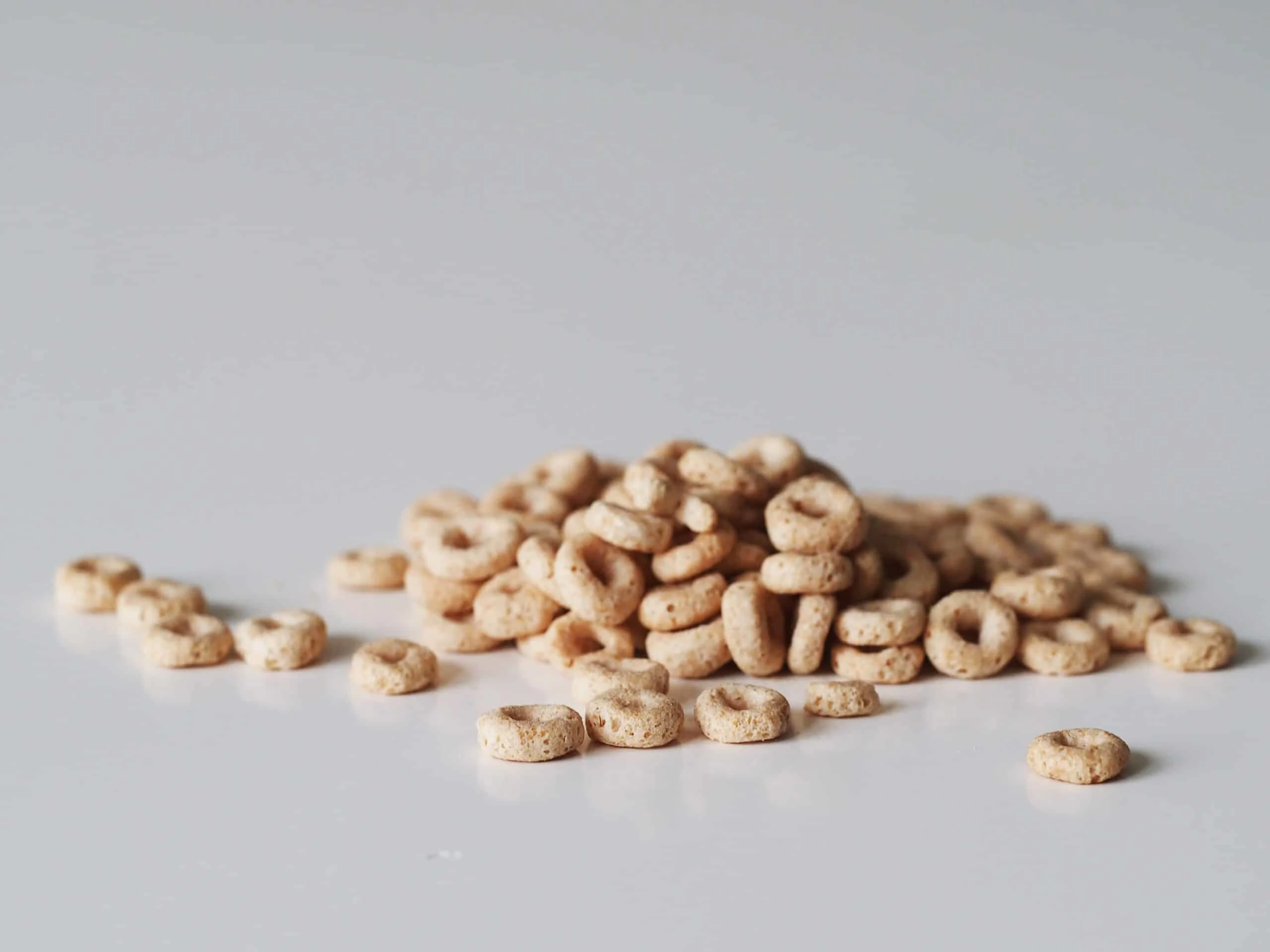
When can babies have Cheerios?
Original Cheerios and other O-shaped cereals may be introduced as soon as baby is ready to start solids, around 6 months of age, as long as the cereal does not contain honey due to the risk of infant botulism from honey in babies under 12 months of age.
Cheerios were invented in 1941 under the name “Cheerioats.” General Mills used what was then a novel technology to “puff” oats, resulting in a crunchy texture that quickly dissolves in the mouth. There are nearly 20 different Cheerios varieties available (some seasonal or only available in certain parts of the world), and countless other brands have imitated the cereal’s iconic shape. Since their invention, Cheerios have been marketed to children, and the brand’s efforts have paid off: the cereal is among the most popular processed foods for many babies and toddlers.
How do you serve Cheerios to babies?
Every baby develops on their own timeline, and the suggestions on how to cut or prepare particular foods are generalizations for a broad audience.
6 months old +:
Opt for plain Original Cheerios and smash or grind them into a fine powder and mix into scoopable foods like yogurt, mashed banana, or applesauce. You can also roll slippery finger foods such as avocado or mango spears in the powdered Cheerios to make the foods less slippery. Lastly, you can soak the O's in breast milk, formula, or yogurt for a few minutes until they soften, then offer on a preloaded spoon or let baby scoop it up with their hands. Once baby can pick up Cheerios and bring them to their mouth on their own, it’s okay to serve them that way as well. Avoid cereal that contains honey at this age, due to the risk of infant botulism.
9 months old +:
Offer plain Original Cheerios and scatter them on a high chair tray or table to give baby the opportunity to practice their developing pincer grasp. Consider offering Cheerios or similar cereals only on occasion: baby can get used to the fact that Cheerios don’t need much chewing to break down in the mouth, and at this age, it’s important that baby get lots of practice with chewable foods. You can also try serving them toward the end of a meal so baby doesn’t fill up on Cheerios at the expense of trying different foods.
12 months old +:
At this age, you can explore other varieties of Cheerios or similar cereals with different textures, or you can stick to the Original variety. Offer the O’s dry and on their own as a snack, or you can start offering them with milk in a bowl for practice with a spoon (just expect some mess as the child practices managing all these new skills and varied textures).
Are Cheerios a choking hazard for babies?
No. Cheerios present a low risk when safely prepared for a child’s age and developmental ability, though, in theory, an individual could choke on any food. Cheerios dissolve easily, and only need a small amount of liquid (like saliva) to become mushy in texture, so there is little chewing needed to break it down. To reduce the risk, prepare and serve Cheerios in an age-appropriate way as described in How to Serve. It is important to note that some other brands of O-shaped cereals do not dissolve as easily as Cheerios and could pose more of a choking risk, but if baby is putting the food in their own mouth, the overall choking risk remains low. Never place food in baby’s mouth. As always, make sure to create a safe eating environment and stay within reach of baby during meals.
Learn the signs of choking and more about choking first aid in our free guides, Infant Rescue and Toddler Rescue.
Do Cheerios contain common allergens?
It depends on the variety. Original Cheerios are made from oats, which are not a common trigger for IgE-mediated allergies. However, reactions to oats have been reported, particularly when the grains are applied to the skin of sensitive individuals.[1] Certain types of Cheerios contain common food allergens like peanuts, tree nuts, and wheat. As always, be sure to read the label before purchasing, as product ingredients can change.
It is important to introduce common food allergens individually and rule out a food allergy before offering baby prepared foods that contain multiple potential food allergens. This way, when you are ready to share Cheerios, you will be confident that baby has already safely eaten any common food allergens in it. This approach can also help you quickly identify potential culprits in the unlikely event that baby experiences an allergic reaction after eating Cheerios.
Despite oats being naturally gluten-free, many oat and oat products can commonly be cross contaminated with gluten-containing grains (such as wheat, barley, and rye), rendering them no longer gluten-free.[2] [3] Uncle Tobys Original Cheerios (sold in Australia and New Zealand) contain wheat and are therefore not gluten-free.
Are Cheerios healthy for babies?
Yes, as long as they are free of honey, such as the Original variety. Original Cheerios offer carbohydrates and fiber, which provide energy for baby to explore while also supporting baby’s digestion. They are rich in many important nutrients like calcium, folate, iron, magnesium, selenium, zinc, and vitamins A and C, as well as various B vitamins. Together, these nutrients support baby’s bones, brain, red blood cells, electrolyte balance, immune function, vision, and more.
Can babies have Honey Nut Cheerios?
Honey Nut Cheerios may be offered after baby’s first birthday. Honey Nut Cheerios contain honey, which carries the risk of infant botulism in babies under 12 months of age.
Are Original Cheerios gluten-free and are they safe for children with celiac disease?
It depends on where you live and an individual’s sensitivity to gluten. Oats, the main grain in Original Cheerios, are naturally gluten-free but are highly susceptible to cross-contamination with gluten-containing grains such as wheat and barley. While General Mills labels some of their Cheerios products as gluten-free, celiac advocacy groups have questioned the safety of the company’s gluten-free practices.[4] [5] Uncle Tobys Original Cheerios (sold in Australia and New Zealand) are not gluten free, as they contain wheat. Ultimately, whether or not to include Cheerios as part of a gluten-free diet is a personal decision to be made with the counsel of your child’s pediatric healthcare specialist.
Reference Material
Boussault, P., Léauté-Labrèze, C., Saubusse, E., Maurice-Tison, S., Perromat, M., Roul, S., Sarrat, A., Taïeb, A., & Boralevi, F. (2007). Oat sensitization in children with atopic dermatitis: prevalence, risks and associated factors. Allergy, 62(11), 1251–1256. DOI: 10.1111/j.1398-9995.2007.01527.x.
Ciecierska A, Drywień ME, Hamulka J, Sadkowski T. (2019). Nutraceutical functions of beta-glucans in human nutrition. Rocz Panstw Zakl Hig. 70(4):315-324. doi: 10.32394/rpzh.2019.0082.
Pinto-Sánchez MI, Causada-Calo N, Bercik P, Ford AC, Murray JA, Armstrong D, Semrad C, Kupfer SS, Alaedini A, Moayyedi P, Leffler DA, Verdú EF, Green P. (2017). Safety of Adding Oats to a Gluten-Free Diet for Patients With Celiac Disease: Systematic Review and Meta-analysis of Clinical and Observational Studies. Gastroenterology. 153(2):395-409.e3. doi: 10.1053/j.gastro.2017.04.009.
Start solids with confidence
- Guided Introduction to 100+ Foods
- Smart Tools to Simplify Mealtime
- Food Allergen 101
- 300+ Meal Ideas
- First Foods® Database
Start solids with confidence
- Guided Introduction to 100+ Foods
- Smart Tools to Simplify Mealtime
- Food Allergen 101
- 300+ Meal Ideas
- First Foods® Database
Expert Tips Delivered to Your Inbox
Sign up for weekly tips, recipes and more.