
Frijoles negros
Legumbre
- Edad sugerida
- 6 meses
- Rico en hierro
- Sí
- Alérgeno común
- No
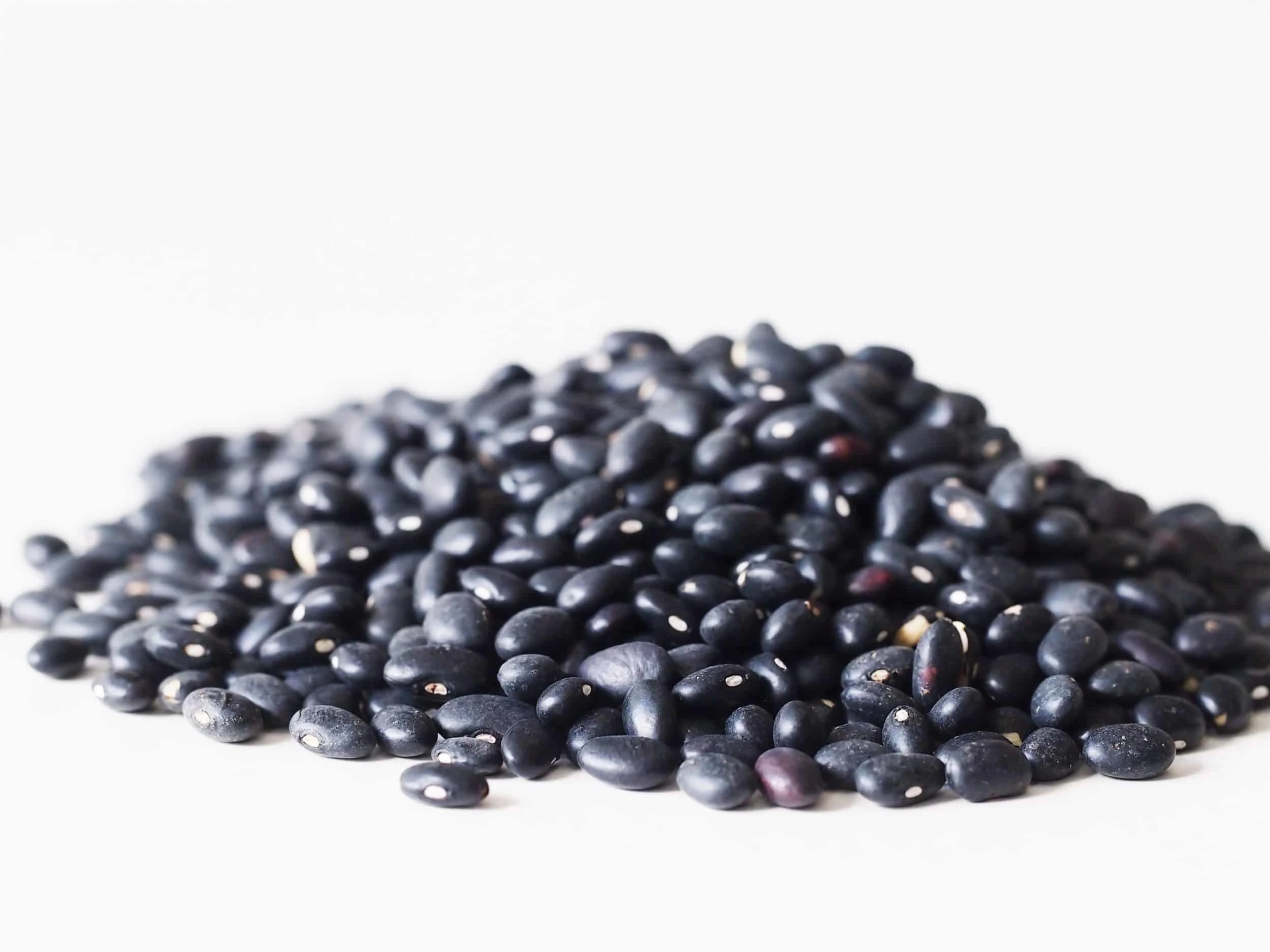
¿Cuándo pueden comer frijoles negros los bebés?
Los frijoles negros (porotos negros, habichuelas negras) se pueden introducir tan pronto como tu bebé esté listo(a) para empezar con los alimentos sólidos, lo que por lo general ocurre alrededor de los 6 meses de edad.
El frijol negro (o frijol tortuga negro) tiene su origen en América, como parte de la familia del frijol común, que abarca el frijol rojo, el frijol blanco y más. Los frijoles negros evolucionaron a partir de plantas silvestres en los cálidos y fértiles trópicos de Centroamérica, donde los seres humanos aprendieron por primera vez a cultivar esta legumbre. Desde allí, los frijoles secos viajaron hacia el norte con las migraciones y el comercio de los pueblos indígenas que vivían en las islas del Caribe y a lo largo de la costa este de Norteamérica.
¿Cómo se sirven los frijoles negros a los bebés?
Cada bebé se desarrolla a su propio ritmo, y las sugerencias que ofrecemos sobre cómo cortar o preparar determinados alimentos son generalizaciones para una amplia audiencia.
6 meses +:
Tritura o licúa los frijoles negros cocidos hasta obtener un puré con textura o una pasta suave para que tu bebé la tome con las manos. Si prefieres, sirve el puré o la pasta con una cuchara, o úntalo en una capa fina sobre una galleta de arroz delgada o una tortilla de maíz. Si quieres, puedes incorporar leche materna, fórmula, aceite de oliva o incluso yogur al preparar el puré o la pasta. También puedes mezclar los frijoles negros triturados o en puré con alimentos blandos y fáciles de tomar con cuchara, como sémola de maíz, verduras en puré, papilla de arroz o verduras de hoja guisadas. Solo empieza con porciones pequeñas de frijoles negros al principio, para reducir cualquier molestia digestiva por tratarse de un alimento con alto contenido de fibra.
9 meses +:
Los bebés que están desarrollando la pinza (pincer grasp) —cuando el pulgar se junta con el índice— pueden pasar a comer frijoles negros que hayas aplastado suavemente entre tu pulgar y tu dedo antes de servirlos. Otra opción es seguir sirviendo los frijoles negros aplastados o en puré para que tu bebé los tome con las manos, sumerja en ellos los dedos o trozos de verduras cocidas, o practique comer con cuchara.
12 meses +:
A esta edad, los(as) niños(as) pequeños(as) ya deberían poder manejar frijoles negros enteros cocidos, así que prueba a ofrecer los frijoles solos o como parte de una comida compartida. Por supuesto, puedes seguir aplastándolos y dejándolos listos en la cuchara. Para fomentar que coma por sí solo(a) con cubiertos, toma algunos frijoles con el cubierto y déjalo junto a la comida para que el(la) niño(a) intente agarrarlo.
¿Los frijoles negros son un riesgo de atragantamiento para los bebés?
Sí. Los frijoles negros son pequeños, redondeados y pueden ser firmes, sobre todo cuando están crudos o poco cocidos, características que pueden aumentar el riesgo de atragantamiento. Para reducir el riesgo, prepara y sirve los frijoles negros de una forma adecuada para la edad, como se describe en la sección sobre cómo servirlos. Como siempre, crea un entorno seguro para comer y mantente al alcance de tu bebé durante las comidas.
Conoce las señales de atragantamiento y más sobre los primeros auxilios para el atragantamiento en nuestras guías gratuitas, Rescate para bebés y Rescate para niños(as) pequeños(as).
¿Los frijoles negros son un alérgeno común?
No. Los frijoles negros no son un alérgeno alimentario común. Se han reportado alergias a los frijoles en algunos pacientes con alergias a otras legumbres, como el maní (cacahuate, cacahuete) y la soya (soja) (que sí son alérgenos alimentarios comunes). Sin embargo, ser alérgico(a) a un tipo de legumbre no significa necesariamente que una persona vaya a serlo a otras, aunque el riesgo de tener más de una alergia a las legumbres puede aumentar.[1] Por suerte, la mayoría de las personas con alergia al maní o a la soya toleran otras legumbres sin problema.[2]
Las personas con alergia al polen de abedul o con síndrome de alergia oral (también llamado síndrome de alergia polen-alimento) pueden ser sensibles a las legumbres, como los frijoles negros. [3] [4] El síndrome de alergia oral suele provocar picazón, hormigueo o ardor de corta duración en la boca, y es poco probable que cause una reacción peligrosa.
Como harías al introducir cualquier alimento nuevo, empieza ofreciendo una cantidad pequeña en las primeras porciones. Si no hay ninguna reacción adversa, aumenta poco a poco la cantidad en las comidas siguientes.
¿Los frijoles negros son saludables para los bebés?
Sí. Para empezar, los frijoles negros son una excelente fuente de fibra, carbohidratos y proteína, además de ácidos grasos omega 3 de origen vegetal. Contienen vitaminas del grupo B, en concreto la vitamina B1 y el folato, que ayudan a nuestro cuerpo a procesar los carbohidratos, las grasas y las proteínas, y dan energía a nuestro cerebro y sistema nervioso. Lo mejor de los frijoles negros: contienen hierro y zinc, dos nutrientes esenciales para los bebés.[5] Los bebés necesitan cantidades cada vez mayores de hierro a partir de los 6 meses, cuando sus reservas se agotan, y los frijoles negros ofrecen una excelente fuente de hierro dietético en esta etapa de la vida de tu bebé. Además, la cáscara negra del frijol aporta antocianinas, compuestos de origen vegetal con antioxidantes que combaten los radicales libres en el cuerpo.
★Consejo: La vitamina C ayuda a tu bebé a absorber el hierro de origen vegetal, así que sirve los frijoles negros con verduras ricas en vitamina C, como espárragos, pimentón (pimiento morrón), brócoli, coliflor o arvejas (guisantes, chícharos).
¿Los bebés pueden comer frijoles negros de lata?
Sí, los bebés pueden comer frijoles negros de lata o frijoles secos bien cocinados.
¿Las lectinas de los frijoles negros son seguras para los bebés?
Sí. A menudo llamados antinutrientes, estos compuestos vegetales de origen natural (entre ellos las lectinas, los oxalatos y los fitatos) se descomponen durante el proceso de remojo y cocción, y por lo general son inofensivos en la mayoría de las personas cuando se consumen como parte de una dieta balanceada.[6] [7] [8] Las lectinas y los oxalatos incluso pueden ofrecer beneficios para la salud, como propiedades antioxidantes y anticancerígenas.[9] [10]
¿Hay que remojar los frijoles negros antes de cocinarlos?
No, pero remojarlos en agua antes de cocinarlos puede reducir el tiempo de cocción, disminuir los niveles de lectina y de un carbohidrato que produce gases, la rafinosa, y ayudar a que el frijol y sus nutrientes principales sean más fáciles de digerir.[11] [12] [13] [14]
Aquí tienes un par de métodos de remojo:
Remojo durante la noche: Usa una proporción de 1 lb (454 g) de frijoles secos por 10 tazas (2 ½ litros) de agua, y remoja los frijoles en agua durante 4 horas o más, o toda la noche. Escurre y enjuaga los frijoles antes de cocinarlos.
Método de remojo en caliente: Usa una proporción de 1 lb (454 g) de frijoles secos por 10 tazas (2 ½ litros) de agua, y lleva la mezcla a ebullición durante 2 a 3 minutos. Apaga el fuego y luego deja en remojo durante unas horas. Escurre y enjuaga los frijoles antes de cocinarlos.
★Consejo de nutrición: Ofrece los frijoles negros junto con un alimento rico en vitamina C, que ayuda al cuerpo a absorber más hierro de los frijoles. Algunos alimentos con alto contenido de vitamina C son el pimiento, el brócoli, la naranja, la papa, la fresa (frutilla), el tomate (jitomate) y las verduras de hoja verde como la col rizada (kale).
★Consejo de cocina: ¿Estás cocinando frijoles negros secos desde cero y no se ablandan? Es posible que ya hayan pasado su mejor momento. Aunque los frijoles negros se conservan bien durante alrededor de un año, los que se han empacado más recientemente se cocinan mejor y más fácilmente que los que tienen una fecha de empaque más antigua.

Material de referencia
Chan, E.S., Greenhawt, M.J., Fleischer, D.M., Caubet, J. C. (2019). Managing Cross-Reactivity in Those with Peanut Allergy. The journal of allergy and clinical immunology. In practice, 7(2), 381–386. DOI: 10.1016/j.jaip.2018.11.012. Retrieved September 19, 2022
Bublin, M., & Breiteneder, H. (2014). Cross-reactivity of peanut allergens. Current allergy and asthma reports, 14(4), 426. DOI: 10.1007/s11882-014-0426-8. Retrieved September 14, 2022
Kashyap, R.R., Kashyap, R.S. (2015). Oral Allergy Syndrome: An Update for Stomatologists. Journal of allergy, 2015, 543928. DOI:10.1155/2015/543928. Retrieved September 19, 2022
Start solids with confidence
- Guided Introduction to 100+ Foods
- Smart Tools to Simplify Mealtime
- Food Allergen 101
- 300+ Meal Ideas
- First Foods® Database

Start solids with confidence
- Guided Introduction to 100+ Foods
- Smart Tools to Simplify Mealtime
- Food Allergen 101
- 300+ Meal Ideas
- First Foods® Database
Consejos de expertos directo en tu correo
Suscríbete para recibir consejos semanales, recetas y más.