
Pimentón
Verdura
- Edad sugerida
- 6 meses
- Rico en hierro
- No
- Alérgeno común
- No
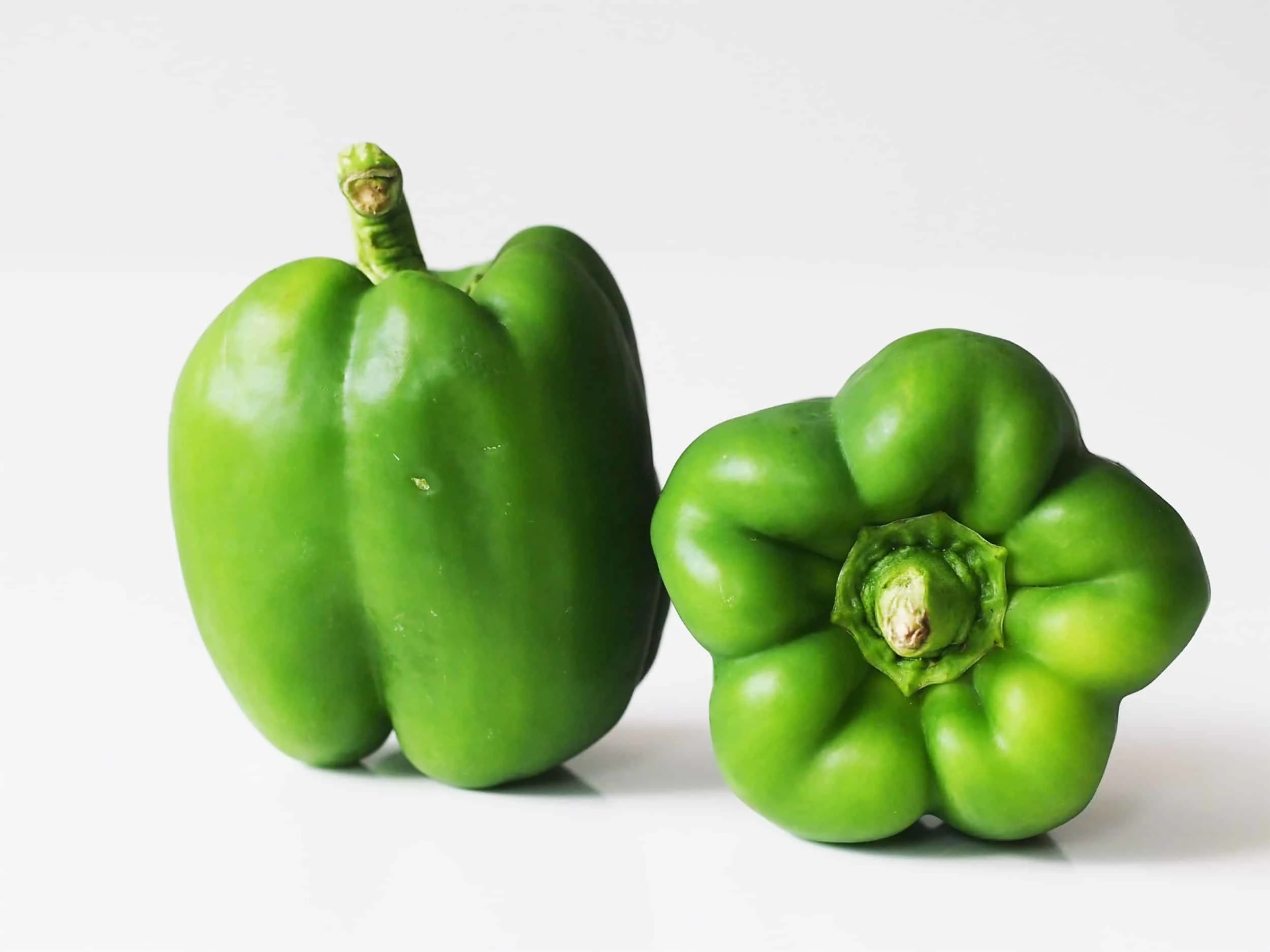
¿Cuándo puede tu bebé comer pimentón?
Puedes introducir el pimentón tan pronto como tu bebé esté listo(a) para empezar con los alimentos sólidos, lo que suele ocurrir alrededor de los 6 meses de edad.
Nuestro planeta alberga más de 50,000 variedades de pimientos, todas derivadas de los chiles (ajíes) originarios de América que se difundieron por todo el mundo a través de la colonización, la migración y el comercio. El pimentón también se conoce como capsicum, pero no contiene capsaicina, el compuesto químico que provoca la sensación ardiente al probar el jalapeño, el serrano u otros chiles picantes.
¿Cómo servir pimentón a tu bebé?
Cada bebé se desarrolla a su propio ritmo, y las sugerencias que ofrecemos sobre cómo cortar o preparar determinados alimentos son generalizaciones para una amplia audiencia.
6 meses +:
Ofrece la mitad de un pimentón cocido sin la parte blanca, las semillas, la piel ni el tallo. ¿Cómo quitar la piel? Inmediatamente después de cocinar los pimentones, colócalos en un recipiente sellado (una bolsa de papel o plástico sirve) y deja que reposen con el vapor durante 15 minutos. El vapor ayuda a despegar la piel de la pulpa del pimentón. Los pimentones enlatados o en frasco también sirven. Como alternativa a la mitad de un pimiento cocido, ofrece dips (salsas para untar), salsas y untables hechos con pimentón cocido.
9 meses +:
Ofrece pimentones cocidos (sin piel, semillas ni la parte blanca), ya sea cortados en secciones grandes para practicar a morder y arrancar, o en trozos pequeños del tamaño de un bocado. También puedes probar a ofrecer rebanadas finísimas (como papel) de pimentón crudo (con o sin piel). Al ofrecer pimentón, es de esperar que escupa mucho, sobre todo con el pimiento crudo, a medida que tu bebé desarrolla las habilidades para masticar. Por último, puedes seguir ofreciendo dips, salsas y untables hechos con pimentón asado.
18 meses +:
A esta edad, muchos niños(as) pequeños(as) ya están listos(as) para secciones más grandes de pimentón crudo: ofrécelas en rebanadas o incluso medio pimiento, sin semillas ni la parte blanca. Ofrece pimentón cocido (sin la parte blanca, las semillas ni el tallo) en rebanadas o en trozos del tamaño de un bocado, ya sea solo o en un platillo para compartir con tu pequeño(a). Como alternativa, ofrece dips, salsas y untables hechos con pimentón asado.
¿El pimentón representa un riesgo de atragantamiento para tu bebé?
Sí, si está crudo. La textura firme y resbaladiza del pimentón crudo puede representar un riesgo de atragantamiento, y aún más si tu bebé tiene dientes y logra arrancar pedazos. Para reducir el riesgo, prepara y ofrece el pimentón de una forma adecuada para la edad. Como siempre, crea un entorno seguro para comer y permanece a un brazo de distancia de tu bebé durante las comidas.
Aprende a reconocer las señales de atragantamiento y arcadas, y más sobre primeros auxilios en caso de atragantamiento, en nuestras guías gratuitas, Rescate para bebés y Rescate para niños(as) pequeños(as).
¿El pimentón es un alérgeno común?
No. Las alergias al pimentón no son comunes, pero se han reportado.[1] [2] Las personas alérgicas al látex o al polen de ciertas plantas también pueden ser alérgicas al pimentón o presentar el síndrome de alergia oral (también conocido como alergia alimentaria por polen).[3] [4] [5] El síndrome de alergia oral suele provocar picazón, hormigueo o ardor de corta duración en la boca, y es poco probable que cause una reacción peligrosa. Cocinar, enlatar o pelar el pimentón puede ayudar a minimizar e incluso eliminar la reacción.[3] [6]
El pimentón forma parte de la familia de las solanáceas, pero ten en cuenta que la alergia a una solanácea no está fuertemente asociada con un mayor riesgo de alergia a otras solanáceas.[7] Otras verduras solanáceas incluyen el tomate, el tomatillo, la papa blanca, la berenjena, los huckleberries [bayas similares al arándano], las bayas de goji y las especias hechas con pimientos (cayena, paprika, etc.).
Como harías al introducir cualquier alimento nuevo, comienza ofreciendo una cantidad pequeña en las primeras porciones. Si no hay una reacción adversa, aumenta gradualmente la cantidad en las comidas siguientes.
¿El pimentón es saludable para tu bebé?
Sí. El pimentón es rico en fibra, líquidos, folato y vitaminas A, B6, C y E. En conjunto, estos nutrientes ayudan a mantener los niveles de energía, la hidratación, un microbioma intestinal floreciente, el desarrollo cerebral, la visión, la inmunidad, los procesos metabólicos, la absorción de hierro, la salud de la piel y más. Ofrecer alimentos ricos en vitamina C puede ayudar a potenciar la capacidad del cuerpo para absorber hierro, así que considera combinar el pimentón con alimentos ricos en hierro como frijoles (porotos, habichuelas), lentejas, frutos secos y semillas.
¿El pimentón le produce gases a tu bebé?
Sí, puede. Como otros alimentos ricos en fibra, el pimentón puede contribuir a los gases cuando las bacterias del intestino de tu bebé procesan su fibra. Por suerte, con el tiempo el sistema digestivo se adapta cuando se ofrecen alimentos ricos en fibra de forma regular y en cantidades que tu bebé tolera de manera individual. Solo introduce el pimentón de forma gradual, según lo tolere el sistema digestivo de tu bebé, y ten en cuenta que tener algunos gases es completamente normal en bebés, niños(as) y adultos(as).
Material de referencia
Callero, A., Cabrera-Hernandez, V., Perez-Rodríguez, E., Jimeno-Nogales, L., Martinez-Tadeo, J., Plata-Rodríguez, E., & Garcia-Robaina, J. (2018). Bell Pepper Allergy: Different Sensitization Profiles. Journal of Investigational Allergology and Clinical Immunology, 28(5), 340–342. DOI: 10.18176/jiaci.0278.
Garcia-Menaya, J.M., Cordobes-Duran, C., Bobadilla-Gonzalez, P., Ledesma, A., Perez-Rangel, I., Sanchez-Vega, S., Zambonino, M.A., Corrales-Vargas, S. (2014). Anaphylactic reaction to bell pepper (Capsicum annuum) in a patient with a latex-fruit syndrome. Allergologia et Immunopathologia. 42.3: 263-265. DOI: 10.1016/j.aller.2012.12.006
American Academy of Allergy Asthma & Immunology. Oral Allergy Syndrome (OAS) or Pollen Fruit Syndrome (PFS).
Start solids with confidence
- Guided Introduction to 100+ Foods
- Smart Tools to Simplify Mealtime
- Food Allergen 101
- 300+ Meal Ideas
- First Foods® Database
Start solids with confidence
- Guided Introduction to 100+ Foods
- Smart Tools to Simplify Mealtime
- Food Allergen 101
- 300+ Meal Ideas
- First Foods® Database
Consejos de expertos directo en tu correo
Suscríbete para recibir consejos semanales, recetas y más.