
Raspberry
Fruit
- Age Suggestion
- 6 months
- Iron-Rich
- No
- Common Allergen
- No
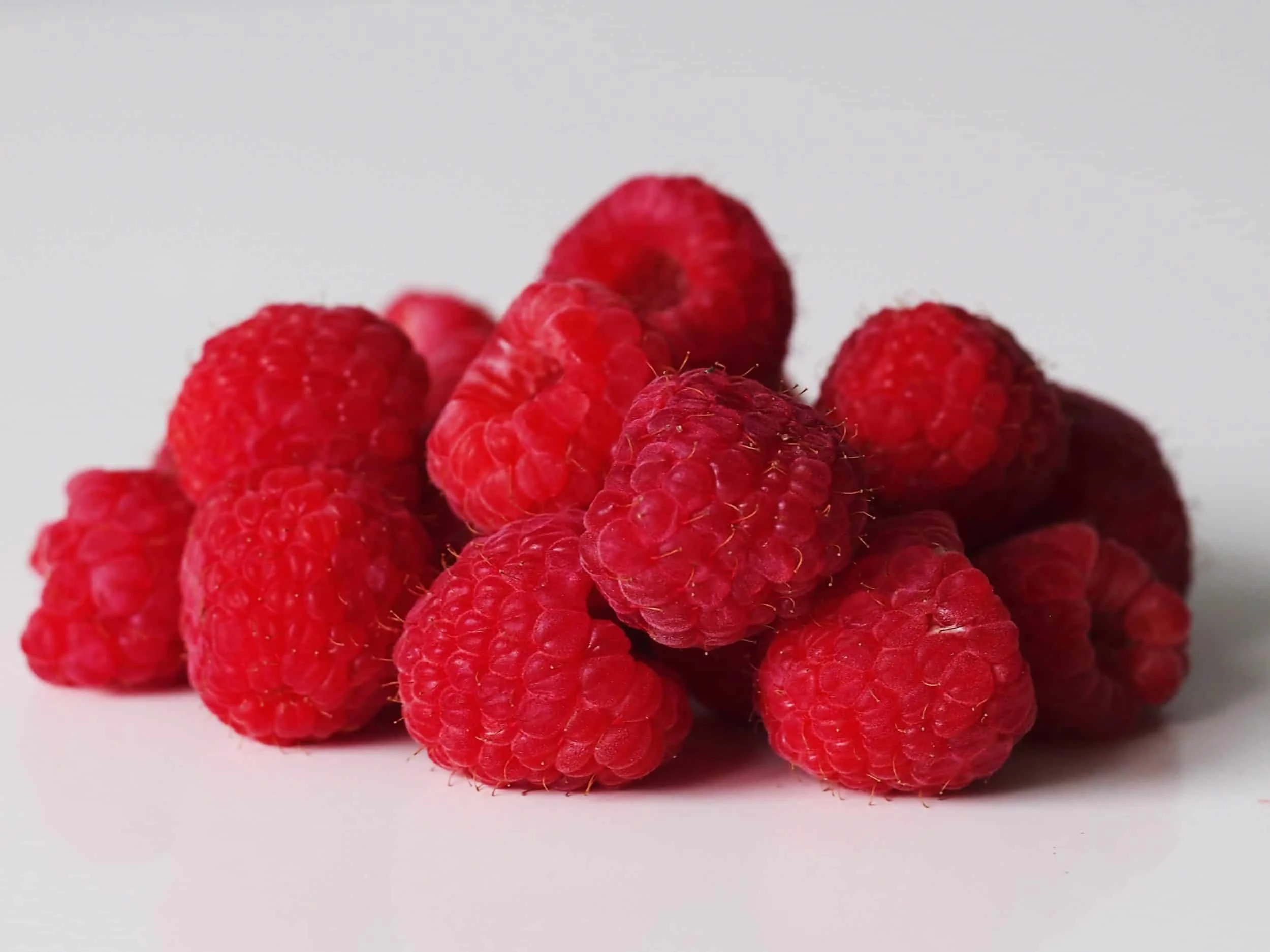
When can babies have raspberries?
Raspberries may be introduced as soon as baby is ready to start solids, which is generally around 6 months of age. Note that acidic foods like raspberries may cause a harmless contact rash where the juice touches the skin or may cause or worsen diaper rash.
Raspberries have been cultivated for hundreds of years, and wild raspberries can still be found in the plant’s native regions of Asia, Europe, and North America. Like their cousins the blackberry, raspberries grow on thorny branches called canes, and the sweet, tart berries are eaten fresh and cooked into baked goods, desserts, and more.
How do you serve raspberries to babies?
Every baby develops on their own timeline, and the suggestions on how to cut or prepare particular foods are generalizations for a broad audience.
6 months old +:
Mash raspberries and serve on their own or mix into scoopable foods like porridge, warm cereals, or yogurt. Alternatively, you can flatten raspberries with your fingers or the back of a fork, but most babies at this age will struggle to pick up these small pieces of food. Wait to offer until baby is confident in using their fingers to pick up smaller items.
9 months old +:
Gently flatten soft and ripe raspberries for baby to practice picking up with their developing pincer grasp. You can also continue to mash raspberries and serve on their own or stir into other foods.
12 months old +:
At this age, you can offer whole raspberries if they are ripe and soft. If you or your child are not ready for whole berries, continue to flatten the berries, flattening a little less as the child’s eating skills mature and your comfort increases.
Are raspberries a choking hazard for babies?
No, ripe raspberries are not a common choking hazard, but firm, small, or unripe berries can pose a risk. To reduce the risk, choose raspberries that are big, ripe, and soft, and prepare and serve in an age-appropriate way. As always, make sure you create a safe eating environment and stay within an arm’s reach of baby during meals. For more information on choking, visit our sections on gagging and choking and familiarize yourself with the list of common choking hazards.
Are raspberries a common allergen?
No. Allergies to raspberries are uncommon, but have been reported. What is quite common with acidic foods like raspberries, however, is a harmless contact rash around the mouth or skin that the raspberries come into contact with, such as the diaper area. Applying a thin layer of barrier ointment—such as pure petroleum jelly or a plant-based oil/wax balm—to baby’s face and bottom prior to mealtime can help prevent contact rashes.
Individuals with Oral Allergy Syndrome (also known as pollen food allergy syndrome) and particularly those with sensitivities to certain tree pollens may be sensitive to raspberries.[1] Individuals sensitive to other berries and foods of the Rosaceae family, such as blackberries, strawberries, apricots, almonds, and plums may also be sensitive to raspberries.[2] [3] Oral Allergy Syndrome typically results in short-lived itching, tingling, or burning in the mouth and is unlikely to result in a dangerous reaction. Cooking raspberries can help minimize and even eliminate the reaction.[4] [1]
As you would when introducing any new food, start by offering a small quantity on its own for the first few servings. If there is no adverse reaction, gradually increase the quantity over future meals.
Are raspberries healthy for babies?
Yes. Raspberries offer carbohydrates, fiber, and water, in addition to folate, magnesium, potassium, zinc, omega-3 fatty acids, and vitamins B6, C, E, and K. Together, these nutrients help provide energy to support baby’s movement and exploration, developing gut microbiome, and hydration. They also help to support brain development, electrolyte balance, taste perception, metabolic processes, skin health, iron absorption, immune function, and blood clotting.
What are the signs of readiness for solids?
Baby should be able to sit with minimal support, hold their head up well, and be able to reach and grab an item and successfully bring it to their mouth while seated. Baby should also show interest in eating and watching caregivers eat. For example of babies who are ready vs not, see our article on readiness.
Does baby need a high chair?
While a high chair can help create a safe eating environment, there are alternative ways for baby to eat safely, such as holding the child on your lap or sitting together on the floor. For more information, see our article on high chairs.

Reference Material
Kashyap, R.R., Kashyap, R.S. (2015). Oral Allergy Syndrome: An Update for Stomatologists. Journal of allergy, 2015, 543928. DOI:10.1155/2015/543928. Retrieved May 24, 2021.
Rodríguez, J., Crespo, J. F., López-Rubio, A., De La Cruz-Bertolo, J., Ferrando-Vivas, P., et al. (2000). Clinical cross-reactivity among foods of the Rosaceae family. The Journal of allergy and clinical immunology, 106(1 Pt 1), 183–189. DOI:10.1067/mai.2000.106927.
Costa, J., & Mafra, I. (2022). Rosaceae food allergy: a review. Critical reviews in food science and nutrition, 1–38. Advance online publication. DOI: 10.1080/10408398.2022.2045897.
Start solids with confidence
- Guided Introduction to 100+ Foods
- Smart Tools to Simplify Mealtime
- Food Allergen 101
- 300+ Meal Ideas
- First Foods® Database

Start solids with confidence
- Guided Introduction to 100+ Foods
- Smart Tools to Simplify Mealtime
- Food Allergen 101
- 300+ Meal Ideas
- First Foods® Database
Expert Tips Delivered to Your Inbox
Sign up for weekly tips, recipes and more.