Canned Fish for Babies
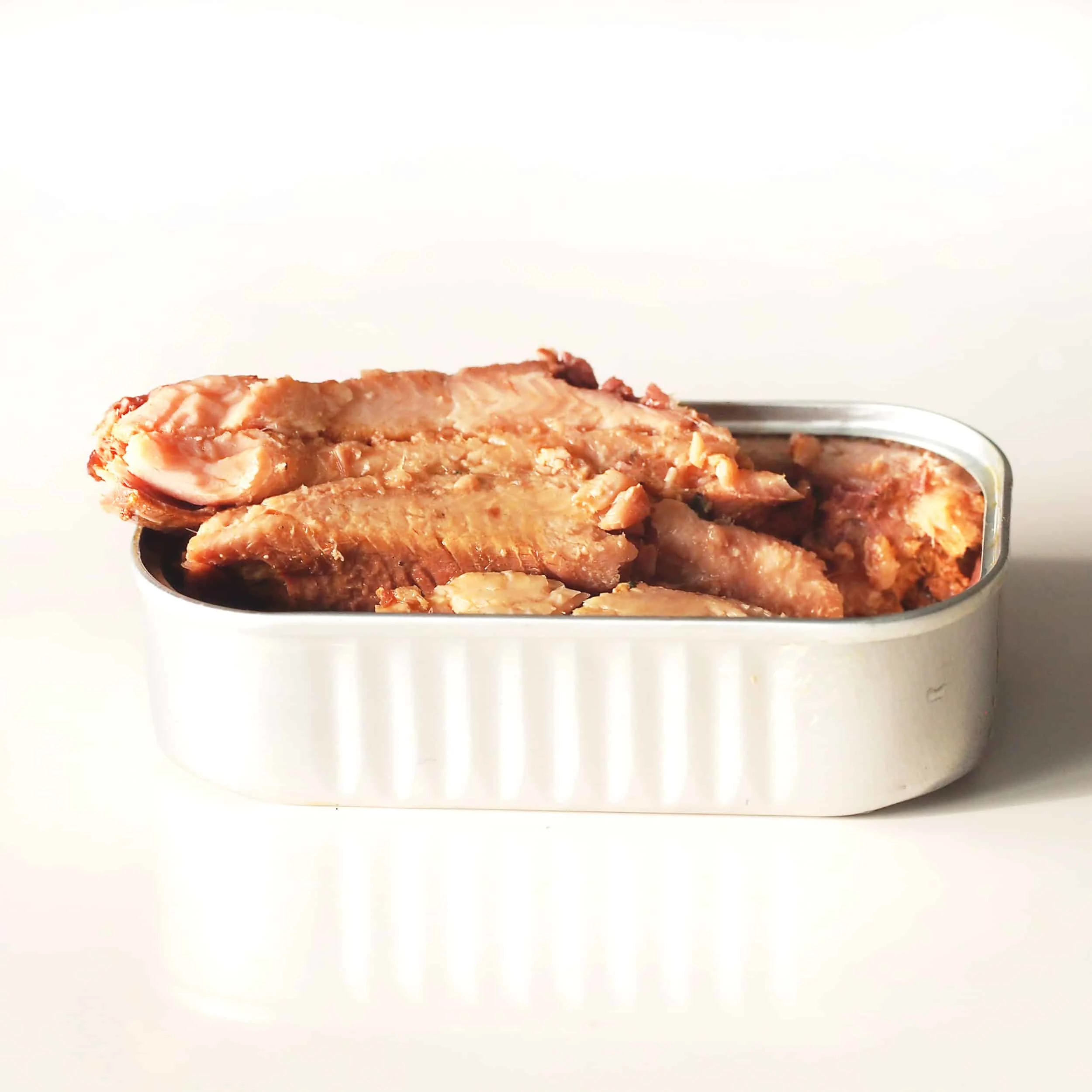
Canned fish can be offered from around 6 months of age. Our pediatric pros explain mercury, sodium, bones, allergens, and how to serve canned fish to baby.
Key Points
Canned fish can be offered from the start of solids
Many types of canned or tinned fish can be introduced as soon as baby is ready for solids. It's an accessible, affordable, and nutritious way to serve fish, and there's no need to remove the tiny bones in canned fish, as they are soft and edible
Choose low-sodium, low-mercury options when possible
Salmon, sardines, and North Atlantic mackerel tend to be low in mercury. Saltier canned fish is okay as an occasional taste as part of a balanced diet.
Fish is a common allergen
Start with a small portion, watch for signs of an allergic reaction, and talk with an allergist first if baby is at higher risk of food allergy.
When introducing fish to babies, canned fish can be an accessible, affordable, and nutritious option. However, there are a few considerations to keep in mind. Our licensed pediatric pros explain what you need to know.
Can baby have canned fish? Can babies have tinned fish?
Yes. Canned fish and tinned fish may be introduced as soon as baby is ready to start solids, which is generally around 6 months of age. Keep in mind:
Some fish may contain more mercury than others. To minimize exposure to mercury, serve fish as part of a balanced diet, and, when possible, choose fish that tend to be low in mercury, like salmon, sardines, or North Atlantic mackerel. For more information about mercury, look up any fish in our First Foods® database.
What to do about any lingering bones. Fish bones can present a risk of choking, and they are typically removed from canned fish during processing. Any lingering tiny bones (as well as any lingering skin) are typically made soft and edible by the canning process and they are a good source of calcium. You can remove them if you like, but it is generally not necessary.
Remember that fish is a common allergen. Learn how to safely introduce a food allergen to baby, and, if you suspect baby may be allergic, consult an allergist before introducing canned fish. Some babies face a higher risk for food allergy, such as babies with severe eczema or a pre-existing allergy.
Try to choose low-sodium fish when possible. While canned fish can be high in sodium, an occasional taste as part of a balanced diet is fine. Remember: the amount of sodium that babies eat tends to be low as they learn the skills to feed themselves, and some sodium in the diet helps support baby’s electrolyte balance, hydration, and movement. Learn more about sodium in food for babies.
Smoked and pickled canned fish is fine, too. Just make sure it is fully cooked. Smoked fish that is not fully cooked (such as cold-smoked salmon) poses an increased risk of foodborne illness for babies, whose immune systems are still developing. For these, there is no definitively safe age to introduce; rather, it is a personal decision for which you must calculate risk.
How to introduce canned fish to babies
When introducing fish for the first time, start with a small portion of well-cooked fish (canned or freshly cooked) and watch carefully after the first bite. If no symptoms of an allergic reaction develop after 10 minutes, offer the remainder at baby’s usual feeding pace. See Introducing Allergens to Babies for specific quantities, pacing, and fish introduction schedules.
After a fish allergy has been ruled out, offer strips of canned fish about the size of two adult fingers pressed together. If baby has a hard time picking up the strip, hold it in the air and let baby grab it from you. Alternatively, offer mashed canned fish on its own or mixed with breast milk, formula, water, or another food that has already been introduced like yogurt or avocado.
When offering canned fish to baby, it is not necessary to remove any lingering tiny bones or skin as they are made soft and edible by the canning process, however, you can pick them out if you prefer.
Once you see signs of a developing pincer grasp (where the tips of the thumb and pointer finger meet), move down in size by offering bite-sized pieces of canned fish. You can also continue to mash or flake canned fish that is mixed into a soft, scoopable food.
Start solids with confidence
- Guided Introduction to 100+ Foods
- Smart Tools to Simplify Mealtime
- Food Allergen 101
- 300+ Meal Ideas
- First Foods® Database
Start solids with confidence
- Guided Introduction to 100+ Foods
- Smart Tools to Simplify Mealtime
- Food Allergen 101
- 300+ Meal Ideas
- First Foods® Database