
Grape
Fruit
- Age Suggestion
- 6 months
- Iron-Rich
- No
- Common Allergen
- No
Warning
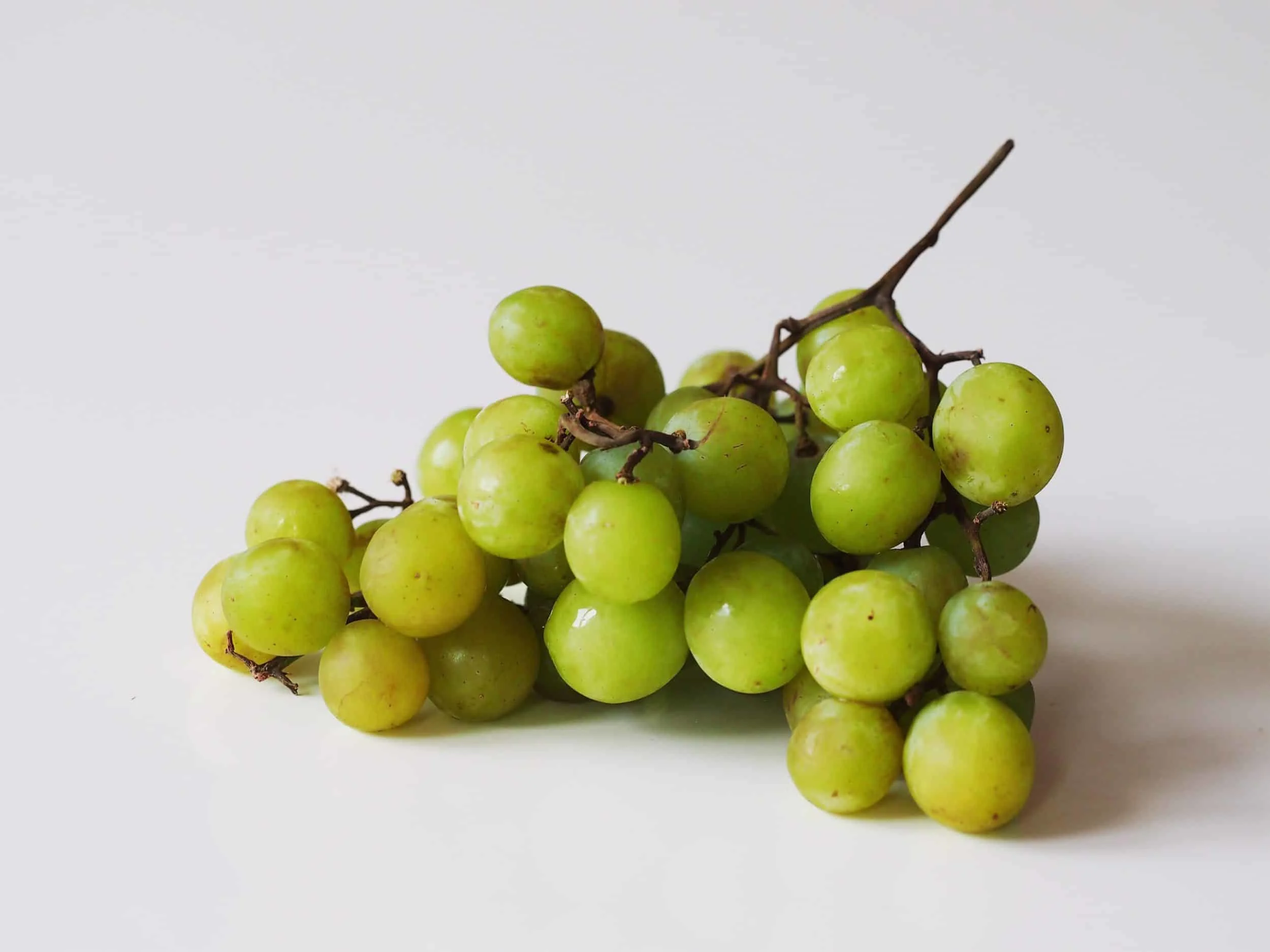
Grapes are a common choking hazard as they are round, slippery, and can be challenging to chew. Read on for how to prepare grapes for babies.
When can babies have grapes?
Grapes, when modified to reduce choking risk, may be introduced as soon as baby is ready to start solids, which is generally around 6 months of age.
Hieroglyphics, petroglyphs, and other historical records suggest that grapes have been part of the human diet for thousands of years in North America, Africa, and Asia. Today, most of the world’s cultivated grapes are turned into wine. The rest are eaten fresh as table grapes, dried to make raisins and sultanas, or processed into oil, vinegar, and sweet food products like candy, jam, jelly, molasses, syrup, and more.
How do you serve grapes to babies?
Every baby develops on their own timeline, and the suggestions on how to cut or prepare particular foods are generalizations for a broad audience.
6 months old +:
Offer grapes that have been cooked until they have burst or blended into a sauce. You can offer the cooked grapes on their own, or mix them into other soft foods for baby to scoop, like ricotta cheese, warm cereal, or yogurt. Small, soft seeds do not increase the choking risk, but if the grapes have large or firm seeds, remove them before serving.
9 months old +:
Offer quartered grapes (cut lengthwise from stem to bottom). When buying grapes for baby, choose large, oblong ones instead of small, round ones, if possible. If baby is having a hard time picking up the quartered pieces, wait a couple more weeks or continue to cook grapes until soft and burst, then stir into a scoopable food. Small, soft seeds do not increase the choking risk, but if the grapes have large or firm seeds, remove them before serving.
12 months old +:
Offer halved grapes (cut lengthwise from stem to bottom) for the child to pick up independently, or continue to serve quartered grapes (cut lengthwise) as desired. Small, soft seeds do not increase the choking risk, but if the grapes have large or firm seeds, remove them before serving. When sharing quartered or halved grapes with toddlers, choose large, oblong ones instead of small, round ones, if possible.
24 months old +:
Note that because whole grapes are a choking hazard, most health advisory bodies do not recommend offering them until age four. However, it is our strong opinion that children should be taught how to safely manage challenging foods early on, well before they are offered these foods outside of your care. When you feel the child has mature eating skills (moves food around in the mouth well, chews food before swallowing, etc.), consider offering whole grapes in a safe and supervised setting. If you have not yet offered grapes halved lengthwise, you may want to begin with this size before progressing.
When serving whole grapes, find large, oblong ones (not the small, rounder ones), keep them on the stem (this slows down the process and discourages the child from overstuffing their mouth), and provide lots of modeling and coaching. We suggest demonstrating chewing with the molars prior to offering the grape: open your mouth, place the grape on your teeth and explain “I am using my big teeth to crush this grape.” You may want to consider holding the grape for the child to practice biting—hold at the corner of the mouth and allow the child to close their teeth on the grape. Coach the child to push hard to break through the grape skin and bite off a piece of the grape. You can make a big deal about the fun squish and squirt that happens when they chew through it. Do not offer whole grapes if the child is not sitting at the table and supervised until you are confident that the child will chew and swallow without coaching. Small, soft seeds do not increase the choking risk, but if the grapes have large or firm seeds, remove them before serving.
Are grapes a choking hazard for babies?
Yes. Grapes are round, firm, and slippery, qualities that greatly increase the risk of choking. To reduce the risk, remove all large seeds and prepare and serve grapes in an age-appropriate way as described in How to Serve. As always, create a safe eating environment and stay within reach of baby during meals.
Learn the signs of choking and more about choking first aid in our free guides, Infant Rescue and Toddler Rescue.
Are grapes a common allergen?
No. Allergies to grapes are rare, but have been reported.[1]
Are grapes healthy for babies?
Yes. Grapes offer carbohydrates, fiber, and water, in addition to potassium and vitamins B6, C, and K. Together, these nutrients help provide energy to support baby’s movement and exploration, developing gut microbiome, and hydration. They also help to support electrolyte balance, metabolic processes, skin health, iron absorption, immune function, and blood clotting.
When can babies drink grape juice?
Small amounts of pasteurized grape juice may be shared as a drink after 12 months of age. That said, it can be beneficial to wait until after a child’s 2nd birthday to regularly share juice and other sugary drinks. Research suggests that regular intake of juice and other sweet drinks tends to increase the risk of dental cavities and take up space in the belly, which may decrease a child’s motivation to eat other foods at mealtime and may negatively affect the child’s growth over time.[2] [3] However, occasional servings of juice after one year of age generally isn’t a cause for concern. Learn more about serving juice to babies and toddlers. Lastly, note that grape juice is typically quite high in sulfites, which may trigger symptoms that are similar to an allergic reaction in people with sulfite sensitivity, although this is rare in babies.
Can babies have grape jam or jelly?
Yes. Grape jam or jelly may be offered as part of a variety of foods. Offering tastes of a baked good, dessert, sauce, or another shared dish containing small amounts of grape jam or jelly is not a cause for concern at this age, just try to hold off on serving regularly due to high levels of sugar.

Reference Material
Bircher, A., Bigliardi, P., Yilmaz, B. (1999). Anaphylaxis resulting from selective sensitization to Americana grapes. Journal of Allergy and Clinical Immunology, 104(5), 1111-1113. Retrieved February 10, 2021
World Health Organization (WHO). (2023). WHO Guideline for complementary feeding of infants and young children 6-23 months of age.
Fidler Mis, N., Braegger, C., Bronsky, J., Campoy, C., Domellöf, et al. (2017). Sugar in Infants, Children and Adolescents: A Position Paper of the European Society for Paediatric Gastroenterology, Hepatology and Nutrition Committee on Nutrition. Journal of pediatric gastroenterology and nutrition, 65(6), 681–696. DOI:10.1097/MPG.0000000000001733.
Start solids with confidence
- Guided Introduction to 100+ Foods
- Smart Tools to Simplify Mealtime
- Food Allergen 101
- 300+ Meal Ideas
- First Foods® Database

Start solids with confidence
- Guided Introduction to 100+ Foods
- Smart Tools to Simplify Mealtime
- Food Allergen 101
- 300+ Meal Ideas
- First Foods® Database
Expert Tips Delivered to Your Inbox
Sign up for weekly tips, recipes and more.