
Queso
Lácteo
- Edad sugerida
- 6 meses
- Rico en hierro
- No
- Alérgeno común
- Sí
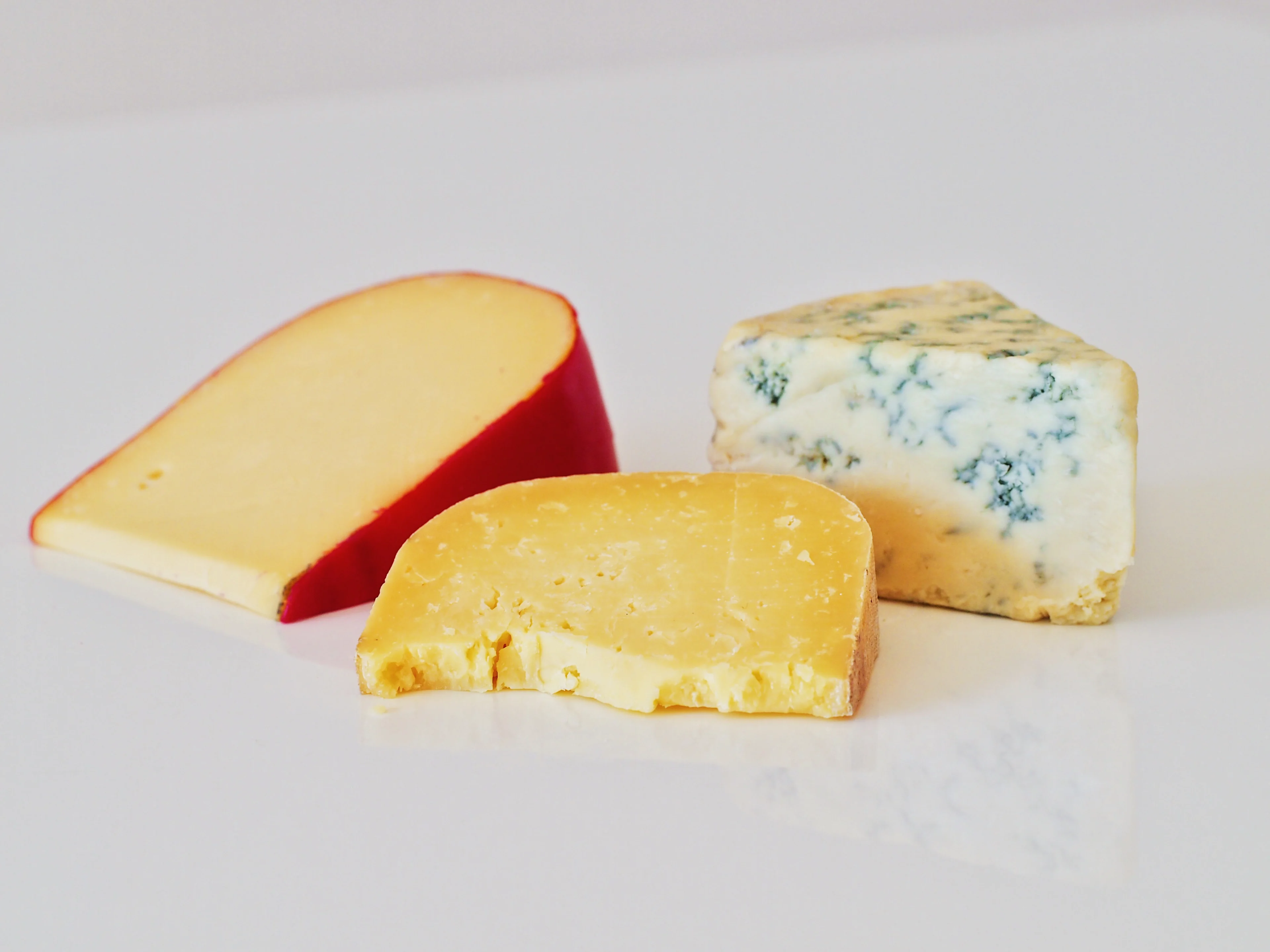
¿Cuándo pueden comer queso los bebés?
El queso puede introducirse tan pronto como tu bebé esté listo para comenzar con los alimentos sólidos, lo que generalmente ocurre alrededor de los 6 meses de edad. Aunque el queso puede tener un alto contenido de sodio, probarlo de forma ocasional está bien como parte de una dieta equilibrada. Elige queso pasteurizado para reducir el riesgo de enfermedades transmitidas por los alimentos.
El queso puede hacerse con cualquier tipo de leche. Este alimento ancestral tiene sus orígenes en la zona alrededor del mar Mediterráneo, donde el queso se elaboraba con leche de vacas, cabras y ovejas domesticadas en el siglo VII a. C. Más al este, en Asia, el queso se hacía tradicionalmente con leche de otros animales, como el búfalo de agua y el yak. El sabor y la textura de un queso varían según la fuente de la leche, el tipo de bacteria que se usa para fermentarlo y el método de preparación, y hoy en día existen miles de variedades en todo el mundo.
¿Cómo se sirve el queso a los bebés?
Cada bebé se desarrolla a su propio ritmo, y las sugerencias que ofrecemos sobre cómo cortar o preparar determinados alimentos son generalizaciones para una amplia audiencia.
6 meses +:
Unta una capa fina de quesos blandos como queso crema, labneh o queso ricotta sobre tiras de pan tostado u otros alimentos que se comen con las manos, o sirve un poco en un tazón para que tu bebé lo tome con la cuchara. A esta edad, también puedes ofrecer trozos largos y planos de quesos semifirmes como cheddar o queso suizo para que tu bebé los agarre y mordisquee. El queso rallado se puede derretir en una variedad de alimentos, pero espolvoréalo con moderación, ya que las grandes bolas de queso derretido aumentan el riesgo de atragantamiento. Aunque quesos como el feta o el parmesano son altos en sodio, una probadita de vez en cuando como parte de una dieta equilibrada también está bien.
Evita los cubos y los trozos grandes de queso debido al mayor riesgo de atragantamiento, y no ofrezcas queso sin pasteurizar ni quesos madurados con moho o de corteza lavada, como el brie o el camembert, debido al riesgo de enfermedades transmitidas por los alimentos.
9 meses +:
Cuando veas señales de que tu bebé está desarrollando la pinza (donde el pulgar y el dedo índice se juntan), puedes ofrecerle trozos del tamaño de un bocado cortados de una rebanada plana de queso semifirme para que tu bebé practique tomarlos, o rebanadas largas y planas de queso para que dé mordidas. El queso rallado se puede servir solo o derretido en una variedad de alimentos, pero al servirlo de esta manera, espolvoréalo con moderación, ya que los grumos grandes de queso derretido aumentan el riesgo de atragantamiento. También puedes seguir ofreciendo quesos blandos como labneh, mascarpone o queso ricotta, ya sea en un tazón para que tu bebé lo tome con la cuchara o untado en una capa delgada sobre pan tostado u otros alimentos para comer con las manos.
Continúa evitando los cubos y los trozos grandes de queso debido al mayor riesgo de atragantamiento, y no ofrezcas queso sin pasteurizar ni quesos madurados con moho o de corteza lavada, como el brie o el camembert, debido al riesgo de enfermedades transmitidas por los alimentos.
12 meses +:
Ofrece una variedad de quesos: quesos blandos; quesos semifirmes derretidos o en rebanadas delgadas; o quesos duros derretidos, desmenuzados o rallados. A esta edad, puedes ofrecer queso derretido en una capa delgada sobre los alimentos (como un sándwich abierto, un trozo de pan tostado o una tortilla), pero continúa retirando los grumos grandes de queso derretido para reducir el riesgo de atragantamiento.
Continúa evitando los cubos de queso, así como los quesos sin pasteurizar. A esta edad, por lo general está bien servir pequeñas cantidades de ciertos quesos pasteurizados madurados con moho o de corteza lavada, como el brie. Para hacer estos quesos más seguros, considera calentarlos a una temperatura interna de 165 grados Fahrenheit (74 grados Celsius).
24 meses +:
Si tu hija o hijo está dando mordidas del tamaño adecuado, no se está llenando la boca de comida y es capaz de seguir instrucciones, es posible que esté listo para comer cubos de queso. Para muchos niños, esto probablemente será alrededor de los 2 años, aunque algunos niños pueden estar listos antes o después. Cuando decidas que tu hija o hijo está listo, asegúrate de que esté sentado y supervisado en un entorno seguro para comer, y observa de cerca para asegurarte de que esté dando mordidas del tamaño adecuado y masticando bien antes de tragar. Si es necesario, muéstrale cómo comes tú un cubo de queso, enseñándole cómo triturar por completo el alimento con las muelas antes de tragar.
Continúa sirviendo rebanadas delgadas de queso, quesos blandos untados en pan o pan tostado, queso derretido en una capa delgada sobre los alimentos, y quesos duros rallados o desmenuzados según se desee. Evita los quesos sin pasteurizar y ten precaución al servir quesos madurados con moho o de corteza lavada como el brie.
¿Es el queso un riesgo de atragantamiento para los bebés?
Sí. El queso puede ser firme y elástico, y puede formar una masa pegajosa en la boca, todas cualidades que aumentan el riesgo de atragantamiento. Para reducir el riesgo, prepara y sirve los quesos de una manera apropiada para la edad, como se describe en Cómo servir. Como siempre, crea un entorno seguro para comer y mantente al alcance de tu bebé durante las comidas.
Aprende las señales de atragantamiento y más sobre primeros auxilios para el atragantamiento en nuestras guías gratuitas, Infant Rescue y Toddler Rescue.
¿Es el queso un alérgeno común?
Sí, el queso a menudo se hace con leche de vaca, que es un alérgeno común.[1] [2] El queso hecho con leche de otros animales, como oveja, cabra y búfalo, puede provocar reacciones alérgicas similares a las de los productos lácteos de leche de vaca.[3] La buena noticia: la alergia a los lácteos suele mejorar con el tiempo, y la mayoría de los niños con alergia a los lácteos la superan antes de llegar a la edad adulta.[4] [5] [6] Nota: Los quesos madurados generalmente contienen histaminas, que pueden causar erupciones en la piel de los niños sensibles a ellas. [7] [8]
Aunque la mayoría de los bebés nunca tendrán una reacción alérgica a los alimentos, retrasar la introducción de alérgenos alimentarios comunes como la leche de vaca podría aumentar el riesgo de que se desarrolle una alergia. Sin embargo, introducir alimentos que contengan leche al principio de la infancia y ofrecerlos con regularidad, incluso durante los años de la primera infancia, puede ayudar a prevenir el desarrollo de una alergia a la leche.
Para la mayoría de los bebés, los alérgenos comunes como la leche por lo general pueden introducirse en casa tan pronto como tu bebé esté listo, en su desarrollo, para comenzar con los alimentos sólidos. Comienza con una pequeña cantidad preparada en forma de alimento sólido, de manera apropiada para su edad. Obtén más información en Cómo servir. Para obtener orientación paso a paso sobre cómo introducir la leche de vaca de forma segura, suscríbete a la aplicación Solid Starts.
Los bebés con eczema o con una alergia existente a otro alimento tienen un mayor riesgo de desarrollar una alergia a la leche, especialmente si se retrasa la introducción. La introducción temprana de productos con leche de vaca (idealmente comenzando entre los 4 y 6 meses de edad) es especialmente importante para estos bebés, incluso si aún no están listos, en su desarrollo, para alimentarse por sí mismos.
Si tu bebé tiene alergias alimentarias conocidas o eczema grave y ya tiene 7 meses de edad o más, ¡no es demasiado tarde! Sin embargo, considera consultar a tu médico antes de introducir la leche en casa, ya que podrían aconsejarte introducir el alérgeno bajo supervisión médica por razones de seguridad.
¿Cómo sé si mi bebé es intolerante a la lactosa?
La intolerancia a la lactosa es poco común en bebés, niños pequeños y niños más pequeños en general.[9] Sin embargo, a veces los bebés y los niños pueden experimentar una intolerancia a la lactosa temporal después de una enfermedad gastrointestinal. Los signos de intolerancia a la lactosa pueden incluir hinchazón, gases, diarrea, náuseas y otras molestias. Habla con tu médico si sospechas que tu bebé está experimentando intolerancia a la lactosa.
¿Es el queso un desencadenante del SEIPA, síndrome de enterocolitis inducida por proteína alimentaria, o FPIES, por sus siglas en inglés?
El queso normalmente se hace con leche de vaca, que es un desencadenante reconocido del síndrome de enterocolitis inducida por proteína alimentaria, también conocido como SEIPA, síndrome de enterocolitis inducida por proteína alimentaria, o FPIES, por sus siglas en inglés. El SEIPA es una alergia tardía a la proteína alimentaria que provoca la aparición repentina de vómitos y diarrea repetitivos que comienzan unas horas después de la ingestión. Esto se denomina SEIPA agudo. Si no se trata, la reacción puede provocar una deshidratación significativa. Cuando la leche está en la dieta con regularidad, el SEIPA puede presentarse como reflujo persistente, pérdida de peso y retraso en el crecimiento; esto se denomina SEIPA crónico. Los síntomas generalmente mejoran al eliminar la leche de la dieta de tu bebé. Afortunadamente, al igual que otras formas de alergia a la leche, el SEIPA que se presenta al principio de la vida generalmente se supera durante los años en que tu bebé es pequeño. [10]
¿Es el queso saludable para los bebés?
Sí. La mayoría de los quesos son ricos en proteínas, grasa, calcio, selenio, zinc y vitaminas A y B12. En conjunto, estos nutrientes trabajan juntos para aportar los componentes básicos del crecimiento, el desarrollo y el funcionamiento del cerebro. También ayudan a favorecer la densidad ósea, la percepción del gusto, la visión, la energía y la inmunidad. Al comprar, elige queso pasteurizado para reducir el riesgo de enfermedades transmitidas por los alimentos. [11] [12]
El queso contiene algo de sodio, que favorece la hidratación, el movimiento y el equilibrio de los electrolitos en el cuerpo. Considera servir quesos con alto contenido de sodio, como el feta o el parmesano, solo de forma ocasional, ya que las necesidades de sodio de tu bebé generalmente son bajas. Dicho esto, la cantidad de alimentos sólidos que consume tu bebé suele ser baja mientras practica alimentarse por sí mismo y, como resultado, la cantidad de sodio que consume también tiende a ser baja. Aprende más sobre el sodio en la comida para bebés.
¿Cuánto queso pueden comer los bebés?
No hay un límite; si lo deseas, podrías servir quesos pasteurizados todos los días, pero trata de no preocuparte por las cantidades exactas que tu bebé está consumiendo. Durante cualquier comida, tu bebé puede comer mucho queso o puede comer muy poco. Ambos escenarios están bien cuando el queso forma parte de una variedad de alimentos en la dieta.
¿Cuándo pueden comer quesos no pasteurizados (crudos) los bebés?
No. No hay ninguna edad a la que comer queso crudo esté libre de riesgo, por lo que decidir si servirlo o cuándo hacerlo es una decisión personal que debes tomar de manera informada en el contexto de tu hijo(a).[12] [13] [11] El queso no pasteurizado o crudo representa un alto riesgo de enfermedades transmitidas por los alimentos, especialmente salmonelosis y listeriosis, que son infecciones bacterianas dañinas tanto para bebés como para niños y adultos, con mayor riesgo de síntomas graves en los bebés.[12] [13] [11]
¿Pueden los bebés consumir queso vegano?
Sí, siempre y cuando se prepare de una manera apropiada para su edad para reducir el riesgo de atragantamiento, y cualquier alérgeno común presente en el queso, como la soya, los frutos secos o el trigo, se haya introducido de forma segura. Existen quesos veganos a base de frutos secos, aceite, guisantes (arvejas, chícharos) o soya, así que ten en cuenta que hay muchas opciones para elegir, dependiendo de cuáles sean las necesidades de tu familia.
Material de referencia
FAO and WHO. (2022). Risk Assessment of Food Allergens. Part 1 – Review and validation of Codex. Alimentarius priority allergen list through risk assessment. Meeting Report. Food Safety and Quality. Series No. 14.
Warren CM, Jhaveri S, Warrier MR, Smith B, & Gupta RS. (2013). The epidemiology of milk allergy in US children. Annals of Allergy, Asthma & Immunology, 110 (5), 370-374. DOI:10.1016/j.anai.2013.02.016.
El-Agamy, E. (2007). The challenge of cow milk protein allergy. Small Ruminant Research, 68, 64-72. DOI: 10.1016/j.smallrumres.2006.09.016.
Start solids with confidence
- Guided Introduction to 100+ Foods
- Smart Tools to Simplify Mealtime
- Food Allergen 101
- 300+ Meal Ideas
- First Foods® Database
Start solids with confidence
- Guided Introduction to 100+ Foods
- Smart Tools to Simplify Mealtime
- Food Allergen 101
- 300+ Meal Ideas
- First Foods® Database
Consejos de expertos directo en tu correo
Suscríbete para recibir consejos semanales, recetas y más.