
Queso Blanco
Dairy
- Age Suggestion
- 6 months
- Iron-Rich
- No
- Common Allergen
- Yes
When can babies have queso blanco ?
Queso blanco may be introduced as soon as baby is ready to start solids, which is generally around 6 months of age. While queso blanco can be high in sodium, a taste here and there as part of a varied diet is not a cause for concern. Choose pasteurized queso blanco to minimize the risk of foodborne illness. [1] [2]
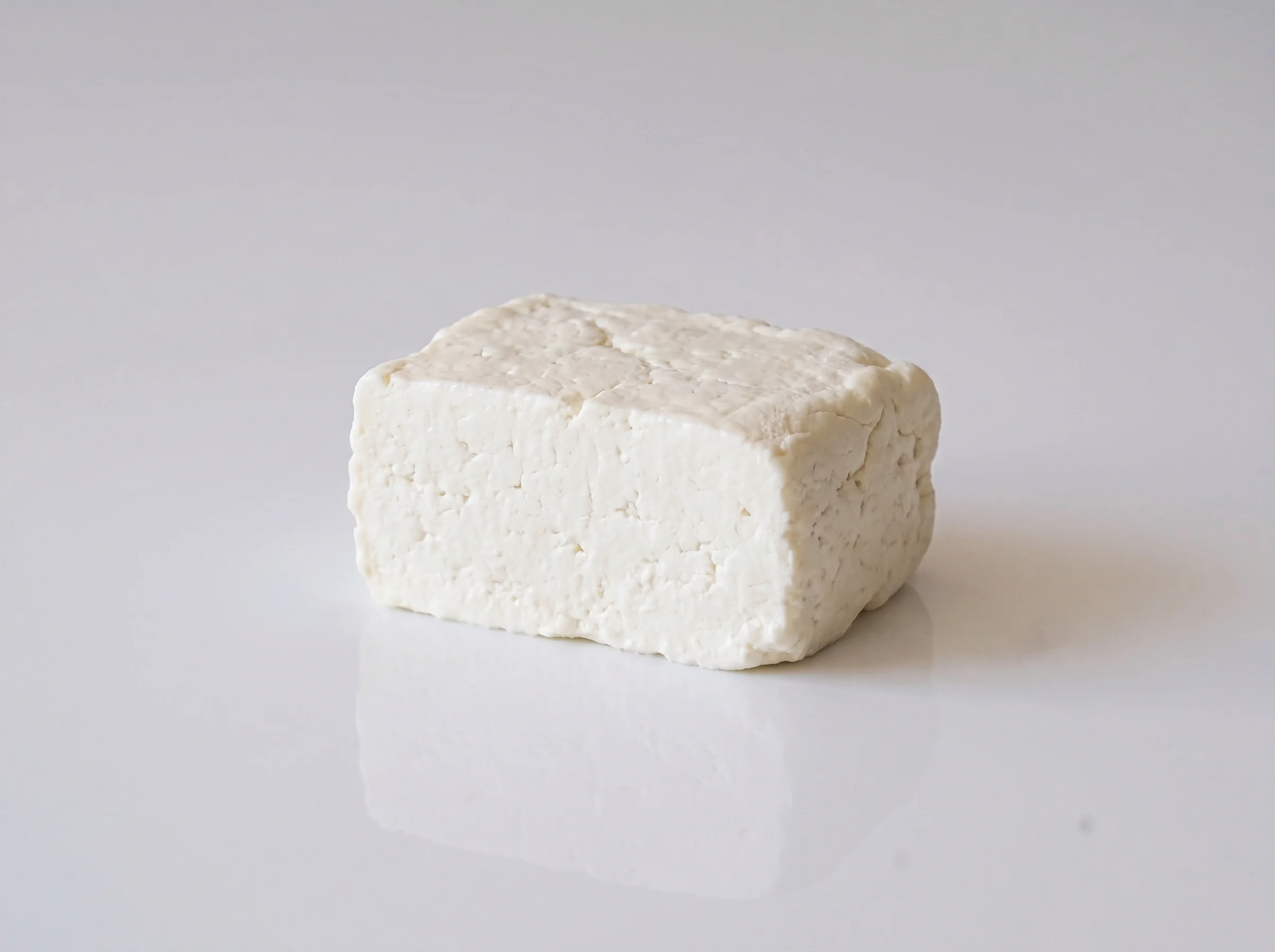
Queso blanco is a fresh, unaged cheese with roots across Latin America made by curdling milk with an acid like lime juice or vinegar and pressing out the whey. It is not the same as the melted white cheese sauce also called "queso blanco" at many Tex-Mex restaurants—queso blanco is a firm, sliceable cheese that softens without truly melting, making it a favorite for crumbling over dishes or pan-frying. It has a mild, milky flavor with a distinctly salty edge, and a firmer, less crumbly texture than its cousin queso fresco.
How do you serve queso blanco to babies?
Every baby develops on their own timeline, and the suggestions on how to cut or prepare particular foods are generalizations for a broad audience.
6 months old +:
Crumble or finely grate queso blanco and sprinkle it over other foods baby is already eating, like scrambled eggs, mashed beans, or rice, so baby can experience its salty, milky flavor. You can also cut a long, flat slice of queso blanco, about the length of an adult finger, for baby to gnaw and practice moving around their mouth. Avoid cutting queso blanco into cube shapes, as they present a higher choking risk. Choose pasteurized queso blanco to reduce the risk of foodborne illness. Queso blanco contains a common allergen (cow’s milk) that should be safely introduced to baby.
9 months old +:
Continue to serve queso blanco crumbled over dishes like rice and beans or huevos rancheros. You can also offer queso blanco pan-fried and cut into flat, bite-sized pieces for baby to practice picking up with their developing pincer grasp, or continue serving in long, flat slices for baby to practice taking bites from. Cooking queso blanco before serving can make the outside a bit crispier and the inside a bit softer, which can make it easier for babies to manage in the mouth. Choose pasteurized queso blanco to reduce the risk of foodborne illness. Queso blanco contains a common allergen (cow’s milk) that should be safely introduced to baby.
12 months old +:
Offer thin slices or small pieces of coarsely crumbled or grated queso blanco on its own, or as part of the family meal, such as crumbled over beans and rice. Choose pasteurized queso blanco to reduce the risk of foodborne illness.
24 months old +:
If the child is taking accurate-sized bites, not stuffing their mouth with food and able to follow instructions, they may be ready to have cubes of queso blanco. For many children, this will likely be around age 2, although some children may be ready earlier or later. When you decide the child is ready, make sure the child is seated and supervised in a safe eating environment, and watch closely to ensure they are taking appropriately sized bites and chewing well before swallowing. If needed, model how you eat a cube of queso blanco yourself, showing how to fully break down the food with your molars before swallowing.
You can also continue to serve queso blanco in thin slices or crumbled or grated over family meals. Choose pasteurized queso blanco to reduce the risk of foodborne illness.
Is queso blanco a choking hazard for babies?
Yes. Because queso blanco is firm and holds its shape rather than melting, thick slices or cubes can be difficult for baby to break down with developing chewing skills. To reduce the risk, prepare and serve queso blanco in an age-appropriate way as described in How to Serve. As always, make sure to create a safe eating environment and stay within reach of baby during meals.
Learn the signs of choking and more about choking first aid in our free guides, Infant Rescue and Toddler Rescue.
Is queso blanco a common allergen?
Yes, queso blanco is often made from cow’s milk, which is a common allergen.[3] [4] The good news: dairy allergy often gets better over time, and the majority of children with dairy allergy outgrow it before reaching adulthood. [5] [6] [7]
Although most babies will never experience an allergic reaction to food, delaying introduction to common food allergens like cow’s milk may actually increase the risk of an allergy developing. However, introducing food containing milk early in infancy and serving it regularly, including throughout the toddler years, can help prevent a milk allergy from developing.
For most babies, common allergens such as milk can typically be introduced at home as soon as baby is developmentally ready to begin solids. Start with a small amount prepared in an age-appropriate way. For step-by-step guidance on how to safely introduce cow’s milk, subscribe to the Solid Starts App.
Is queso blanco healthy for babies?
Yes. Queso blanco offers protein and calcium to support baby's growing bones and teeth, along with fat, which babies need in generous amounts for brain development.
Look for queso blanco made with pasteurized milk before serving it to baby. Queso blanco made with raw or unpasteurized milk carries an increased risk of foodborne illness, and babies are more at risk of severe symptoms. Fresh, unaged cheeses like queso blanco also have more moisture and less acidity than aged cheeses, which makes it easier for Listeria to grow (even after pasteurization, if the cheese becomes contaminated during production), so consider checking for any recent recalls of pasteurized queso fresco before serving to your child.
Queso blanco can be high in sodium, but the amount of sodium that babies actually eat tends to be low as they learn the skills to feed themselves. While babies don’t need salt added to their food, it is safe to share meals with some salt in them. [8] [9] [10] Sharing family meals, even if they contain salt, has its benefits, but you can keep baby’s sodium intake low by choosing low- or no-salt options when available and aiming for a varied diet over time. Learn more about salt and babies.
What's the difference between queso blanco and queso fresco?
Queso blanco and queso fresco are both fresh, unaged white cheeses from Latin American cooking, and the names are sometimes used interchangeably. Traditionally, queso blanco is curdled with an acid like lime juice or vinegar, giving it a firmer, denser texture, while queso fresco is more often set with rennet or live cultures, giving it a softer, more crumbly texture. Both soften without fully melting when heated, but queso blanco tends to hold its shape and slice more cleanly, which is why it is often the cheese used for pan-frying or grilling.
Is the "queso blanco" dip served with tortilla chips the same thing as queso blanco?
No. The warm, melted queso dip served with tortilla chips at many restaurants is typically made with processed cheese, cream, and often green chiles, and is a different product from the fresh, firm cheese called queso blanco.
Is unpasteurized (raw milk) queso blanco ever safe to serve to a baby?
No. Queso blanco made with raw, unpasteurized milk carries an increased risk of Listeria and other harmful bacteria, a risk that is especially serious for babies, older adults, and pregnant people. The safest approach is to use queso blanco you know was made with pasteurized milk, and when you are not sure, choose a different cheese or skip it for baby.
Reference Material
Committee on Infectious Diseases; Committee on Nutrition; American Academy of Pediatrics. (2014). Consumption of raw or unpasteurized milk and milk products by pregnant women and children. Pediatrics, 133(1), 175-179. doi:10.1542/peds.2013-3502. Retrieved September 20, 2021
U. S. Food & Drug Administration. Dangers of raw milk.
FAO and WHO. (2022). Risk Assessment of Food Allergens. Part 1 – Review and validation of Codex. Alimentarius priority allergen list through risk assessment. Meeting Report. Food Safety and Quality. Series No. 14.
Start solids with confidence
- Guided Introduction to 100+ Foods
- Smart Tools to Simplify Mealtime
- Food Allergen 101
- 300+ Meal Ideas
- First Foods® Database
Start solids with confidence
- Guided Introduction to 100+ Foods
- Smart Tools to Simplify Mealtime
- Food Allergen 101
- 300+ Meal Ideas
- First Foods® Database
Expert Tips Delivered to Your Inbox
Sign up for weekly tips, recipes and more.