Cómo cortar alimentos de forma segura para bebés
Aprende qué alimentos no debes ofrecer a los bebés y cómo preparar los alimentos de forma y tamaño seguros.
Puntos clave
Bigger shapes are actually safer at first
Around 6 to 8 months of age, large pieces of food like a mango pit, corn on the cob, or a chicken drumstick are easier to grab, bring to their mouth, and bite, which makes them safer overall than small, bite-sized pieces of food.
Smaller shapes are safe once baby is around 9 months old
Small, bite-sized pieces of food are not safe for a baby just starting solids around 6 months old. It’s safe for babies to practice eating bite-size pieces once they start to develop the ability to pick up food with their fingertips, which typically happens around 8 to 9 months. That said, it can help to stick with bigger pieces if they’re just getting started with solids at this age.
Babies can explore a variety of textures from the start
Babies can safely explore lots of textures as soon as they are ready to start solids around 6 months of age. There's no need to "graduate" from one texture to the next. Most foods can be modified to safely share with babies.
How to safely prepare solid food for babies depends on their motor skills, which vary by age. Our licensed pediatric pros explain how to cut and prepare foods during different stages of a baby’s development.
Food Sizes and Textures by Age
Almost any food can be made safe to share once you see all signs baby is ready. To minimize the risk, prepare foods that baby can easily grab, hold, and bring to the mouth on their own. When you are ready to serve the meal, let baby practice feeding themselves. It’s okay to offer a little guidance here and there (such as passing a piece of food or a loaded spoon when baby needs help) but ideally the child has opportunities to practice feeding themselves. Research shows the risk of choking decreases when a person feeds themselves.[1] [2] [3] [4] [5]
Below are general guidelines for safe food sizes and food textures by age.
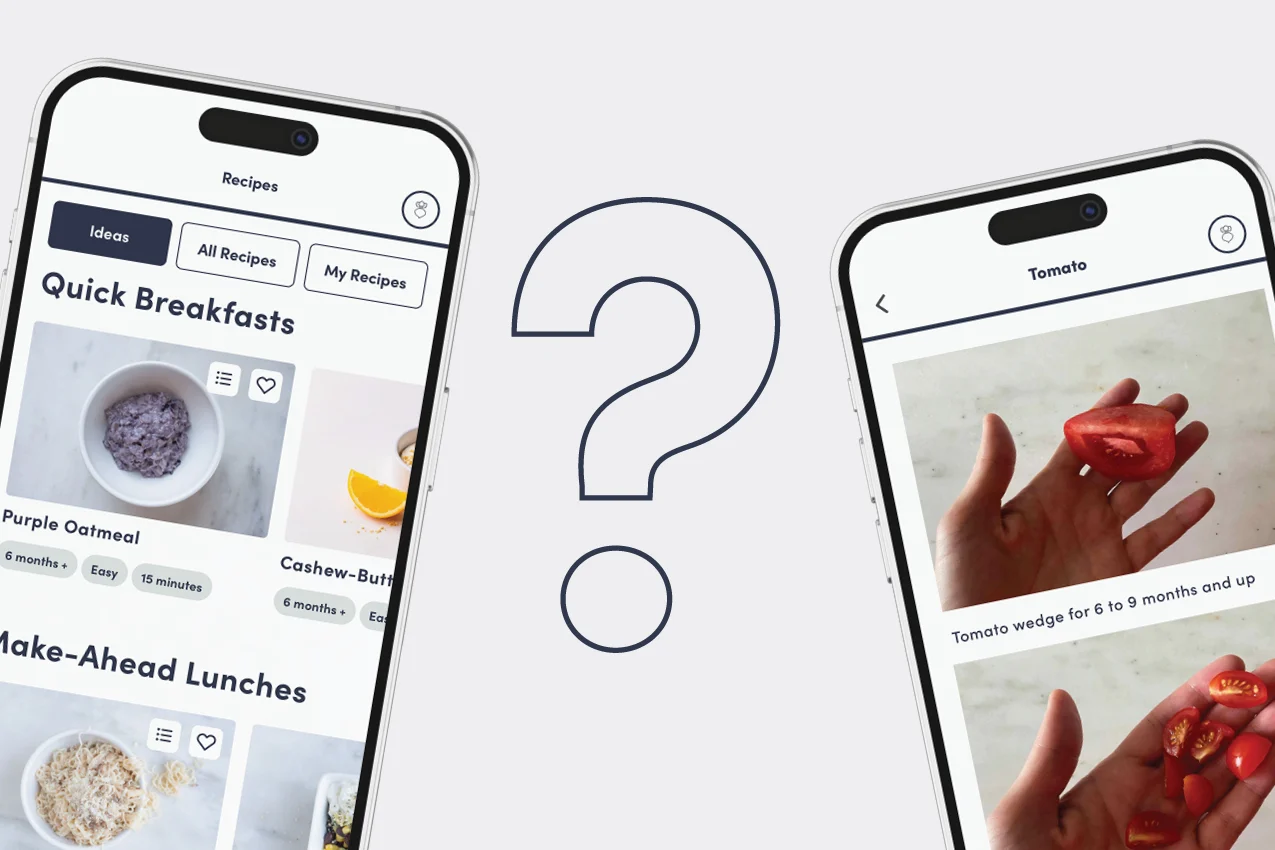
Download the Solid Starts App to look up any food in the First Foods® database. Suggestions are appropriate for all babies whether or not teeth have emerged. Remember: babies learn to chew by grinding, mashing, biting, and tearing food with their gums.
6 to 8 Months of Age
At this age, bigger shapes are safer. In general, cut and prepare foods so that they are:
large enough for baby to hold with bits sticking out above and below the fist
about the size of two adult fingers pressed together
Stick-shaped foods are easier for babies to pick up and munch on their own. Other large shapes work well, too, such as the heel of a crusty loaf of bread, a whole half of a peeled banana, or a very ripe peach. Any big shape works well at this age as long as baby can grab and hold it with one or two hands. Download the Solid Starts App to use the First Foods® database for suggestions on how to cut and prepare any food to minimize the risk of choking.
Babies can explore many different textures at this age.
Firm foods. Unbreakable stick-shaped food teethers are fantastic first foods for many reasons, such as their ability to advance self-feeding and chewing in a low-risk way.
Fibrous foods. Some foods like a whole asparagus spear or strip of cooked meat are resistive enough to hold their shape, but break down into bits as baby gnaws and sucks.
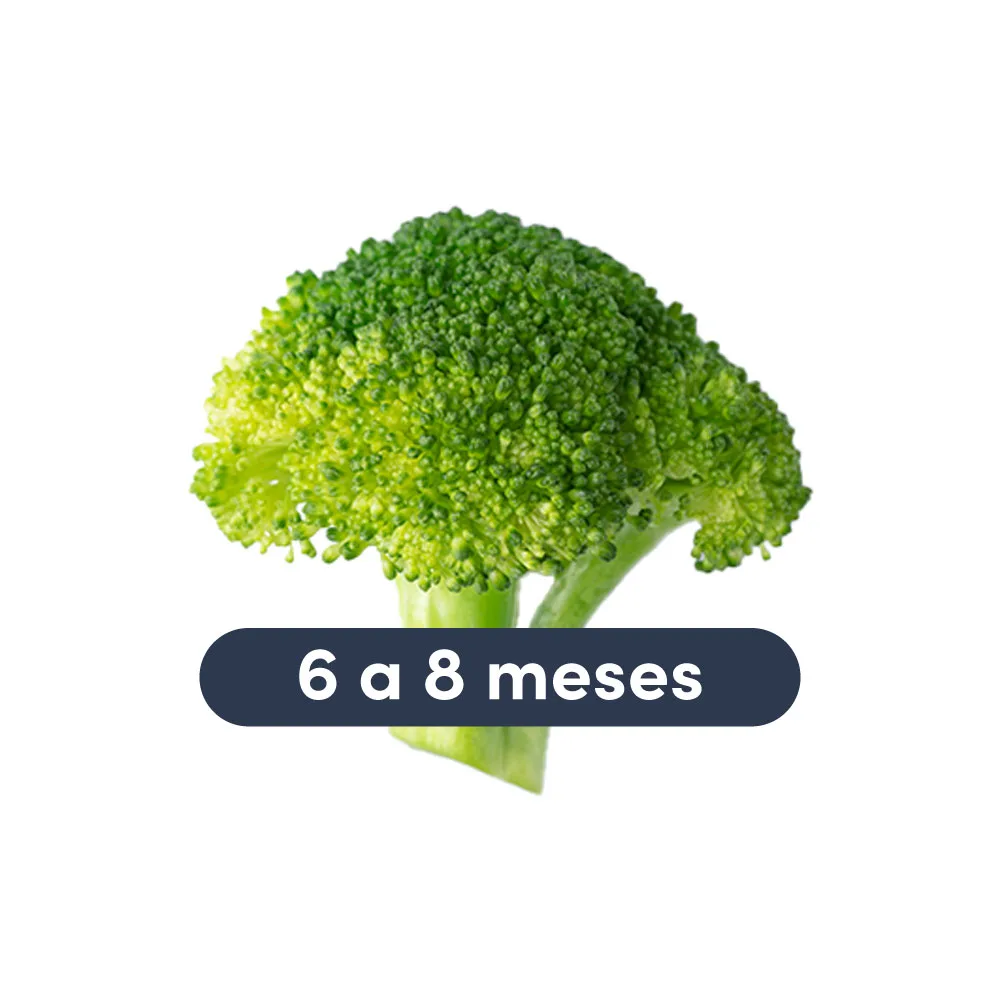
Soft finger foods. Cooked broccoli florets, mango spears, and strips of pancakes are examples of soft foods that baby can grab, hold, munch, and break down to swallow.
Soft scoopable foods. Mashes and purees are a great texture for baby to explore with hands or a spoon. That said, mashes and purees are not as strong at activating the chewing reflexes since they can mostly be sucked to swallow. In fact, these soft foods can be a challenging texture for young babies because they spread and stick in the mouth, which can lead to gagging. See our article, How to Help Baby Gagging on Solids, for more information.
After some practice with these foods, offer other textures that are more challenging to bite and move around in the mouth, such as crumbly foods or crunchy foods, as well as foods with mixed textures like cottage cheese, guacamole, or stews. The goal is for baby to learn how to chew and break down a wide variety of textures over time, not to modify all foods to be the same texture.
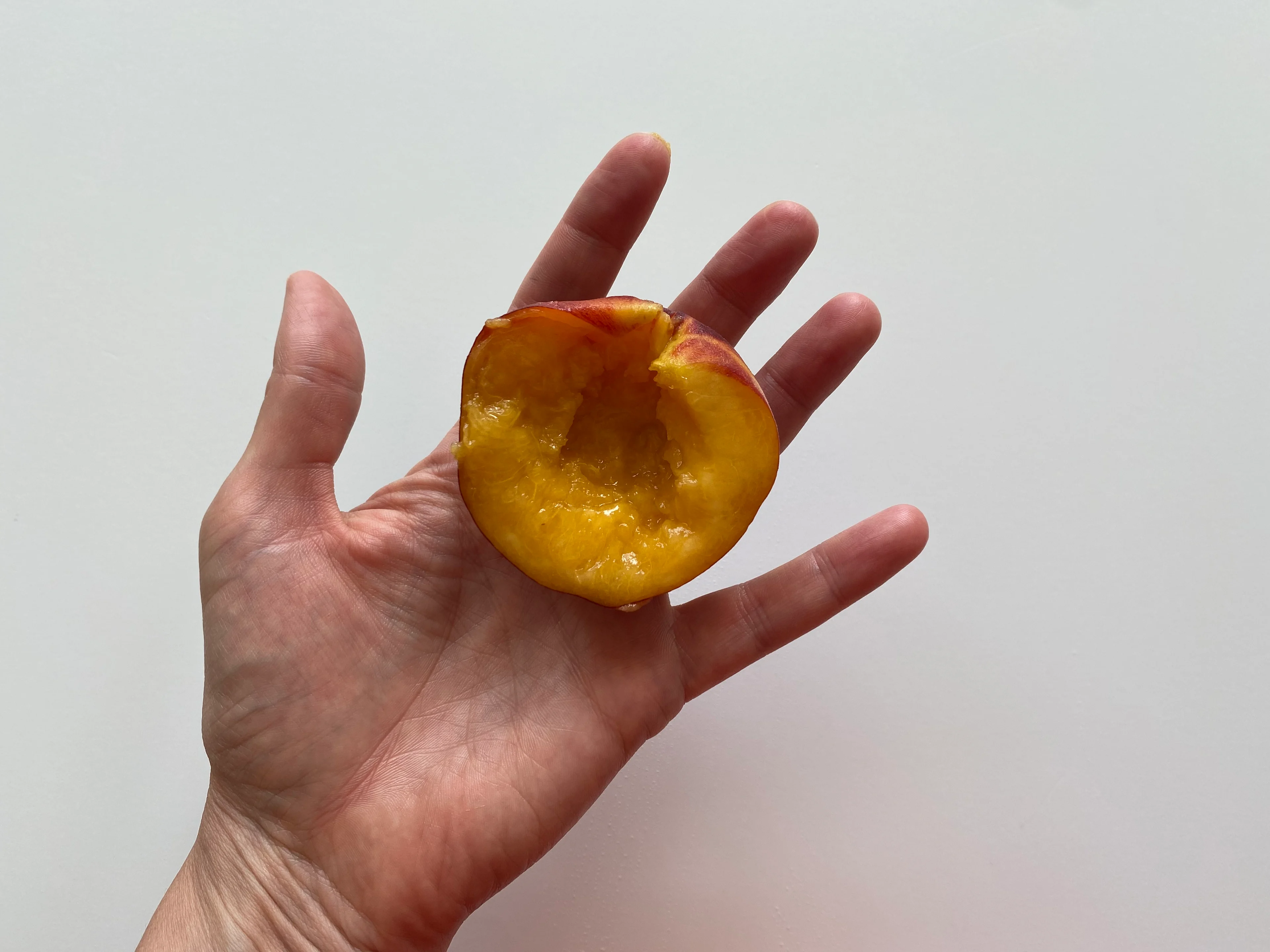
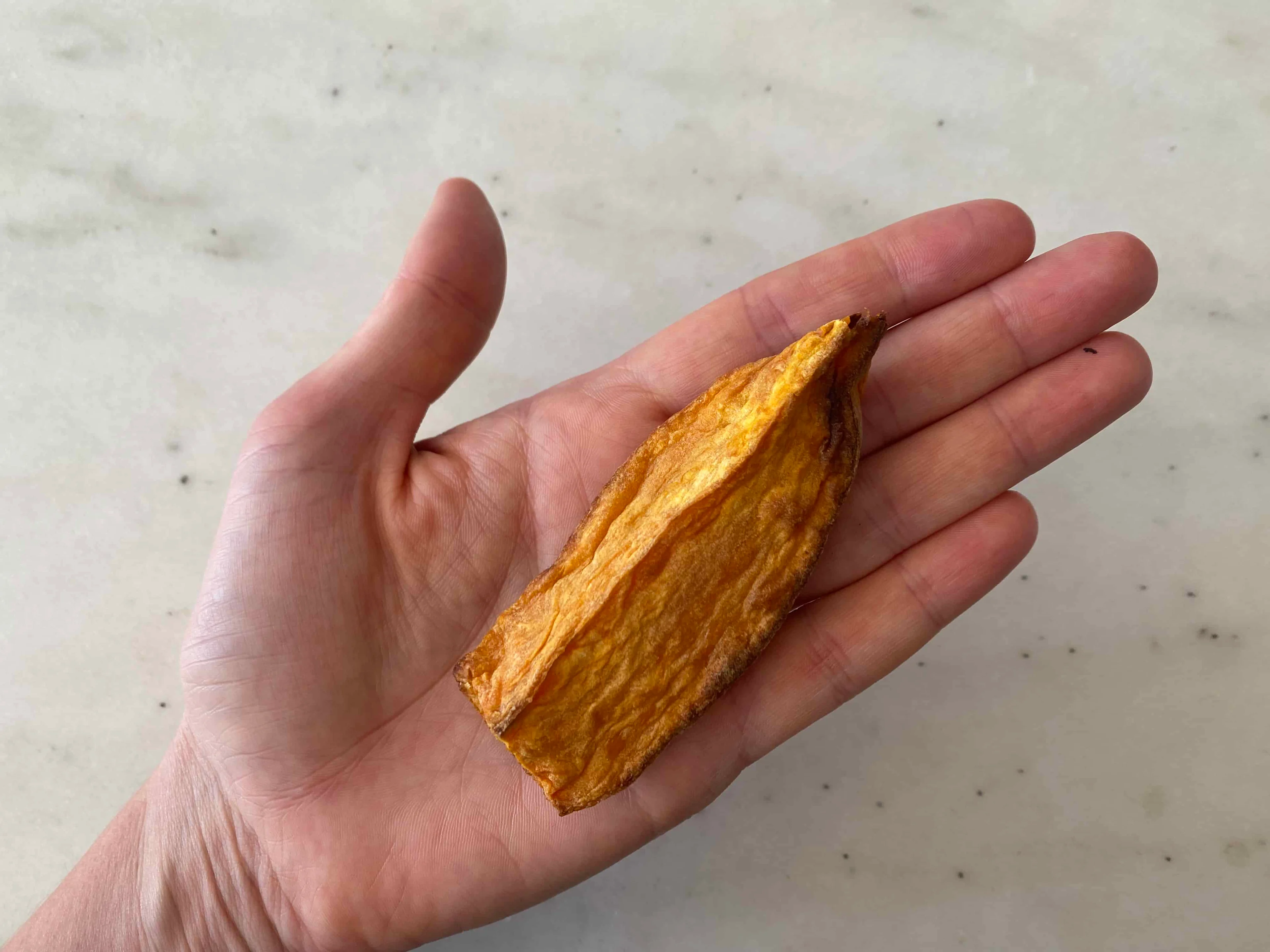
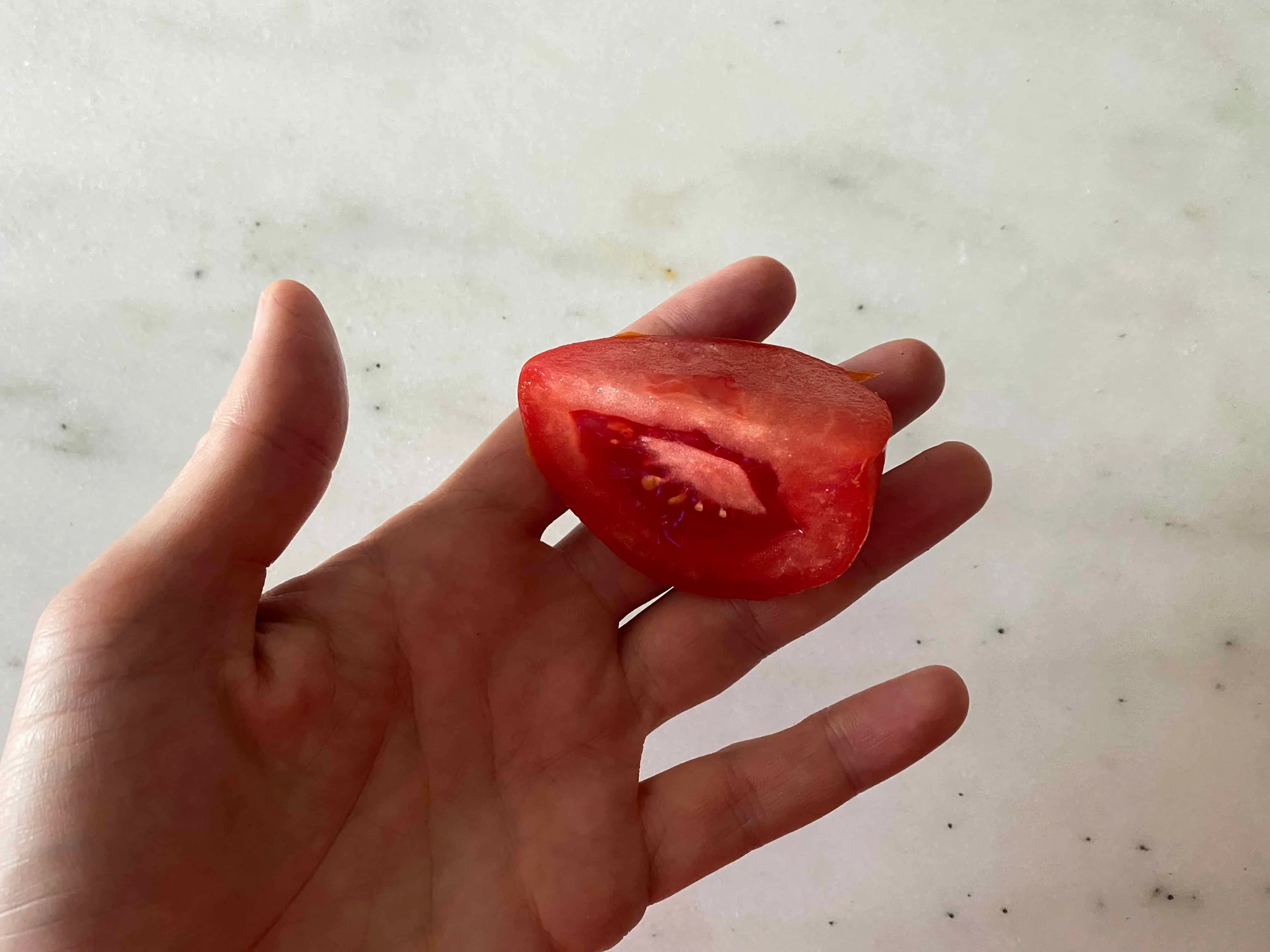
Won’t baby choke on a big piece of food?
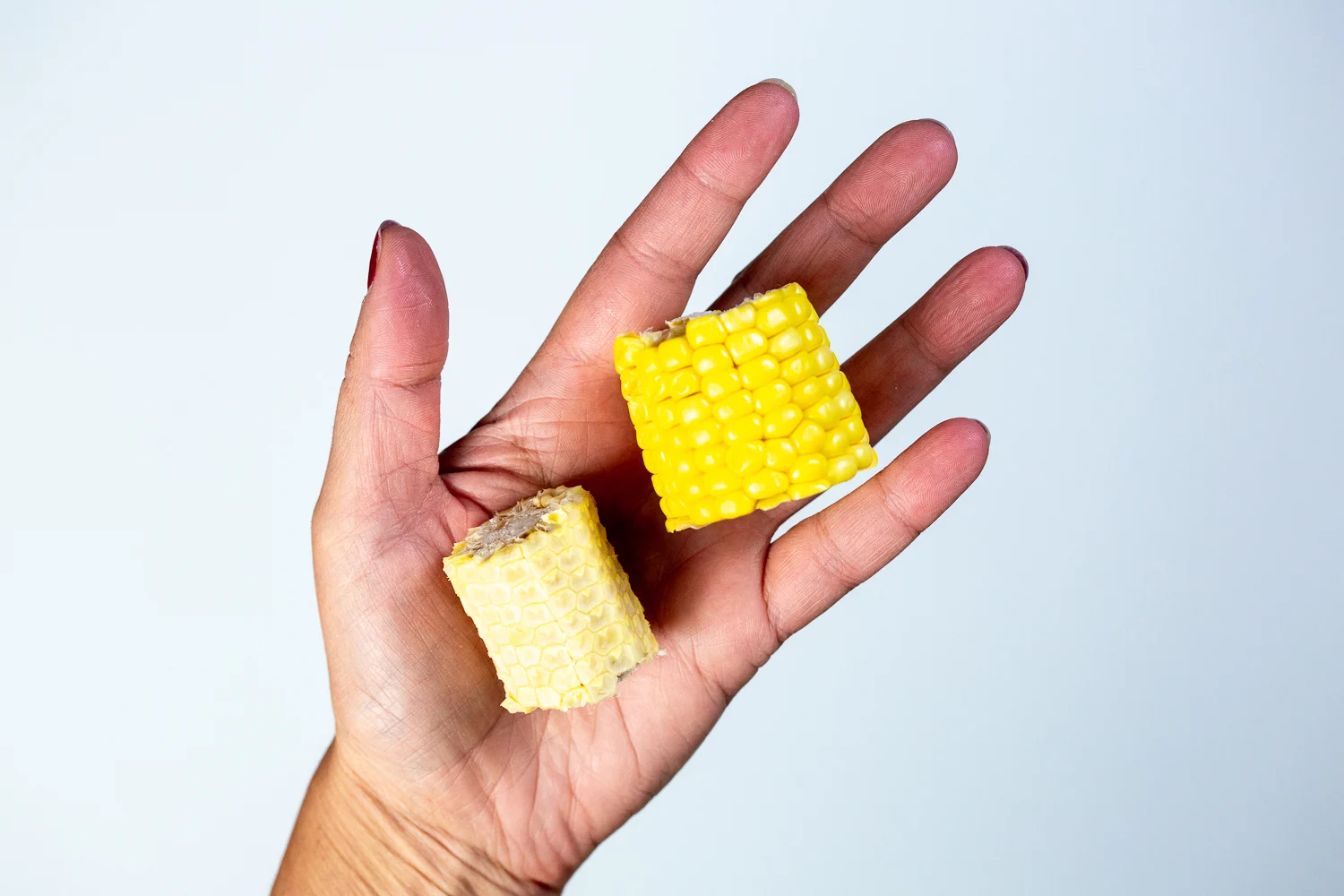
Contrary to popular belief, big pieces of food are not necessarily choking risks for several reasons. The size of a baby or child’s breathing tube is about ¼ inch (⅔ cm), and increases in size as baby grows.[6] Foods that could get stuck in that tube or form a sticky plug over the breathing tube are choking risks. Large pieces of food would not be able to fit into and plug the breathing tube. Learn more about why larger pieces of food are safer in our article, How Babies Learn to Chew.
What if baby takes a bite?
While it can be scary to watch, remember: baby has skills and protective reflexes to manage food in their mouth. When a baby takes a bite, the brain gets the message, “Hey, I’m supposed to chew.” Brain stem reflexes are triggered, and baby engages motor patterns to move the food around in the mouth—spitting out the food, swallowing it whole (and yes, this is generally okay!), or possibly gagging on it.[6] [7] You may be tempted to reach in and pull out the food, but don’t do it. Putting your fingers in baby’s mouth can increase the risk of choking by pushing the food back farther into the mouth and toward the throat, taking away baby’s control of the food. See our article, What to Do When Your Baby Takes a Big Bite for more guidance.
Can I give small pieces of food to baby at this age?
If you dice or finely chop food, it must be mixed into a scoopable food like yogurt or potatoes to be safe. Small pieces of food are too small for most 6- to 8-month-old babies to pick up on their own, and placing them in a baby’s mouth is not safe. Small pieces of food require the pincer grasp (the ability to pick up things with the tips of the pointer finger and thumb) which tends to emerge around 8 to 9 months of age.[8] As a result, babies at this age tend to quickly lose interest in a meal of small pieces of food that they cannot pick up and practice eating. In addition, diced, finely chopped, and mashed foods are more challenging for a 6- to 8-month-old baby to manage once the food is in the mouth, which leads to lots of gagging and spitting.
What if baby breaks a large piece of food into small pieces?
It’s okay. If baby breaks apart food with their hands, leave pieces on the table or tray, and let baby explore them. If a baby has the skill to pick up the pieces, this is a sign that baby has developed the pincer grasp and it is safe for baby to practice eating these foods. If they have not yet developed a pincer grasp, they will struggle to pick up small pieces of food, which means they are not able to bring these smaller pieces to their mouth. If you are ever nervous or worried, or baby appears frustrated with inability to pick these smaller pieces up, remove those pieces of food from the table or tray.
9 to 11 Months of Age
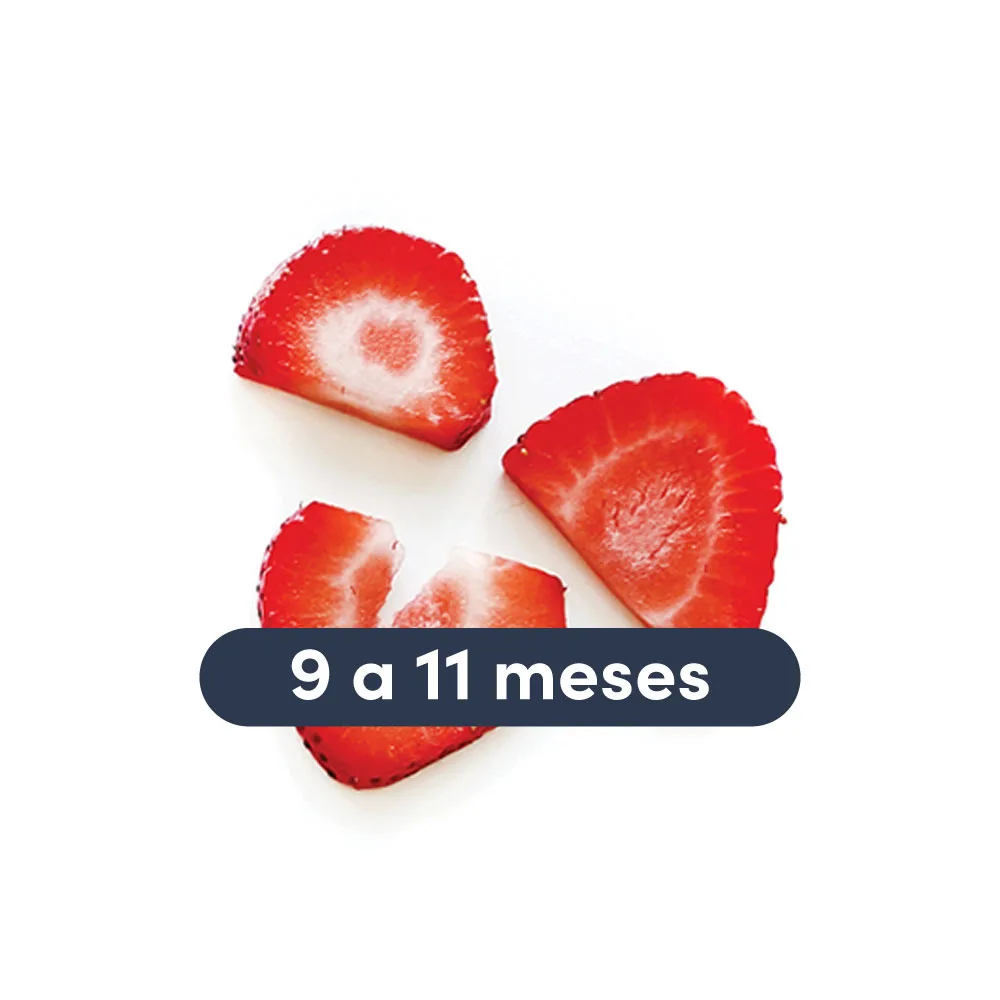
Around 9 months of age, babies develop the pincer grasp, the ability to pick up things with the tips of the pointer finger and thumb. To encourage practice with the pincer grasp, cut and prepare foods in smaller sizes for baby, such as:
bite-sized pieces
shreds
very thin slices
Download the Solid Starts App to look up any food in the First Foods® database.
Keep offering different textures for babies to explore at this age like soft finger foods and scoopable foods like bean dip, noodles, porridges, and stews. You can also continue to offer food teethers and larger pieces of fibrous food for biting and tearing practice. If you haven’t already started, consider introducing the following textures to promote chewing skills:
Crumbly foods like a soft meatball tend to break apart into pieces in the mouth. This lets baby practice using the tongue to bring the pieces together into a ball to swallow.
Crunchy foods like cucumber encourage biting and using the tongue to move the bite-sized pieces to the sides of the mouth where the gums can break them down.
Loose grains like rice that spread on the tongue, which require coordinated tongue movement to form the pieces into a ball before swallowing.
Lumpy foods like egg salad are a new sensory challenge for the brain as they feel different in the mouth and teach baby how to manage a mix of textures at once.
It is common for babies to stuff food in their mouths as they gain more confidence in their ability to pick up food and bring it to their mouth. See our article, When Baby Stuffs Food in the Mouth for tips on how to navigate this behavior.
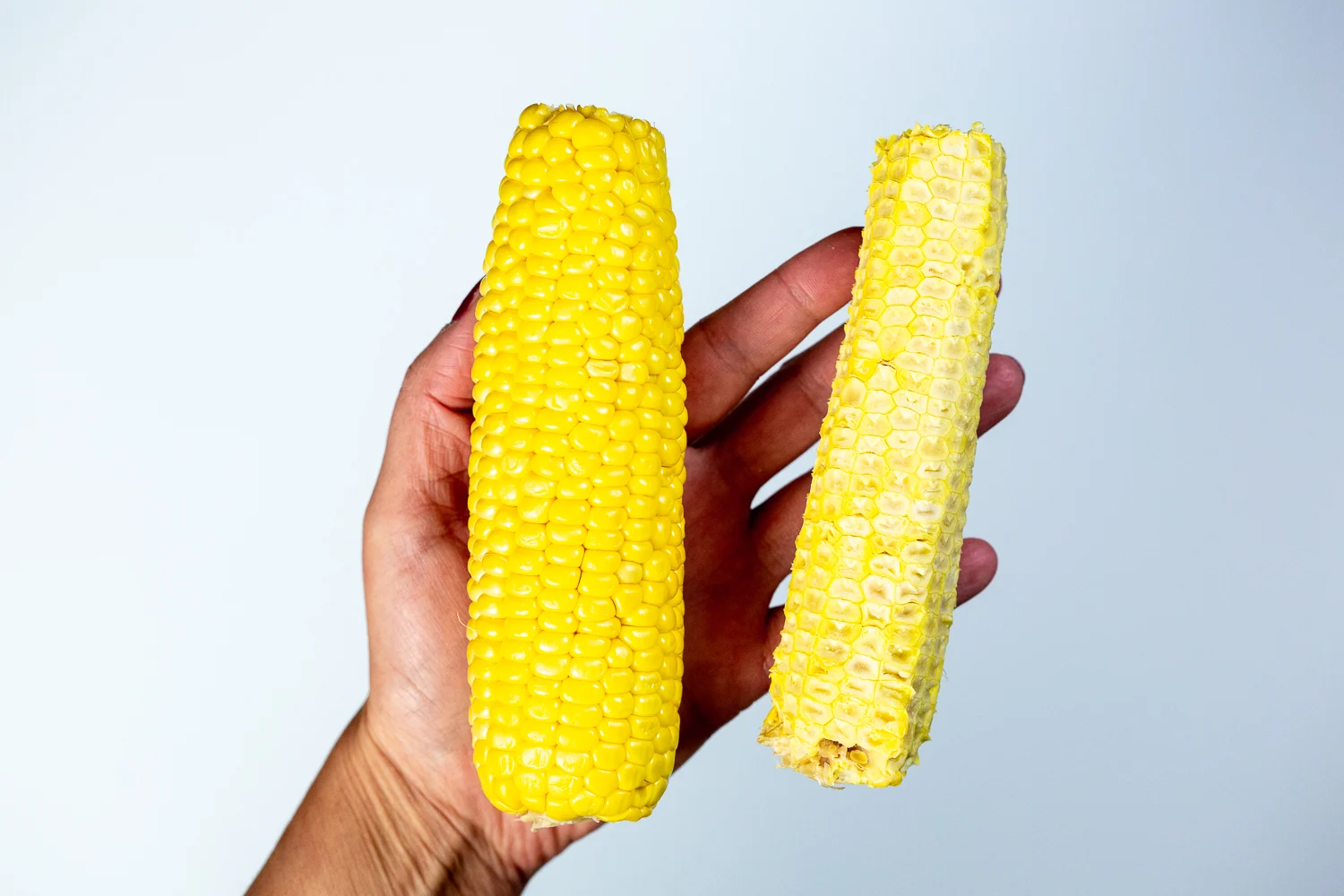
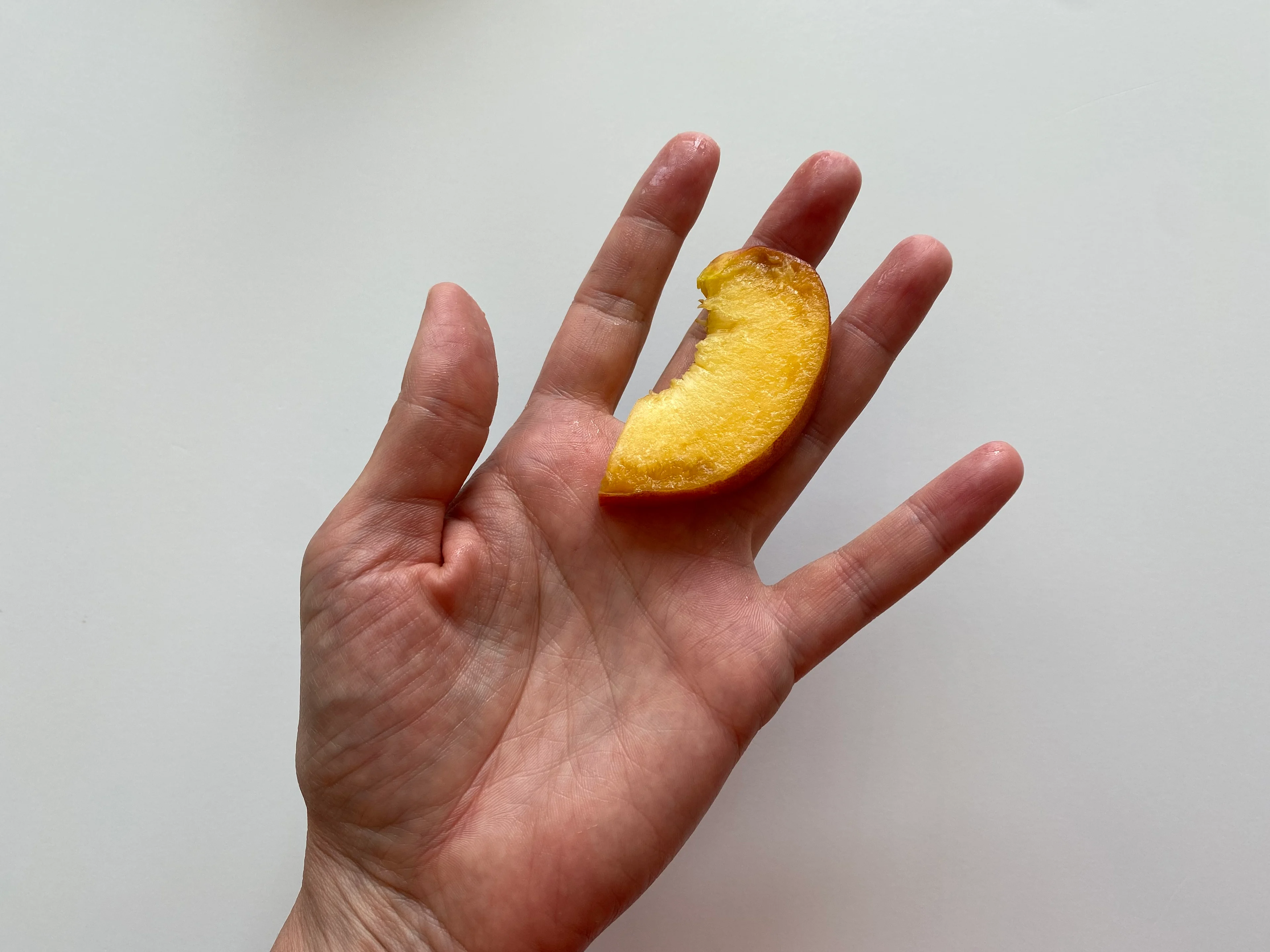
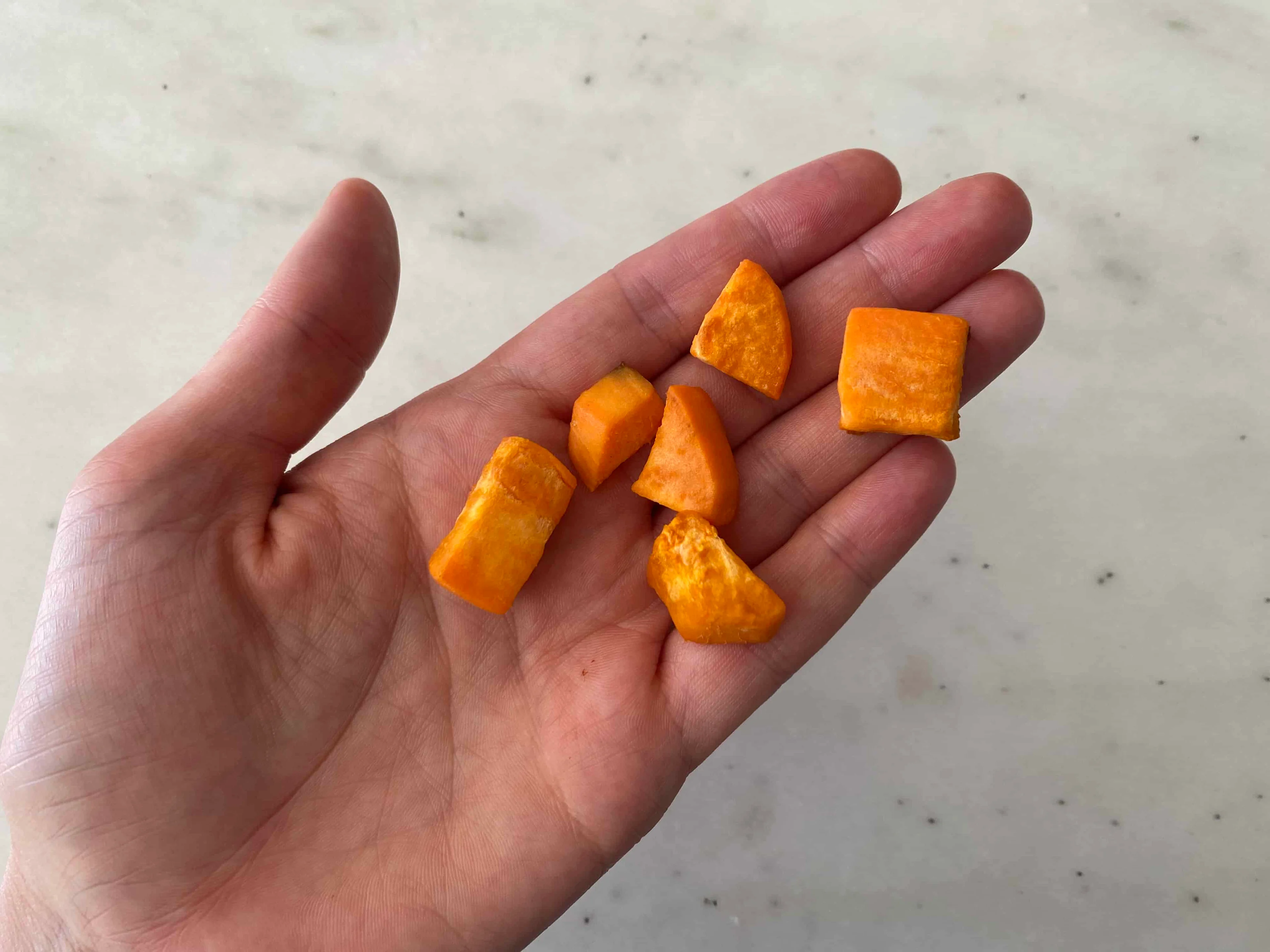
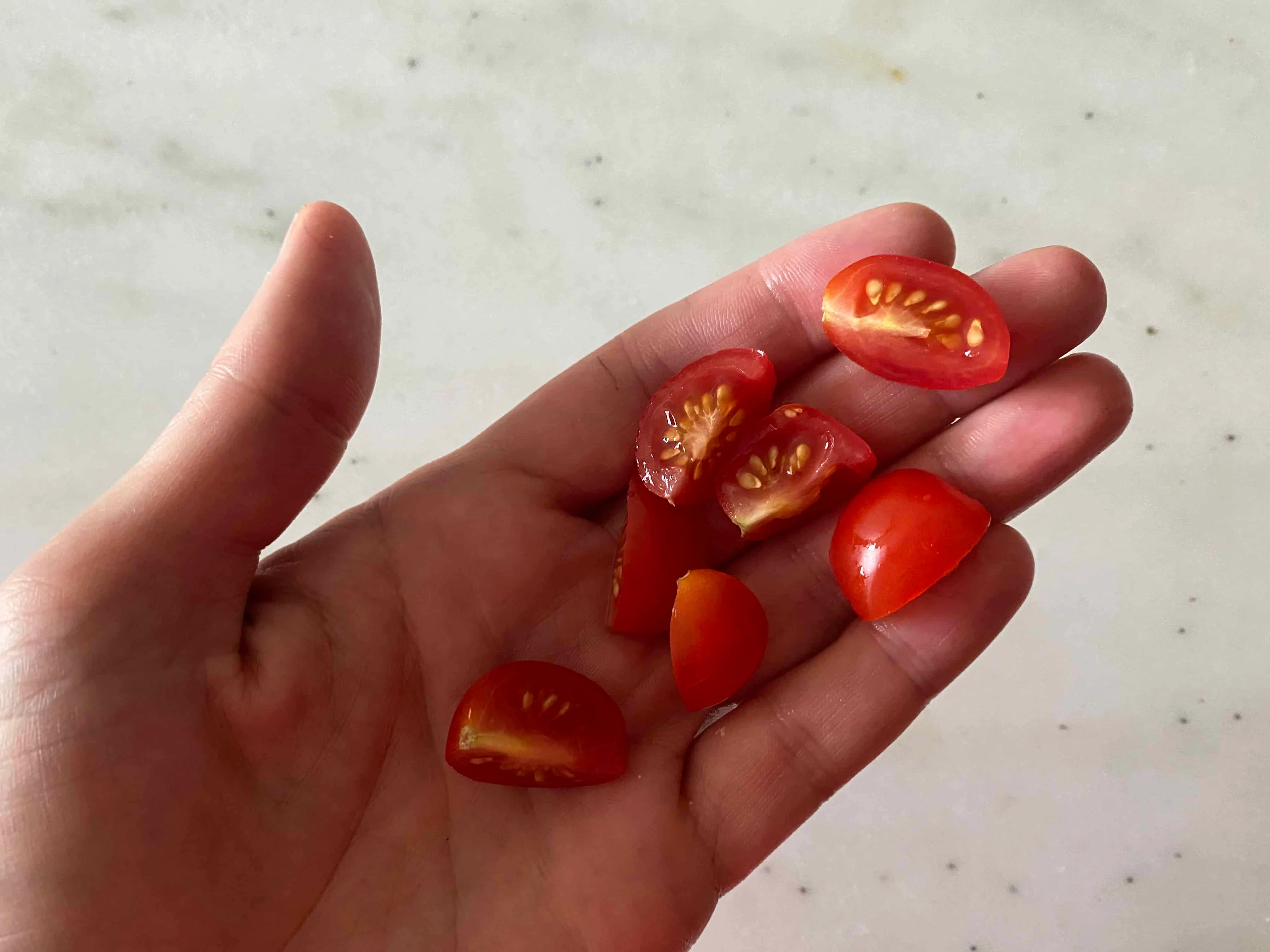
Why is it suddenly safe for baby to eat smaller pieces at this age?
The research is clear that the risk of choking is lower when a person feeds themselves, and around 9 months of age, babies develop the skill to pick up and put smaller pieces of food in their mouth with the pincer grasp.[1] [2] [3] [4] [5] [8]
Once they place a smaller piece of food in their mouth, most babies at this age are able to quickly figure out how to move it around with the tongue, especially if they have been practicing with bigger pieces of food up until this time. It’s not uncommon to see tons of spitting and gagging as baby figures this out. But the act of bringing the food to their own mouth is what makes this size of food safe at this age.
When 9- to 11-month-old babies are new to chewable foods, it may take them some time to develop the tongue coordination to move around and swallow smaller pieces of food. See our guide, Purees to Finger Foods for strategies and guidance.
What developmental signs am I looking for? Is it just pincer grasp?
Generally speaking, you are looking for a pincer grasp, which indicates that baby is ready to practice picking up and eating smaller pieces of food.
What should I offer if baby has only had purees up until now?
At first, start with food teethers or larger pieces of soft finger food. This way, baby can practice chewing in a low-risk way before you move down to bite-sized pieces. While you can offer bite-sized pieces, many babies struggle to move them around as they have not developed the tongue coordination to chew them just yet, causing gagging and spitting. For more on this transition, check out our guide, Purees to Finger Foods: How to Teach Baby to Feed Themselves.
Can I offer large pieces or do I have to stick to smaller pieces?
Yes, babies can still practice eating larger pieces of food at this age. These shapes are excellent for biting and tearing practice, and larger pierces of food help develop coordinated chewing skills. However, it is important to offer smaller pieces in addition to larger pieces of food. This way, baby can work on developing new and different skills. Smaller pieces of food also lead to more consumption, which helps teach baby how food can fill the belly.
12 to 17 Months of Age
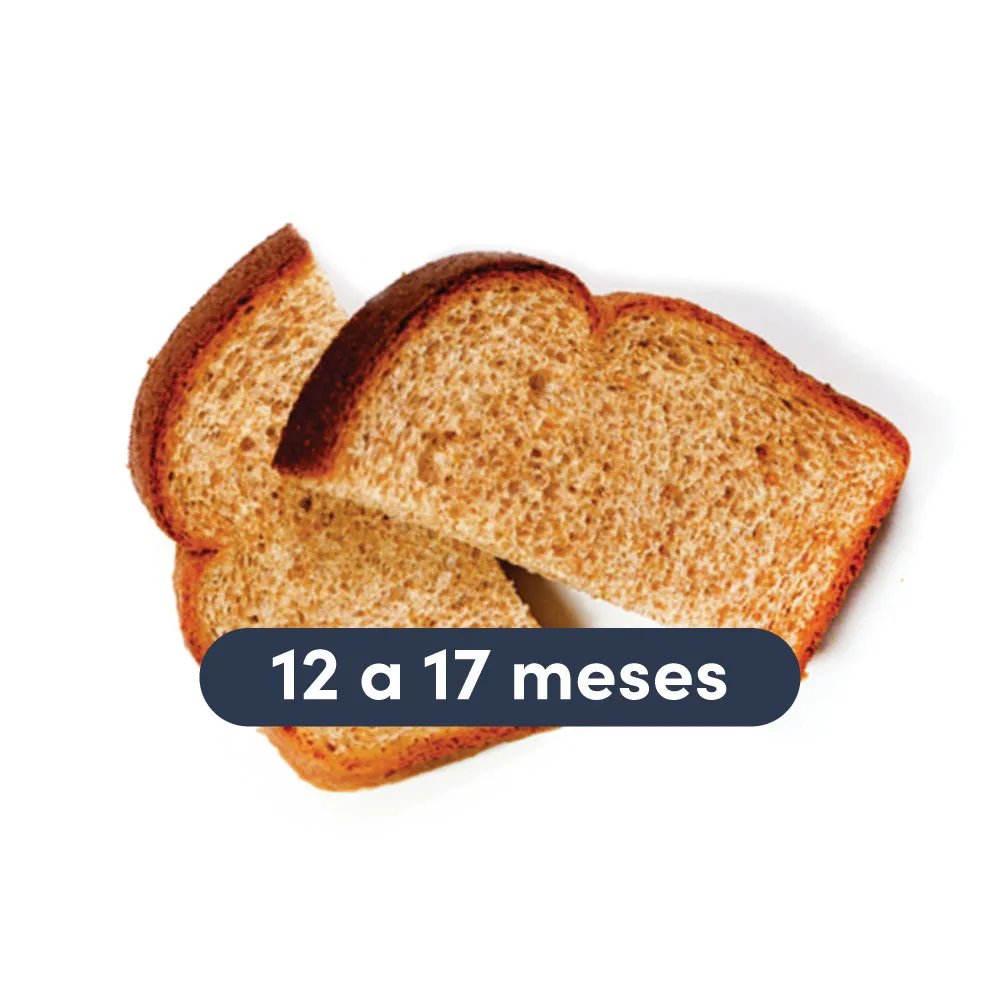
At this age, a child who has been practicing chewing solid foods for a few months is typically ready for foods that are:
soft and cut into small pieces alongside a utensil for practice
soft and large to encourage biting and tearing practice
thinly sliced or shredded if the food requires a lot of chewing, such as cooked meat
At this age, a toddler can likely eat what you eat with few modifications. However, the child may continue to spit out foods that aren’t thoroughly chewed or feel more difficult to manage. This is normal with more challenging foods like meat and skin-on foods like tomatoes. If this regularly happens, offer stick-shaped foods to help the child further “map” the mouth and develop more chewing coordination. Check out our article, Baby Spitting Out Food, for more guidance.
18 Months of Age and Up
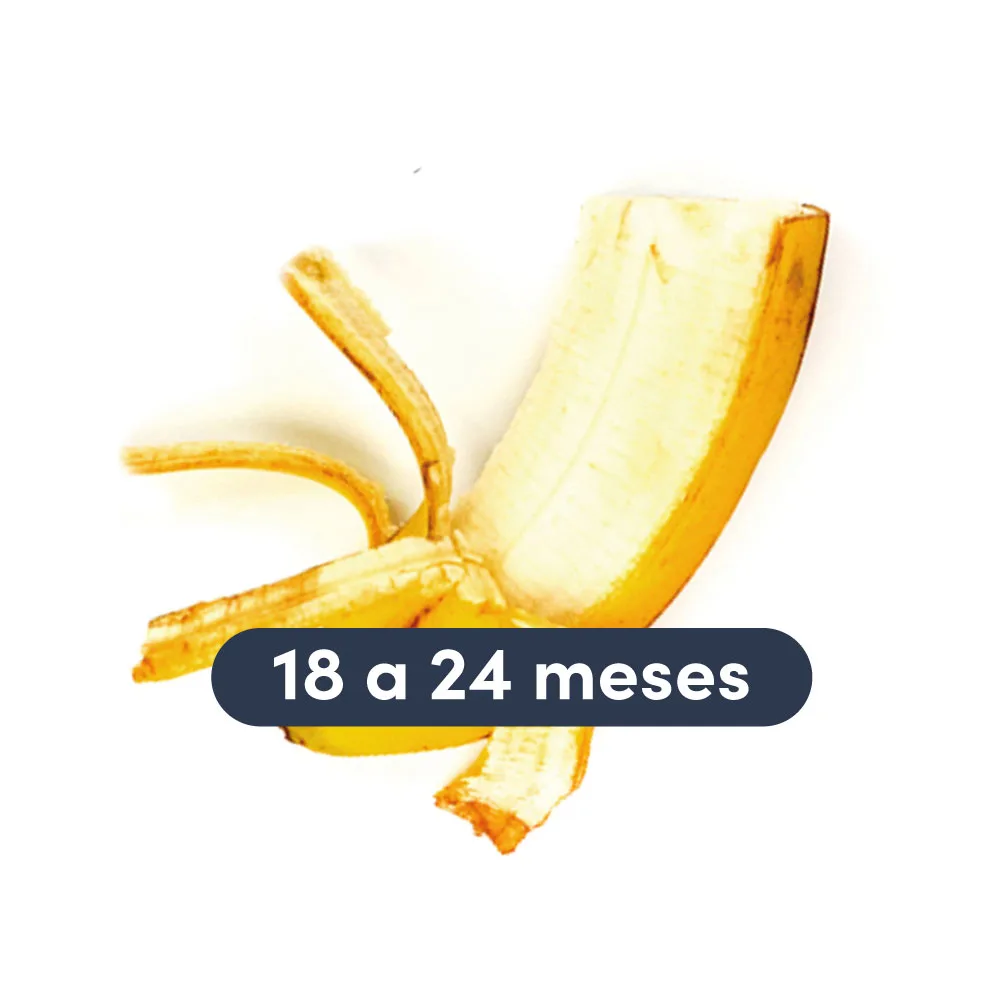
Toddlers who have consistently practiced eating a variety of food shapes, sizes, and textures are typically advanced eaters around 18 months of age. However, to minimize the risk, you should modify high-risk foods like popcorn, whole grapes, whole cherry tomatoes, and nuts until you are confident in your child’s ability to take accurate-sized bites, not overstuff their mouth, and chew thoroughly.
With high-risk foods, one of the best ways to keep a child safe is to teach the child how to safely eat these foods. This includes teaching the child to sit down when eating, how to take small bites, and how to manage these foods in the mouth, including spitting out food when necessary. See our guide, Teaching Children How to Safely Eat High-Risk Foods for details.
At this age, many toddlers are getting better at using utensils by themselves. Some toddlers may still need to practice, and they may benefit from you pre-loading the utensils for them. Keep in mind that it is normal for toddlers to toggle between feeding themselves with fingers and utensils, especially as a meal progresses or at the end of a very long day.
Written By
K. Grenawitzke, OTD, OTR/L, SCFES, IBCLC, CNT, Pediatric Feeding/Swallowing Specialist
J. Longbottom, MS, CCC-SLP, CLC, Pediatric Feeding/Swallowing Specialist
K. Rappaport, OTR/L, MS, SCFES, IBCLC, Pediatric Feeding/Swallowing Specialist
R. Ruiz, MD, CLC, FAAP. Pediatric Gastroenterologist
M. Suarez, MS, OTR/L, SWC, CLEC, Pediatric Feeding/Swallowing Specialist
Preguntas frecuentes
Yes. Babies do not need teeth to safely start solids. Babies chew by using their gums to mash food long before their molars (the teeth we use for chewing) emerge in toddlerhood.
You don’t need to change the way you cut or prepare foods for babies with teeth. Babies with teeth may be more likely to bite off small pieces of food. This is normal, and it’s actually a big part of how they learn. Biting off a piece of food teaches them how to manage the food in their mouth. Their oral motor reflexes help them break down those pieces to swallow or push those pieces out of their mouth if needed. Check out What to Do When Baby Takes a Big Bite to learn more.
We recommend starting with food teethers, such as a mango pit, a pineapple core, or corn on the cob. These long hard sticks of food are fantastic first foods for teaching babies to chew. Plus they do not easily break apart as baby munches. While any food can be a choking hazard, food teethers are safe and effective at teaching babies to chew in a low-risk way.
Cooked food should be firm enough to hold its shape when baby grabs it, yet soft enough to be easily mashed with their gums. To test for this texture: stick a fork in the food. If you feel a little pressure but the fork is able to easily pierce it, it is ready to offer to baby. If the fork causes the food to immediately fall apart baby’s hands will smush the food as they try to grab it.
Some families prefer to start with purees, then move on to mashed food and finger foods. That’s okay, but it is not necessary. You can introduce foods that need to be chewed as soon as baby is ready to start solids around 6 months of age. In fact, there are many benefits to offer food teethers and other foods that need to be chewed from the start.
We like to start with food teethers like a mango pit or corn on the cob, but there are lots of fantastic first foods. Choose foods that are big and colorful so they’re easy and enticing to grab, and full of flavor to wake up the senses in baby’s mouth. For example, you might try a big broccoli floret, a large wedge of roasted sweet potato, or a juicy strip of steak. You can look up any food in the First Foods database for suggestions on how to prepare the food by age.
Babies are ready to practice eating bite-sized pieces of food when they start to develop the ability to pick up food with their fingertips. Babies typically reach this milestone around 9 months of age. If you started with purees or you’re just getting started with solids at this age, it can help to start with a food teether or big pieces of food that are easy to bite and tear.
Gagging is normal and expected when babies are starting solids. Babies need lots of practice chewing different shapes and textures, and their gag reflex protects them from choking through this transition. If baby continues to gag on foods after a few weeks of practice, try offering food teethers, which can help soften a sensitive gag reflex. Learn more tips for how to help baby gagging on solids.