Egg Substitutions for Babies & Toddlers
Whether your child has an egg allergy, eats a plant-based diet, or you're simply out of eggs, there are plenty of ways to replace egg in cooking and baking. Our team breaks down what works, how much to use, and which substitute to reach for in each recipe.
Key Points
Don’t skip egg unless you have to
Egg is a common allergen that's best introduced early, by at least 6 months of age, and offered regularly to help prevent egg allergy from developing. Opt for a substitute because of an allergy, a plant-based diet, or because you’re out of eggs that day, not as a reason to skip introducing egg itself.
Try finding replacements for egg’s nutrition
Eggs are rich in protein, fat, choline, and other important nutrients for growing babies and toddlers, so if you need to avoid egg in baby’s meals, look for other foods that offer those nutrients and serve them as part of a varied diet.
Check for other allergens
These swaps contain no egg, so they're safe for a child with an egg allergy, but always check them for other allergens like soy, cow’s milk, or nuts and make sure those ingredients have been safely introduced.
Egg is one of the most widely consumed foods in the world—but it is also one of the most common food allergens in babies.[1] While 70% of children eventually outgrow egg allergy, many experience egg sensitivities or challenges with the texture of egg.[2] Whether you have an egg allergy on your hands, are raising a plant-based family, or are simply out of eggs in your kitchen, this article will help.
Reach for the swaps below when you're managing a diagnosed allergy, following a plant-based diet, or have just run out of eggs. But generally speaking, egg is best introduced early and offered regularly to help lower the chance of an allergy developing.
Keep in mind that an egg substitute is not a treatment for an egg allergy. If your child has a diagnosed egg allergy, follow your allergist's plan. While these swaps are safe for children with an egg allergy, check each one for other common allergens, like soy (tofu, soy lecithin), cow’s milk (yogurt), or peanut and tree nuts (nut and seed butters) and make sure these other common allergens have been safely introduced.
Finally, remember that these substitutes replace what egg does in a recipe, not everything egg offers nutritionally. Eggs are a great source of protein, fat, and choline, so if your family eats few or no eggs, aim to include other sources of these nutrients as part of baby’s regular diet.
How to choose an egg substitute
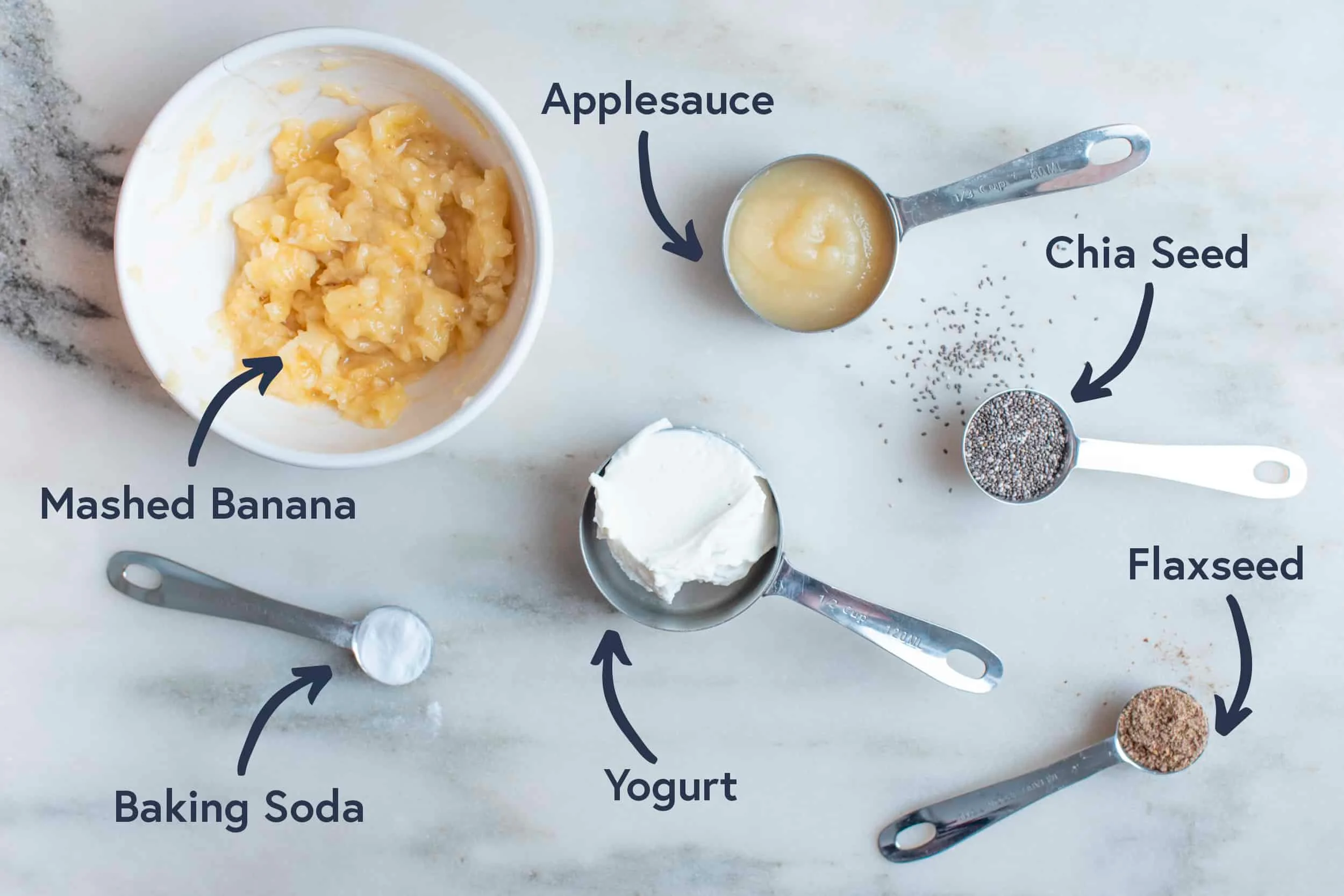
The best egg substitute depends on what you want to cook or bake. Many substitutes cover more than one of these functions, and some recipes need a combination:
To bind ingredients together (fritters, meatballs, veggie burgers, patties): aquafaba, arrowroot and other starchy powders, chia seed egg, chickpea flour, flaxseed egg, or a mashed starchy fruit or vegetable.
To help the food rise (cakes, fluffy pancakes, muffins): aquafaba, baking soda and vinegar, or carbonated water. Binders like chia, flax, applesauce, and starches do not help a baked good rise, so pair them with a leavening agent when you need lift.
To add moisture and tender texture (muffins, quick breads): applesauce and other fruit or vegetable purees, avocado, mashed banana, or yogurt. These are often low in fat, so add a little oil or butter for richness.
To help blend, thicken, or stabilize (mayonnaise, custard, sauces, dressings): agar, soy lecithin (for egg yolk), tofu, or xanthan gum.
To mimic the mouthfeel of eggy dishes (scrambles, frittata, quiche): tofu.
Egg substitutes at a glance
Egg substitute | Per 1 large egg | Best for | Allergen note |
|---|---|---|---|
Agar (and other plant-based gelatins) | 1 tbsp (5 g) powder + ¼ c (60 ml) boiling water | Stabilizing custards, puddings, sauces (not baked goods) | — |
Aquafaba (bean water) | 3 tbsp (45 ml) | Binding, leavening, whipping (meringue, mayo, fritters, muffins, pancakes) | — |
Applesauce (and other fruit/vegetable purees) | ¼ c (60 ml) | Binding + moisture in baked goods (no leavening) | — |
Arrowroot (and other starchy powders) | 2 tbsp (16 g) + 3 tbsp (45 ml) water | Binding + thickening (no leavening) | — |
Avocado | ¼ c (60 ml) mashed (¼ large hass) | Fat + moisture in muffins, quick breads, veggie burgers | — |
Baking soda + vinegar | 1 tsp (5 g) + 1 tbsp (15 ml) | Leavening, best in single-egg recipes | — |
Carbonated water | ¼ c (60 ml) | Leavening + moisture (cakes, pancakes, waffles, batters) | — |
Chia seed egg | 1 tbsp (10 g) + 3 tbsp (45 ml) water | Strong binder; limited leavening | — |
Chickpea flour/besan | 2 tbsp (12 g) + 2 tbsp (30 ml) water | Binding, thickening, egg wash, frittata | — |
Flaxseed egg | 1 tbsp (10 g) ground + 3 tbsp (45 ml) water | Binder; limited leavening | — |
Mashed banana (and other starchy fruits/veg) | ¼ c (60 ml) = 1 small ripe banana | Binding + moisture (no leavening) | — |
Peanut butter (and other nut/seed butters) | 3 tbsp (48 g) smooth | Moisture + richness (brownies, cookies, muffins) | Peanut, tree nut |
Soy lecithin | Yolk only: 1 tbsp (8 g) powder + 1 tbsp (15 ml) water | Emulsifying, thickening (mayo, dressing, ice cream) | Soy |
Tofu | Silken/soft: 1/3 c (71 g) pureed · Firm: ¼ c (50 g) crumbled | Mimicking eggy dishes; binding, moistening | Soy |
Xanthan gum | ¼ tsp (~½ g) + ¼ c (60 ml) liquid | Thickening, stabilizing sauces; binder in baking | — |
Yogurt | ¼ c (60 ml) | Moisture + tang (cakes, muffins, pancakes, waffles) | Cow’s milk |
Egg substitutes by recipe
If a recipe calls for egg to… | Try… |
|---|---|
Make an egg wash | When foods need to be dipped in egg wash before breading and frying, try aquafaba or chickpea flour. |
Hold together casseroles | For bread pudding, kugel, strata, and other baked casseroles, try silken tofu. |
Bind fritters and patties | Experiment with aquafaba, arrowroot powder, chia seed, chickpea flour, or flaxseed to bind the ingredients. |
Bind meatballs and meatloaf | Choose a binder like arrowroot powder, chia seed, chickpea flour, flaxseed, or a starchy fruit. |
Moisten muffins | Applesauce and mashed banana add moisture but lack fat, so use them with cooking oil. |
Fluff up pancakes | For American-style breakfast pancakes, add or increase baking powder for fluffy texture. |
Stand in for scrambled eggs | Scramble tofu with seasonings like onion powder and turmeric to mimic the color and taste of egg. |
Bind veggie burgers | Choose a binder like aquafaba, arrowroot powder, chia seed, chickpea flour, or flaxseed. |
Common egg substitutes and how to use them
Agar, carrageenan, and other plant-based gelatins
1 large egg = 1 tbsp (5 g) agar powder + ¼ c (60 ml) boiling water
Agar agar (also called simply “agar” or by its Japanese name, “kanten”) and carrageenan are plant-based alternatives to gelatin obtained from animal tissues. These plant-based gelatins consists of dried fiber-packed carbohydrates extracted from seaweed. The seaweed is processed into neutral-tasting flakes, powders, and strips that can be activated with boiling hot water. The result: a gelatinous goo that adds jelly-like texture and acts as a stabilizer in custards, puddings, and sauces.
How do I use agar as an egg substitute?
To begin, use the powdered form, which is easier to use than flakes or strips. Each type of plant-based gelatin has different strengths and functions, but generally speaking, 1 tbsp (5 g) of powder mixed with ¼ c (60 ml) of boiling water works as a substitute for 1 large egg. Whisk the powder into the boiling water, then switch to a spatula or spoon (to keep the activated gelatin from sticking to the whisk) and stir until the mixture is smooth, translucent, and gloopy. Let the mixture cool before using in a recipe.
Can babies have foods with carrageenan?
Yes, it is fine to offer with foods that contain carrageenan as part of a varied diet. Most research showing negative impacts of carrageenan were using carrageenan in amounts that were much greater than what most people would eat in their daily diets. That said, it is completely fine to choose other egg substitutes if you’d like to.
What are recipe ideas for using plant-based gelatins as an egg substitute?
Plant-based gelatins work beautifully as stabilizers in recipes for dishes with a smooth, jellied mouthfeel. For example, try agar in savory sauces like aioli, hollandaise, cashew cheese, or mayonnaise—or go sweet with agar in custard, ice cream, jam, jell-o, or whipped cream. When using plant-based gelatins in dishes with lots of acidity (like chocolate pudding, lemony mayonnaise, or strawberry curd) try increasing the amount of agar to strengthen the stabilizing effect against the acid. Plant-based gelatins are not a great substitute for egg in many baked goods because the activated powder adds gelatinous texture.
★ How to store plant-based gelatins
Once activated, agar and carrageenan must be used right away. Store the deactivated dried powder in an airtight container in a cool, dry place for 1 year.
Applesauce and other fruit and vegetable sauces
1 large egg = ¼ c (60 ml) applesauce
For baked goods and savory foods whose ingredients need help sticking together, try applesauce—or any fruit or vegetable puree for that matter… you can use blended beet, pear sauce, pureed guava, or any viscous fruit sauce or vegetable puree. These egg substitutes have multiple purposes: not only do they contain proteins that bind foods, but their juiciness adds moisture and flavor to the finished dish. Fruit and vegetable sauces offer carbohydrates, fiber, and fluid, as well as vitamins and minerals. Since they are often low in protein and fat, add oil or butter to your dish to add richness and a tender texture.
How do I use applesauce as an egg substitute?
Swap ¼ c (60 ml) of sauce for 1 large egg in a recipe. Keep in mind that fruit and vegetable sauce works as a binder, but it does not make foods rise. When baking, ensure that there are leavening ingredients in the recipe, such as aquafaba, baking powder, or baking soda and vinegar. You may also increase the amount of leavening agent to account for the lack of rise that the egg would have offered. Finally, remember that fruit and vegetable sauce contains more moisture than egg, which means it can easily create a gooey, denser texture in baked goods.
Should I buy applesauce or make it homemade?
Both homemade and store-bought sauce work as egg substitutes. In terms of their function as a binder in the finished dish, it also does not matter if the sauce is flavored or sweetened, though of course, the taste of the sauce has an impact.
What are recipe ideas for using applesauce as an egg substitute?
Use applesauce as an egg substitute to bind and sweeten fritters, meatballs, or veggie burgers. To keep foods on the savory side, consider swapping applesauce for pureed beet, mashed squash, or other fruit or vegetable purees to cut back on sweet apple flavor. For older babies and toddlers, use applesauce in moist baked goods like muffins, quick bread, pancakes, and smash cakes.
★ How to store applesauce
Once a jar of applesauce is opened, store it with the cover screwed on tight in the refrigerator for 3 weeks or in the freezer for 2 months.
Aquafaba (bean water)
1 large egg = 3 tbsp (45 ml) aquafaba
Aquafaba is the thick, viscous liquid leftover from cooking chickpeas—or any legume for that matter. Aquafaba works as an egg substitute because it mimics multiple functions of egg. First, it contains protein and starch that help bind, emulsify, and thicken foods. Aquafaba also offers some leavening power, which helps muffins, pancakes, and other fluffy baked goods to rise. Naturally, fresh aquafaba smells and tastes of beans, but as it cooks or bakes in a dish, the flavor mellows, becoming faint and nearly indistinguishable in most recipes.
Is it okay to use aquafaba in foods for babies?
Yes. You can use aquafaba from canned chickpeas or, alternatively, make aquafaba from scratch by cooking dried chickpeas in water (no added salt) and using the cooking water after the legumes are done. If you would like to experiment with aquafaba made from other types of beans and legumes, use the First Foods Database to review nutrition, allergen information, and other key points about the specific types.
How do I use aquafaba as an egg substitute?
Measure 3 tbsp (45 ml) for each egg called for in the recipe. From there, consider the function of egg in your recipe. If aquafaba needs to bind foods (like fritters, meatballs, or pancakes) or to emulsify foods (like mayonnaise, salad dressing, or sauce), whisk the liquid until it is frothy, then proceed with the recipe. If aquafaba needs to thicken foods (like custards, frosting, ice cream, and puddings), use an electronic mixer to whip aquafaba until the mixture develops soft peaks, which can take 10 minutes. Adding a small amount of an acidic powder like cream of tartar can help stabilize the whipped aquafaba, slowing the loss of moisture and volume.
Does it matter if the aquafaba comes from homemade or canned beans?
No—both work as egg substitutes, however, texture is important. Aquafaba needs to be thick and viscous to work as an egg substitute. Often homemade aquafaba is very loose from cooking legumes in lots of water. This can be remedied by simply simmering the aquafaba on low until the liquid reduces and develops a gloopy consistency, then cool before proceeding with the recipe.
What are recipe ideas for using aquafaba as an egg substitute?
Aquafaba is a great substitute for egg-free aioli or mayonnaise. It also works as a binder and leavening agent in fritters, muffins, and pancakes. You can mix aquafaba into bean patties, fish cakes, fritters, meatballs, and veggie burgers to help the ingredients stick together. Or whip aquafaba until thick and creamy so you can use it to frost smash cakes for baby.
★ How to store aquafaba
Aquafaba keeps in an airtight container in the refrigerator for 3 days or in the freezer for 2 months. When freezing, portion aquafaba into small containers. This way, rather than defrosting a big batch, you’ll have easy access to small portions when you need a substitute for just one or two eggs.
Arrowroot powder, cornstarch, and other starchy powders
1 large egg = 2 tbsp (16 g) arrowroot powder + 3 tbsp (45 ml) of water
Mixing water with a powder made of dried, ground-up starchy vegetables creates a sticky slurry that mimics the binding and thickening functions of egg. These powders also have the benefit of a neutral flavor, unlike other popular starchy egg substitutes, like mashed banana. Cornstarch and potato starch are widely available options, and increasingly grocers sell starches made from other starchy vegetables like arrowroot, cassava (tapioca), kudzu, and taro.
Is it okay to use arrowroot powder in foods for babies?
Yes. Arrowroot offers starch and fiber to recipes. Use the First Foods Database to review nutrition, allergen information, and other key points about cassava, corn, potato, and other starchy vegetables used to make powder.
How do I use arrowroot powder as an egg substitute?
Stir 2 tbsp (16 g) of arrowroot powder (or the starchy powder of your choice) with 3 tbsp (45 ml) of water to create a slurry, then proceed with the recipe. Avoid adding starchy powder directly to broth, stock, or a wet batter because it tends to clump. If you are using powder to thicken soups and stews, create the slurry with broth from the pot instead of water.
What are recipe ideas for using arrowroot powder as an egg substitute?
Starchy powders work best in bean balls, fish cakes, fritters, meatballs, pancakes, sauces, and veggie burgers. For baked goods, use starchy powders to bind cakes, muffins, and quick breads. Keep in mind that these starches do not offer leavening power. If you need a baked good to rise, pair starchy powder with a leavening ingredient, such as aquafaba, baking powder, baking soda and vinegar, or carbonated water.
★ How to store starchy powders
Once a container of starchy powder is opened, store it in an airtight container in a cool, dry place for 1 year.
Avocado
1 large egg = ¼ c (60 ml) mashed avocado = ¼ large hass avocado
What do avocado and egg have in common? Aside from their oval shape, they are full of omega-3 fatty acids and other healthy fats that fuel brain development and provide energy for play and exploration. This fat moistens foods and softens texture. Avocado and egg also act as binders, but in different ways. While eggs bind foods with protein, avocado has soluble fiber to help foods stick together—and ease baby’s constipation, too.
How do I use avocado as an egg substitute?
Swap ¼ c (60 ml) of the mashed avocado for 1 large egg in recipes. One large ripe Hass avocado yields approximately 1 c (240 ml) of mashed avocado.
Does it matter if the avocado is ripe?
Yes. Super-soft ripe avocado adds more moisture and creamy texture, while super-hard unripe avocado contains more starch, which can offer a stronger binding effect. For avocado to function as an egg substitute in most recipes, the sweet spot is somewhere in between. Choose avocados that are still a bit firm with a slight yield when gently squeezed in your palm.
What are recipe ideas for using avocado as an egg substitute?
Use avocado to add fat and moisture in muffins, quick breads, and veggie burgers. For toddlers and older children, experiment with using avocado in sweeter recipes, like custard, ice cream, and pudding, and dishes with fudgy, velvety texture, like brownies and cookies. Keep in mind visual impact: its color dulls to grey as avocado meets air.
★ How to store avocado
Keep whole avocado at room temperature until ripe, then store in the refrigerator for 4 days. Once cut, avocado keeps in its skin in the fridge for 3 days. No need to wrap in plastic if the halved fruit is intact in its peel. For peeled and mashed avocado, store in an airtight container in the refrigerator for 3 days. Note that mashed avocado darkens as the fruit is exposed to air, and the color may impact the appearance of a dish.
Baking soda and vinegar
1 large egg = 1 tsp (5 g) baking soda + 1 tbsp (15 ml) vinegar
Mixing baking soda and vinegar produces a chemical reaction that creates a volcanic eruption of tiny bubbles filled with carbon dioxide. When this mixture is used in batters and doughs as an egg substitute, the chemical reaction helps foods expand and rise. Apple cider vinegar and white vinegar have relatively neutral flavors that work well in this egg substitute, or you can try mixing baking soda with a different acidic liquid like buttermilk, lemon juice, or yogurt.
Is it okay to use baking soda and vinegar in foods for babies?
Yes. Food containing baking powder, baking soda, or vinegar may be introduced as soon as baby is ready to start solids, which is generally around 6 months of age. While baking soda and powder have sodium, they may be safely used in baking and cooking to share with baby because the amount used is generally small. Use the First Foods Database to review nutrition, allergen information, and other key points about vinegar.
How do I use baking soda and vinegar as an egg substitute?
Stir 1 tsp (5 g) of baking soda with 1 tbsp (15 ml) of vinegar, then immediately stir the mixture into the batter. Do not wait—the mixture loses its leavening power over time.
What are recipe ideas for using baking soda and vinegar as an egg substitute?
Use this combination to create light, fluffy texture in fritters and pancakes, as well as baked goods like cakes, muffins, and quick breads. Baking soda and vinegar works best in recipes that call for only one egg because increasing the baking soda and vinegar combination can make the finished dish taste too acidic.
★ How to store baking soda and vinegar
Once activated, baking soda and vinegar must be used right away. Store deactivated ingredients separately in an airtight container in a cool, dry place for 1 year.
Carbonated water (club soda, seltzer water, sparkling water)
1 large egg = ¼ c (60 ml) carbonated water
Want fluffy texture and moisture in cakes, pancakes, and waffles? Carbonated water may be for you! Adding carbonation to batter mimics the way egg provides structure. And because it is clear and flavorless, carbonated water is a great choice when the color and taste of other ingredients need to shine. Here’s how it works: the water is infused with dissolved carbon dioxide, so when batters and doughs are exposed to heat, the tiny bubbles of gas try to escape, creating airy pockets of moisture that tenderize the finished dish. Recipes using carbonated water may benefit from added oil or butter to add richness and a tender texture.
How do I use carbonated water as an egg substitute?
Measure ¼ c (60 ml) of carbonated water for 1 large egg, then proceed with the recipe. Use batters and doughs with carbonated water shortly after mixing. This way, you take advantage of the leavening in the carbonated water, which loses its potency as the carbon dioxide dissipates. Some carbonated waters are infused with minerals that lower the pH of the liquid, and this extra acidity can help baked goods rise when they contain leavening agents like baking powder or baking soda.
What are recipe ideas for using carbonated water as an egg substitute?
Use carbonated water in light, fluffy baked goods like cakes, crepes, muffins, pancakes, and waffles. It is also a great substitute for egg in batters for fried chicken, fish, and tempura.
★ How to store carbonated water
Unopened containers of carbonated water keep in an airtight container at room temperature for 9 months. Once opened, the carbon dioxide in the water begins to dissipate, so when using carbonated water as an egg substitute, start with a fresh, unopened container and incorporate it into the recipe shortly after opening. The bubblier the carbonated water, the better the result.
Chia seed egg
1 large egg = 1 tbsp (10 g) chia seed + 3 tbsp (45 ml) water
Chia seed is an excellent egg substitute that is rich in protein and fat, similar to eggs. When the tiny seeds are exposed to water, the natural soluble fibers in chia seeds become gelatinous—an excellent texture to bind ingredients in baked goods and other foods. Chia seed egg actually offers more viscosity than applesauce, flaxseed egg, mashed banana, and other popular egg substitutes, which means it has a stronger binding effect.
How do I make a chia seed egg?
Stir 1 tbsp (10 g) of chia seeds with 3 tbsp (45 ml) of water, then let the mixture rest for 15 minutes before using chia seed egg in a recipe. Leave the seeds whole, or grind them to create a chia seed egg with a smoother texture.
How do I use chia seed egg as an egg substitute?
Use chia seed egg as an egg substitute when you need to bind all the ingredients fritters, meatballs, or veggie burgers. You can also use chia seed egg in baked goods, but keep in mind that it offers a limited amount of leavening. When a baked good needs to rise, ensure that there are other leavening ingredients in the recipe, such as aquafaba, baking powder, or baking soda and vinegar. You may also increase the amount of leavening agent to account for the lack of rise that the egg would have offered.
What are recipe ideas for using chia seed egg as an egg substitute?
Chia seed egg works best in bean patties, fish cakes, fritters, meatballs, pancakes, and veggie burgers. For baked goods, use chia seed egg as a binder in muffins or quick breads. Keep in mind visual impact: if the color of brown or black chia seeds doesn’t work with the appearance of the finished dish, use cream-colored chia seeds for a more neutral effect.
★ How to store chia seed egg
Chia seed egg keeps in an airtight container in the refrigerator for 4 days or in the freezer for 2 months. When freezing, portion chia seed eggs into small containers. This way, rather than defrosting a big batch, you’ll have easy access to small portions when you need just one or two egg substitutes.
Chickpea flour and besan
1 large egg = 2 tbsp (12 g) chickpea flour + 2 tbsp (30 ml) water
Chickpea flour is one of the most versatile egg substitutes—plus it contains protein, fiber, iron, zinc, and B vitamins to help baby grow, play, and thrive. Ground-up chickpeas mimic the binding and thickening function of an egg, and their relatively neutral taste makes them a great choice for all sorts of recipes. Keep in mind that texture varies slightly depending on the variety of chickpea used to make the flour. Slightly denser and finer in texture is besan (also called gram flour) made from chana dal (split brown chickpeas with the skin removed). Brands labeled simply “chickpea flour” are often coarser and fluffier and made with whole garbanzo beans, also called chola and kabuli chana. Both besan and chickpea flour can both be used as an egg substitute, though chickpea flour may require a bit more liquid when making loose batters and doughs.
How do I use chickpea flour as an egg substitute?
Whisk 2 tbsp (12 g) of chickpea flour into 2 tbsp (30 ml) of water and 1 tsp (5 ml) of neutral cooking oil until smooth. Let the mixture rest for 2 minutes, then proceed with the recipe.
What are recipe ideas for using chickpea flour as an egg substitute?
Try chickpea flour when a recipe calls for food to be dipped in whisked egg, like French toast, fish sticks, and nuggets. Mix chickpea flour with silken tofu to make an egg-free frittata or scrambled “egg”. Stir chickpea flour into soups and stews to thicken the broth. Chickpea flour also functions as a binder in fish cakes, fritters, meatballs, pancakes, and veggie burgers—as well as baked goods like muffins and quick breads. Keep in mind that chickpea flour egg does not act as a leaven so when you want a baked good to rise, make sure to add a leavening agent like aquafaba, baking powder, baking soda and vinegar, or carbonated water.
★ How to store chickpea flour egg
Chickpea flour egg keeps in an airtight container in the refrigerator for 4 days. Store the de-activated chickpea flour in an airtight container in a cool, dry place for 6 months.
Flaxseed egg
1 large egg = 1 tbsp (10 g) ground flaxseed + 3 tbsp (45 ml) water. Similar to chia seed, flaxseed contains protein and omega-3 fatty acids to support baby’s brain, growth, and energy. They also contain soluble fiber, and when the tiny seeds are ground up and mixed with water, the fiber becomes gummy and viscous. This texture makes a great egg substitute when a recipe needs egg to bind ingredients together.
How do I make a flaxseed egg?
Grind whole seeds (or use pre-ground flax meal/flaxseed meal) to yield 1 tbsp (10 g) of ground-up flaxseed, then whisk the ground flaxseed with 3 tbsp (45 ml) of water. Allow the mixture to rest for 5 minutes, whisk one more time, then proceed with a recipe. If you like, you can toast whole flaxseeds before grinding them to enhance their nutty aroma.
How do I use flaxseed egg as an egg substitute?
Use flaxseed egg as an egg substitute when you need to bind ingredients. Keep in mind that flaxseed egg offers a limited amount of leavening, so when you want baked goods to rise, make sure that there are other leavening ingredients in the recipe, such as aquafaba, baking powder, baking soda and vinegar, or carbonated water. You may also increase the amount of leavening agent to make up for the lack of rise that egg would have offered.
Does the color of flaxseed matter? Are whole flaxseeds better than pre-ground flaxseeds?
It does not matter if you use brown or golden flaxseed. However, it does matter if the seeds are whole or ground-up. Be sure to grind whole flaxseed before mixing with water. One flaxseed egg needs 1 tbsp (10 g) of ground flaxseed, not whole flaxseed, mixed with 3 tbsp (45 ml) of water. You can also purchase pre-ground flaxseed meal, which should be stored in the refrigerator to help extend its shelf life.
What are recipe ideas for using flaxseed egg as an egg substitute?
Flaxseed egg works best in bean balls, fish cakes, fritters, meatballs, pancakes, and veggie burgers. For baked goods, use flaxseed egg as a binder in muffins or quick breads.
★ How to store flaxseed egg
Flaxseed egg keeps in an airtight container in the refrigerator for 4 days or in the freezer for 2 months. When freezing, portion flaxseed eggs into small containers. This way, rather than defrosting a big batch, you’ll have easy access to small portions when you need just one or two egg substitutes.
Mashed banana and other mashed starchy fruits and vegetables
1 large egg = ¼ c (60 ml) ripe banana puree = 1 small ripe banana
If you’ve ever tasted a deliciously moist and chewy egg-free muffin, you may have banana to thank. Mashed banana is an excellent egg substitute for baked goods and savory foods that need moisture and help sticking together. Don’t like the flavor? You don't need to limit yourself to mashed banana because beans, beet, cassava, parsnip, plantain, sweet potato, taro, yam, and other mashed starchy fruits or vegetables work, too. As egg substitutes, they serve multiple purposes: they act as binders, add moisture and flavor to a finished dish, and offer plenty of nutrients for babies.
How do I use mashed banana as an egg substitute?
Swap ¼ c (60 ml) of the mashed fruit or vegetable for 1 large egg in a recipe. One small ripe banana yields approximately ¼ c (60 ml) of mashed banana. Keep in mind that mashed starchy fruits and vegetables work as binders, but they do not act as leavening agents. When a baked good needs to rise, ensure that there are other leavening ingredients in the batter, such as aquafaba, baking powder, baking soda and vinegar, or carbonated water. You may also increase the amount of leavening agent to make up for the lack of rise that egg would have offered. Finally, remember that mashed fruits and vegetables contain more moisture than egg, so they often create a gooey, denser texture in baked goods.
Does it matter if the banana is ripe?
Yes. Super-soft ripe banana adds more moisture and creamy texture, while super-hard unripe banana contains more starch, which can offer a stronger binding effect. For banana to function as an egg substitute, consider its purpose in the recipe. Do you need banana to bind the ingredients? Choose bananas that are still a bit firm and just starting to brown. Do you need banana to bind, sweeten, and moisten ingredients? Go for a riper banana with more give when gently pressed in your palm.
What are recipe ideas for using banana as an egg substitute?
Ripe banana works best as a binder, moistener, and sweeter in foods that work with banana flavor, like smash cakes, energy balls, muffins, pancakes, or quick breads. Alternatively, use other mashed starchy fruits or vegetables in savory foods like fritters, meatballs, or veggie burgers—and take a moment to consider how the flavor of the fruit or vegetable pairs with the other ingredients in the dish. Finally, keep in mind visual impact: its color dulls to grey as banana is exposed to air.
★ How to store mashed banana
Once peeled and mashed, banana keeps in an airtight container in the refrigerator for 3 days. The cool temperature causes the banana to brown, but the fruit is still edible and works just as well as an egg substitute.
Peanut butter and other nut and seed butters
1 large egg = 3 tbsp (48 g) smooth peanut butter
When peanuts are blended into a creamy butter, their fat and protein mimic the moistening and thickening function of egg. They also offer nutty flavor and golden color. Added bonus? Nut and seed butters contain protein, fat, and energy-boosting nutrients to power baby’s growth and development. As egg substitutes, all nut or seed butters function in the same way, so use whichever one you have in your pantry. Just be sure to rule out a food allergy by first safely introducing peanut, tree nut, and any other common food allergens in nut butter—and be sure to avoid nut butter with honey, which should not be offered to a baby under 12 months of age due to its association with infant botulism.
How do I use peanut butter as an egg substitute?
To use in baked goods, whisk 3 tbsp (48 g) of smooth peanut butter into the wet ingredients, then proceed with the recipe. Keep in mind that peanut butter does not offer the leavening power of egg, nor does it function as a binder in recipes where egg is the only ingredient keeping a dish from falling apart. For baked goods that need to rise, pair peanut butter with a leavening agent, such as aquafaba, baking powder, or baking soda and vinegar. If ingredients need to stick together, use peanut butter alongside an egg substitute that binds foods, like arrowroot powder, chia seed, chickpea flour, or flaxseed.
What kind of peanut butter works best as an egg substitute? Does it matter if the peanut butter is flavored or salted? Can I use chunky peanut butter?
Avoid chunky peanut butter due to the increased risk of choking on the nut pieces, and instead go for a smooth peanut butter with no added honey. Before using it, be sure to read the food label to ensure any common food allergens have already been safely introduced. Smooth peanut butter works best as an egg substitute because it ensures the fats and proteins are fully incorporated into the finished dish—with no clumps or chunks that could create a choking hazard for babies and toddlers. Salted and sweetened peanut butters function the same way as smooth peanut butter, but alter the taste of a finished dish.
What are recipe ideas for using peanut butter as an egg substitute?
Use peanut butter as an egg substitute in baked goods that have dense, moist texture like brownies, cookies, or muffins. You can also add a small amount (a spoonful or two) to flavor savory foods like fritters and pancakes that call for only one egg.
★ How to store nut and seed butters
Once opened, store a container of nut or seed butter at room temperature in a pantry for 2 months or in the refrigerator for 3 months. If you are storing the nut or seed butter in the refrigerator, bring it to room temperature before using it as an egg substitute.
Soy lecithin
Yolk of 1 large egg = 1 tbsp (8 g) soy lecithin powder + 1 tbsp (15 ml) water
Want an egg substitute for yolk? Lecithin is for you. Lecithin is a fat in cell membranes of animals and plants like grains, legumes, and seeds. Soy lecithin comes from soy beans. When added to foods, soy lecithin helps emulsify, stabilize, and thicken ingredients—key functions of egg yolks in recipes for ice cream, salad dressings, sauces, and condiments like mayonnaise. Soy lecithin is widely used in food processing, and increasingly it can be found from grocers and online retailers for use in home cooking. Before using soy lecithin as an egg substitute, be sure to rule out a food allergy by safely introducing soy—a common food allergen in babies.
Is it okay to use soy lecithin in foods for babies?
Yes—as long as soy has been safely introduced and an allergy has been ruled out. Because of how soy lecithin is processed, most individuals with soy allergies can consume foods with soy lecithin without issue, but if your child has a soy allergy, make sure to talk to your child’s allergist for individualized guidance on this.
How do I use soy lecithin as an egg yolk substitute?
Measure 1 tbsp (8 g) of soy lecithin powder (not granules or liquid), then whisk in 1 tbsp (15 ml) of water until completely smooth. Use the mixture right away.
What are recipe ideas for using soy lecithin as an egg yolk substitute?
Swap egg yolk for soy lecithin powder in bread and homemade pasta. Whisk it into aioli, caesar salad dressing, mayonnaise, and hollandaise sauce. Use it to thicken frosting, ice cream, lemon curd, or pudding. Add it to cookies, pie crusts, and quick breads—just remember to add a leavening agent like aquafaba, baking powder, baking soda and vinegar, or carbonated water to help the baked good rise.
★ How to store soy lecithin
Once activated with water, use soy lecithin as an egg substitute right away in a recipe. Once opened, store a container of soy lecithin powder keeps in a cool, dry place or in the refrigerator.
Tofu
1 large egg = 1/3 c (2 ½ oz or 71 g) pureed soft tofu or silken tofu
1 large egg = ¼ c (1 ¾ oz or 50 g) crumbled firm tofu or extra-firm tofu
Tofu is made of soybean and mimics the binding, moistening, and thickening function of egg. Neutral in flavor and rich in protein, iron, and zinc,, tofu has an advantage over other egg substitutes: its texture can mimic the mouthfeel of eggy dishes like custard, frittata, and scrambled eggs. Before using tofu as an egg substitute, be sure to rule out a food allergy by safely introducing soy—a common food allergen in babies.
Is it okay to use tofu in foods for babies?
Yes—as long as soy has been safely introduced and an allergy has been ruled out.
How do I use tofu as an egg substitute?
For each large egg called for in a recipe, measure 2 ½ oz (71 g) of silken tofu or soft tofu or 1 ¾ oz (50 g) of firm or extra-firm tofu, then pat the tofu dry to remove excess moisture. Before proceeding with the recipe, puree soft tofu or silken tofu or break firm tofu or extra-firm tofu into crumbles. These weights yield approximately 1/3 c (80 ml) of pureed silken tofu or soft tofu and ¼ c (60 ml) of crumbled firm tofu or extra-firm tofu.
Does it matter which type of tofu is used for egg substitutes?
Yes—it depends on the function of egg in your recipe. If tofu needs to mimic the mouthfeel of scrambled eggs, use firm tofu or extra-firm tofu broken into crumbles. If tofu needs to emulsify egg-free aioli or mayonnaise, use silken tofu or soft tofu. If tofu needs to bind a veggie-packed frittata with creamy texture, use silken tofu or soft tofu. If tofu needs to moisten a muffin or quick bread recipe, use soft tofu or silken tofu. When baking, keep in mind that tofu does not contain leavening power. If a baked good needs to rise, ensure that there are other leavening ingredients in the recipe, such as aquafaba, baking powder, or baking soda and vinegar. You may also increase the amount of leavening agent to account for the lack of rise that the egg would have offered. Finally, remember that tofu contain lots of moisture, so baked goods may have a denser, fudgier texture.
What are recipe ideas for using tofu as an egg substitute?
Tofu is your go-to for eggy dishes. Silken tofu and soft tofu mimic eggs in frittatas and quiches, while firm tofu or extra firm tofu work better for egg salad and scrambled eggs. You can also use silken tofu or soft tofu to bind custard, egg sauces like mayonnaise, and pudding with creamy, smooth mouthfeel. When baking, use silken tofu or soft tofu as a way to bind and moisten ingredients in muffins and quick breads. For cakes and airy baked goods, opt for an egg substitute with leavening power, like aquafaba, baking powder, baking soda and vinegar, or carbonated water.
★ How to store tofu
Once opened, a package of tofu keeps in an airtight container in the refrigerator for 3 days. Tofu does not freeze well because the chill alters the texture of the soy curd.
Xanthan gum
1 large egg = ¼ tsp (~ ½ g) + ¼ c (60 ml) liquid
Xanthan gum and other gums can mimic the function of gluten in baking and thicken and stabilize gravy, mayonnaise, salad dressing, and other emulsified sauces. So, what is it exactly, and where does xanthan gum come from? Xanthan gum is a manufactured product: it is created by dehydrating and grinding a carbohydrate that is produced from sugar molecules (typically derived from corn, soy, or wheat) that have been fermented with bacteria. Discovered in the 1960s, this food additive is now widely used in commercial food processing, and increasingly, it is also available for use in home kitchens.
How do I use xanthan gum as an egg substitute?
Stir ¼ tsp (~ ½ g) of xanthan gum with ¼ c (60 ml) liquid to create a slurry, then proceed with the recipe. Avoid adding xanthan gum directly to broth, stock, or a wet batter because it tends to clump. If you are using xanthan gum to thicken soups and stews, create the slurry using broth from the pot instead of water.
What are recipe ideas for using xanthan gum as an egg substitute?
Xanthan gum works best as a stabilizer and thickener in gravies, mayonnaise, sauces, and salad dressings. It serves the same purpose in fruit juices, shakes, and smoothies whose ingredients need help staying emulsified. Xanthan gum also works as a binder in baking but note that it does not add replicate the leavening (rising) power or flavor of egg, so use it in tandem with substitutes to flavor and lift baked goods.
★ How to store xanthan gum
Once a container of starchy powder is opened, store it in an airtight container in a cool, dry place for 1 year.
Yogurt
1 large egg = ¼ c (60 ml) yogurt
Ready to bake? Yogurt is a great choice as an egg substitute just as long as you have ruled out a dairy allergy by safely introducing milk to baby. Yogurt adds creamy texture, tangy flavor, and moisture to egg-free cakes, muffins, pancakes, quick breads, and waffles thanks to its protein and fat content. For those seeking plant-based egg substitutes, rest assured: vegan yogurts work just as well as yogurts made from animal milk.
How do I use yogurt as an egg substitute?
To use in baked goods, whisk ¼ c (60 ml) of yogurt into the wet ingredients, then proceed with the recipe. Keep in mind that yogurt does not offer the leavening power of egg. If you need a baked good to rise, pair yogurt with a leavening egg substitute, such as aquafaba, baking powder, or baking soda and vinegar. If using baking soda and vinegar for rise, cut back on the vinegar since yogurt has plenty of acid to activate the baking soda.
Does it matter which type of yogurt is used for egg substitutes?
No. However, some work better than others. Greek-style whole milk (not low-fat or skim milk) yogurt is a great pick. Because it has been strained, the yogurt is thicker with a higher concentration of protein and fat than looser, unstrained yogurt. These combined qualities add more creaminess, moisture, and rich flavor to baked goods. Full-fat vegan yogurts work equally well as egg substitutes in baked goods. Be sure to consider flavor: many yogurts contain fruit and other seasonings that impact the taste of the finished dish.
What are recipe ideas for using yogurt as an egg substitute?
Use yogurt as an egg substitute in baked goods that taste delicious when moist and tangy, like cakes, muffins, quick breads, pancakes, and waffles.
★ How to store yogurt
Yogurt keeps in an airtight container in the refrigerator for 1 week.
Frequently Asked Questions
No, not unless your doctor has explicitly told you to do so. Egg is a common allergen, and introducing it early and offering it regularly can help lower the chance of an egg allergy developing. Egg substitutes are for families managing an allergy, following a plant-based diet, or are simply out of eggs, not a way to avoid introducing egg to a baby who might otherwise be able to safely eat it.
No. Every substitute in this article is egg-free, so none of them contain the protein a child with an egg allergy reacts to. What you do need to watch for is other allergens: for instance, tofu contains soy, yogurt contains cow’s milk, and nut and seed butters contain peanut or tree nuts. Always read the label and make sure any allergen in the substitute has already been safely introduced.
Yes and no. Many of these substitutes are rich in nutrients in their own right. Tofu, for example, is a great source of protein and iron, or chia seeds are an excellent source of fiber. But these swaps are designed to imitate what an egg does in a recipe, like binding, leavening, moisture, or richness, not to match its nutrition. Egg is a source of protein, fat, and choline, so if your family eats little or no egg, make sure to include other sources of those nutrients across the week.
For most baked goods, a chia seed egg or flaxseed egg is the simplest place to start. Just stir the ground seeds with water and let the mixture gel. Both work well as binders in muffins and quick breads. Just remember that they add little to no lift, so if a recipe needs to rise, include a leavening agent like baking powder, baking soda and vinegar, or carbonated water.
Certain ones, yes. Skip the ones that contain any ingredients your child is allergic to. For a soy allergy, avoid tofu and soy lecithin and reach for options like aquafaba, chia, flaxseed, applesauce, or mashed banana. For a cow’s milk allergy, skip yogurt (or use a vegan yogurt) and choose any of the plant-based swaps. When in doubt about a specific product or a reaction, check with your child's allergist.
Reference Material
Food Allergy Research & Education. (n.d.) Egg allergy.
American College of Allergy, Asthma & Immunology. (2019). Egg allergy.
Start solids with confidence
- Guided Introduction to 100+ Foods
- Smart Tools to Simplify Mealtime
- Food Allergen 101
- 300+ Meal Ideas
- First Foods® Database

Start solids with confidence
- Guided Introduction to 100+ Foods
- Smart Tools to Simplify Mealtime
- Food Allergen 101
- 300+ Meal Ideas
- First Foods® Database