How to Start Solids: A Beginner’s Guide
Most babies are ready to start solids around 6 months. Our pediatric experts explain readiness signs, purees vs. baby-led weaning, first foods, and how to keep meals safe.
Key Points
Look for the signs, not just baby's age
Most babies are ready to start solids around 6 months old, once they can sit upright with minimal support, control their head, and bring things to their mouth. Starting solids before 4 months old is not recommended.
There's more than one way to start solids
Spoonfeeding purees, self-feeding with finger foods, and a combination of the two can all work to get started. Whichever method you choose, aim to offer finger foods by about 8 months so baby can build varied eating skills.
Early meals are for learning
First meals may last only a few minutes, with gagging, funny faces, or very little eating, and that's okay. Breast milk and/or formula remains baby's main source of nutrition through the first year.
Starting solids is one of the most anticipated milestones of baby's first year, and it's normal to feel a mix of excitement and nerves. Here's what you need to know to get started, from spotting the signs of readiness to serving baby's very first bite.
When to start solids: age and readiness signs
Most babies are ready to start solid foods around 6 months of age.[1] Every baby develops on their own timeline, so it’s best to look at what baby can do, not the date on the calendar. Starting solids before 4 months of age is not recommended as baby doesn't have the strength and motor skills to eat solids safely, among other reasons.[1]
Signs baby is ready for solid foods
Look for all of these signs together:[1]
Readiness sign | What it looks like |
|---|---|
Sits upright with minimal support | Baby can sit in a high chair or on a lap with little help and stay steady while reaching and grabbing. |
Has good head and neck control | Baby holds their head steady and can turn toward or away from food. |
Brings objects to the mouth | Baby can grab a toy or piece of food and bring it to their mouth fairly well. |
Shows interest in food | Baby watches others eat, leans in, or reaches for food at the table. |
Around 5 months old, it’s a good idea to bring baby to the table on your lap during some family meals. If baby holds their head up the whole time, watches you eat, and tries to grab the food, they're likely getting close. For a closer look at each sign, read more about when to start solid foods.
If baby was born early or has medical or developmental differences, talk with baby's doctor or a feeding therapist about when and how to begin.
Why babies need solid foods around 6 months of age
Around this time, many babies are open to new tastes and textures, and they are showing a natural readiness to develop their eating skills. Babies who don't get lumpy, chewable foods until after about 9 months old may have a harder time accepting a wide variety of textures later on.[2][3] Solid food helps fill that gap, too.
Methods for starting solids: spoonfeeding, finger foods, or both
There are three main ways to start solids: spoonfeeding purees, letting baby self-feed (also known as baby-led weaning), or a combination of the two. The right choice depends on baby, your family, and your food culture. Whichever approach you choose, aim to offer finger foods for baby to practice self-feeding by around 9 months of age.[2][4]
Spoonfeeding purees | Baby-led weaning | Combination feeding | |
|---|---|---|---|
Who holds the food | Caregiver (baby can help) | Baby | Both |
Textures | Smooth purees, moving to mashed and lumpy | Purees and finger foods prepared for baby's age | Purees and finger foods |
Mess | Less | More | Somewhere in between |
How much baby swallows at first | Often more | Often very little at first | Varies |
Skill-building | Managing purees, accepting simple flavors; finger foods needed by about 8 months | Grasping, chewing, problem solving, accepting a variety of flavors, and self-feeding from the first meal | A mix of both |
Spoonfeeding purees
With spoonfeeding, a caregiver offers smooth or mashed food from a spoon. It's a traditional approach in many cultures, it can be less messy, and babies often swallow more food early on. But it can also lead to baby having less say in how much they eat, and less practice with the textures and self-feeding skills they’ll need. To help baby build skills, offer a preloaded spoon (a spoon you’ve already filled with food) for baby to grab and bring to their mouth, and move gradually toward thicker, lumpier textures. Babies who mostly eat smooth purees past about 9 months may come to prefer soft foods and have a harder time accepting lumpier textures later on. Plan to add finger foods and transition away from holding the spoon for baby by about 8 months old.[2]
Baby-led weaning: self-feeding with finger foods
Baby-led weaning (BLW) is a way of starting solids where baby feeds themselves purees and large pieces of food from the first meal. Here, "weaning" means adding solid food, not stopping breast milk or formula. Baby decides what to pick up and how much to eat, practices chewing and hand skills right away, and can often share family meals. It's messier, and baby may swallow very little at first. The risk of choking is not any higher when babies self-feed foods prepared safely for their age[5] and the emphasis is on building strong chewing skills. Learn more in our guide to baby-led weaning.
Combination feeding: purees plus finger foods
Combination feeding mixes both approaches: purees and spoon feeding at some meals, plus self-feeding and finger foods for baby to explore. Many families land here naturally, since it lets you adjust to baby's skills and your schedule. To support self-feeding with this approach, try letting baby hold a preloaded spoon instead of feeding every bite.
Not sure where to begin? The Solid Starts App offers step-by-step guidance for introducing baby’s first 100 foods and beyond, whichever method you choose.
Best first foods for baby
There's no single perfect first food. Most foods can be prepared in a way that's safe for babies, so start with nourishing foods you feel comfortable serving, including the foods your family already loves. Herbs and spices are welcome, too.
Over the first few months of solids, try to offer:
Iron-rich foods at most meals, such as beef, lamb, sardines, eggs, lentils, beans, tofu, or iron-fortified cereal. Iron is one of the most important nutrients for babies at this age.[6][3]
Fruits and vegetables in a range of colors, flavors, and textures. Pairing plant-based iron with foods rich in vitamin C, like strawberries or bell pepper, helps baby absorb more iron.[7]
Foods with healthy fats, such as avocado, full-fat yogurt, olive oil, or nut butter thinned with water or breast milk/formula for baby.
Common allergens, introduced one at a time (see the section on introducing allergens below).
To see how to cut and serve hundreds of foods by age, search the First Foods® database. For more ideas, see our list of iron-rich foods for babies.
Foods and drinks to avoid when starting solids
The good news is that the list of foods to avoid is short. Almost everything your family eats can be prepared in a safe way for babies starting solids. However, a small number of foods are not safe before baby’s first birthday due to their risk of foodborne illness or for their risk as a choking hazard. For example, you should never serve honey to a baby before their first birthday. Learn more in Garlic, Honey & Infant Botulism.
Drinks to save for later
In the first year, breast milk and/or formula is all baby needs to drink, along with small sips of water from around 6 months of age. Do not give other beverages to babies under 12 months of age. That includes avoiding cow's milk as a drink before baby’s first birthday, though it's fine as an ingredient in food before that. It is also recommended to avoid tea, juice, soda, and other sweet drinks.[8] Learn more in Cow’s Milk for Babies & Toddlers and our juice entry in the First Foods® database.
Foods to share in moderation
Added sugar. Babies don't need sugar added to their food to grow and thrive, but tastes of a baked good, dessert, or shared dish containing sugar aren't a cause for concern. Aim for a gentle balance: reduce sugar when you can, enjoy food when you can't, and share a variety of food. Learn more about sugar and babies.
Salt. While family meals can sometimes be high in sodium, the amount of sodium that babies eat tends to be low as they learn the skills to feed themselves. Some sodium is important for supporting baby’s electrolyte balance, hydration, and movement. While many health organizations recommend holding or reducing salt in food shared with baby, recent reviews of literature suggest that this may not be necessary. Furthermore, sharing family meals, even if they contain salt, has its benefits: baby has opportunities to explore a wider variety of food, share their family food culture, and practice eating a variety of textures. So rather than strict avoidance of all salt, aim for balance, a varied diet over time, and making low- or no-sodium swaps when you can. Learn more about salt and babies.
How to start solids: baby's first meal, step by step
Once baby shows all the signs of readiness, it's time for a first meal. Here's what that can look like.
Choose a food you're comfortable serving. Pick any food from the First Foods® database that you feel good about, such as mango, asparagus, mashed black beans, or plums.
Pick a good time. Baby should be well-rested and in a good mood. Offer a breast or bottle feed about 30 minutes before the meal, so baby isn't too hungry to explore.
Prepare the food for baby's age. Look up the food in the First Foods® database to see how to cook and cut it for baby's age, or read our guide to safe food sizes and shapes.
Seat baby safely. Baby should be strapped in their high chair and sitting fully upright, not leaning back. Baby's shoulders should line up with their hips or be slightly forward, with knees bent and feet flat on a footrest. No high chair? Baby can be seating in your lap or on the floor with you behind them, providing support. See our guide to high chairs and how to create a safe eating environment.
Let baby lead. Place the food on the tray or hold it in front of baby to grab. Avoid placing food directly in baby's mouth, which can increase the risk of choking. If you're spoonfeeding, wait for baby to open their mouth and lean in.
Remember that gagging is okay. Gagging is a normal reflex while baby learns to eat, and it helps keep baby's airway clear. Gagging is common whether you start with purees or finger foods. Stay calm and let baby work the food forward on their own.
Expect a wide range of reactions. Baby might smile, make faces, spit food out, look confused, or refuse to touch the food. That's okay. Exploring and building skills is the goal.
Follow baby's cues. It's normal for first meals to last only a few minutes. End the meal when baby turns away, throws or swipes food off the tray, gets distracted, or starts fussing. Sitting longer for meals is a skill baby will build over time.
When you’re ready for baby’s next bite, the Solid Starts App guides you through how to prepare foods, teaches what do when introducing allergens, and suggests 300+ meal ideas for every stage.
How to introduce common allergens to baby
For most babies, common allergens like peanut, egg, and dairy can be introduced around 6 months of age, as soon as baby is developmentally ready for solids. And while a majority of babies will never experience an allergic reaction to food, delaying introducing to these common allergens may actually increase the risk of an allergy developing.[9] Once a common allergen has been safely introduced, keep offering it regularly to help maintain tolerance.
To learn more, read about introducing food allergens. And if you’re looking for direct guidance, the Solid Starts App can walk you through exactly when and how to introduce allergens within the first few weeks of starting solids with baby.
Gagging vs. choking when baby starts solids
Watching baby gag can be scary, especially the first few times. But gagging is a sign that baby's body is doing its job: it's a protective reflex that moves food away from the airway. It's most frequent in the first weeks and tends to decrease as baby gets more practice.[5] Choking is different: it happens when something blocks the airway, and baby needs help right away.
As always, create a safe eating environment and stay within reach of baby during meals. Learn the signs of choking and more about choking first aid in our free Infant Rescue Guide. For more detail, see our complete guide to gagging and choking.
How much and how often should baby eat when starting solids?
In the first year, breast milk and/or formula are baby's main source of nutrition. Solid food complements milk; it doesn't replace it.[3] At first, baby may swallow very little food, and that's okay. Babies are good at sensing when they're hungry and full, so let them decide how much to eat. Most babies keep drinking about the same amount of breast milk and/or formula during the first months of solids.
Use this as a rough guide and adjust to baby's cues:
Age | Solid meals per day |
|---|---|
6 to 7 months | 1 to 2 |
8 to 9 months | 2 |
10 to 11 months | 3 |
12 months + | 3, plus 2 optional snacks |
For more routines by age, see our sample baby feeding schedules.
Frequently Asked Questions
Usually not. Most babies don't show all the signs of readiness until around 6 months of age, and starting solids before 4 months old is not recommended.[1] For most babies, there's no benefit to starting early. If baby has severe eczema or an egg allergy, baby's doctor may recommend introducing very small tastes of peanut, egg, dairy or other common allergens as early as 4 months old, after an evaluation.[10] If you're unsure whether baby is ready, talk with their doctor.
No. Babies can mash soft foods with their gums, which are surprisingly strong. The back teeth used for chewing (molars) usually don't come in until after the first birthday.[11]
Yes. Self-feeding can include purees and soft foods like yogurt, hummus, and mashed beans. Offer them in a bowl for baby to scoop with their hands, or on a preloaded spoon that baby brings to their own mouth. The key is that baby leads.
No. All babies move to chewable foods at some point, so it's never too late to start. If baby is around 9 months or older and has mainly eaten purees, try to add finger foods soon, since babies who start lumpy textures later may have a harder time accepting them.[2] Begin with the larger food sizes recommended for 6 month olds in the First Foods® Database, which are easier for new eaters to hold.
No. In a randomized controlled trial, babies who self-fed foods prepared safely for their age were no more likely to choke than babies who were spoonfed.[5] Gagging was common in both groups. Whatever method you choose, safe food preparation, upright seating, and staying within reach of baby matter most.
It depends on baby's age and experience. From 6 to 8 months old, babies often do well with a short breast or bottle feed about 30 minutes before a solid meal so they aren't too hungry to explore, plus another feed afterward if they're still hungry. If baby gags or spits up a lot at meals, stretch that to 60-90 minutes before coming to the table, or skip the feed before and offer it about an hour after instead. By around 8 to 10 months, most babies no longer need milk before meals, and by 12 months, leaving about an hour between milk feeds and meals helps baby come to the table hungry.
Not necessarily. Many pediatric practitioners no longer recommend waiting 3 days between every new food, especially for babies at low risk of food allergy.[12] Current allergy guidance focuses on introducing common allergens around 6 months of age and offering a wide variety of foods.[9] It still helps to introduce common allergens one at a time, so you can tell which food caused a reaction if one happens. If baby is at higher risk of food allergy, ask baby's doctor about a plan.
There's no required first food, and for most babies, foods don't need to be introduced in a specific order.[1] Rice and processed rice products like infant rice cereal can contain varying amounts of arsenic, so it's best to offer a variety of grains rather than relying on rice cereal alone.[13] If you'd like to offer infant cereal, iron-fortified oat, barley, or multigrain cereals can be added for variety.
Yes, as an ingredient in solid food, but wait until after the first birthday to regularly offer cow's milk as a drink so it does not displace breast milk or formula, which offer important nutrition that baby needs to grow and thrive. For more information on milk, read Cow’s Milk for Babies & Toddlers.
Yes. It's common to see bits of food, like pieces of carrot, corn, or blueberry skins, in baby's poop. Food can move quickly through baby's digestive system, and baby is still learning to chew. As long as baby is growing well, this usually isn't a concern. If you see it often and baby is having trouble gaining weight, check in with their doctor.
Not reliably. We know how tempting it is to hope for longer nights. But sleep changes a lot in the first year for many reasons, and starting solids before baby is developmentally ready hasn’t been proven to help.
Reference Material
Centers for Disease Control and Prevention. When, what, and how to introduce solid foods. Infant and Toddler Nutrition. https://www.cdc.gov/infant-toddler-nutrition/foods-and-drinks/when-what-and-how-to-introduce-solid-foods.html
Coulthard, H., Harris, G., & Emmett, P. (2009). Delayed introduction of lumpy foods to children during the complementary feeding period affects child's food acceptance and feeding at 7 years of age. Maternal & Child Nutrition, 5(1), 75–85. https://doi.org/10.1111/j.1740-8709.2008.00153.x
World Health Organization (WHO). (2023). WHO Guideline for complementary feeding of infants and young children 6-23 months of age.
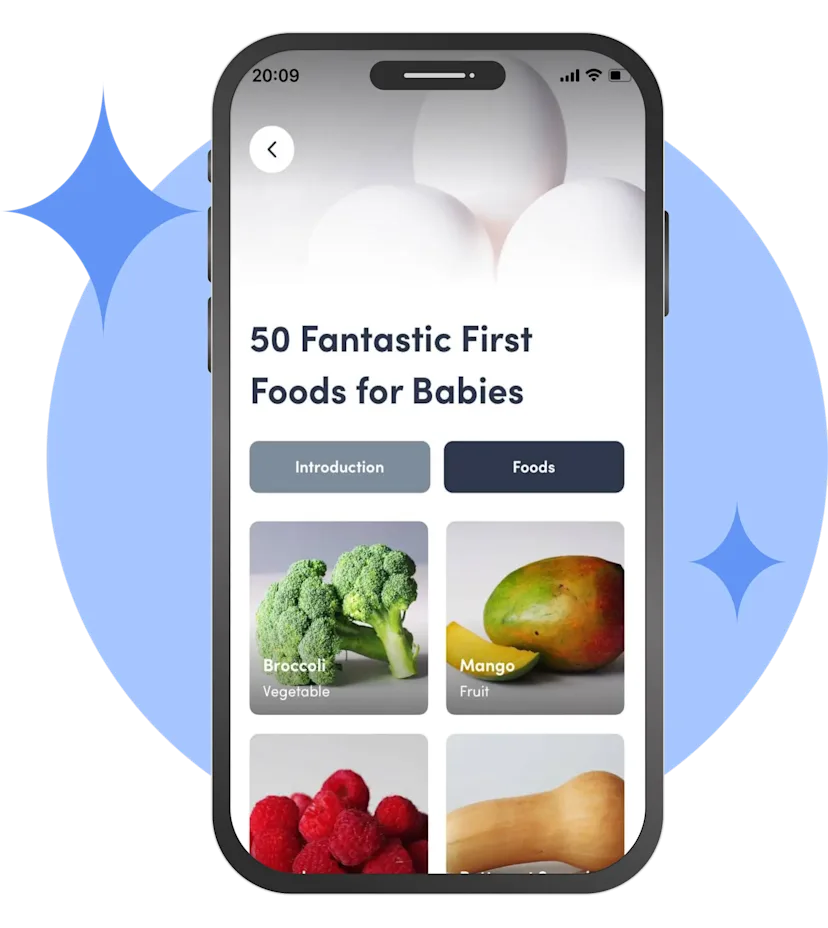
Start solids with confidence
- Guided Introduction to 100+ Foods
- Smart Tools to Simplify Mealtime
- Food Allergen 101
- 300+ Meal Ideas
- First Foods® Database
Start solids with confidence
- Guided Introduction to 100+ Foods
- Smart Tools to Simplify Mealtime
- Food Allergen 101
- 300+ Meal Ideas
- First Foods® Database