High-Sulfite Foods
Wondering if sulfites in dried fruit and more are safe for your baby? See which foods contain them, why apricots turn bright orange, and when sulfite sensitivity matters.
Key Points
Sulfite-containing foods are safe to introduce
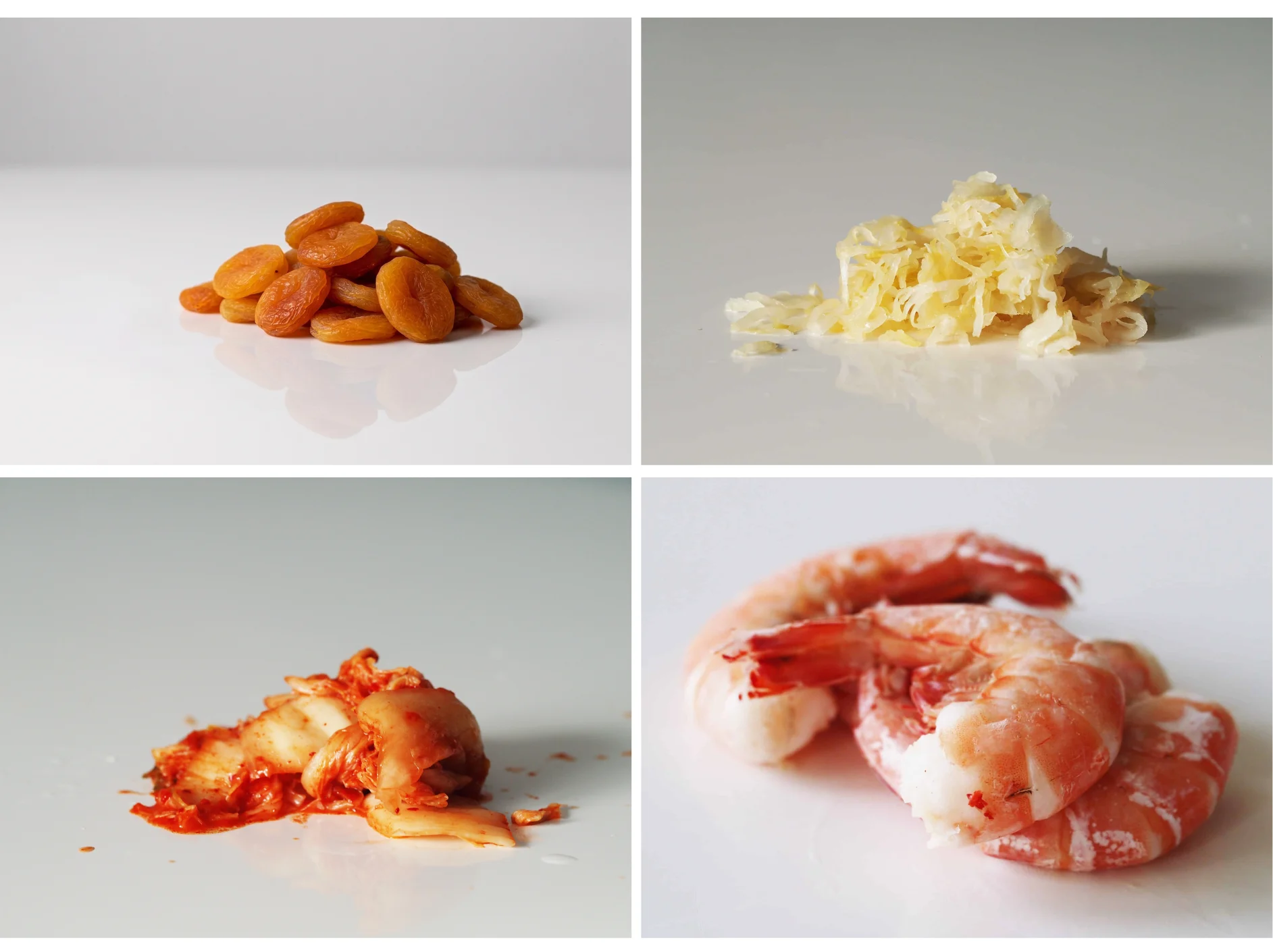
Sulfites are a naturally-occurring compound found in some foods and added to others to help keep them fresh. Foods like dried fruit, pickles, and shrimp are fine to offer in an age-appropriate way to babies who are ready for solids. There's no need to delay or avoid them because they can be high in sulfites.
True sulfite allergy is rare, and sensitivity is mostly found in adults
Reactions are usually from a sensitivity to sulfites, not an IgE-mediated allergy, and this sensitivity tends to show up later in life rather than in babies. People with asthma are most likely to be affected.
Sulfites are easy to spot on a label once you know the names
Look for terms like sulfur dioxide, sodium bisulfite, or "sulfiting agents." Choosing unsulfured dried fruit and fresh, whole foods is the most reliable way to keep sulfites low, if needed.
What are sulfites?
Sulfites are a type of compound that are found naturally in some foods and added to other kinds of foods to help keep them fresh and prevent the natural browning that comes from age and exposure to air. Sulfites most often show up in dried fruit and certain frozen, processed, or pickled foods. Small amounts of sulfites also form naturally during fermentation, which is why foods like kimchi or sauerkraut may contain sulfites, even when none have been added.
High-sulfite foods list
Foods high in sulfites |
|---|
Bottled lemon or lime juice |
Dried fruits (apricot, mango, papaya, pineapple) |
Grape juice |
Golden raisins |
Some store-bought jams/jellies |
Kimchi (store-bought) |
Molasses |
Pickled vegetables (chilis, cucumbers, etc.) |
Sauerkraut |
Shrimp |
Vinegar |
Are sulfite foods safe for babies?
Yes, for nearly all babies. There's no reason to delay or avoid introducing foods to your baby based on their sulfite content.
True sulfite allergy, the kind driven by the immune system's IgE antibodies, is rare at any age, and it's especially uncommon in babies. Most sulfite-related reactions are due to a sensitivity rather than a true allergy, and such a sensitivity tends to develop later in life and is seen far more often in adults than in babies or young children.
How to choose low-sulfite foods for your baby
If your baby does have a sulfite sensitivity, try to choose fresh, whole foods and cook from scratch when possible, since sulfites are more often found in processed or pre-made foods. Swaps like using dark-colored raisins instead of golden raisins or using less-processed sugars like pure cane sugar or panela when you need a sweetener can help when trying to follow a low- or no-sulfite diet. When you buy dried fruit, look for unsulfured versions. When added as a preservative, sulfites are required to be listed on the label, so do a quick scan of the ingredients before buying packaged foods.
How to spot sulfites on a label
Sulfites can appear under several names depending on where you live, but most countries follow a similar system: sulfites have to be mentioned on the label if the food contains roughly 10 ppm (parts per million) or more of total sulfur dioxide equivalent, whether the sulfites were added on purpose or occur naturally.
Australia and New Zealand
Labels use the spelling "sulphite" and the same 10 ppm rule applies, and sulphites must appear in the ingredient list, but E-numbers aren't used.
European Union and United Kingdom
Labels use the spelling "sulphite" and often list the compound as an E-number: E220 (sulfur dioxide), E221 (sodium sulphite), E222 (sodium bisulphite), E223 (sodium metabisulphite), E224 (potassium bisulphite), E225 (potassium metabisulphite). The name or E-number must stand out visually in the ingredient list, typically in bold.
Japan
Japan regulates residual sulfurous acid by food category rather than by one general threshold amount: the limit is much lower for general foods (about 30 ppm) than for foods like dried apricots (about 2,000 ppm) or dried gourd shavings (about 5,000 ppm). Labels list "sulfurous acid" (亜硫酸) or the specific compound.
Mexico, Central America, and South America
Most countries in the region, including Mexico, Argentina, Chile, Colombia, Peru, and countries in Central America, follow the same 10 ppm threshold used internationally, with labels listing "sulfitos" or the Spanish/Portuguese name of the specific compound (e.g., "metabisulfito de sodio"). Brazil is a notable exception: its regulatory agency (ANVISA) doesn't classify sulfites as an allergen, so there's no required "contains sulfites" statement on Brazilian food labels.
South Korea and Taiwan
Both use a 10 ppm threshold and require disclosure when sulfurous acid or sulfites are added at or above that level.
United States and Canada
Look for the specific compound name: sulfur dioxide, sodium sulfite, sodium bisulfite, sodium metabisulfite, potassium bisulfite, or potassium metabisulfite. You may also see the general phrase "sulfiting agents." In Canada, the word "sulfite," "sulphite," "sulfiting agent," or "sulphiting agent" must appear at least once on the label.
If none of these terms appear, the food either contains no sulfites or contains them at a level below the labeling threshold for that region.
Sulfite sensitivity vs. sulfite allergy
These two terms get used interchangeably, but they’re not quite the same. A sulfite sensitivity is the far more common reaction. It is not a true allergy driven by the immune system's IgE antibodies, and a person’s reaction or symptoms tend to depend on the dose. That is, if the person eats something with a very small amount of sulfite, it may cause no trouble, while a large amount might cause symptoms for them. A true, IgE-mediated sulfite allergy is rare.
For both sulfite sensitivity and true sulfite allergy, symptoms can include: wheezing or trouble breathing, especially in those with asthma, and sometimes hives, stomach upset, or a runny nose. Severe, whole-body reactions are possible but uncommon. Talk to your pediatrician or an allergist if you have concerns or notice a pattern.
Why asthma raises the risk
Among people without asthma, sulfite sensitivity is rare, affecting only a small fraction of the population. Among people who have asthma, an estimated 5 to 10 percent are sensitive to sulfites, and consuming a large amount of sulfite can trigger asthma symptoms in this group. That said, a formal asthma diagnosis is uncommon in babies and toddlers.
Frequently Asked Questions
Because they have been treated with sulfur dioxide, a sulfite that preserves the fruit's natural color. Without it, apricots brown as they dry, the same way a cut apple turns brown when it sits out.
No. Sulfites and sulfa sound similar, but are unrelated. Sulfa refers to a type of antibiotic medication (sulfonamides), and a sulfa drug allergy has nothing to do with sulfites in food. Being allergic to one does not mean you will react to the other.
Soaking or rinsing in water can wash away some sulfites, since they dissolve in water, but it will not remove them completely or predictably. If keeping sulfites low matters for your family, buying unsulfured dried fruit is a more reliable method than trying to rinse them out of food.
Cooking reduces some sulfites because heat causes part of the sulfur dioxide to evaporate, but it does not completely remove them, and how much is lost varies. If you want to minimize sulfites, choosing unsulfured or fresh foods is the better route.
No. Sulfite treatment is most common in light-colored dried fruits like apricots, mango, and golden raisins, since sulfites prevent the browning that would otherwise happen during drying. Darker dried fruits, like dark raisins, dates, prunes, and figs, are typically dried without added sulfites because browning isn't a concern for fruit that's already dark. But checking the label is still the most reliable way to know for sure.
"Unsulfured" means no sulfites were added during drying. Unsulfured dried fruit is usually darker in color and has a shorter shelf life than sulfured versions, since sulfites are what help preserve the fruit's bright color and slow spoilage. If keeping sulfites low matters for your family, look for "unsulfured" on the package rather than assuming based on color alone, since some naturally darker fruits can still have added sulfites.
Start solids with confidence
- Guided Introduction to 100+ Foods
- Smart Tools to Simplify Mealtime
- Food Allergen 101
- 300+ Meal Ideas
- First Foods® Database
Start solids with confidence
- Guided Introduction to 100+ Foods
- Smart Tools to Simplify Mealtime
- Food Allergen 101
- 300+ Meal Ideas
- First Foods® Database