How to Teach Baby to Use a Spoon
Learn how to teach your baby to use a spoon with expert tips from pediatric feeding specialists — including when to start, how responsive spoon feeding works, and the best foods to practice with.
Key Points
There's no rush
Babies typically show accurate, consistent spoon use sometime after the second birthday, and using fingers to eat is completely normal as baby learns. Offering spoons early for practice is great, but there's no need to push utensils over hands—both build the skills baby needs to eventually self-feed.
Let baby lead with the spoon
Rather than putting the spoon into baby's mouth, preload it and set it down, or hold it out and let baby reach for it or lean in to take a bite. This approach, also called responsive spoon feeding, builds positive associations with food, strengthens hand-eye coordination, and helps baby's brain prepare for incoming food, which also reduces choking risk.
Consistency and modeling matter more than technique
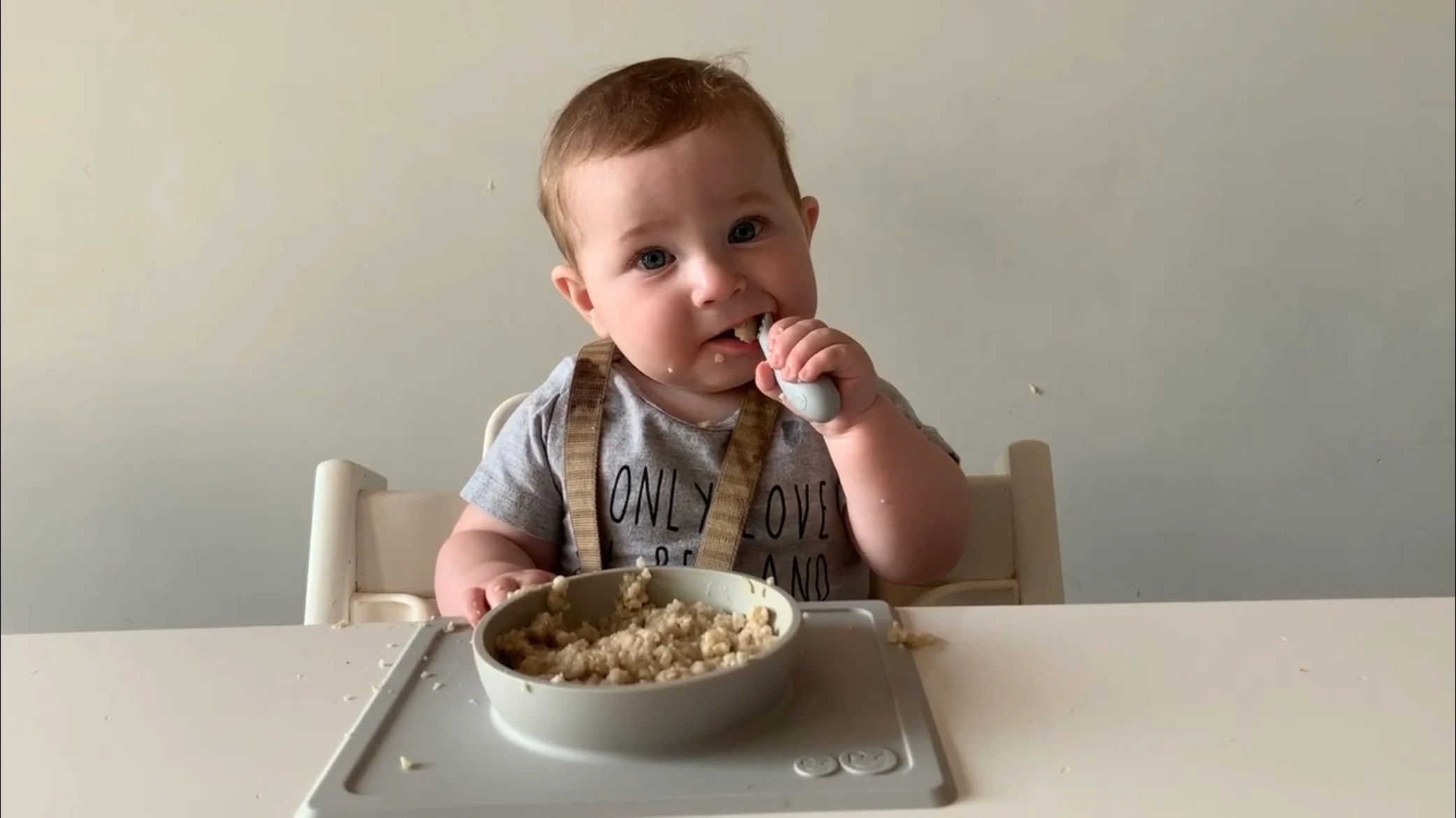
The most important thing you can do is eat alongside baby and show them how a spoon works—their mirror neurons are doing more work than you might think. Expect months of mess, dropped spoons, and wrong-end-in-mouth moments, all of which are signs that baby is learning and practicing, not failing.
When a baby is allowed to practice feeding themselves, they typically use their fingers and ignore utensils for a while. This is normal (eating with utensils is challenging!) but it doesn’t mean they can’t start learning. Start with a spoon, and try these tips from our pediatric pros.
When to Teach Baby to Use A Spoon
You can wait to offer utensils until baby has had a bit of experience with solid food, or you can offer spoons right away if you prefer. There is no need to rush the transition. In fact, there are many benefits to letting baby decide how to put food in their mouth. Baby may choose to use their hands or practice with spoons, and either choice helps the child learn to self-feed. Rather than enforcing spoons over fingers, offer plenty of opportunities for baby to explore food as you eat alongside them to model how utensils work. This eventually leads to utensil use, although it takes months of practice. Accurate and consistent use of a spoon typically happens between 18 and 24 months of age… and it usually takes even longer for a child to learn how to eat with forks and other utensils. It is also not at all uncommon to see children continue to use their hands for more challenging-to-hold foods until 5 or 6 years old.
How to Help Your Baby Learn to Self-Feed With a Spoon
It takes time for babies to learn how to coordinate the arms, hands, and eyes to accurately feed themselves with spoons. Here’s what you can do to help them develop this skill.
Tip | Description |
|---|---|
Model how to eat with a spoon | Babies learn how to eat by watching you, so scoop some food (from baby’s bowl or yours) and show baby how you bring it to your mouth to take a bite. Move slowly so baby can you watch what you do, and repeat this a few times. Every time baby watches you, their mirror neurons are firing and gathering information so they can try to mimic you. |
Let baby play with the spoon | Offer the spoon, and let baby grab it, hold it, play with it, and maybe even practice putting it in their mouth if they can figure it out. Expect mistakes and imperfection, especially for the first few months. Baby will drop the spoon. Food will fall off the spoon. The wrong end will make its way into the mouth. This is normal and part of learning how spoons work. |
Preload the spoon for baby | Learning to scoop food successfully with a spoon takes lots of practice over time. To help baby figure it out, dip a spoon in a soft, scoopable food then place the spoon in front of baby, with the handle facing them, and let them try to pick up the spoon on their own. If you like, you can dip both ends of the spoon in the food so baby tastes the food regardless of which end makes its way into the mouth. If baby struggles to pick up the utensil, hold it in the air in front of them within their reach, then wait. Once they grab the spoon, let go. Show baby how to put the spoon back in the bowl, which coats it in more food and starts to teach baby how scooping works. |
Let baby “feed” you with spoons | If baby successfully holds the spoon, but needs a little guidance that the spoon goes into the mouth, make a game out of it to help them learn how it’s done. Open your mouth wide and say, “Ahh!” as you move in the direction of baby’s spoon. Babies often smile and enjoy this connection, and it helps them understand that the spoon with food goes into the mouth. You can then take your own spoon and bring to your mouth, encouraging baby to do the same as they mimic you with their own spoon. |
Play with spoons away from the table | Outside of mealtime, build fine motor skills with games that use spoons. Scoop water at bathtime. Stir blocks or toys in a bowl. Bang drums with spoons. Use spoons to dig. Stack spoons. Let baby take spoons out and put them away in a box or bowl. These games help baby practice using their fingers and hands which will strengthen the muscles and coordination they need to use spoons at mealtime. |
Go slow and set your expectations | The more a baby feels pressured, the more they will resist, especially as they grow. Be patient with utensils at mealtime. While it can be incredibly frustrating to watch baby eat with their hands when you want them to eat with their fingers, trust that this is temporary, and normal for their developmental stage! Feign indifference to unwanted behaviors at the table, and keep modeling how to eat with spoons. Baby will eventually join you. |
Can I hold the spoon for baby?
If you prefer to control the spoon, responsive spoon feeding is the way to go. Here’s how it works:
Sit next to baby.
Dip a spoon in puree.
Hold the spoon in the air near baby’s mouth.
Now the important part: wait for baby to lean in and take it with the mouth.
This way, baby decides when to lean in and take a bite, which helps build positive associations with solid food. As you go, remember: babies are naturally curious and they like to explore with their hands. It’s helpful to encourage this exploration by letting them grab the spoon if they reach for it, especially with older babies. You can also let them grab your hand while holding the spoon to bring it to their mouth to practice this movement. As they grow, babies seek more control with food. Wrestling to keep ahold of the spoon while baby tries to hold it causes frustration—for both you and baby. Also, if baby is used to being fed without reaching for the spoon, this can sometimes result in baby having difficulty understanding they can reach to bring the spoon to their own mouth later on despite months of “practice.”
Frequently Asked Questions
If they reach for it, we’d encourage letting go. Babies instinctually reach out and explore their surroundings with their hands, and this exploration is good. As baby grows, they seek more control at mealtime, and battles often start with the spoon, especially when they are not allowed to hold it. As you are introducing solids, the goal is to build positive experiences with food at mealtime, and wrestling to keep control of the spoon frustrates both caregiver and baby, which often results in food refusal and high chair distress. If baby is okay with you still holding the spoon, but is still in control of bringing your hand holding the spoon to their own mouth, this can be a good in-between that can minimize mess while also letting baby practice this hand to mouth movement.
Try holding the pre-loaded spoon within reach of baby, and place it so the handle is facing baby’s hand. Babies often try to bend forward to reach the spoon with the mouth, and when they are unable to grab it this way, and their own natural instincts kick in and they try to grab it with their hand.
If baby still does not try to reach for it, gently tap baby’s arm or hand while holding the spoon within its reach. This works as a cue for baby to reach out and grab it. Another cut to try: tap their hand with the spoon itself or even placing the spoon into their hand.
Still not enough? Try gently guiding baby’s arm by the elbow, towards the spoon. You could even do this by standing behind them. If you feel any resistance from your baby at all, stop immediately as you don't want any semblance of forcing. In that case, it is better to back off, go back to modeling how you hold and use the spoon, but keep a back up spoon near baby in case they change their mind and want to imitate you. Try these same steps again at the next meal.
There is no need to buy a special baby spoon; any spoon with a shallow bowl works well, such as a soup spoon, a dessert spoon, or a teaspoon or tablespoon. Ideally, the spoon has a short handle (long handles are challenging for baby to control and direct towards their mouth) and the bowl fits easily in baby’s mouth.
Explore foods that easily cling to the spoon, like avocado, bean dip, lentil dal, oatmeal, polenta, potato, refried beans, ricotta cheese, thick stews, or yogurt. Just keep in mind that it is totally normal for food to fall off the spoon as baby develops the fine motor skills to steadily bring the utensil to their mouth. Learning to use spoons is messy, and there are ways to minimize the mess for when you just can’t deal with a big clean-up.
Let them! As they are learning about utensils, it doesn’t matter which end of the spoon baby decides to use. You can even dip both ends of the spoon in food to help baby taste and learn that spoons can bring food to the mouth. Even if baby just decides to chew on their spoon, that has benefits, too. Spoons with short handles are great tools for baby to move in and around the mouth, which helps build jaw strength and triggers the brain to activate the chewing reflexes while “drawing” a mental map of their mouth. See our article, How Babies Learn to Chew for more details.
Offer spoons with foods that easily cling to the utensil, like avocado, bean dip, lentil dal, oatmeal, polenta, potato, refried beans, ricotta cheese, thick stews, or yogurt. An occasional pouch or puree are fine, but try to avoid regularly offering perfectly smooth foods. When babies are mostly fed smooth purees, they learn to eat solid food by sucking to swallow just like breast milk and formula. They are also more at risk for developing aversions to texture. When starting solids, babies need to practice eating foods that need to be chewed, so try to offer spoons alongside mashes or purees with some lumpy textures.
Babies are able to regulate their appetite, and you can tell if they are hungry or full by interpreting their signs. Learn more in our article, How to Tell If Baby Is Getting Enough and remember: breast milk and formula provide most of the nutrition that baby needs until they have the skills to eat a variety of solid food. This means that even if baby eats no solids at some meals, they still receive adequate nutrition from nursing or bottle feeds.
You certainly can, but even if you are feeding them, try and hand over the pre-loaded spoon for baby to grab from you rather than controlling the spoon for baby. Using multiple spoons at mealtime has a number of benefits: it gives baby more opportunities to hold and manipulate the spoon themselves, and it can reduce the chances of a meltdown when you take a spoon away to reload it with food.
Start solids with confidence
- Guided Introduction to 100+ Foods
- Smart Tools to Simplify Mealtime
- Food Allergen 101
- 300+ Meal Ideas
- First Foods® Database
Start solids with confidence
- Guided Introduction to 100+ Foods
- Smart Tools to Simplify Mealtime
- Food Allergen 101
- 300+ Meal Ideas
- First Foods® Database