
Requesón
Dairy
- Age Suggestion
- 6 months
- Iron-Rich
- No
- Common Allergen
- Yes
When can babies have requesón?
Requesón may be introduced as soon as baby is ready to start solids, which is generally around 6 months of age. Choose pasteurized requesón to minimize the risk of foodborne illness. [1] [2]
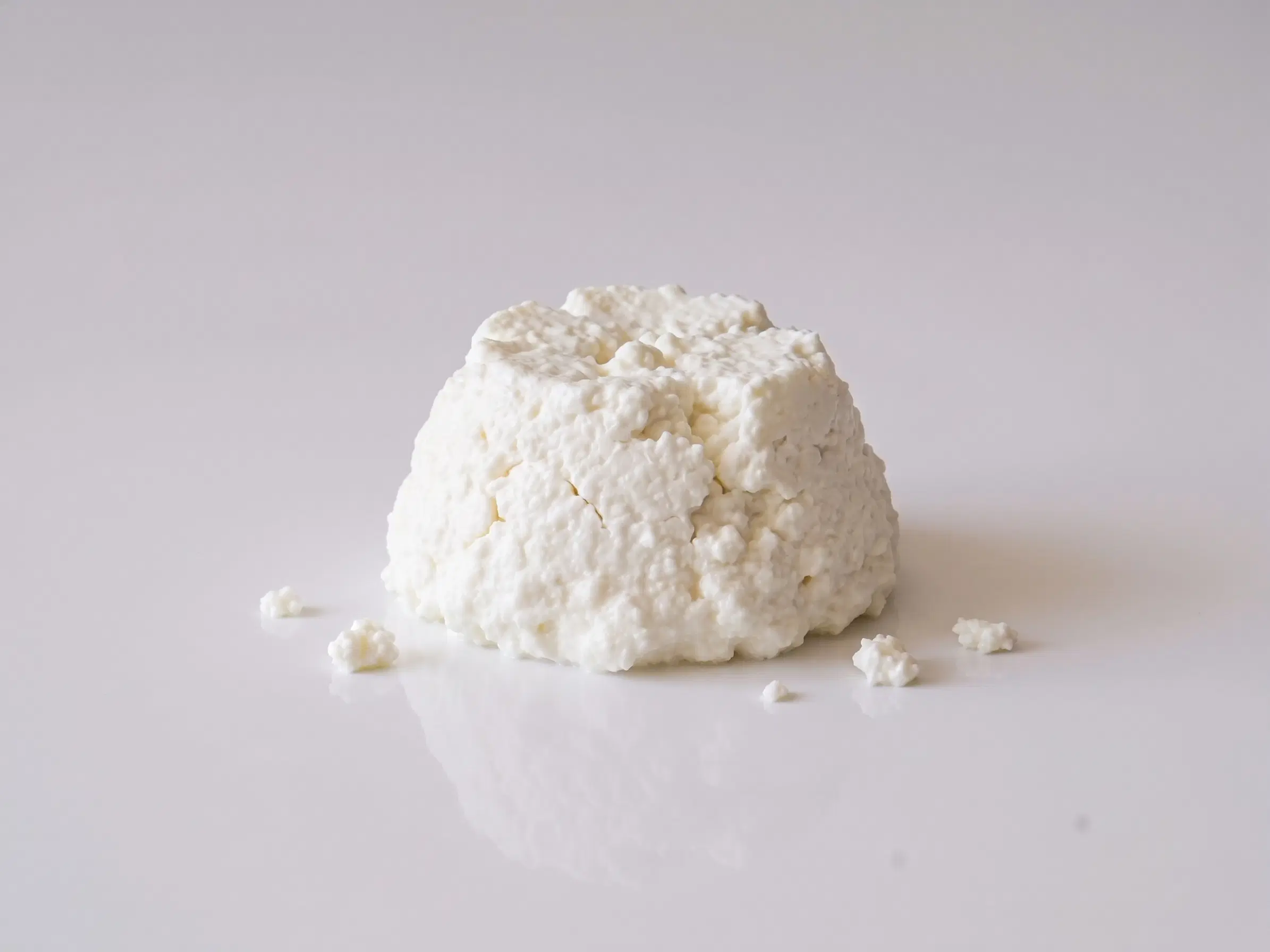
Requesón is a fresh, spreadable cheese popular in Latin America. Like ricotta cheese, it is traditionally made by heating whey left over from other cheesemaking together with a small amount of added milk, then draining the soft curds through cheesecloth. Similar cheeses appear across Latin America under regional names, including requeijão in Brazil. Mild, creamy, and slightly tangy, requesón is a beloved filling for tlacoyos, gorditas, and enchiladas, and is just as often spread on bread or paired with fresh fruit.
How do you serve requesón to babies?
Every baby develops on their own timeline, and the suggestions on how to cut or prepare particular foods are generalizations for a broad audience.
6 months +:
Spread requesón in a thin layer on soft corn tortilla, toast, or other finger foods, or serve a small scoop in a bowl for baby to practice dipping and scooping. You can also stir it into warm cereal, mashed vegetables, or fruit purees to add creaminess. When serving requesón with a spoon, pre-load the utensil, pass it to baby, and let them grab it from you. Choose pasteurized requesón to reduce the risk of foodborne illness. Requesón contains a common allergen (cow’s milk) that should be safely introduced to baby.
9 months +:
Continue to offer pasteurized requesón in a bowl for scooping or spread thinly on soft corn tortilla, toast, or other finger foods. You can also mix requesón into meatballs, pancakes, and tortilla de patatas. Choose pasteurized requesón to reduce the risk of foodborne illness. Requesón contains a common allergen (cow’s milk) that should be safely introduced to baby.
12 months +:
Spread requesón on soft corn tortilla, toast, or other finger foods, or offer it in a bowl for scooping practice. You can also offer requesón in family meals, such as a spoonful of requesón tucked into a warm tortilla, tlacoyo, or gordita alongside beans or greens.
Is requesón a choking hazard for babies?
No. Requesón presents a low risk when safely prepared for a child's age and developmental ability, though, in theory, an individual could choke on any food. To reduce the risk, prepare and serve requesón in an age-appropriate way as described in How to Serve. As always, make sure to create a safe eating environment and stay within reach of baby during meals.
Learn the signs of choking and more about choking first aid in our free guides, Infant Rescue and Toddler Rescue.
Is requesón a common allergen?
Yes, requesón is often made from cow’s milk, which is a common allergen. [3] [4] The good news: dairy allergy often gets better over time, and the majority of children with dairy allergy outgrow it before reaching adulthood. [5] [6]
Although most babies will never experience an allergic reaction to food, delaying introduction to common food allergens like cow’s milk may actually increase the risk of an allergy developing. However, introducing food containing milk like requesón early in infancy and serving it regularly, including throughout the toddler years, can help prevent a milk allergy from developing.
For most babies, common allergens such as milk can typically be introduced at home as soon as baby is developmentally ready to begin solids. Start with a small amount prepared in an age-appropriate way. For step-by-step guidance on how to safely introduce cow’s milk, subscribe to the Solid Starts App.
Is requesón healthy for babies?
Yes. Requesón is a good source of protein, calcium, phosphorus, riboflavin, and vitamin B12. Together, these nutrients help build and maintain bones and teeth, support muscle and cell growth, and play a role in energy production and red blood cell formation. Compared to many other cheeses, requesón is naturally lower in sodium. Choose pasteurized requesón to minimize the risk of foodborne illness.[1] [2]
What's the difference between requesón and ricotta?
They are very similar in texture and flavor, and can typically be used interchangeably in recipes. Both are both made by heating whey, sometimes with a small amount of added milk, to form soft curds. The main differences are subtle: requesón tends to be a touch saltier and is often slightly lumpier, while ricotta is generally smoother.
Is requesón the same as queso fresco?
No. While both are fresh cheeses, queso fresco is a firmer, crumbly curd cheese, while requesón has a much softer, spreadable texture. Queso fresco is also generally saltier than requesón.
Is requesón safe if it's made from raw (unpasteurized) milk or whey?
No. There is no age at which eating raw-milk cheese is without risk, so whether or when to serve it is a personal decision that depends on your family's circumstances. Unpasteurized cheese carries a higher risk of foodborne illness, including salmonellosis and listeriosis, which can be especially serious for babies. When shopping for or making requesón, choose versions made from pasteurized milk and whey. To serve requesón and other fresh cheeses safely, look for "pasteurized" (pasteurizado) on the label, and when in doubt about a homemade, market, or imported cheese, it is safest to not offer it to baby.
Reference Material
Committee on Infectious Diseases; Committee on Nutrition; American Academy of Pediatrics. (2014). Consumption of raw or unpasteurized milk and milk products by pregnant women and children. Pediatrics, 133(1), 175-179. doi:10.1542/peds.2013-3502. Retrieved September 20, 2021
FAO and WHO. (2022). Risk Assessment of Food Allergens. Part 1 – Review and validation of Codex. Alimentarius priority allergen list through risk assessment. Meeting Report. Food Safety and Quality. Series No. 14.
Start solids with confidence
- Guided Introduction to 100+ Foods
- Smart Tools to Simplify Mealtime
- Food Allergen 101
- 300+ Meal Ideas
- First Foods® Database
Start solids with confidence
- Guided Introduction to 100+ Foods
- Smart Tools to Simplify Mealtime
- Food Allergen 101
- 300+ Meal Ideas
- First Foods® Database
Expert Tips Delivered to Your Inbox
Sign up for weekly tips, recipes and more.