


Access our First Foods® Database in the Solid Starts App.
Learn morePeanut Butter
Legume
Age Suggestion
6 months
Iron-Rich
Yes
Common Allergen
Yes
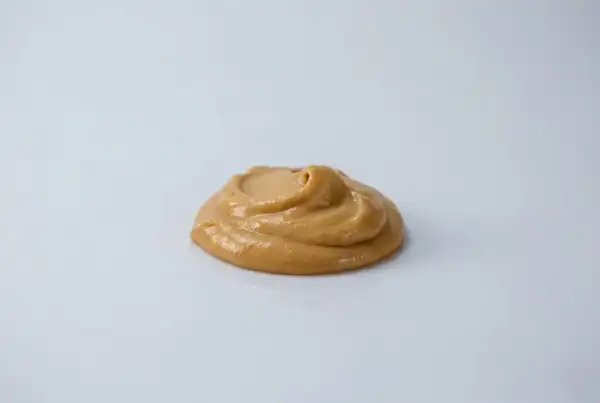
When can babies have peanut butter?
Peanut butter, when thinned out with breast milk, formula, water, or puree, may be introduced as soon as baby is ready to start solids, which is generally around 6 months of age. Peanut butter and peanuts are choking hazards for babies and children, so read How to Serve closely before serving. Avoid peanut butter that contains honey when sharing with babies under 12 months of age due to the risk of infant botulism.
Classified as a major allergen by food regulators, peanut is not actually a nut, but rather the edible seed of a legume plant that grows underground. Peanut originated in South America, where Indigenous people cultivated the groundnut for nourishment and ceremonial purposes. European colonizers brought peanuts with them around the globe. Peanut butter is made by grinding peanuts into a paste and is commonly used as a spread, or as an ingredient in sauces, baked goods, desserts, and much more.
How do you serve peanut butter to babies?
Every baby develops on their own timeline, and the suggestions on how to cut or prepare particular foods are generalizations for a broad audience.
4 months old +:
For most babies, allergen introduction can begin once they show all of the signs that they are ready to start solids, which is typically around 6 months of age. However, if your baby is at increased risk of food allergy, your doctor may recommend allergen introduction as early as 4 months of age. Start with a small amount (such as ¼ teaspoon) of smooth peanut butter (honey-free) thinned out with water, breast milk, or formula and gradually increase the quantity offered as long as baby shows no symptoms of an allergic reaction. Once peanut is successfully introduced, offer it regularly (ideally twice a week) to help prevent peanut allergy from developing. Subscribe to the Solid Starts App for step-by-step guidance, including quantities, schedules, and answers to common questions.
6 months old +:
To introduce peanut, start with a small amount (such as ¼ teaspoon) of smooth peanut butter (honey-free) thinned out with water, breast milk, or formula and gradually increase the quantity offered as long as baby shows no symptoms of an allergic reaction. Subscribe to the Solid Starts App for step-by-step guidance, including quantities, schedules, and answers to common questions.
Once peanut is successfully introduced, keep it in the diet regularly (ideally twice a week) to help prevent peanut allergy from developing. At this age, thinned out peanut butter can be offered on its own, as a peanut sauce on meat or vegetables, or mixed into other soft, scoopable foods like oatmeal or yogurt. You can also spread a thin layer of the thinned-out peanut butter on toast. Pancakes, banana bread, and other baked goods made with peanut butter are another way to keep up exposure.
12 months old +:
Continue to mix smooth peanut butter into soft, scoopable foods and add peanut butter to the batter for baked goods. Offer smooth peanut butter thinly spread on toast and try serving with a drink of water or milk to help wash down any sticky pieces.
18 months old +:
Serve smooth peanut butter as desired, mixed into or spread on top of other foods, or incorporated into sauces, marinades, or batters for baked goods. At this age, you can also offer chunky peanut butter thinly spread on other foods.
Videos
Is peanut butter a choking hazard for babies?
Yes. Peanut butter can be thick and sticky, qualities that can increase the risk of choking. To reduce the risk, prepare and serve peanut butter in an age-appropriate way as described in How to Serve. As always, create a safe eating environment and stay within reach of baby during meals.
Learn the signs of choking and more about choking first aid in our free guides, Infant Rescue and Toddler Rescue.
Is peanut a common allergen?
Yes. Peanut is a common allergen, and for those who develop a peanut allergy, it tends to be lifelong.
However, there’s good news: introducing peanut early and serving regularly, including through the toddler years, can help prevent the allergy from developing.
Although most babies will never experience an allergic reaction to food, delaying introduction to common food allergens like peanut may actually increase the risk of an allergy developing. Babies with eczema or an existing allergy to another food, particularly to egg, are at increased risk of developing a peanut allergy, especially if introduction is delayed. The early introduction of peanut (ideally beginning at 4 months of age) is especially important for these babies, even if they are not yet developmentally ready to self-feed. If baby has known food allergies or severe eczema and is already 7 months of age or older, consult your doctor before introducing peanut at home, as it may be safer to introduce the allergen under medical supervision.
Being allergic to peanut may increase the risk of allergy to other legumes. However, cross-reactivity among legumes is more commonly seen on blood and skin testing than it is in practice. Children with peanut allergy do not necessarily need to avoid all other legumes.
For babies without severe eczema or pre-existing food allergy, common allergens such as peanut can typically be introduced at home. Start with a small amount prepared in an age-appropriate way to reduce the risk of choking. Learn more in How to Serve. For step-by-step guidance on how to safely introduce peanut, subscribe to the Solid Starts App.
Is peanut a common FPIES trigger?
Peanut has recently emerged as an increasingly recognized FPIES trigger. FPIES (food protein-induced enterocolitis syndrome) is a non-IgE-mediated food allergy that results in delayed vomiting and diarrhea after ingestion of a food trigger, and can cause significant dehydration. However, this is not a reason to delay peanut introduction unless specifically advised by your baby’s doctor. Unlike IgE-mediated allergy to peanut, FPIES to peanut tends to be outgrown during the toddler years. Read more about FPIES.
Is peanut butter healthy for babies?
Yes. Peanut butter is rich in protein, fat, iron, and various other nutrients that support baby’s growth and development. While some versions of peanut butter have added salt or sugar, they are usually in small amounts and tastes of these peanut butters are generally not a cause for concern. For families looking to reduce added salt and sugar, unsalted, unsweetened (sometimes labeled as "natural") peanut butters are an option to explore. Make sure that peanut butter is free of honey for babies 12 months and under, due to the risk of infant botulism.
Our Team
Written by

Dr. Rachel Ruiz
Pediatrician & pediatric gastroenterologist

Dr. Sakina Bajowala
Pediatrician & pediatric allergist/immunologist

Kim Grenawitzke
Pediatric occupational therapist, feeding & swallowing specialist, international board-certified lactation consultant

Venus Kalami
Pediatric registered dietitian & nutritionist
Get 10% Off
Sign up to save and get weekly tips, recipes and more.




Copyright © 2026 • Solid Starts Inc