


Access our First Foods® Database in the Solid Starts App.
Learn moreParsnip
Vegetable
Age Suggestion
6 months
Iron-Rich
No
Common Allergen
No
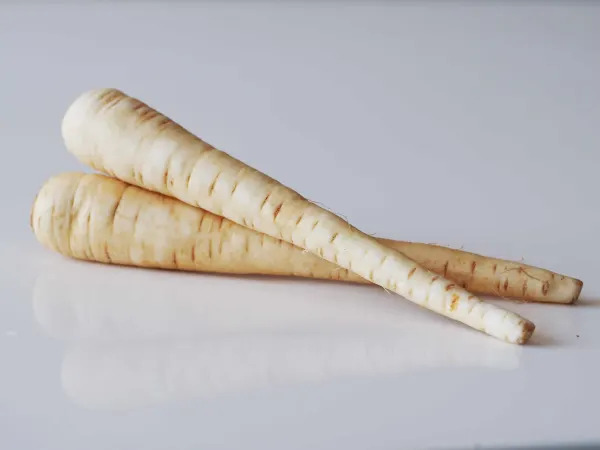
When can babies eat parsnips?
Parsnips may be introduced as soon as your baby is ready to start solids, which is generally around 6 months of age.
How do you prepare parsnips for babies with baby-led weaning?
Every baby develops on their own timeline, and the suggestions on how to cut or prepare particular foods are generalizations for a broad audience.
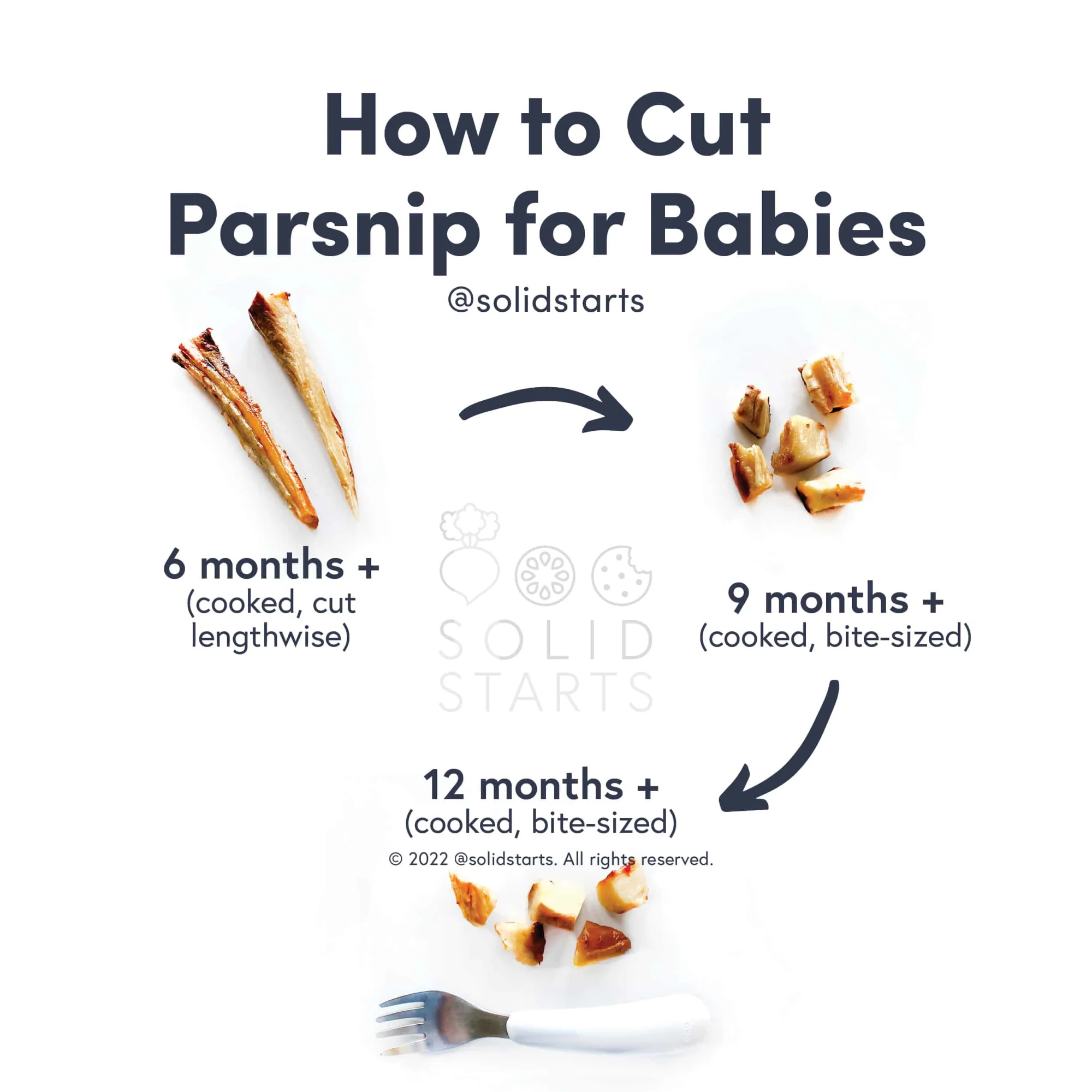
6 to 12 months old:
Offer large, long pieces of cooked parsnip cut lengthwise. At this age babies love holding large pieces of food for easy munching and it is actually safer to give young babies large pieces of food as smaller pieces could be accidentally swallowed whole. Another way of introducing parsnips: mash the cooked parsnips and mix with a little unsalted butter, olive oil, or fat of your choice.
12 to 24 months old:
Use parsnips in place of any root vegetable in a recipe. You might continue offering cooked parsnip cut into matchsticks as finger food, small pieces to encourage fork practice, mashed parsnips, or parsnips folded into salads and grain dishes.
How to prepare parsnips for babies.
Parsnips have an earthy flavor and hearty texture that make the root a great substitute for meat. Try swapping parsnips in savory pies, casseroles, tacos, or any dish that call for ground meat.
For more information on how to cut food for babies, visit our page on Food Sizes & Shapes.
Videos
Are parsnips a common choking hazard for babies?
If they are raw, yes—parsnips can be a choking hazard. To minimize the risk, cook parsnips until soft before serving to your baby, and avoid cutting raw or cooked parsnips into coin-shape pieces. (Long matchsticks would be best.)
For more information, visit our section on gagging and choking and familiarize yourself with common choking hazards.
Are parsnips a common allergen?
No. That said, in theory an individual can be allergic to any food. As with introducing any new food, start by serving a small quantity on its own for the first couple of times, and if there is no adverse reaction, gradually increase the quantity over future servings.
Are parsnips healthy for babies?
Yes. Parsnips are an excellent source of copper, fiber, folate, and vitamin C in addition to a wide range of other nutrients and lots of healthy carbohydrates to fuel your baby’s body with energy. They’re a terrific vegetable to include in regular rotation in your baby’s diet as they help support the immune system, eye health, heart function, iron absorption, a healthy gut and bowel movements, and overall growth.
Background and origins of parsnips
Parsnips are white root vegetables that are often mistaken for carrots—but they are quite different. Starchy and sweet with a more fibrous texture, parsnips are a great first food to introduce to babies as they are super versatile. In fact, parsnips have a long history as a staple food for many cultures, including ancient Greeks and Romans who favored the vegetable for its many culinary uses. They can be steamed and mashed, folded into grain dishes, and even mixed into baked goods like breads and muffins.
Written and reviewed by these specialists
Get 10% Off
Sign up to save and get weekly tips, recipes and more.




Copyright © 2026 • Solid Starts Inc