
Arroz con Leche
Prepared
- Age Suggestion
- 6 months
- Iron-Rich
- No
- Common Allergen
- Yes
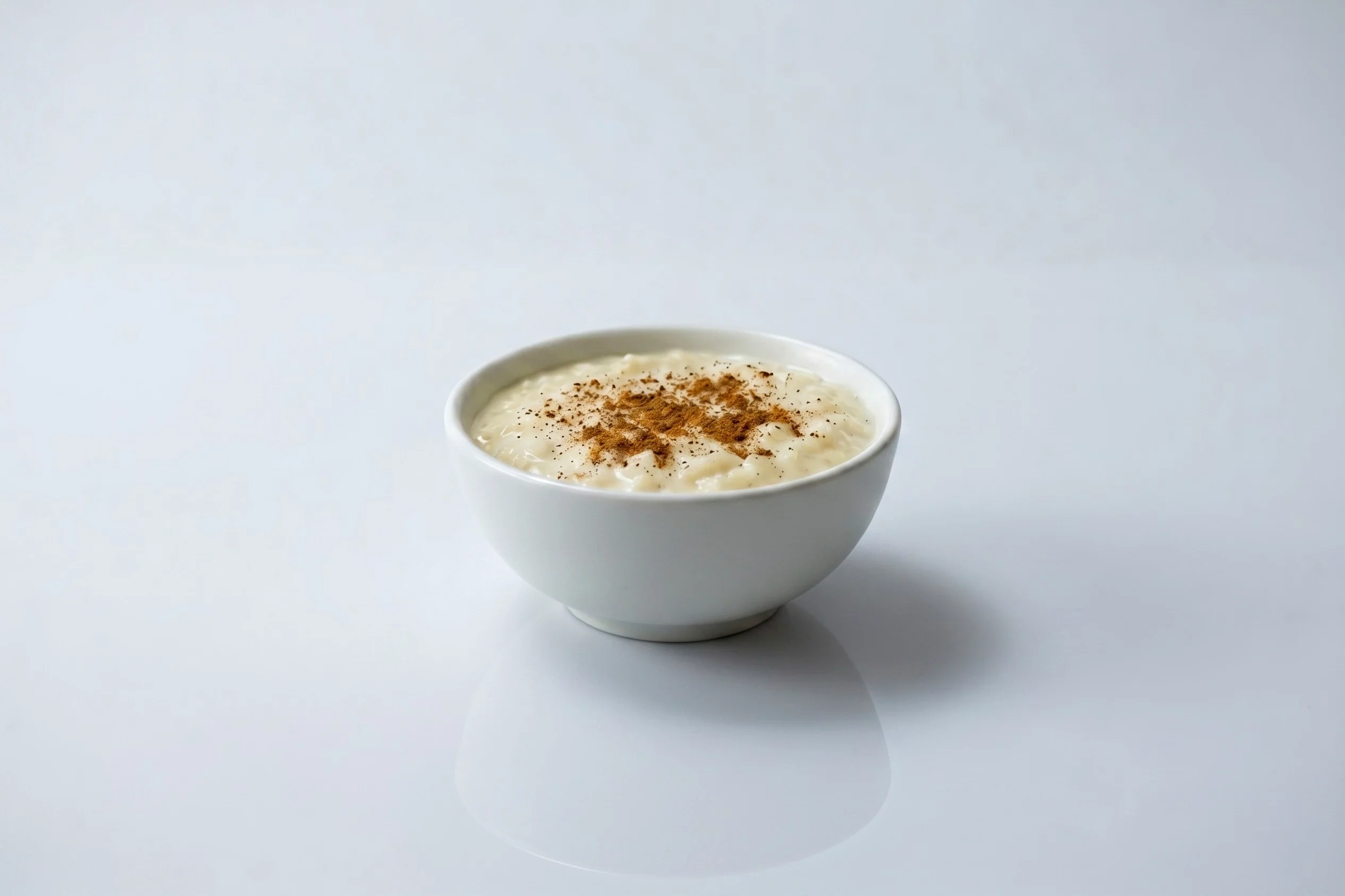
When can babies have arroz con leche?
Arroz con leche may be introduced as soon as baby is ready to start solids, but it can be beneficial to wait until the child is older to serve it regularly. While an occasional taste is fine, regularly consuming excessive amounts of food with added sugar, like many kinds of arroz con leche, can increase the risk of cavities as baby’s teeth come in and decrease the child’s motivation to try other foods.[1] [2] [3] If sharing a taste of arroz con leche, make sure it is free of honey, raw or undercooked egg, and choking hazards. Note that arroz con leche may contain dairy and egg, which are common allergens that should be safely introduced before sharing with baby.
Arroz con leche—rice cooked slowly in milk and sweetened with sugar, cinnamon, and sometimes lemon or orange zest—is a beloved dessert and comfort food across the Spanish-speaking world. Versions of the dish appear throughout Central and South America, Spain, and beyond, from Mexico and Colombia to Peru and the Philippines, with each tradition bringing its own touches: some include egg yolks for richness, some are firmer and sliced, others are loose and porridge-like.
How do you serve arroz con leche to babies?
Every baby develops on their own timeline, and the suggestions on how to cut or prepare particular foods are generalizations for a broad audience.
6 months old +:
Serve arroz con leche in a soft, loose, porridge-like consistency that baby can scoop with their hands or eat from a pre-loaded spoon. Occasional tastes of fully sweetened arroz con leche are fine at this age, or you can make an unsweetened version to share with baby. Make sure it does not contain any honey or raw or undercooked egg due to the risk of foodborne illness.
12 months old +:
Serve arroz con leche however the rest of the family is having it, warm or chilled, and offer a spoon so the child can practice self-feeding with utensils—pre-loading the spoon and setting it on the tray alongside the bowl is a good way to encourage independent feeding. Firmer, sliceable preparations common in some regional traditions (such as certain Spanish-style versions) are also appropriate at this age, as long as the texture is soft enough to mash readily with the gums.
Is arroz con leche a choking hazard for babies?
No. Soft, scoopable arroz con leche presents a low choking risk when safely prepared for a child's age and developmental ability, though, in theory, an individual could choke on any food. To reduce the risk, prepare and serve arroz con leche as described in How to Serve. As always, create a safe eating environment and stay within reach of baby during meals.
Learn the signs of choking and more about choking first aid in our free guides, Infant Rescue and Toddler Rescue.
Does arroz con leche contain common allergens?
Yes. Arroz con leche is typically made with cow’s milk, and may contain other common allergens such as egg, among others. If buying pre-made arroz con leche, read the label to check which common allergens it may contain. It is important to introduce common food allergens individually and rule out a food allergy before offering baby prepared foods that contain multiple potential food allergens. This way, when you are ready to share arroz con leche, you will be confident that baby has already safely eaten any common food allergens in it. This approach can also help you quickly identify potential culprits in the unlikely event that baby experiences an allergic reaction after eating arroz con leche.
Is arroz con leche safe for babies?
It can be, as long as it is free of honey, raw or undercooked egg, and common choking hazards.
While most arroz con leche has added sugar, a bite here and there is fine. When it comes to arroz con leche and other foods with added sugar, aim for a gentle balance: reduce when you can, enjoy when you can’t, and aim to share a variety of food over time.[4] [5] [6] [7] See our article, Sugar in Food for Babies 6 to 12 Months of Age, for more guidance. Plus, arroz con leche offers carbohydrate, protein, fat, and calcium to support energy, growth, brain development, and bone density.
Can I make arroz con leche with a non-dairy milk for my baby?
Yes, as an ingredient in solid food. Plant-based milk alternatives such as oat, coconut, or rice milk can be used to make arroz con leche. For more on milk substitutes, see our Milk FAQs page.
Does arroz con leche need to be refrigerated?
Yes. Arroz con leche contains dairy and should be refrigerated promptly once cooled and stored for no more than 3 days. Reheat gently on the stovetop or in the microwave, stirring well to distribute heat evenly, and always allow it to cool to a safe temperature before serving to a baby or toddler.
Reference Material
Fidler Mis, N., Braegger, C., Bronsky, J., Campoy, C., Domellöf, M., Embleton, N. D., Hojsak, I., Hulst, J., Indrio, F., Lapillonne, A., Mihatsch, W., Molgaard, C., Vora, R., Fewtrell, M., & ESPGHAN Committee on Nutrition: (2017). Sugar in Infants, Children and Adolescents: A Position Paper of the European Society for Paediatric Gastroenterology, Hepatology and Nutrition Committee on Nutrition. Journal of pediatric gastroenterology and nutrition, 65(6), 681–696. DOI: 10.1097/MPG.0000000000001733. Retrieved August 30, 2022
World Health Organization, Guidelines Review Committee, Nutrition and Food Safety (NFS). (2023). WHO Guideline for complementary feeding of infants and young children 6-23 months of age. Geneva: World Health Organization.
Chi, D. L., & Scott, J. M. (2019). Added Sugar and Dental Caries in Children: A Scientific Update and Future Steps. Dental clinics of North America, 63(1), 17–33. DOI: 10.1016/j.cden.2018.08.003. Retrieved May 13, 2021
Start solids with confidence
- Guided Introduction to 100+ Foods
- Smart Tools to Simplify Mealtime
- Food Allergen 101
- 300+ Meal Ideas
- First Foods® Database
Start solids with confidence
- Guided Introduction to 100+ Foods
- Smart Tools to Simplify Mealtime
- Food Allergen 101
- 300+ Meal Ideas
- First Foods® Database
Expert Tips Delivered to Your Inbox
Sign up for weekly tips, recipes and more.