What Is Baby-Led Weaning?
Baby-led weaning is a method of introducing solid food to babies where purees and spoonfeeding are skipped in favor of finger foods that a baby self-feeds. Learn about the many benefits of BLW including independence and development.
Key Points
Baby-led weaning skips the idea of “staged baby foods”
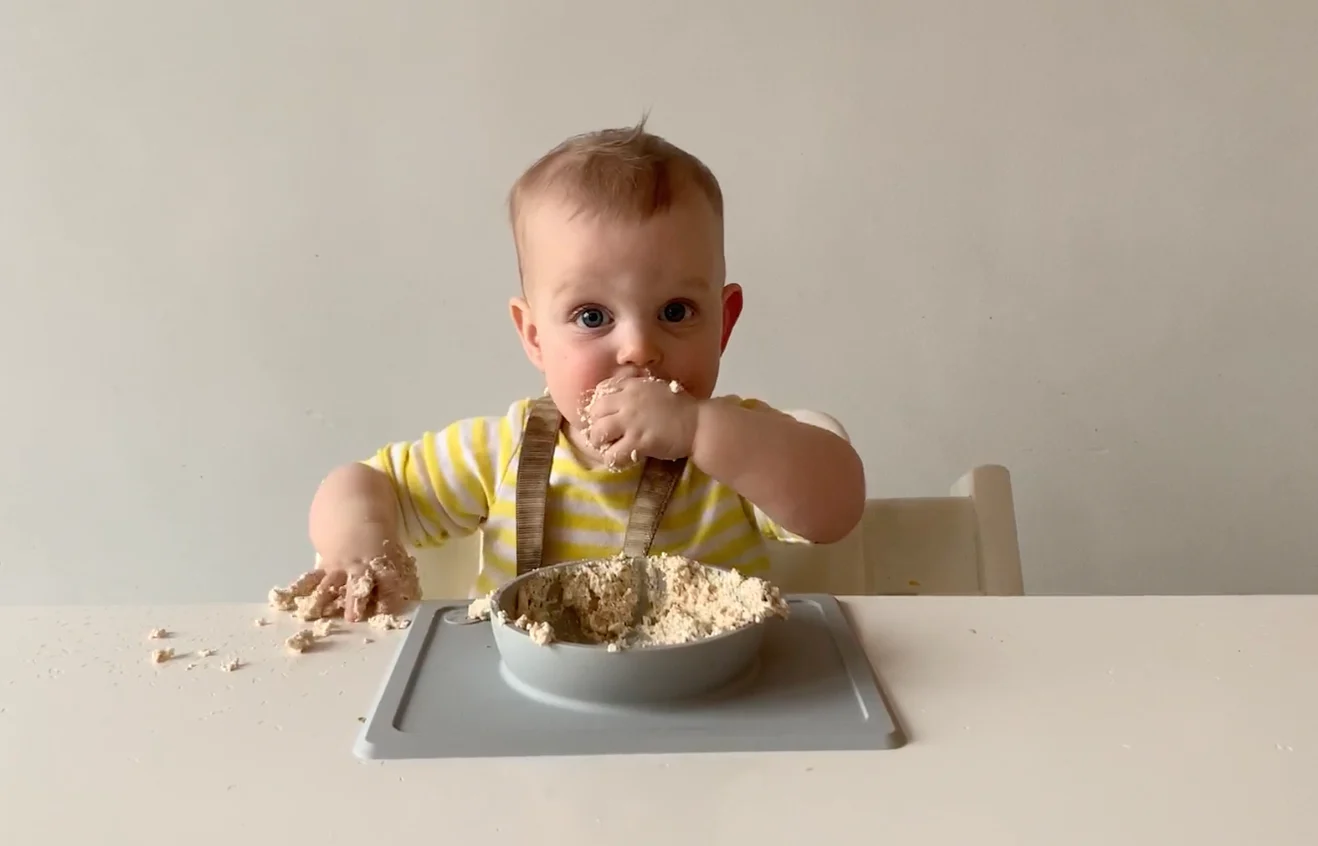
Baby-led weaning is a way of feeding an infant that lets them explore solid foods and practice feeding themselves a variety of food textures at their own pace.
Baby-led weaning lets babies practice feeding themselves
While families often choose to skip purees and offer finger foods from the start with baby-led weaning, you can offer purees, finger foods, or both—and let baby practice feeding themselves.
It’s safe to start solids with baby-led weaning around 6 months of age
It’s a myth that purees are safer than finger foods. Multiple studies have shown no greater risk of choking when babies explore finger foods prepared for their age and stage of development.
What is baby-led weaning?
Baby-led weaning is a method of starting solids that skips spoon feeding and “stages” of baby food. Instead, baby is offered a variety of food textures from the start and allowed to practice feeding themselves.
Baby-led weaning honors a baby’s development and communication cues:
When they show signs of interest, you let them reach for, grab, and explore the food.
When they show signs they are disinterested, full, or done exploring, you end the meal.
Baby-led weaning helps them practice listening to their own internal cues. It also naturally builds their internal motivation to explore food and learn to eat.
Baby-led weaning traditionally uses finger food and skips purees and spoonfeeding. Our approach is a little different: you can offer finger food, mashed and purees, or a combination and let baby explore at their own pace.
We know how you feed your baby is a deeply personal decision, and we have seen firsthand how babies benefit when they are allowed to take the lead at mealtime, whether they’re offered food or spoons. We encourage you to do what feels right for you—and let your baby take the lead.
How to do baby-led weaning
Baby-led weaning can begin as soon as a baby shows all of the signs that they are developmentally ready to start solids, which is typically around 6 months of age.
Once they’re ready, baby-led weaning works like this:
Place food in front of baby.
Let them watch as you take a bite.
Now let baby take the lead.
Baby may grab food. Baby may decide to just look at or touch it. Baby may also decide that they simply want to watch you. If baby decides to put the food in their mouth, they do not yet know how to chew or eat it, so they will likely lick it, mash it, spit it out, or even gag. These responses are a normal part of what to expect with baby-led weaning and how babies learn how to feed themselves.
There are so many fantastic first foods to try with baby-led weaning. As you offer new tastes and textures, observe the child’s cues and respond with support and encouragement, but don’t force it. Sometimes babies need a little assistance getting started, especially when it comes to picking up food. To help, you can hold the food in the air within your baby’s reach, and let them reach for it and grab it. This also works with spoons; learn more in our article, How to Teach Baby to Use Spoons.
Keep in mind that at first, baby is exploring the food as they would a toy because they do not yet know that what you placed in front of them is food. And a baby’s ability to feed themselves and eat enough solid food to fill the belly does not yet line up with their hunger needs, so they will continue to rely on breast and bottle feeds as they build their eating skills. This is normal and expected. With practice, they eventually learn how solid foods can make the belly feel nourished just like breast milk and formula. During this transition, you can gradually space out the time between solid food and nursing or bottlefeeding to help build motivation to practice self-feeding at mealtime. For more information, see Baby Feeding Schedules.


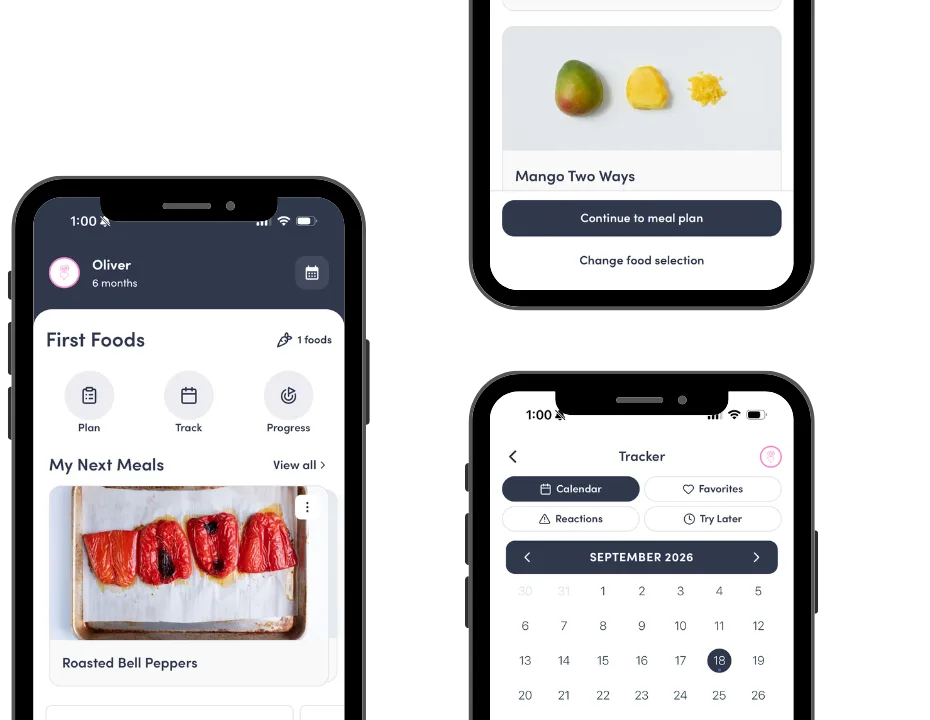
There's even more in the app
Get expert guidance based on your baby's age: serving suggestions, tips, recipes, and more.
Is baby-led weaning safe?
Yes. Multiple studies have shown that there is no increase in the risk of choking when babies who are ready to eat solid food are offered developmentally-appropriate foods.[1] [2] Research also shows it is safer for an individual to feed themselves than to have food placed in their mouth by a caregiver.[2] [3] There is also an emerging body of research demonstrating there are many benefits of baby-led weaning, and these apply whether you choose to start with purees or finger food.[4] [5] Despite the evidence, many well-known books and parenting resources are woefully outdated, and established health institutions and governmental bodies are late to the conversation. There is also a persistent myth that babies need special baby food, when that is simply not true.
The research shows:
Most babies can feed themselves around 6 months.
According to the American Academy of Pediatrics, when a “baby can sit up and bring their hands or other objects to their mouth, [the caregiver] can give them finger foods to help them learn to feed themselves.” And research shows that this is around 6 months old for most infants.[6]
Self-feeding protects against choking.
A baby’s brain is ready to spit out or safely swallow food while their body is actively engaged in chewing.[2] When the brain is not expecting food to enter the mouth, the risk of choking increases when someone else puts food in the mouth.[3] [2] This is one reason why “tricking” babies to eat—distracting them, then quickly putting food in their mouth—can be dangerous.
Bigger foods are safer at first.
A baby’s breathing tube is about ¼ inch (⅔ cm) in diameter.[7] When the breathing tube is blocked, choking occurs. A mango pit isn’t going to get stuck in there, but a blueberry might. Also, bigger foods send more touch and pressure messages to baby’s brain, making it easier for them to acknowledge that it’s there and how it’s moving.[4] In the same way a child learns to catch a large beachball before a small baseball, they learn to move big foods more easily with less skill.
It is safe to start chewing practice now.
Good news: babies do not need teeth to chew (it’s amazing how strong those gums are!) and they have reflexes that protect against choking as they practice eating chewable food. Between 6 and 9 months of age, these reflexes are stronger than they will ever be, and they begin to fade after 9 months of age. In other words, waiting until a baby grows older to offer food that needs to be chewed does not decrease the risk of choking—it may actually increase it.[8] [5]
Purees are not necessarily safer than finger foods.
Multiple randomized controlled trials found no difference in choking incidents between babies fed purees and babies fed foods that need to be chewed.[2] [9] [1] While it is totally okay to let baby explore purees with their hands, and there is no harm in spoonfeeding when you are just getting started with solids, remember: purees do not teach baby to chew. Instead, purees encourage baby to use the same suck-to-swallow skill that they have spent months using to drink breast milk and formula. To learn to chew, babies need to practice with foods that need to be chewed.[5]
Babies can safely start solids with finger food.
Baby-led weaning is not new. For thousands of years, humans have been sharing their food with their babies and allowing babies to learn how to bite and chew through practice with real food.[10] In the history of baby food, it was not until the 20th century that food companies popularized the myths that babies can only eat purees and that babies must be spoonfed. Decades later, Dr. Gill Rapley, a public health nurse in the United Kingdom, coined the term “baby-led weaning” when she observed babies were capable of self-feeding when offered a variety of foods as soon as they are developmentally ready to start solids.
Why baby-led weaning works
When you allow baby to explore solid food at their own pace, you are creating time and space for the child to learn how to feed themselves while laying the foundation for a positive relationship with food. At the same time, baby is figuring out what solid food is, and how it can make the belly feel nourished just like breast milk and formula.
There will be times when baby does not want to participate, or when they simply want to play with their food, and that is okay… even if no food makes its way into the belly. Consumption tends to be low as baby learns to feed themselves, especially at first. Trust that breast milk and formula will continue to satisfy baby’s nutritional needs until they have the skills to eat a variety of foods.
To learn how to feed themselves and develop the skills to bite and chew, babies need to be given the opportunity to practice with real food over and over again. Along the way, mistakes happen, mealtimes are messy, and the learning process may feel frustratingly slow on some days, but stick with it. The research shows there are benefits of baby-led weaning, and regular practice in a pressure-free environment eventually leads to eating (just as practice of any new skill leads to more success!) Keep offering a variety of foods, including iron-rich foods, and enjoy your meal alongside baby so they can learn how to eat by watching you.
What are the benefits of baby-led weaning?
Baby-led weaning helps nurture trust at the table and strengthens your bond with baby whether you decide to offer finger foods or spoons. Self-feeding also has other benefits:
Benefits of baby-led weaning
Skill | How Baby-Led Weaning Helps |
|---|---|
Oral-motor development | Mouthing on food and spoons prompts them to move their jaw up and down and their tongue from side to side, key movements to build chewing skills. |
Eye-hand-mouth coordination | Moving food and spoons to the mouth in a coordinated way requires consistent practice, which they do not get when a caregiver controls the spoon. |
Self-awareness | Bringing food and spoons to their own mouth helps them start to understand that they are their own person, and that they are capable of doing some things on their own. |
Tuning into the body | Letting them explore when they're interested and stop when they are done starts to teach them to listen to their hunger and satiety cues, key to a happy relationship with food. |
Fewer mealtime battles | Exploring different flavors and textures helps babies get comfortable eating a variety of foods long before the opinionated toddler years. |
Self-feeding promotes oral-motor development.
When baby is allowed to grab food or spoons and practice bringing it to their mouth, they are activating oral motor reflexes that are key to building chewing skills. These reflexes naturally cause the tongue to stick out, then move side to side, and the jaw to move up and down. Learning to chew requires regularly and consistently using these reflexes to practice chewing real food.[5] Check out our article, How Babies Learn to Chew for more details.
Self-feeding encourages hand, arm, and eye coordination.
When babies are spoonfed by a caregiver, they do not need to practice moving their arms, hands, and eyes in a coordinated way to pick up food and bring it to the mouth. These are fine-motor and gross-motor skills baby must practice over and over again in order to learn how to feed themselves. When you allow a baby to self-feed, at first they practice using their whole hands to grab food and spoons. As they grow, they develop the ability to use their fingertips to eat, and you can prepare foods in different ways to promote this skill.[11] Learn more in our article, How to Safely Cut Food for Babies.
Self-feeding meets baby where they are.
Around 6 months of age, babies are starting to understand that they are their own person, separate from you, and they are curious about it. They start to recognize themselves in the mirror. They start to communicate by babbling directly at you and others. They are reaching for and grabbing things they want to explore. By offering developmentally-appropriate foods and allowing baby to practice feeding themselves, you are helping baby learn about themselves and that they are capable.[10]
Self-feeding can help prevent mealtime battles.
Babies get comfortable with tastes and textures that they are allowed to practice eating while starting solids, and good news: at this stage, babies are incredibly curious and open to exploring all kinds of new flavors.[5] [4] In fact, the more familiar they become with foods, the more likely they are to develop a lasting preference for them (or willingness to return to them after selective periods!). This is not the case with toddlers, who naturally develop big opinions and more skepticism of food, especially new foods. You can decrease aversion to foods in toddlerhood by offering a variety of foods and allowing baby to practice feeding themselves as soon as they are ready to start solids.[12] [13]
Self-feeding nurtures a happy relationship with food.
There are many reasons why messy eating is good for babies. When babies are allowed to self-feed, they are learning to listen to their hunger and satiety cues, exploring more when their body tells them they want more, and stopping when their body tells them they are done. While there are tons of mistakes at first, this is baby’s first chance to learn about intuitive eating. The ability to listen and respond to these internal cues forms the foundation of a happy relationship with food throughout life. Baby is learning to trust their body to make choices that feel good and nourishing to them.[14] [15]
Self-feeding brings baby into your family’s food culture.
The more a child eats the same foods as their family, the more likely they will eat and enjoy those foods later on. Allowing baby to self-feed makes the transition to sharing meals a bit easier because baby is given the opportunity to practice chewing and get comfortable with the tastes and textures that you enjoy eating.[16] Keep in mind that foods need not be bland for baby. Contrary to popular belief, babies can enjoy big flavors, too.[17]
Baby-led weaning foods
With baby-led weaning, you can skip the artificially created “stages” of baby food and allow them to explore family foods at their own pace. There are many fantastic first foods that introduce a variety of textures, including big pieces of food that a baby can pick up and practice biting and chewing—and letting your baby self-feed is safe whether you choose to offer finger foods or purees.
Food | Description | How It Helps |
|---|---|---|
Food Teethers | Big unbreakable firm foods, like a mango pit or a chicken drumstick | Strengthens the tongue and jaw while letting baby practice chewing in a low risk way |
Big Sticks or Wedges | Soft finger foods like a cooked broccoli floret or strip of cooked meat | Teaches how to take bites, spit out food, and use the tongue to move food around in the mouth |
Mashes & Purees | Naturally smooth or textured food, like hummus, porridge, and yogurt | Encourages baby to practice scooping with hands and spoons |
Bite-Sized Pieces | Small pieces of food around 9 months of age | Promotes pick-up practice with the fingertips once baby has a pincer grasp |
Frequently Asked Questions
You can introduce solid foods with baby-led weaning as soon as a baby is showing all of the signs that they are developmentally ready to start solids, which is generally around 6 months of age.
Yes. It is a myth that babies need teeth to practice eating solid foods. Babies can safely munch and grind age-appropriate foods with their gums. Their chewing skills won’t just appear when teeth emerge. Babies are born with reflexes to help them learn how to chew, and it is safe for them to practice breaking down foods with their gums until their teeth pop. Check out How Babies Learn to Chew to learn more.
You do not need to do anything different with baby-led weaning if your baby has teeth. Babies are able to bite off pieces of food with or without teeth, and this actually helps them learn how to bite and chew. Biting off a piece of food teaches them how to manage the food in their mouth and can reinforce the life-saving skill of spitting food out. Check out What to Do When Baby Takes a Big Bite to learn more.
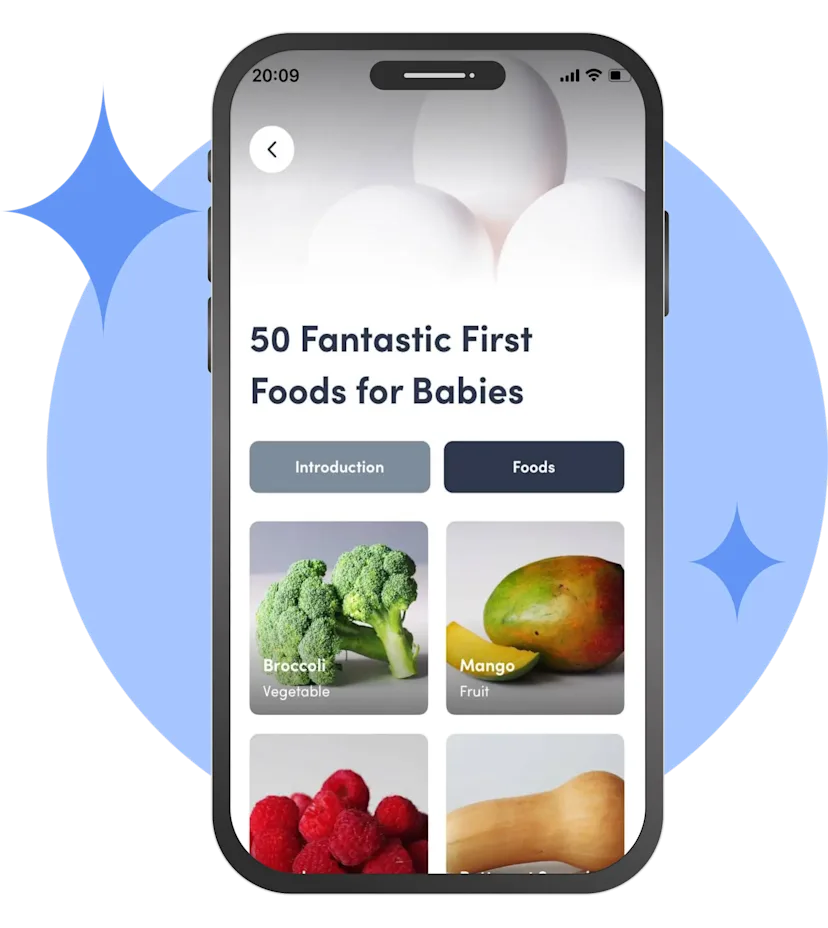
Almost any food in the world can be safely prepared and shared with babies starting solids with baby-led weaning. We suggest trying food teethers, which are fantastic first foods to build your baby’s chewing skills, but there are so many fantastic first foods. Subscribe to the Solid Starts App for a guide to our favorite first foods to build your baby’s eating skills.
How to safely prepare foods for baby-led weaning depends on the type of food and baby’s motor skills, which vary by age and how much practice they’ve had so fa. For example, big and unbreakable pieces of food (like corn on the cob or a mango pit) are fantastic first foods for babies who are just getting started, while babies with some experience may be ready to practice picking up bite-sized pieces of food. Research shows the risk of choking is lower when an individual feeds themselves, so foods should be prepared in a way that makes it easy for baby to grab, hold, and bring food to their mouth on their own. It’s okay to offer a little assistance if they need help (like passing a piece of food or a loaded spoon in the air so they can grab it) but ideally they are taking the lead. Check out How to Safely Cut Foods for Babies to learn more.
Yes. The goal with baby-led weaning is to let baby practice feeding themselves, and mashes and purees are fantastic first foods to get started… although they are quite messy so prepare yourself for a clean-up when baby is all done. If you want to minimize the mess, you can preload a spoon for baby, then hold it in the air within their reach and let them lean in and grab it from you. This way, they are less likely to suck food like breast milk or formula. Sucking purees won’t hurt, but the movement—one baby knows so well from months of practice—must be replaced by chewing food, and letting baby self-feed is the first step. Check out Purees to Finger Foods for guidance.
Yes. Daycare and caregivers often feel more comfortable offering purees, which will not confuse your baby if they are only offered finger foods at home. Babies learn best when they feel comfortable around their caregivers, so it is important that whoever you put in charge of feeding your baby feels calm and confident at mealtime. Ask your caregivers if they would feel comfortable letting baby control the spoon, and if they prefer to spoonfeed, you can offer them tips that let baby take the lead. Check out How to Teach Baby to Use a Spoon for details.
Yes. Baby-led weaning has many benefits, but the mess is not one of them. When you want to control the spoon to help minimize the mess, you can follow responsive spoon-feeding practices, like holding the spoon in the air near their mouth, then waiting for them to lean in and take a bite. Check out How to Teach Baby to Use a Spoon for more tips.
As soon as you feel ready. The research is clear: there are many benefits to letting babies practice eating finger foods as soon as they are ready to start solids around 6 months of age, and that it is ideal to start before 9 months of age. You can offer purees at first if it makes you feel more comfortable, then offer finger foods once you feel more confident. Ideally, your baby is practicing with finger foods a week or two after starting solids so they can start practicing eating different shapes and textures. However, it is okay if you’ve been offering purees for a few weeks and just starting to move toward finger foods. Check out Transitioning from Purees to Finger Food for guidance.
Solid food once a day is more than enough around 6 months of age. If your baby is so interested that they are ready to explore solid food twice a day, go for it but it is not necessary. After a month or two, start offering solid food twice a day when possible so they have more opportunities to strengthen their eating skills and start to understand that solid food can fill the belly. The goal is to gradually work toward offering solid food three times a day (plus snacks) around the first birthday. Check out Feeding Schedules for more information.
Breast milk and formula are the main source of nutrition until a baby has the skills to eat a variety of solid foods. Focus on regularly offering different shapes and textures so they can practice eating them. As their eating skills improve over time, they will begin to consume greater quantities at meal time and gain more nutrition from solid foods. Check out How to Tell If Baby Is Eating Enough Solids for more information.
No. It is normal for babies to not eat much (or any!) solid food at mealtime, especially during the first few weeks of starting solids. There are many reasons why this happens, so the first step is to pay attention to their cues. Once you have a theory on why baby won’t touch food, there are many strategies to try to encourage them to eat. Check out What to Do When Baby Won’t Touch Food for details.
Reference Material
Correia, L., Sousa, A. R., Capitão, C., & Pedro, A. R. (2024). Complementary feeding approaches and risk of choking: A systematic review. Journal of Pediatric Gastroenterology and Nutrition, 79(5), 934–942. https://doi.org/10.1002/jpn3.12298
Fangupo, L. J., Heath, A. M., Williams, S. M., et al. (2016). A baby-led approach to eating solids and risk of choking. Pediatrics, 138 (4), Article e20160772 https://doi.org/10.1542/peds.2016-0772
Shune, S. E., Moon, J. B., & Goodman, S. S. (2016). The effects of age and preoral sensorimotor cues on anticipatory mouth movement during swallowing. Journal of Speech, Language, & Hearing Research, 59(2), 195–205. https://doi.org/10.1044/2015_JSLHR-S-15-0138e
Start solids with confidence
- Guided Introduction to 100+ Foods
- Smart Tools to Simplify Mealtime
- Food Allergen 101
- 300+ Meal Ideas
- First Foods® Database
Start solids with confidence
- Guided Introduction to 100+ Foods
- Smart Tools to Simplify Mealtime
- Food Allergen 101
- 300+ Meal Ideas
- First Foods® Database