Foodborne Illness and Babies
A parent's guide to what foodborne illness is, why babies are more vulnerable, how to prevent it in your own kitchen, and what to do if your child gets sick.
Key Points
Babies are more vulnerable to foodborne illness
Their immune systems are still developing, so their bodies are more sensitive to the germs in food.
A few core safe food prep practices can reduce much of the risk
Wash hands and surfaces, cook proteins to the right internal temperature, chill leftovers promptly, and hold off on high-risk foods.
Watch for signs of dehydration
Most foodborne illness clears up at home, but babies and toddlers can dehydrate quickly from vomiting and diarrhea. Know the warning signs and when to call your pediatrician.
What is foodborne illness (food poisoning)?
Foodborne illness, often called food poisoning, refers to any sickness caused by eating food or drinking water that has been contaminated with harmful germs including bacteria, viruses, or parasites. Common culprits include Salmonella, Listeria, E. coli, Campylobacter, norovirus, and parasites like Cyclospora. Symptoms usually involve the digestive system: nausea, vomiting, diarrhea, and stomach cramps, sometimes with fever or fatigue.
How sick someone gets from one of these illnesses depends on the germ in question, the age and health of the person, and a number of other factors. In general, foodborne illnesses tend to resolve on their own within a few days. The concern with babies and young children is often less about the illness itself and more about how quickly they can become dehydrated from vomiting or diarrhea, which is why prevention and knowing the warning signs is so important.
Can babies get food poisoning?
Yes, babies and young children can get food poisoning, and they're actually more at-risk of severe symptoms than older children and adults. Their immune systems are still developing, so their bodies are less equipped to fight off the germs that cause foodborne illness. Their smaller body size also means they can become dehydrated much faster than an adult once vomiting or diarrhea starts.
This doesn't mean you should approach feeding your baby from a place of anxiety or fear. Following basic food safety habits are worth building into your routine, for the health of everyone in the family–including babies and toddlers.
What are the symptoms of food poisoning in babies?
Symptoms of foodborne illness in babies typically show up in the digestive system and can include diarrhea, vomiting, stomach cramps or a tender belly, gas and bloating, loss of appetite, and fussiness or fatigue. Some illnesses also cause a low-grade fever. Depending on the germ involved, symptoms can begin anywhere from a few hours to a couple of weeks after eating the contaminated food.
Because babies can't tell you how they feel, watch for changes in behavior and diapers: more frequent or watery stools, refusing to eat or drink, unusual sleepiness, or a noticeable drop in number of wet diapers.
Which foods can cause foodborne illness in babies?
Some foods carry a higher risk than others and are worth avoiding or preparing with extra care for babies and young children:
Food | Risk |
|---|---|
Honey | Carries a risk of infant botulism for babies under 12 months of age |
Raw or undercooked meat, poultry, and eggs | Can harbor Salmonella, E. coli, and other bacteria |
Raw or undercooked fish and shellfish | Includes sushi, and some cured or cold-smoked fish |
Unpasteurized (raw) milk, cheeses made from raw milk, and unpasteurized juices | Risk of foodborne illness |
Deli meats and hot dogs | Risk of Listeria unless heated until steaming |
Raw sprouts | Grown in conditions that can promote bacterial growth |
Certain raw produce | Risk during active outbreaks (see cyclosporiasis, below) |
How to Prevent Foodborne Illness When Feeding Your Baby
Babies and young children have immune systems that are still developing, which means their bodies are more sensitive to foodborne illness. Fortunately, safely preparing food for babies is easier than you think. Here are some food preparation practices to reduce the risk of illness and help you feel more confident in the kitchen.
Safe Food Prep Before Cooking
Wash your hands frequently, before, during, and after cooking.
Keep your food preparation areas clean. Regularly wipe down counters and wash cutting boards and knives, especially after handling higher-risk foods like raw meat or fish.
Store similar foods together in the fridge. Keep vegetables with vegetables and meats with meats, etc., which helps reduce the spread of germs from one food to another.
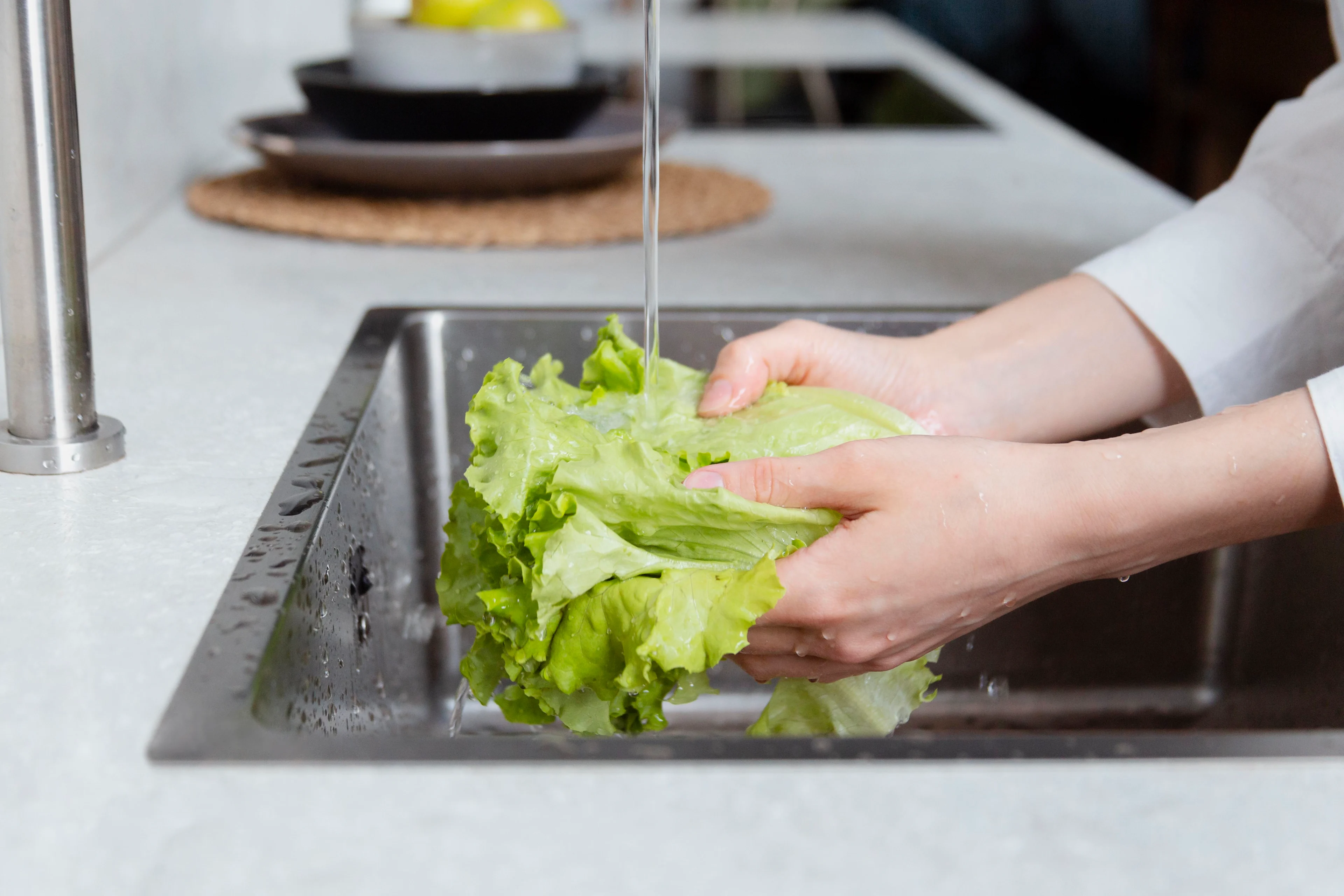
Wash all fruits and vegetables well before cutting into them, including organic produce and prewashed produce. This reduces bacteria on the skin's surface. Running water while rubbing or scrubbing the outside of the food helps more than rinsing alone; there's no need for a special produce wash unless you'd like to use one.
Defrost frozen food in the refrigerator ahead of time, not on the counter or at room temperature.
Pay attention to expiration dates, and throw out any foods that are expired, or that look or smell "off."
Regularly replace your dish sponge and wash kitchen towels to prevent the buildup of unfriendly bacteria.
Safe Cooking for Babies
Cook food thoroughly. Eggs, meat, and fish should be cooked well-done; eggs should not still be runny. Raw or undercooked proteins like raw fish (including sushi), certain cured meats, and smoked fish carry an increased risk of foodborne illness.
Cook proteins to their ideal internal temperature:
Ground red meats (beef, pork, lamb): 160°F (71.1°C)
Seafood: 145°F (63°C)
Whole red meats (not ground): 145°F (63°C), then let rest 3 minutes before serving
Poultry (turkey, chicken, duck): 165°F (74°C)
Hold off on cooking with alcohol. You may have heard that alcohol "cooks off," but this isn't as reliable as it sounds, and varying amounts can remain in the finished dish. Babies are sensitive to even small amounts of alcohol. Vanilla and similar extracts are fine in the small amounts used in typical cooking.
Cook sprouts thoroughly and avoid sharing them raw with babies. Sprouts grow in an environment that can promote bacterial growth, so cooking at high heat helps make them safer.
Hold off on honey until after the first birthday to minimize the risk of infant botulism.Read more about honey.
Avoid unpasteurized milk products, including raw cow's milk and cheeses made from raw/unpasteurized milk, which greatly increase the risk of foodborne illness.
Don't stress about salt and sugar. It's okay to share foods with some salt and sugar as part of a varied diet. Read more on salt and sugar.
Cook and store food in metal, glass, or wooden containers when possible, to reduce microplastics and undesirable chemicals in food.
Storing Food Safely
Refrigerate food as soon as possible after cooking. Try not to leave food out at room temperature for more than two hours.
Know your storage windows. When stored properly, most foods last about 3–4 days in the refrigerator or 3–4 months in the freezer.
Wipe down spice and herb jars after cooking. Studies show that because these containers aren't commonly cleaned, germs from raw foods can spread to them and become a source of foodborne illness at home.
For storing breast milk, formula, or foods made with them, see our pages on breast milk and formula.
Reheating Leftovers Safely
Reheat until steaming, then let the food cool until it's no longer hot. Make sure it's heated all the way through.
Check the temperature by touching or tasting the food before serving it to your baby.
If microwaving, check for hot spots before serving, since microwaves heat unevenly.
What are the most common types of foodborne illness?
Different germs cause foodborne illness in different ways. A quick overview of some of the most common:
Illness | Description |
|---|---|
Salmonella | often linked to raw or undercooked poultry and eggs; causes diarrhea, fever, and cramps. |
Listeria | found in unpasteurized dairy, deli meats, and soft cheeses; less common but can be serious |
E. coli | associated with undercooked ground beef and contaminated raw produce; can cause severe diarrhea. |
Campylobacter | commonly from raw or undercooked poultry and unpasteurized milk. |
Norovirus | very contagious virus spread through contaminated food, water, and surfaces; causes sudden vomiting and diarrhea. |
Clostridium botulinum (infant botulism) | the reason honey is avoided before age one. |
Cyclospora | a parasite spread through contaminated fresh produce |
What is cyclosporiasis?
Cyclosporiasis is an intestinal illness caused by a tiny parasite called Cyclospora cayetanensis. The parasite spreads through contaminated food or water and infects the small intestine. Cyclosporiasis can cause severe illness and sometimes require hospitalization, but it is not usually life-threatening.
The illness causes watery diarrhea that can be frequent and sometimes explosive, along with loss of appetite, stomach cramping, bloating, nausea, and fatigue. Less commonly, it can cause vomiting, body aches, headache, and low-grade fever. Symptoms usually begin about one week after exposure, though the range is anywhere from 2 days to 2 weeks or more, which can make tracing the source of illness tricky. Without treatment, symptoms can last from a few days to a month or longer, and they can even seem to improve and then return. Babies, toddlers, and young children are especially at risk for dehydration from prolonged diarrhea.
In the United States, outbreaks have almost always been linked to fresh produce. Importantly, disinfectants like chlorine, bleach, and vinegar do not kill Cyclospora. Washing with water may physically remove some of the parasite from the food, which can reduce the risk of illness, but washing is not a completely reliable method of making contaminated produce safe.
Cyclosporiasis Outbreak 2026: What Parents Need to Know
As of July 2026, the CDC is tracking nearly 7,000 cases of cyclosporiasis across at least 34 states. Cyclosporiasis is not a new illness–cases are reported every year–with increases noted every summer, since the parasite thrives in warm, humid weather. But this year’s cases are significantly higher than in prior years. Michigan's Department of Health and Human Services (MDHHS) was the first state agency to publicly flag lettuce and salad greens as a potential source on July 4, 2026, and the FDA confirmed on July 14, 2026. Check foodsafety.gov for updates as health officials work to identify the source.
During an active, documented outbreak of cyclosporiasis, here are some tips for reducing your family’s risk of exposure:
It can be a good idea to temporarily avoid serving some of the highest-risk produce raw to babies and toddlers. During this outbreak, consider skipping raw salad greens, pre-washed bagged salads, fresh cilantro, fresh basil, and raw raspberries until the source is identified and resolved. Avoid salad bars and pre-made salads with raw greens while the outbreak is active.
Cook produce when possible. Cooking to 158°F (70°C) or higher is the only reliable way to kill Cyclospora. For firm produce like melons and cucumbers, scrub under running water and peel before eating, since the peel carries the risk. For lettuce when cooking isn't possible, buy whole heads rather than bagged lettuce or salad mixes; discard the outer leaves; and rinse the inner leaves under running water, and understand this reduces but does not eliminate risk.
Wash your hands with soap and water before and after handling raw produce, before preparing meals, and before feeding children. Alcohol-based hand sanitizers are less effective against parasites than regular soap and water.
How is foodborne illness in babies treated?
Most foodborne illness in babies and toddlers is mild and gets better on its own within a few days. Focus on keeping your child hydrated and comfortable. Because many cases are caused by viruses or resolve quickly, antibiotics usually aren't needed or helpful. Some infections—such as cyclosporiasis, which is caused by a parasite—do have a specific antibiotic that your doctor can prescribe.
Avoid giving anti-diarrheal medications to babies and young toddlers unless your pediatrician specifically recommends it. If symptoms are severe, persistent, or keep returning, your doctor can determine whether testing or a specific treatment is warranted.
Food Poisoning in Babies: When to Call the Doctor
Call your pediatrician:
If you think baby might be dehydrated
If a baby or toddler has diarrhea lasting more than 2 days, especially with vomiting, fever, or refusal to eat or drink
If you see blood in baby’s poop (this symptom can mean a more serious infection that needs evaluation
If symptoms improve and then return
Trust your instincts—you know your child best. If your child seems very unwell or you're worried, it's always a good idea to check in with baby’s doctor.
Signs of Dehydration in Babies and Toddlers (When to Go to the ER)
Dehydration is typically the most dangerous complication of foodborne illness in young children. Seek emergency care if a child shows any of the following:
No wet diapers for 6 or more hours (or very dark, concentrated urine)
No tears when crying
A sunken soft spot (fontanelle) on the top of a baby's head
Sunken eyes, or a very tired, limp, or unusually fussy appearance
Dry mouth and lips
Excessive sleepiness or difficulty waking
A hoarse or weak cry
How to Keep a Sick Baby Hydrated at Home
Continue breast or bottle feeding as much as baby wants to throughout the illness. Breast milk and formula offer essential hydration and nutrition. If your doctor recommends it, you can offer small sips of an oral rehydration solution such as Pedialyte. Avoid offering apple juice, sports drinks, soda, or plain water to babies as rehydration fluids.
For solid food meals, offer them if baby seems interested, but don’t stress if baby only seems interested in milk feeds while they aren’t feeling well. Resume a normal, age-appropriate meals whenever your child seems ready. There's no need to restrict food to the so-called "BRAT diet"; whatever foods baby had been eating before the illness are fine as baby recovers too.
Frequently Asked Questions
It depends on the germ, but most cases of foodborne illness in babies clear up within a few days. Some, like certain parasitic infections, can last longer or symptoms can come and go. Throughout, the priority is keeping your child hydrated. If diarrhea lasts more than 2 days, keeps returning, or comes with signs of dehydration, call your pediatrician.
Yes! Breast milk provides essential hydration and nutrition, so there's no need to stop. In fact, keeping up with baby’s milk feeds is one of the best ways to help prevent dehydration during a diarrheal illness.
Washing fruits and vegetables under running water is a good habit to reduce the risk of illness, as it helps remove surface bacteria, so it's worth doing before you cut into any produce. That said, washing doesn't remove every germ. Some parasites like Cyclospora cling stubbornly and aren't reliably rinsed off, and vinegar or produce sprays don't kill them. Certain germs are only eliminated by cooking the food.
Cooking to the proper temperature reliably kills most foodborne germs, which is why thoroughly cooking meat, poultry, eggs, and high-risk produce is so effective. Freezing is different: it can slow or stop germs from multiplying, but it doesn't reliably kill them, so food that was contaminated before freezing can still make someone sick. When in doubt, cook it through.
They can be hard to tell apart, since both cause vomiting and diarrhea. Foodborne illness comes from contaminated food or water, while a "stomach bug" usually refers to a virus (like norovirus or rotavirus) that spreads from person to person. The good news is that the home care is largely the same: focus on hydration, watch for signs of dehydration, and call your pediatrician if symptoms are severe, last more than a couple of days, or keep returning.