


Acceda a la base de datos First Foods® en Solid Starts App.
Leer másSemolina
Grano
Sugerencia de edades
6 meses
Alto contenido de hierro
Sí
Alérgeno común
Sí
When can babies have semolina?
Semolina may be introduced as soon as baby is ready to start solids, which is generally around 6 months of age.
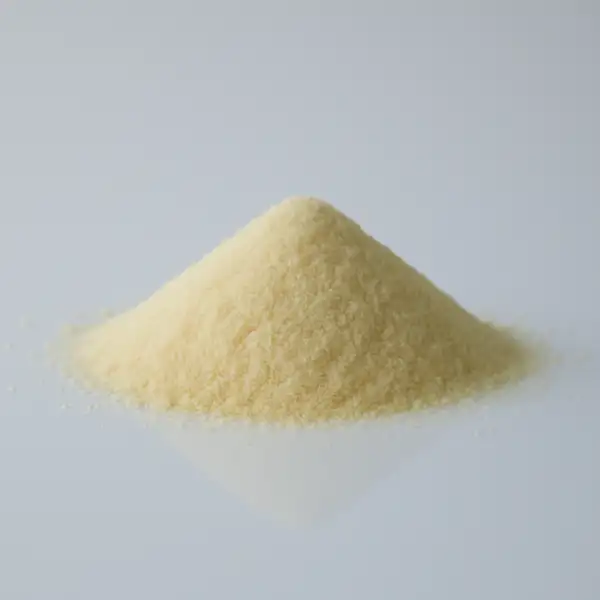
Semolina is a coarse flour made from durum wheat, one of the hardest types of wheat. It has long been a staple in cuisines across Europe, North Africa, and South Asia, where it goes by the names rava or sooji, among others. In Italy, semolina is often used to make pasta; in India, it appears in sweet and savory dishes like halwa and upma; and in North Africa, it is a key ingredient in making couscous.
How do you serve semolina to babies?
Cada bebé se desarrolla a su propio ritmo, y las sugerencias que ofrecemos sobre cómo cortar o preparar determinados alimentos son generalizaciones para una amplia audiencia.
6 months old +:
Offer semolina as a porridge for baby to scoop with their hands or eat from a pre-loaded spoon. You can use breast milk, formula, water, or, as long as you’ve ruled out a dairy allergy, a small amount of milk to cook the semolina. Feel free to stir in mashed fruits, vegetables, or spices like cinnamon for variety. Hold off on serving semolina porridges made with honey due to the risk of infant botulism.
You can also serve noodles or large pasta shapes made from semolina. If serving couscous made from semolina at this age, mix it into a sauce or other scoopable food like yogurt–the tiny grains can be difficult to scoop and can scatter in the mouth, making it more challenging for babies.
9 months old +:
Offer semolina porridges made with breast milk, formula, water, or, as long as you’ve ruled out a dairy allergy, a small amount of milk. Hold off on serving semolina porridges made with honey due to the risk of infant botulism.
Alternatively, incorporate semolina into patties, pancakes, or soft dumplings, and serve in bite-sized pieces to support the development of baby’s pincer grasp, where the thumb and first finger meet to pick up smaller pieces of food. Serve any size or shape of pasta made from semolina that the family enjoys. If serving couscous made from semolina at this age, mix it into a sauce or other scoopable food like yogurt or mash them with the back of a fork to help flatten them and stick them together a bit–the tiny grains can be difficult to scoop and can scatter in the mouth, making it more challenging for babies.
12 months old +:
Continue serving semolina porridge as well as breads, pasta, puddings, or grain-based casseroles made from semolina. Around this age, children may become more interested in practicing with a utensil. Cooking semolina porridge until it is a bit thicker can help it cling to spoons for easier self-feeding, but don’t be discouraged if it’s still quite messy or the child opts for their hands too. Keep in mind that using utensils can be exhausting for new eaters, and many children toggle back and forth between feeding themselves with their fingers and utensils. Try not to apply too much pressure—consistent and accurate utensil use will come in due time—probably after the second birthday.
Is semolina a choking hazard for babies?
No. Semolina presents a low risk when safely prepared for a child’s age and developmental ability, though, in theory, an individual could choke on any food. To reduce the risk, prepare and serve semolina in an age-appropriate way as described in the How to Serve section. As always, make sure to create a safe eating environment and stay within reach of baby during meals.
Learn the signs of choking and more about choking first aid in our free guides, Infant Rescue and Toddler Rescue.
Is semolina a common allergen?
Yes, semolina is a form of wheat, and wheat (as well as other gluten-containing cereal grains) is classified as a common allergen. Wheat is one of the most common food allergens in children. Fortunately, two-thirds of children outgrow the allergy by their 12th birthday.
It is important to note that wheat allergy is not the same as celiac disease. While a wheat allergy may be outgrown, celiac disease requires a strict, lifelong gluten-free diet and lifestyle. A gluten “allergy” is typically a misnomer, often in reference to celiac disease.
While rare, some individuals have a condition known as wheat-dependent, exercise-induced anaphylaxis, which can result in a severe allergic reaction if the person exercises within a few hours after eating wheat. These patients should avoid eating wheat in the four hours before strenuous activity.
Lastly, individuals with Oral Allergy Syndrome (also known as pollen food allergy syndrome) may be sensitive to wheat, particularly those who are allergic to grass pollen. Oral Allergy Syndrome typically results in short-lived itching, tingling, or burning in the mouth, and can also result in gastrointestinal distress (abdominal pain, cramping, bloating, or diarrhea) in some cases—especially if the grain was not properly digested and the proteins reach the lower GI tract intact. While uncomfortable, it is unlikely to result in a dangerous reaction.
If you are concerned that your baby may be allergic to wheat, talk to a pediatric health care professional before introducing wheat at home. As you would when introducing any new food, start by offering a small quantity for the first few servings and watch closely for any signs of an allergic reaction. If there is no adverse reaction, gradually increase the amount over future meals.
Is semolina healthy for babies?
Yes. Semolina is a good source of B vitamins and complex carbohydrates, which support red blood cell production, energy metabolism, and growth. It also provides protein, iron, and a small amount of fiber.
Is semolina gluten free?
No. Semolina is made from durum wheat and contains gluten. It is not safe for individuals with celiac disease, gluten intolerance, or wheat allergy.
Consejos de expertos directo a tu bandeja de entrada
¡Suscríbete y recibe correos semanales con recetas, consejos y más!




Copyright © 2026 • Solid Starts Inc