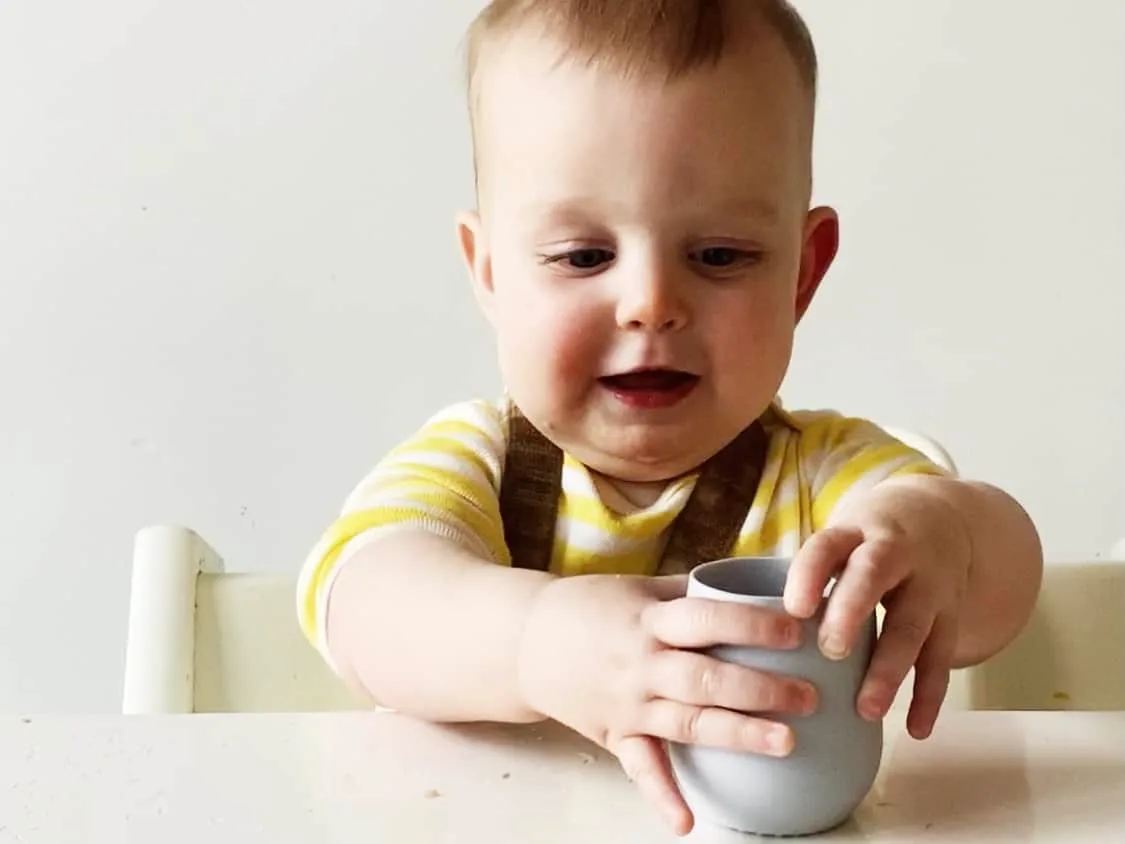
How to Teach Baby to Drink from a Cup
Everything you need to know about teaching your baby to drink from an open or straw cup, written by licensed pediatric feeding experts.
Key Points
Start with an open cup and a straw cup around 6 months of age
Kickstart learning the lifeline skills of drinking from an open cup and straw when starting solids. If you’re getting started later, introduce cups as soon as you can.
Alternate between open cups and straw cups to build different skills
Start with an open cup or a straw cup and switch after a few days, or even alternate between meals. Both styles have benefits and neither is better than the other to get started.
Cup drinking skills improve with practice, but it takes time
Consistently drinking from a cup without spills usually happens between 2 and 3 years of age. Manage your expectations: occasional spills are normal through the 3rd birthday.
Choose an Open Cup and a Straw Cup
We recommend choosing two styles: an open cup and a straw cup. They teach different skills, including sealing the lips, sucking while sealing the lips (using straws), tilting to drink (from open cups), and preventing spills.
We don’t recommend sippy cups for cup drinking practice. There is no harm in using them, but sippy cups just aren’t as helpful as open cups and straw cups when you’re trying to build the lifelong skill of drinking from cups and straws. Drinking from a sippy cup is an “expiration skill” that loses its value as a baby grows into a toddler.
Check out Best Cups for Baby for product recommendations and reviews of our favorites.
Choose A Cup to Start
You can choose to start with an open cup or a straw cup. We’ll start by explaining how to teach baby to drink from an open cup, but you can jump ahead to how to teach baby to drink from a straw if you’d prefer to start with that style.
There is no research to suggest that one is better than the other to get started, or that you must start with a straw cup and move on to an open cup once they’ve figured out how straws work. We encourage you to offer both styles—an open cup and a straw cup—and alternate between meals. This way, they can practice different skills.


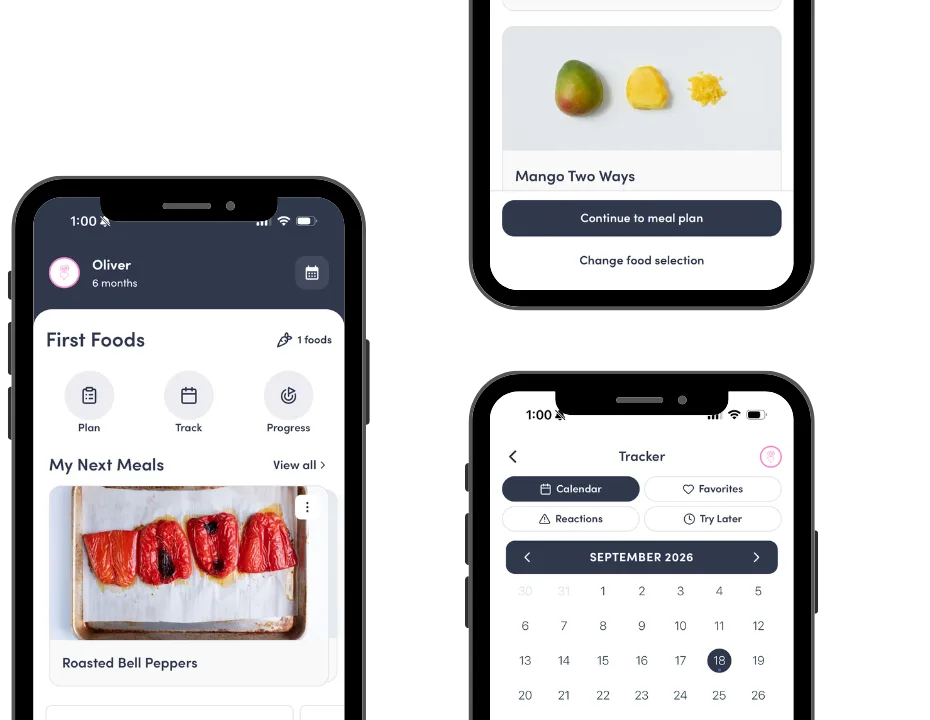
There's even more in the app
Get expert guidance based on your baby's age: serving suggestions, tips, recipes, and more.
Teach Baby to Use an Open Cup
Your goal: let baby try to use the cup and expect some spills. They will not learn if they just sit back while you pour liquid into their open mouth.
Step | Guidance |
|---|---|
Step 1 | Pour a small amount of water, breast milk, or formula (1 to 2 fl oz or 30 to 60 mL at most) in a cup. Bring the cup to the table with baby seated in the high chair or in your lap. |
Step 2 | Catch baby’s attention, bring the cup to your mouth, and take a small sip. (You can sip from baby’s cup or use your own, ideally one that looks similar to baby’s cup.) |
Step 3 | After you’ve taken a sip or two, let baby try. Hold it in front of baby so it’s within reach, and let baby try to grab it. Don’t bring the cup to their lips right away. Give them a bit to touch and try to hold the cup, then gently assist with moving it toward their mouth. |
Step 4 | After baby has reached for the cup, help them guide it to their mouth and stabilize it on their lower lip. Tilt it just enough to bring the liquid to their mouth. You might see baby lick, spill, or even cough and sputter a bit. This is normal. As baby learns, there will be many mistakes before they get it right. |
Step 5 | Repeat the previous steps a few times, and eventually, baby will want to hold the cup. With a small amount of water in the cup (it will get spilled), set the cup in front of them and let them try. When they inevitably tilt the cup too far and spill it on themselves, stay positive and say, “Oops! Slower next time.” Keep a towel nearby to wipe up when they’re done. |
Teach Baby to Drink from a Straw
When introducing cups with straws, babies often “get it” immediately because they are used to sucking from the breast or bottle. If they don’t catch on right away, you may need to teach them to close their lips and suck. This can be helpful for babies who are 8 months of age or older who are trying to drink from a straw for the first time.
There are two different methods to teach babies to drink from a straw: the pipette method and the straw trainer method. We recommend you start with the pipette method because it is usually effective at helping babies understand they need to close their lips around the straw to drink.
How to Teach Baby to Drink from a Straw with the Pipette Method
Step | Guidance |
|---|---|
Step 1 | Dip a straw (a standard plastic straw will do) in breast milk, formula, or water, then tap your finger on top of the straw to trap a small amount of liquid in the bottom. |
Step 2 | Hold the straw near baby’s face and wait for baby to open their mouth to accept it. |
Step 3 | When baby accepts the straw in their mouth, lift your finger from the top to allow the liquid to pour into their mouth. |
Consider a Straw Trainer
A straw trainer is a special cup designed to help babies who are struggling to drink from a straw with the pipette method. Straw trainer cups include the Mr. Juice Bear Cup, the Honey Bear Straw Cup, The First Years Squeeze and Sip Straw Cup, and the Take & Toss Straw Cup. These cups have a very short shelf life (baby outgrows it as soon as they learn to drink from it) but they can be quite effective, especially for babies who are struggling with the pipette method.
How to Use A Straw Trainer to Teach Straw Drinking to Baby
Step | Guidance |
|---|---|
Step 1 | Bring the straw trainer cup with water, breast milk, or formula to the table. Hold the cup near their mouth to encourage them to reach for it. |
Step 2 | Wait for baby to open their mouth and lean in to accept the straw, then give the cup a little squeeze, which will express a small amount of liquid through the straw into their mouth. Most babies will respond by immediately sealing their lips around the straw. |
Step 3 | After practicing a few times, try again but do not squeeze. Instead, let baby try to get the liquid out of the straw by sucking. |
Step 4 | It may take several attempts, but with practice they will begin to understand how to use the straw and no longer need the squeeze feature. When this happens, transition to other straw cups to generalize the skill to all straws. |
Common Challenges with Cup Drinking
Baby's lips won't close around straw
If you have tried both the pipette method and the straw trainer method, and baby still won't close their lips around the straw, try one of these methods:
Puree on a straw. Dip the end of a straw in puree, then hold it near their mouth and wait for them to reach for it. The texture of puree cues them to seal their lips around the straw. After trying this a few times, try the pipette method or the straw trainer method again with water, breast milk, or formula.
Baby sucks the straw, then spits or lets the water fall from the mouth
This is normal in the beginning. If it continues for more than a few weeks, there are different ways to slow down the flow of liquid into their mouth, which gives them a bit more time to coordinate sipping and swallowing.
Narrow straws. Try using a straw with a little more resistance and a slower flow, such as a straw with a smaller diameter. If baby is particularly struggling, you could try an even narrower straw, such as a coffee stirrer. The small size encourages them to close their lips more tightly around the straw, which can help keep the liquid in the mouth. Once baby has success with this, they are typically able to generalize the skills to larger diameter straws.
Modeling. Let them watch as you show how it’s done. Take a sip, point to your mouth and then gesture with your hand the action of the liquid moving down your throat all the way to your tummy (rub your tummy). Then open your mouth and say “ahhh!” to show that the liquid is gone. This can help baby understand that the goal is to swallow the liquid.
For toddlers 12 months+ Offer a straw cup with a thicker liquid, such as kefir or a smoothie. These drinks tend to move more slowly, giving the child's brain more time to understand where the liquid is moving in the mouth. Typically after trying this a couple times, toddlers can manage thin liquids more effectively.
Need help choosing a cup? See Best Cups for Baby for our recommendations and reviews.
Baby not interested in cup drinking
There are a few strategies to try when a baby is not interested in trying to drink from a cup or straw.
Wait it out. At first, many babies need you to model how it’s done before they give it a try. As long as they are interested and not upset by a cup, simply bring a cup to each meal, model how to take a sip, and be patient. They’ll eventually follow your lead.
Share a cup. You can model the behavior by drinking from a cup at mealtimes and occasionally offering the same cup to baby. Stay calm and trust baby will learn by watching you.
Chase the why. Ask yourself, “Why is this happening?” then let their cues guide your support. Do they want to hold the cup? Are they frequently spilling it? Are they possibly feeling too much pressure and need a break? Understanding their behavior can inform your next step.
Change your approach. If baby is struggling or appearing frustrated, stick with one style of cup for several days or weeks at a time, rather than switching back and forth between straw cups and open cups. This can help them focus on one cup drinking skill at a time.
Take a break. If baby cries at the sight of the cup or immediately arches and pushes the cup away, it is absolutely okay to take a break for a few days, then try again with a different cup. This can act as a sort of “reset” for both of you.
Baby won’t hold their cup
Some babies won’t hold a cup without your help. Others want you to hold it for them. When this happens, try the following:
Step 1
Hold the cup in front of baby then wait. Be patient. Eventually, baby will likely lean in and put their mouth on the cup, and when this happens, you can gently guide their hands onto the cup, then help tilt the cup.
Step 2
After practicing a few times, baby will likely begin reaching for the cup when you offer it. Once baby starts to do this, remove your hands and let baby hold the cup on their own.
Step 3
Progress to handing over the cup and eventually, setting the cup on the tray or table for baby to pick up. Alternatively, you can bring the cup to the side just out of reach of baby’s mouth, which will often prompt baby to reach for the cup to try to guide it to their mouth.
Baby pours the open cup all over themselves
This is normal and expected for the first few weeks. There are a few strategies that can help baby improve their coordination.
Smaller amount. Less liquid in a cup (such as ½ fl oz or 15 mL) is just enough that if they pour all of it in their mouth, the liquid won’t overwhelm them.
Prevent soaking clothes. At the table, use a scoop bib to catch falling water. You can also lay a towel across their lap to prevent upset from sudden wetness. You can also try practicing outside or in the bath where baby may be more comfortable with spills while learning.
Take a break. If baby is already too upset and refuses the open cup, try a straw cup for a while, then try again with the open cup in a few days or weeks.
For toddlers 12 months+ Use liquid with a thicker texture (such as a kefir or smoothie) to slow down the flow. After practicing with thicker liquids for a few days, go back to thin liquids. This can improve their chances of success and encourage them to keep practicing.
Baby coughs when drinking from the straw
As baby learns to drink from a straw, they are figuring out how to move liquid around in their mouth in a new way, which can be overwhelming and result in coughing or sputtering. While this is expected for a few weeks when first getting started, if it continues to happen even after practice,, try one of these tactics:
Narrow straw. A straw with a small diameter (such as a coffee stirrer) requires baby to form a tighter seal with their lips, and only takes in a small amount of fluid with a lot of effort from baby, which gives them time to coordinate the swallow.
One sip then pull away. Some babies inadvertently guzzle fluid, which can be hard to manage. To help teach baby to pace themselves, try this: gently guide the cup to baby’s mouth and, after they take a single sip, gently pull it away and wait for baby to swallow before guiding the cup back to their mouth.
Swirly straw. These straws require more time to suck the liquid up and out of the straw. This naturally requires more effort from baby, and baby will typically get less liquid in the mouth, allowing it to be more easily managed before swallowing.
For toddlers 12 months+ Offer thicker drinks, such as kefir or a smoothie. These thicker liquids require increased effort to drink and naturally slow the flow as they are slower moving. This helps train toddlers to manage liquid coming into the mouth.
If you have tried these strategies and you are still seeing baby cough with most attempts at cup drinking, review the options in When to Seek Help.
Baby only bites the straw
This is normal behavior for babies who are trying to build jaw stability and coordination. To encourage baby to suck, use a firm straw that won’t collapse and model how to use it. Move slowly as you bite on the straw, then let go and just use your lips. You can also practice with the pipette method so baby feels liquid coming out of the straw.
Baby putting food in cup/splashing
This is a normal form of exploration for babies and toddlers, and it’s great for children to explore different textures. On the other hand, it can be distracting and quite messy. If you want to decrease this behavior at the table, try to offer opportunities for play away from the table. Place cups or squishy toys in a bucket of water or play with them in the bathtub. At the table, you might consider taking a break from an open cup for a few days and only offer a straw cup with meals. This can break the association for a bit and help reset use of the open cup. Ideally, when you reintroduce the open cup and model how to use it, baby may be more interested in trying to mirror you.
When to Seek Help
Signs that you may need help include:
After a month or two, baby coughs constantly when drinking from a cup and/or straw, and modifications (thicker liquids or straws with thinner diameters) don’t help.
Baby makes “wet” vocal noises (sounds like they are underwater or congested) when drinking or after drinking liquids.
Baby is suddenly getting unexplained upper respiratory infections or fevers of unknown origin a month or two after you started cup practice.
Your child is older than 15 months and still not drinking from a cup.
It is normal for babies to need lots of time and practice to drink from a cup or straw, but if you are not seeing any progress despite regularly practicing for a few months, or if it seems something is just off, talk to your pediatrician. You may need support from a feeding therapist.
Frequently Asked Questions
Offer small amounts of water, breast milk, or formula for cup drinking practice with babies when they are starting solids. Check out Water for Babies for quantities by age.
Around the first birthday, you can offer small amounts of cow’s milk or a milk alternative in cups, but it is not necessary. Toddlers can just as easily practice cup drinking with water at this age, and there are lots of ways to encourage them to do so. Check out Cow’s Milk for Babies & Toddlers for details.
There are an endless number of open cups and straw cups for babies, but there are few styles that have certain qualities that are best for teaching cup drinking skills. Check out Best Cups for Baby for product recommendations and reviews of our favorites.
There is no harm in offering a sippy cup. However, we encourage you to use an open cup and a straw cup if your goal is to teach baby to eventually drink from the same cup that you use. Drinking from a sippy cup does not carry over to cup and straw drinking. Check out Best Cups for Baby for product recommendations and reviews of our favorites.
Drinking from a straw is a lifelong skill, and it is one that is often easier for babies to learn when they are starting solids. At this age, they are very familiar with the suck-to-swallow pattern that they have used for breast and bottle feedings. Straw cups are also a great option when you want to decrease spills. Check out Best Cups for Baby for product recommendations and reviews of our favorites.
Around 2 or 3 years of age, but even then, expect the occasional spill. While the American Academy of Pediatrics suggests independent cup drinking with minimal spills happens between 18 and 24 months of age, we encourage you to be realistic and expect occasional spills even though the third birthday.
That said, many toddlers can independently use a spill-proof straw cup much earlier than this, closer to 12 to 18 months old if they started practicing at 6 months.
★ Tip: Try to coach a toddler to sit or be still while drinking, especially from straw cups. This helps minimize spills and avoid accidental falls while using a straw, which can hurt a child’s palate.
Start solids with confidence
- Guided Introduction to 100+ Foods
- Smart Tools to Simplify Mealtime
- Food Allergen 101
- 300+ Meal Ideas
- First Foods® Database

Start solids with confidence
- Guided Introduction to 100+ Foods
- Smart Tools to Simplify Mealtime
- Food Allergen 101
- 300+ Meal Ideas
- First Foods® Database