What’s the Best Cup for Babies?
Not sure which cup is right for your baby? Licensed pediatric experts share their top picks and explain why open and straw cups beat sippy cups.
Key Points
Open cups and straw cups are the way to go
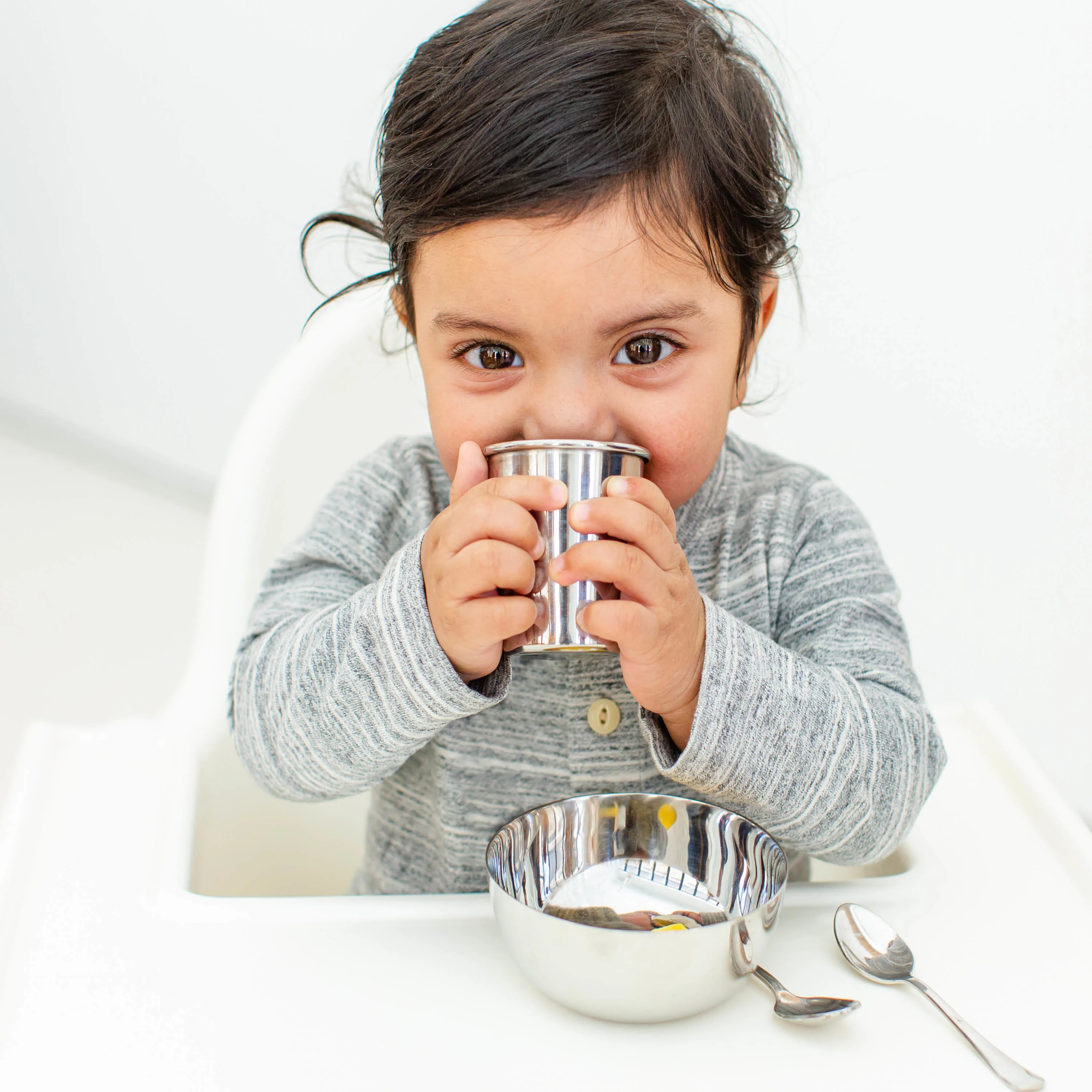
Skip the sippy cup. Open cups and straw cups teach skills that babies will use for life, like sipping, sealing their lips, and carefully tilting a cup to drink.
Choose a small cup that is easy to hold and easy to clean
Keep it simple! Our favorite cups are easy for babies to hold and easy for you to clean. You don't even need to buy one—a shot glass or espresso cup work great
Diameter and length matter most when choosing straws
Short, narrow straws with no valve are best at helping babies learn to suck from a straw. Make sure to choose a straw cup that is easy to clean. It’s easy for mildew to grow in straws that are not thoroughly cleaned after each use.
How to choose a cup for baby
Our licensed pediatric professionals have helped many families teach babies and toddlers to drink from a cup, and they have found the best cups for babies are:
open cup or straw cup
easy to hold
small in size
cost-effective
spill-proof
easy to clean (dishwasher-safe)
Best cups for babies
Qualities | Why It Matters |
|---|---|
Open cup & straw cup | Babies need to learn to drink from both styles to build different skills. |
Easy to hold | Babies need a cup they can hold independently. |
Small in size | It should hold just enough liquid for cup practice—not a large quantity. |
Cost-effective | No need to break the bank on a cup that they'll eventually outgrow. |
Spill-proof (straw cup) | Cuts down on the clean up after cup practice. |
Easy to clean (dishwasher safe) | Saves time and energy when it's time to clean up. |
Our recommendations do not include sippy cups or 360-style cups. Why? These cups are built for babies and encourage them to learn skills that they no longer need after a few months. There is no harm in using a sippy cup, but we do not recommend using them exclusively if your goal is to build the lifelong skills of drinking from an open cup and a straw. See our guidance on choosing sippy cups for more information.


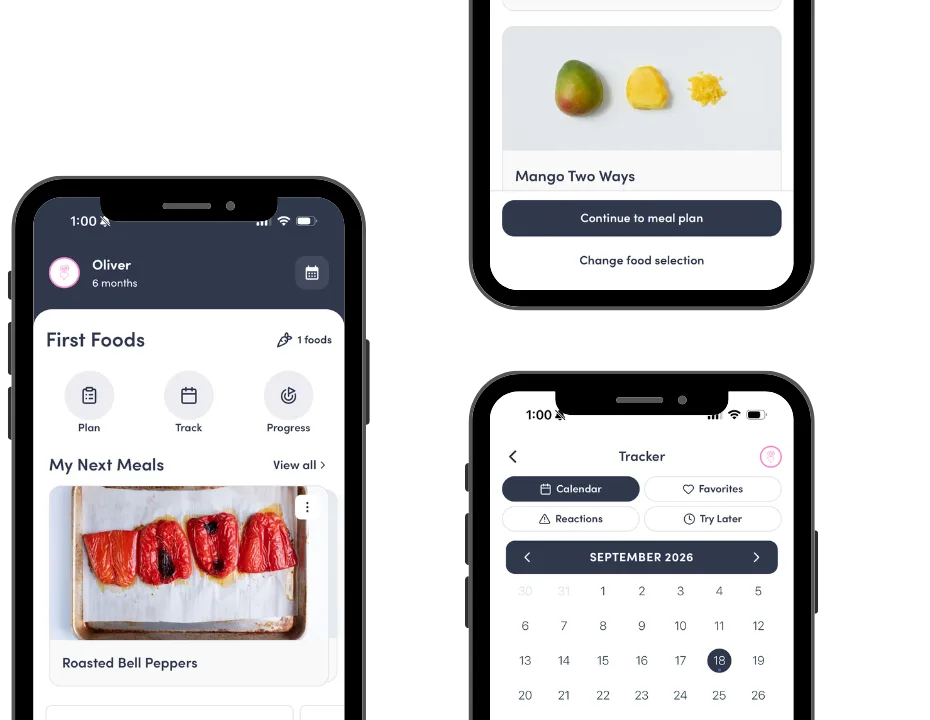
There's even more in the app
Get expert guidance based on your baby's age: serving suggestions, tips, recipes, and more.
How to choose a straw for babies
There are so many opinions on what, when, and how to use a straw, but there is actually no evidence to back up the claims that the type of straw impacts a baby’s feeding, swallowing, or speech. So what really matters when choosing a straw?
The straw’s diameter and length are important for babies. It’s also helpful to get straws that are easy to clean. We recommend starting with an open straw, but if baby is struggling, a valved straw may help improve their coordination.
Straw Qualities | Why It Matters |
|---|---|
Diameter of straw | A narrow straw can help slow the flow of liquid, which helps babies take manageable sips. |
Length of straw | Shorter straws require less effort to suck liquid into the mouth. |
Valved or unvalved | Unvalved are ideal for babies just getting started. Valved straws can slow down drinking, which can help improve coordination if they’re frequently coughing or spilling most of what they drink out of the sides of their mouth. struggling. The downside? Valved straws encourage biting. |
Easy to clean | Straws can grow mildew if they are not cleaned well after use (look for straws that come with a long, thin brush for cleaning) |
Material | Any material is fine to use–it’s a personal preference If using a metal or glass straw, be extra diligent about making sure baby is seated while practicing. Walking around while drinking from a straw made of rigid materials can have catastrophic consequences if they fall. |
Solid Starts guide to cups for babies
Below are some cups that meet our standards in 2026. When choosing cups for babies, we recommend two styles: an open cup and a straw cup. Using both helps babies learn a variety of cup drinking skills: sealing the lips, sucking while sealing the lips (using straws), tilting to drink (from open cups), and preventing spills.
Cups & skill building for babies
Open cup | Straw cup |
|---|---|
sealing the lips | sucking while sealing lips |
tilting to drink | tongue control |
pacing (sips vs guzzling) | suck-swallow-breathe coordination |
tongue control | eye-hand-mouth coordination |
eye-hand-mouth coordination | pacing (sips vs guzzling) |
independent drinking | independent drinking |
We’re going to share some of our favorite cups for babies and tell you why they work, but keep in mind: it is not always necessary to purchase a special cup for baby. There are many things that you may have around the house that can work well, such as an espresso cup, a shot glass, or small cup. If you already have a cup that you want to use, see How to Teach Baby to Drink from a Cup to get started.
Best open cups for babies & toddlers
The following open cups best met our criteria: small in size, easy to hold, cost-effective, and easy to clean. We also love how these cups are slightly weighted at the bottom, which helps with stability as baby practices cup drinking.
We recommend a product only when we believe that it is worth your consideration, and our opinions are free from conflict of interest. Solid Starts is an independent organization that does not accept money or free products in exchange for reviews. We provide affiliate links to retailers of those products, and we may receive a commission if you purchase through one of those links. Learn more.
EZPZ Tiny Cup
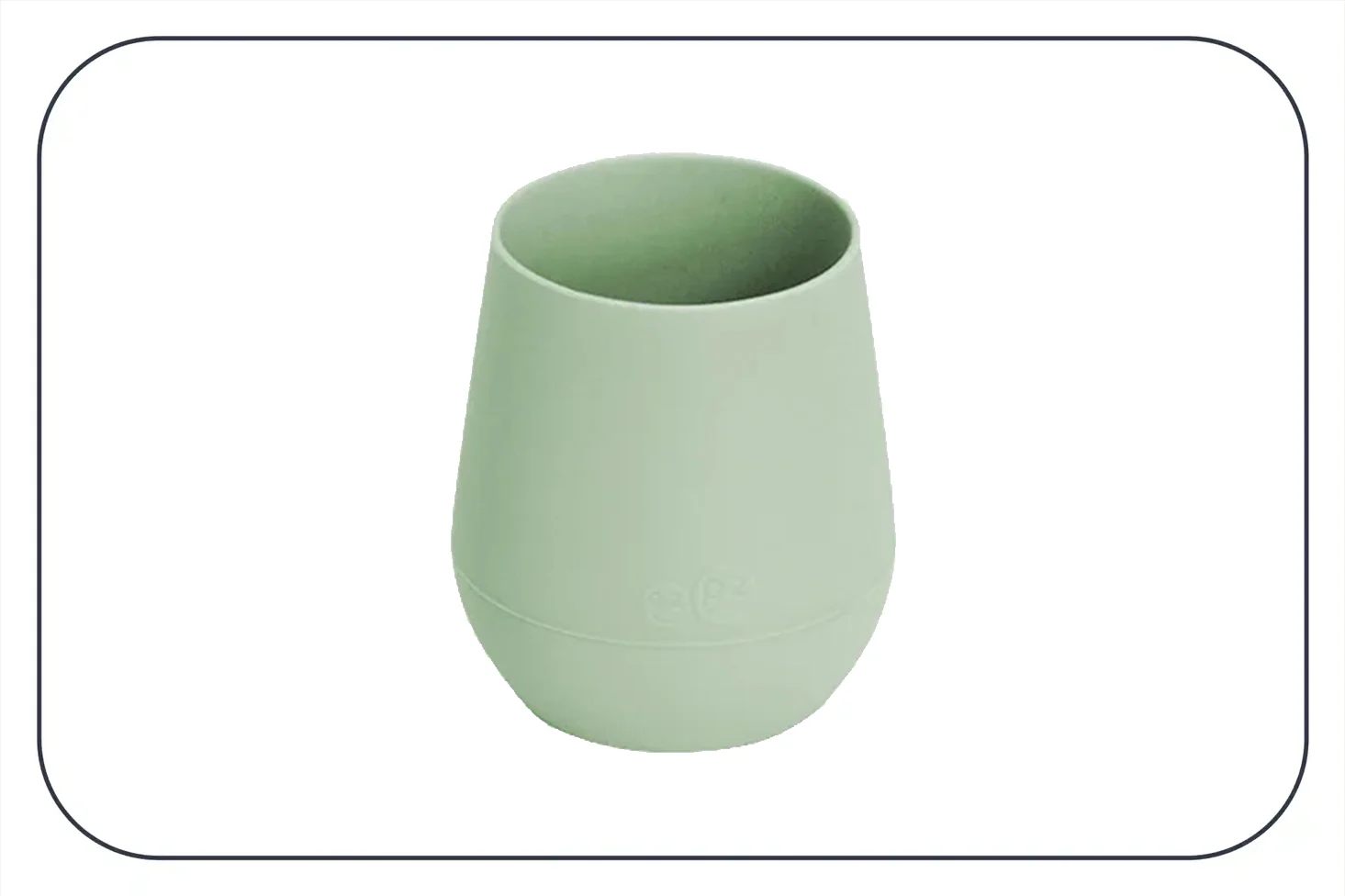

A family favorite, the EZPZ tiny cup holds 2 fl oz (60 ml), and it is made of dishwasher safe silicone for easy gripping and holding. Moderately priced, this cup is a staple in many households due to its small size, weighted bottom (helps with stability and returning to the table), and fun color options.
Lalo Mealtime Cup
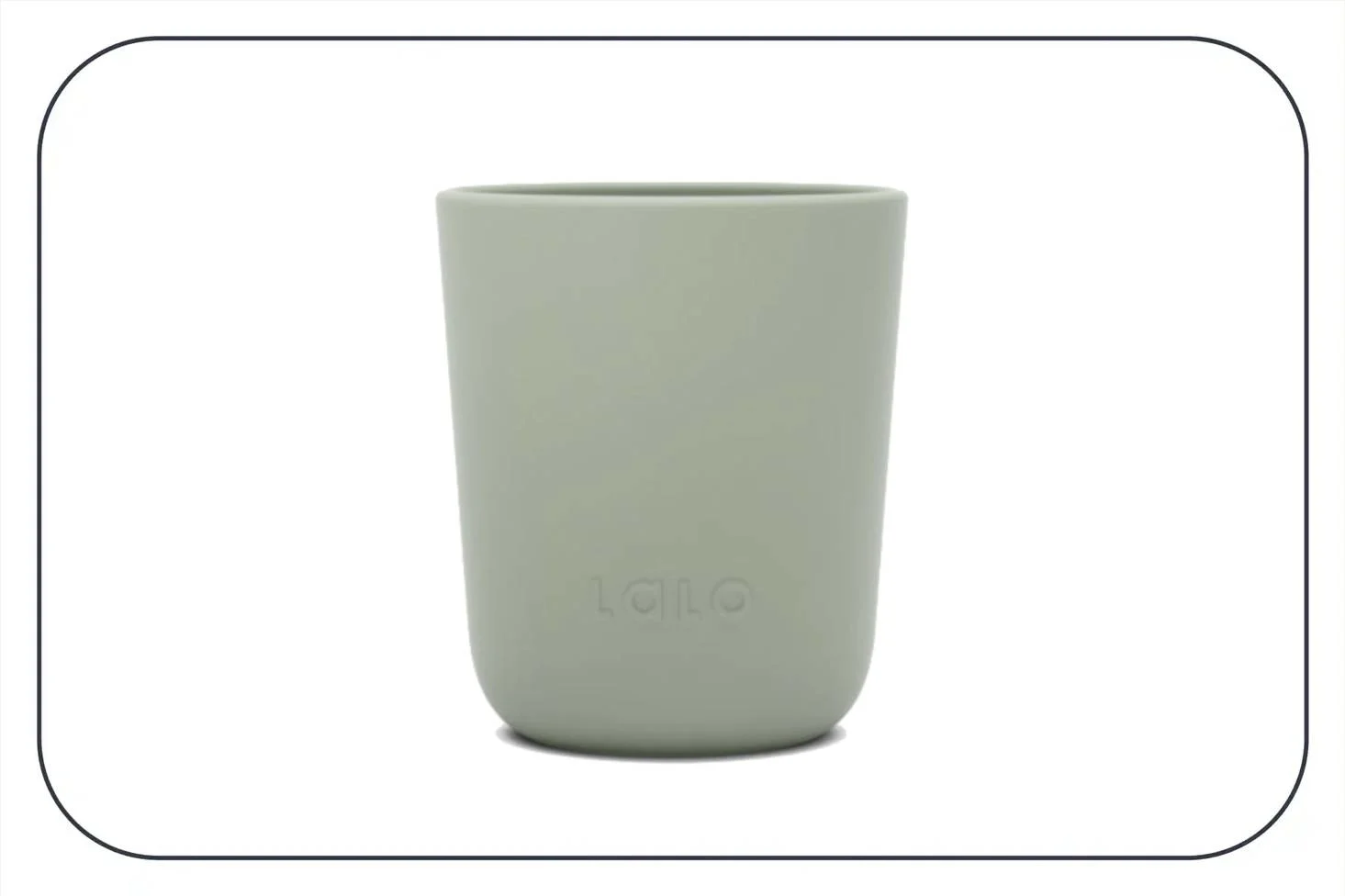
A great medium-sized open cup. The Lalo Mealtime Cup holds 6 fl oz (180 ml) and is made of dishwasher-safe silicone with a rigid core. That means it's soft and easy to grip but gives a little more feedback as young toddlers are learning to get the cup to their mouth. It has no handles or special rim, so it's a lot like the cups adults use. It's sold in a pack of two and made for kids 12 months old and up.
Mushie Silicone Starter Cup
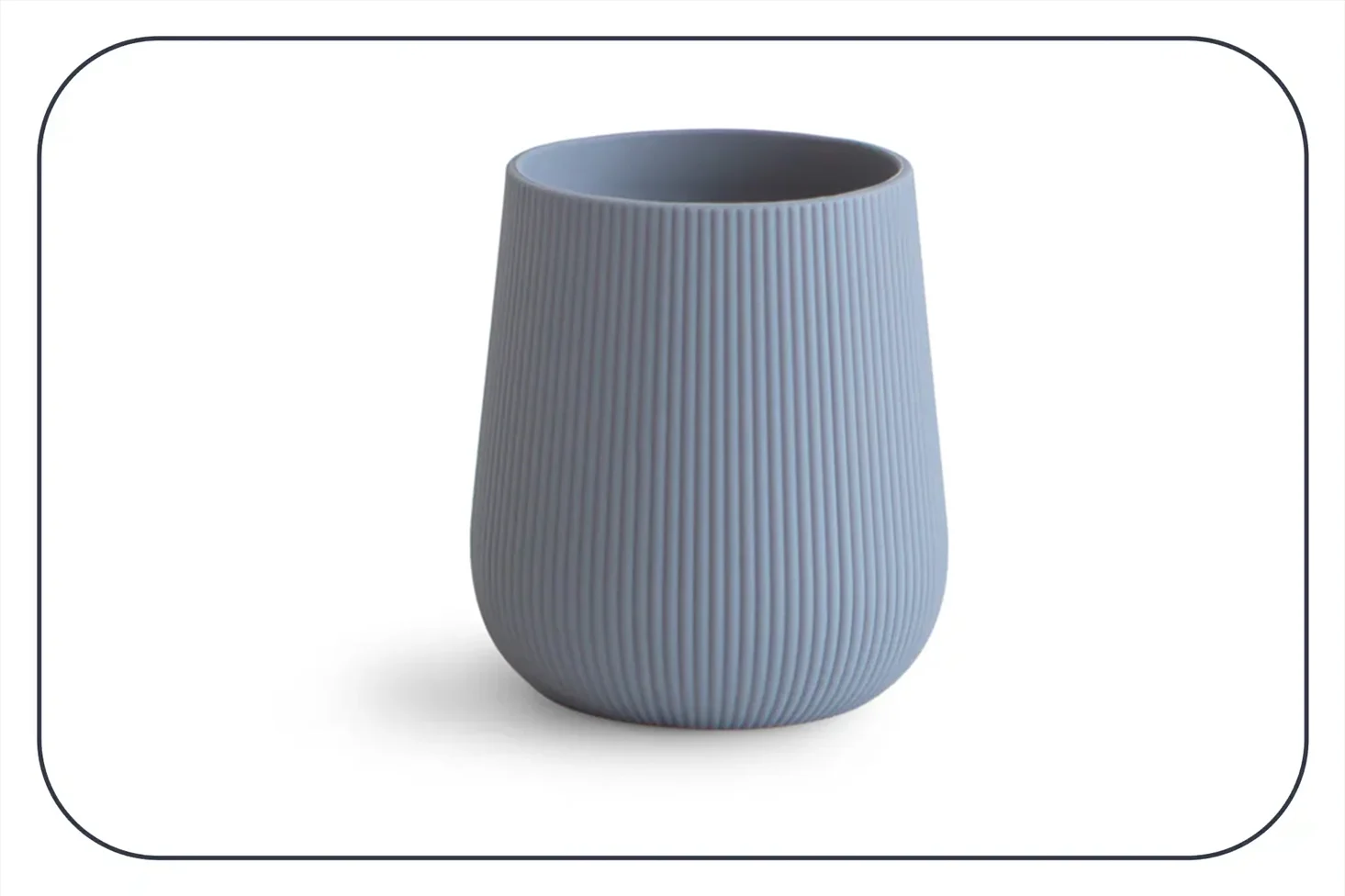
Very similar to the EZPZ tiny cup, the Mushie starter cup holds 2 fl oz (60 ml), and it is made of dishwasher safe silicone for easy gripping and holding. Ridges may help baby with gripping, and it is slightly less expensive.
Nuby Baby's First Mini Sipper Training Cup
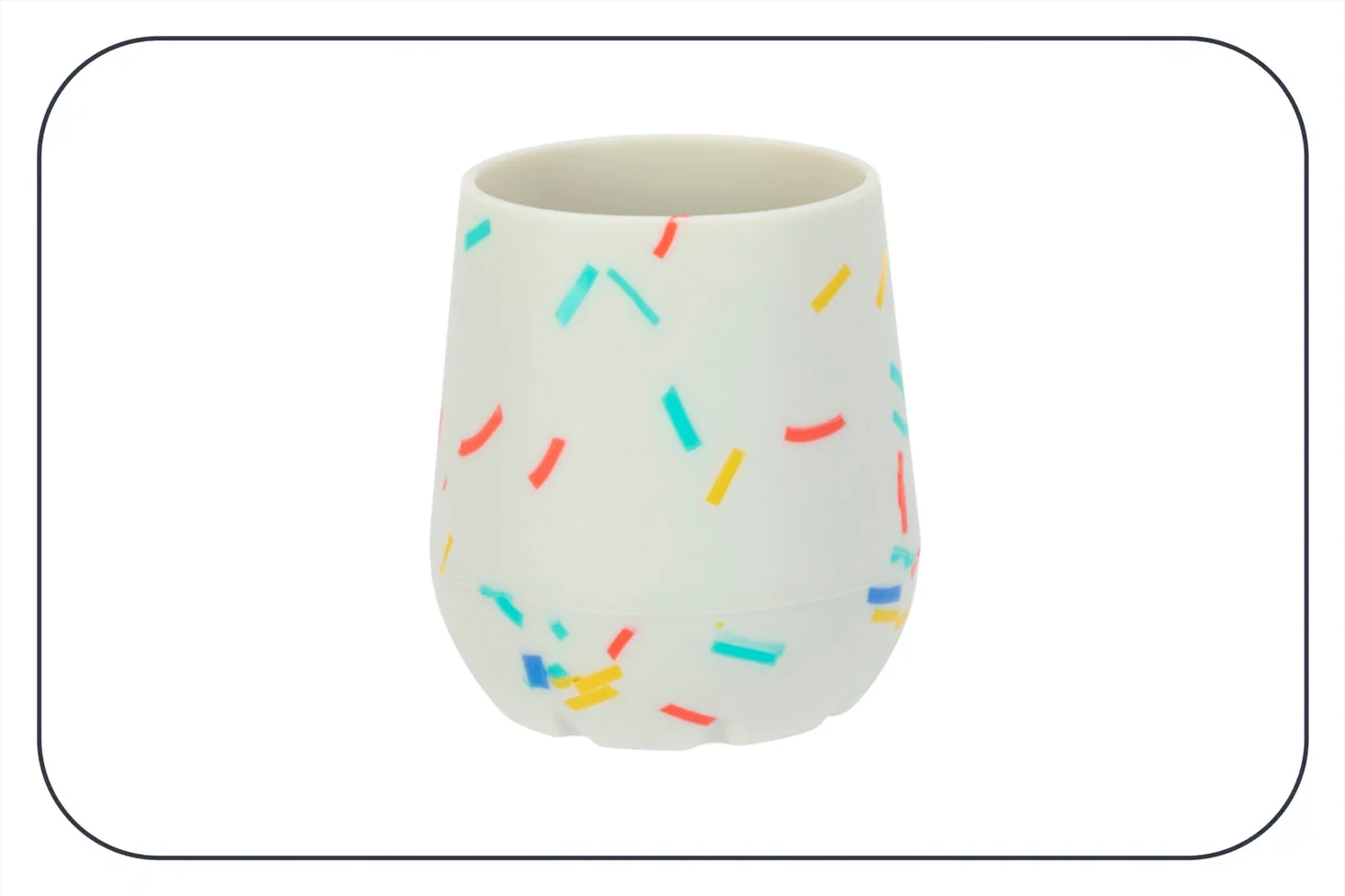
Nuby Mini-Sipper has the same features as our other top recommended open cups for babies, and it is the least expensive. Bonus: grooves on the base may help baby keep the cup upright as they set it down.
Best silicone-free open cups for babies & toddlers
While we love how silicone cups are safe to put in the dishwasher and are easy for kids to hold on to, sometimes they can take on a faint smell of dish soap after repeated washings. If you are looking for silicone alternatives, below are our favorite cups. We recommend using these cups with babies at least 9 months of age due to their larger size. Also note: the cups hold more liquid and may result in bigger spills. That said, the larger size means the cups continue to work well for babies as they become toddlers.
Ahimsa Starter Sips Cup
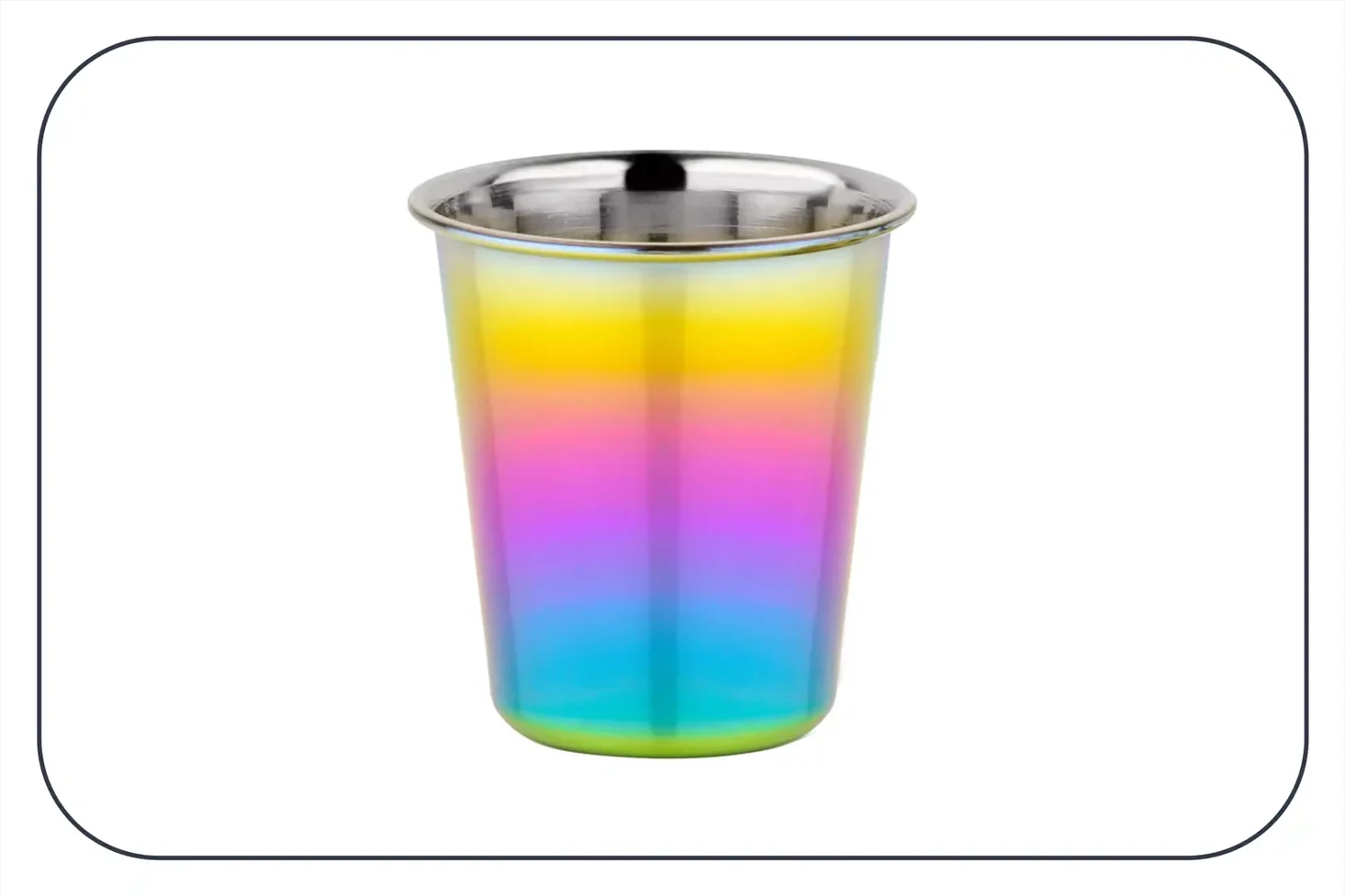
Perfect for those who love stainless steel, the Ahimsa Starter Sips Cup holds 4.5 fl oz (133 ml) and has a rim with a lip, which can help babies and toddlers seal their lips. Note: the cup is sold in a pack of two.
Mushie Dinnerware Cup
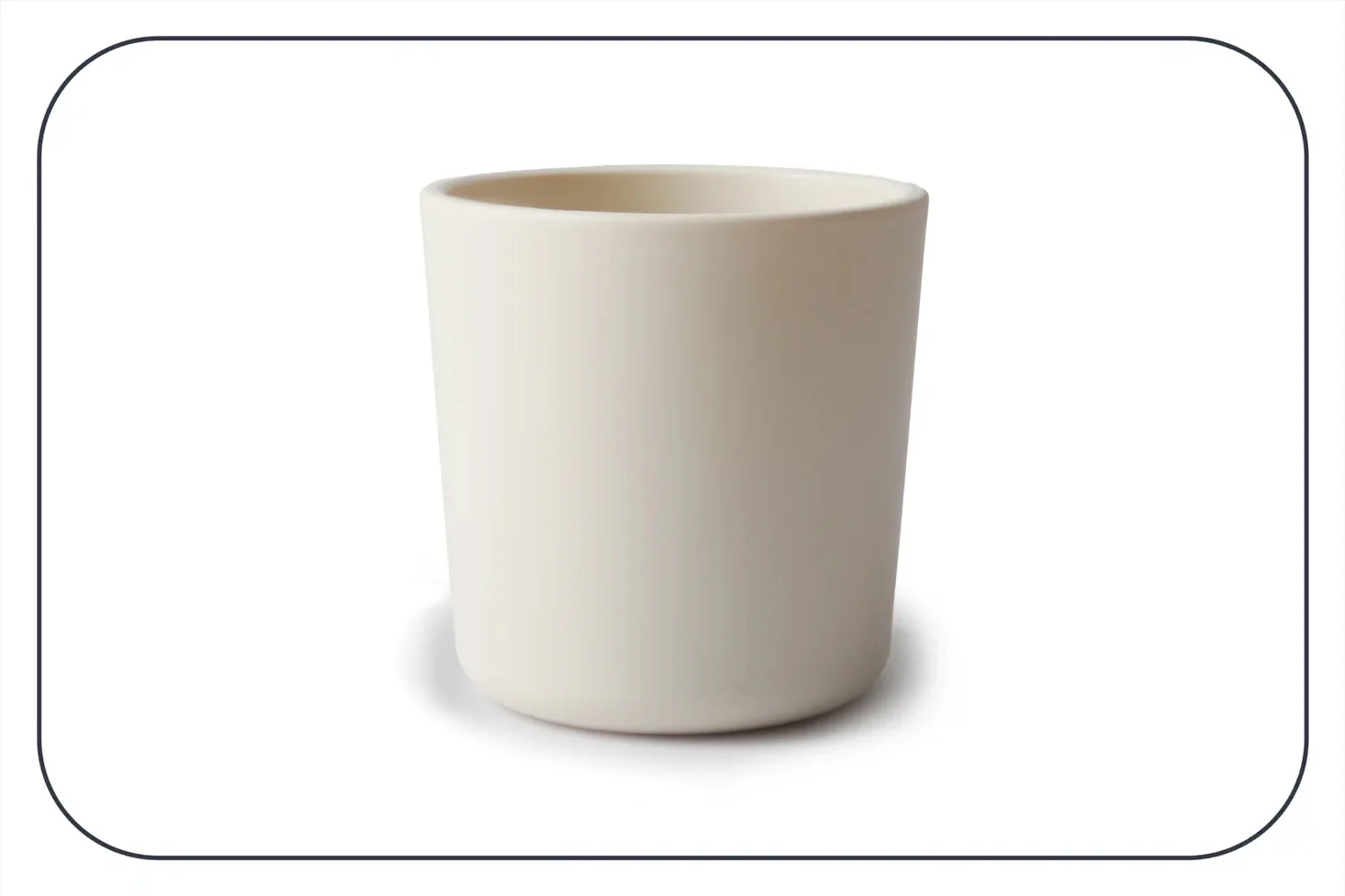
Made of soft, dishwasher safe plastic, the Mushie Dinnerware Cup is lightweight, easy to hold, and fits right in with many adult-sized cups at mealtime. Available in a pack of two, this cup is a bit larger (holds 7 fl oz or 210 ml) and works well for babies and toddlers alike.
WeeSprout Bamboo Toddler Cup
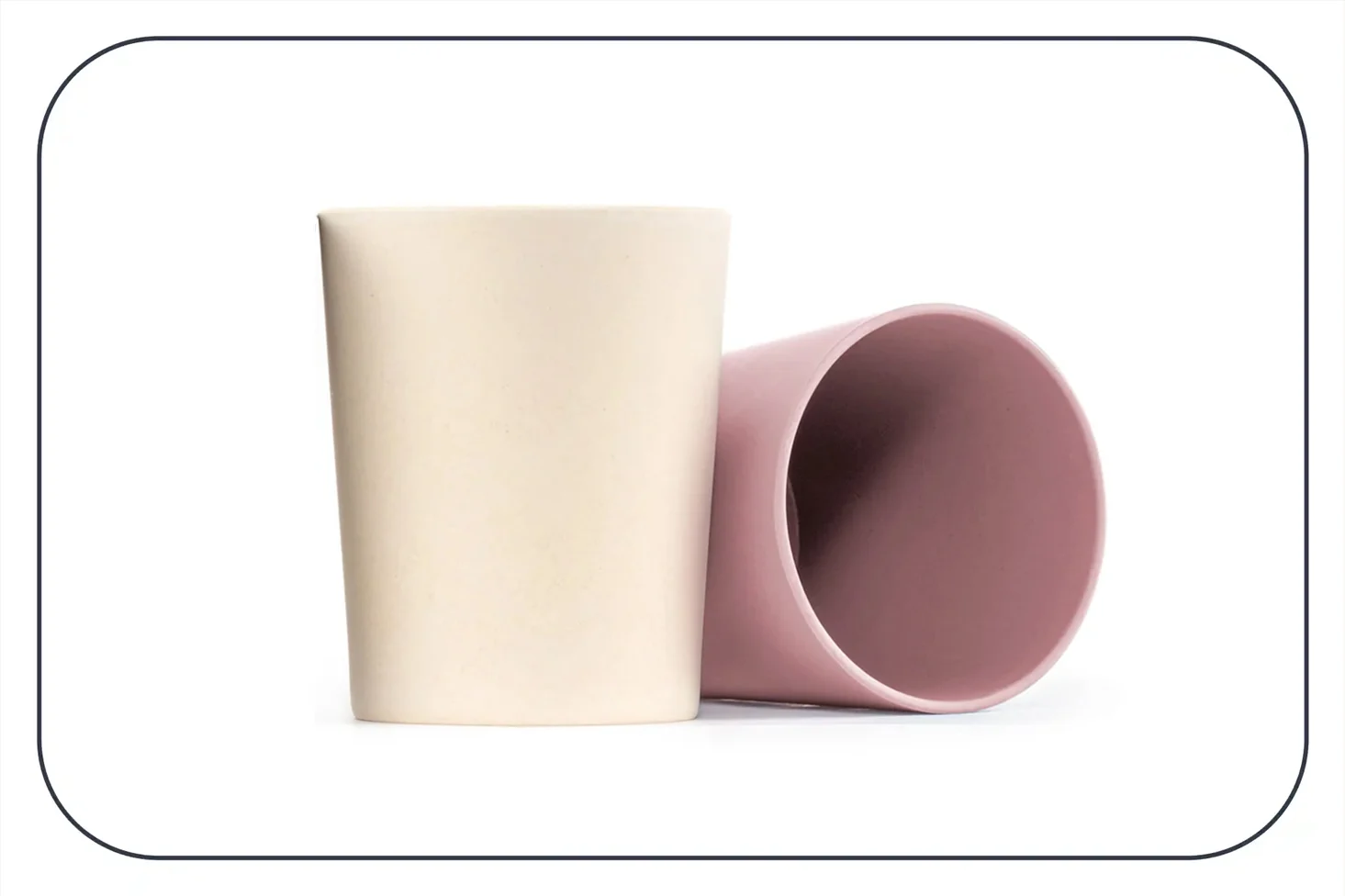
For those who want to avoid plastic, the WeeSprout is an excellent choice. A bit larger than the other cups (10 fl oz or 300 ml) and available in a pack of 4, these cups are made of food-safe bamboo and they are safe to wash on the top rack of a dishwasher.
Best straw cups for babies & toddlers
When considering a straw cup, we look for options that are affordable, easy to hold, easy to clean, and equipped with a standard size, unvalved straw when first learning. If, after baby learns to suck from the straw, they are struggling more with the flow of liquid, we’d consider introducing a valved straw. Just keep in mind that valved straws can promote more straw biting.
Straw cups are so variable in their features and use, so pick the style of cup that works best for you–which may mean more than one. Note: a clean straw is often more important than the cup material or style. Use a brush and running water to thoroughly clean straws between uses.
Want to minimize the mess? Check out the Best Spill-Proof Straw Cups for Babies.
Baby needs a little extra help with straws? Check out the Best Unvalved Straw Trainer Cups for Babies.
Our favorite straw cup
The Early Years Take and Toss Straw Cup
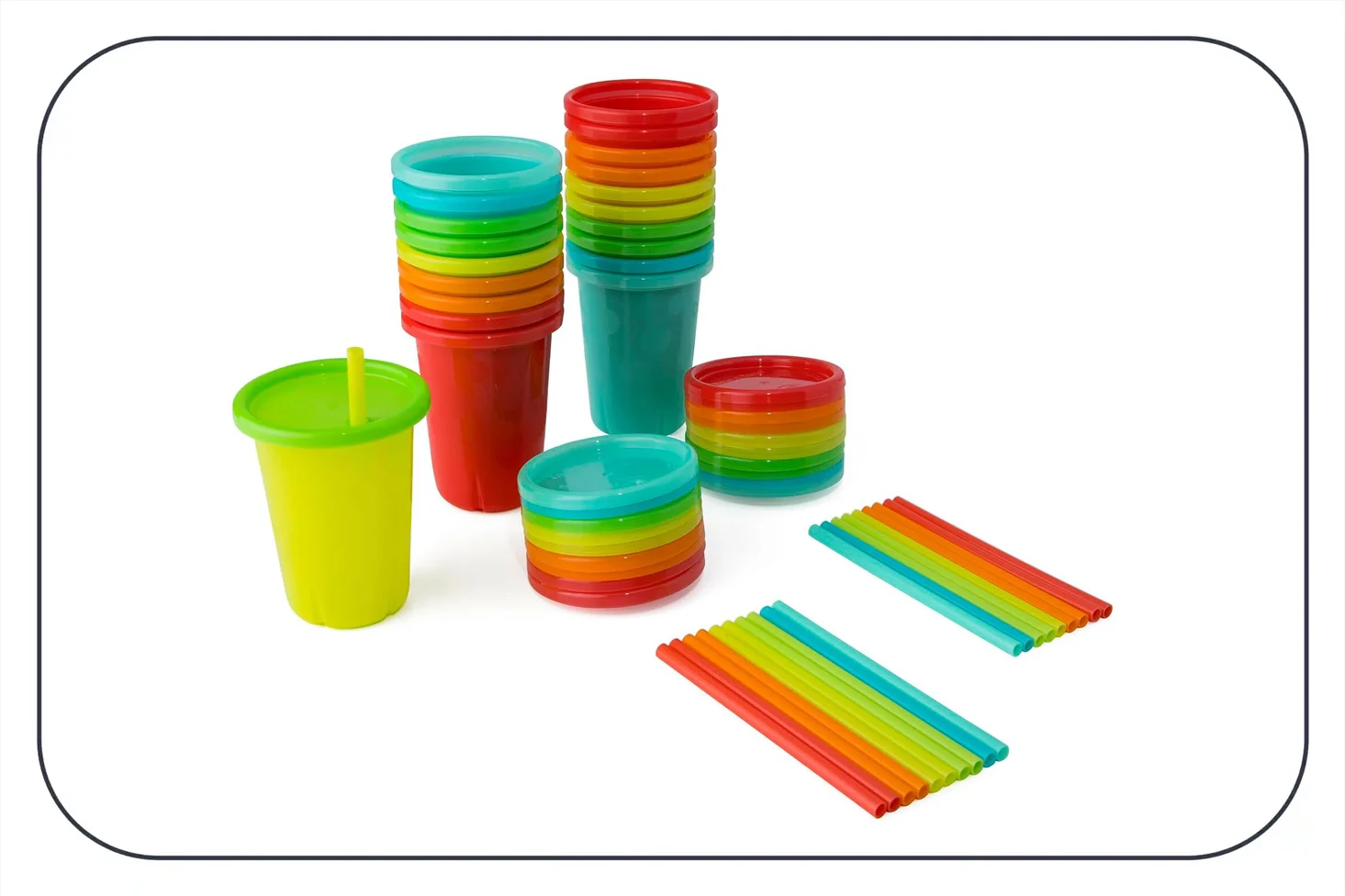
The Early Years Take and Toss can be used as an open cup or a straw cup thanks to its removable lid. As a straw cup, it can be gently squeezed to express liquid. The cup is inexpensive (a pack currently costs $20) and its larger size means it works well as baby grows into toddlerhood. The downside? These are made of plastic, which many families prefer to avoid and there is no valve on the straw, which means it’s not entirely spill-proof.
Volume | Cup Material | Straw Material | Straw Type
| Handles | Squeezable | Spill-Proof | Dishwasher-Safe |
|---|---|---|---|---|---|---|---|
10 fl oz (300 ml) | Plastic | Plastic | No Valve | No | Yes | No | Yes |
Best spill-proof straw cups for babies
Spill proof options are helpful for on-the-go, or for phases where your baby or toddler just loves to throw their cup. Many of these options have valved straws and weighted straws.
Thermos Kids Straw Bottle
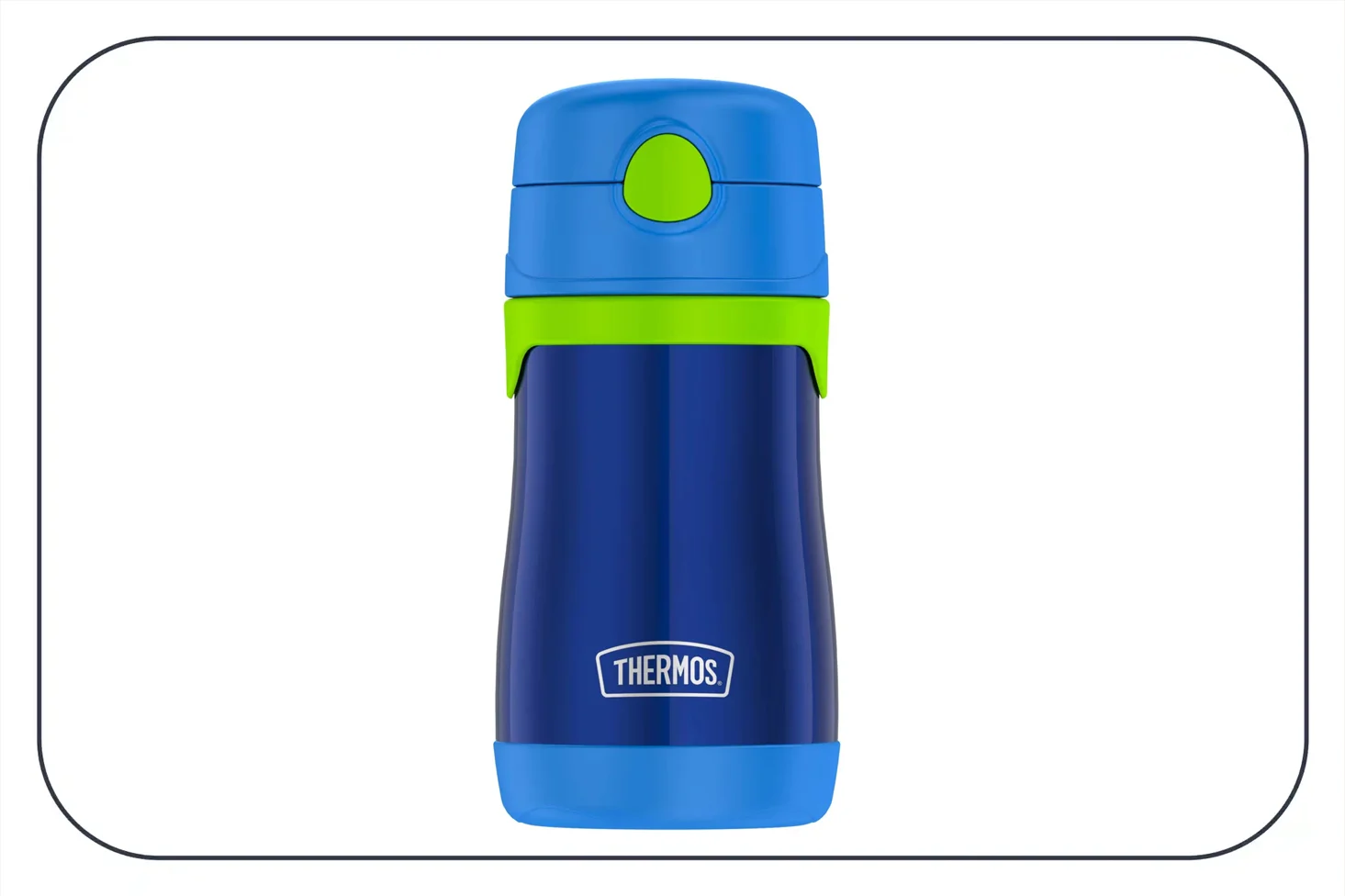
Just like the grown ups! This insulated stainless steel straw cup is great for older babies and toddlers on the go. It withstands dropping without spills thanks to a locking lid, and it is easy to clean. If you want a cup that will stick around through toddlerhood, this is a great choice.
Volume | Cup Material | Straw Material | Straw Type
| Handles | Squeezable | Spill-Proof | Dishwasher-Safe |
|---|---|---|---|---|---|---|---|
10 fl oz (300 ml) | Steel | Silicone | Valve | No | No | Yes | Yes |
Munchkin® Simple Clean™ Toddler Sippy Cup with Easy Clean Straw
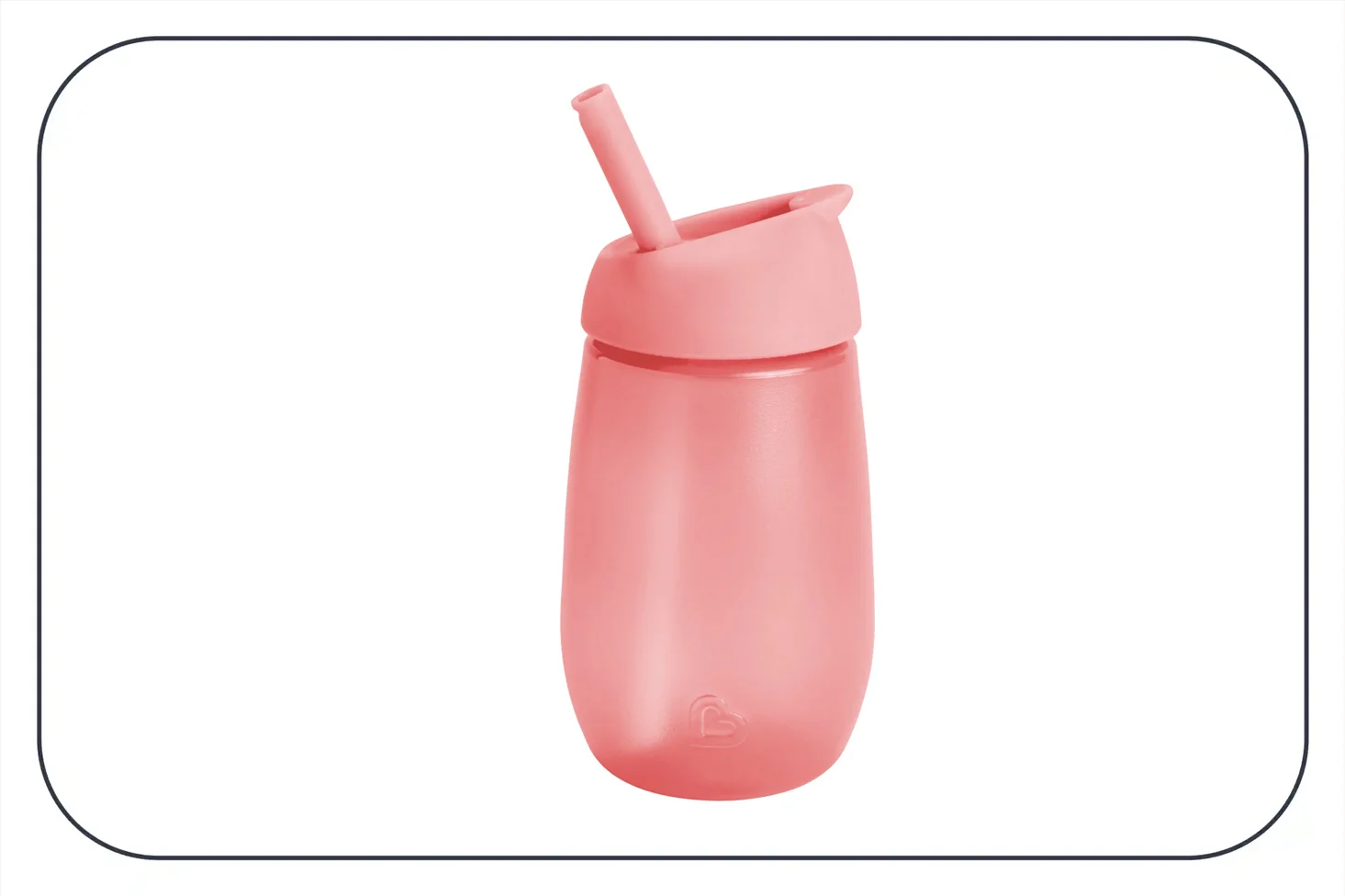
This is a favorite spill-proof cup thanks to its valved straw, which is easy to clean (it opens up!) and safe to put in the dishwasher. While the cup is on the larger side, it remains lightweight and easy to hold.
Volume | Cup Material | Straw Material | Straw Type
| Handles | Squeezable | Spill-Proof | Dishwasher-Safe |
|---|---|---|---|---|---|---|---|
10 fl oz (300 ml) | Soft Plastic | Silicone | Valve | No | No | Yes | Yes |
Lalo Stainless Toddler Cup
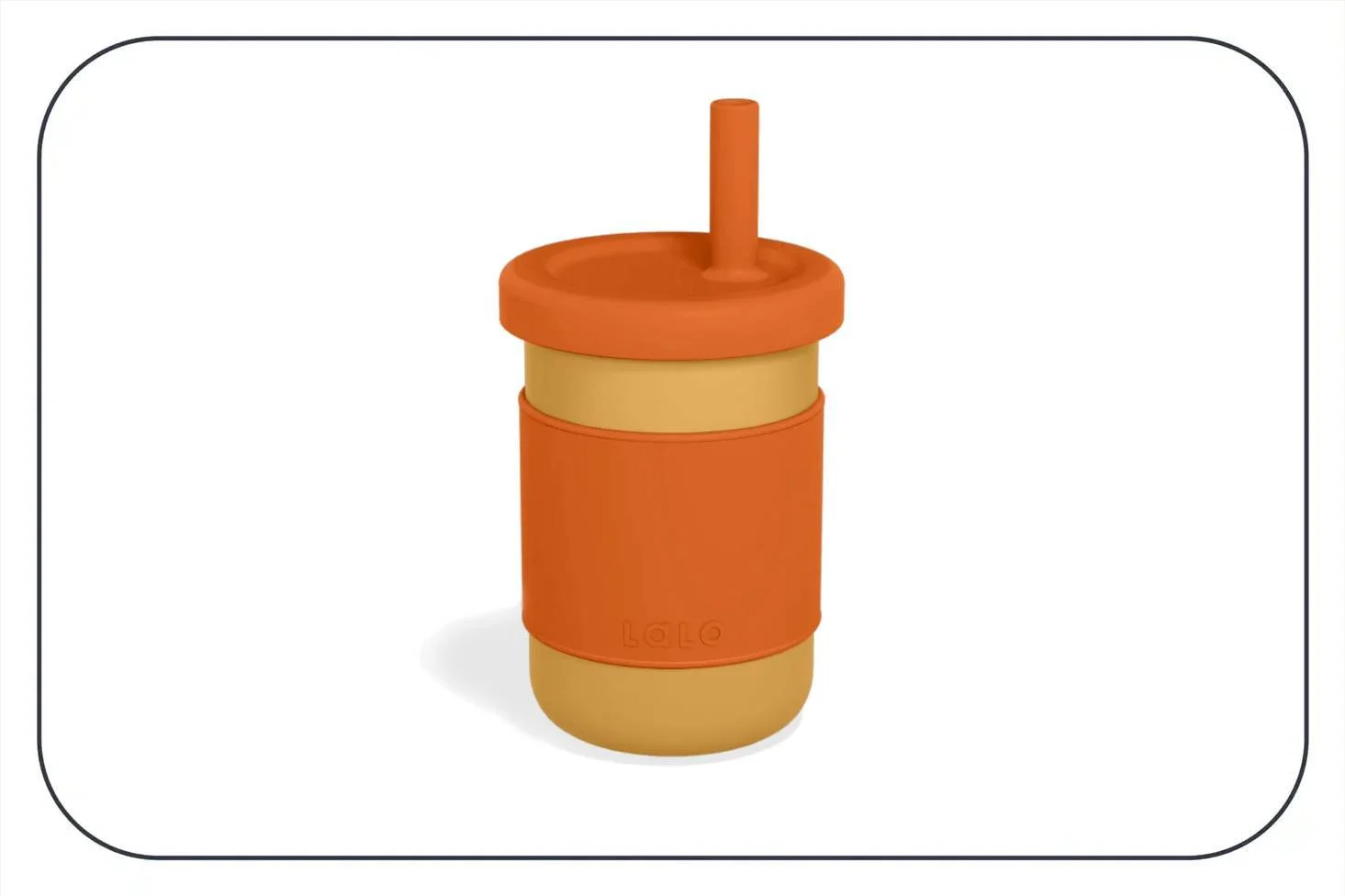
A good pick for families who want a straw cup with no plastic. This stainless steel cup holds 12 fl oz (355 ml) and has a soft silicone sleeve that makes it easier to grip. The straw has a steel core with a soft silicone outside, which is gentler on teeth and gums. It's rigid, though, so make sure your toddler is seated while drinking. The cup is spill-proof, safe to clean on the top rack of the dishwasher, and comes with a straw-cleaning brush. As it’s on the larger side, it’s made for kids 12 months old and up. Also, the straw's flow is very slow, so it can be hard to drink from for toddlers still learning to use a straw.
Volume | Cup Material | Straw Material | Straw Type
| Handles | Squeezable | Spill-Proof | Dishwasher-Safe |
|---|---|---|---|---|---|---|---|
12 fl oz (355 ml) | Steel | Steel with silicone | Valve | No | No | Yes | Yes |
The First Years Squeeze & Sip Toddler Straw Cup
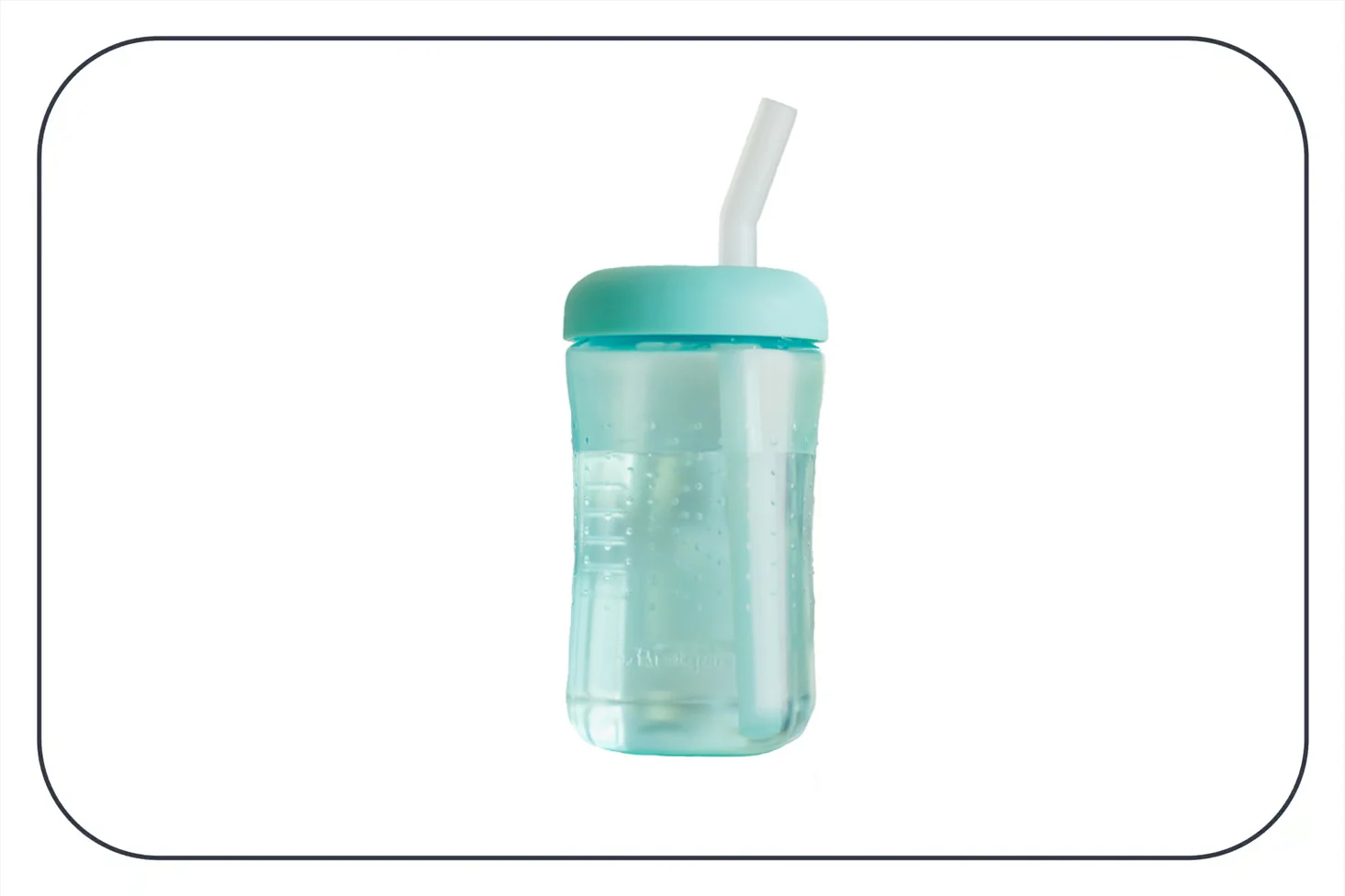
Small, affordable, and easy to hold, this spill-proof silicone cup is a favorite of feeding therapists and parents alike. The cup’s valve helps prevent spills, and it is designed to express liquid when it is gently squeezed.
Volume | Cup Material | Straw Material | Straw Type
| Handles | Squeezable | Spill-Proof | Dishwasher-Safe |
|---|---|---|---|---|---|---|---|
7 fl oz (210 ml) | Plastic | Silicone | Valve | No | Yes | Yes | Yes |
Lollacup
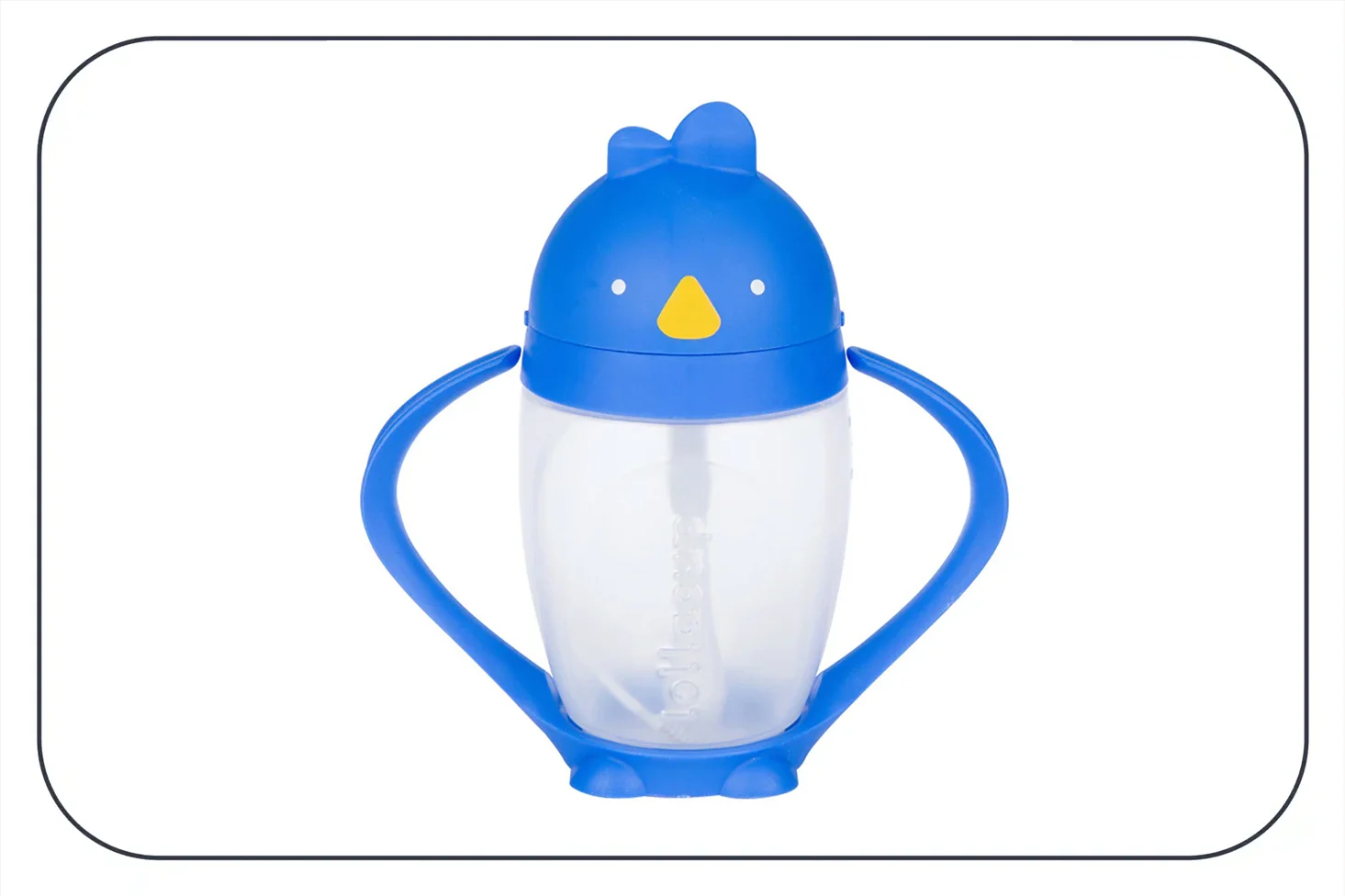
This is a great option if you want a weighted straw cup that lets a child drink even when the cup is tilted or upside-down. The straw is wide enough for thicker drinks like smoothies, plus it comes with a cleaning brush. Removable handles are an added bonus.
Volume | Cup Material | Straw Material | Straw Type
| Handles | Squeezable | Spill-Proof | Dishwasher-Safe |
|---|---|---|---|---|---|---|---|
10 fl oz (300 ml) | Soft Plastic | Silicone | No Valve | Yes | No | Yes | Yes |
OXO Tot Transitions Straw Cup
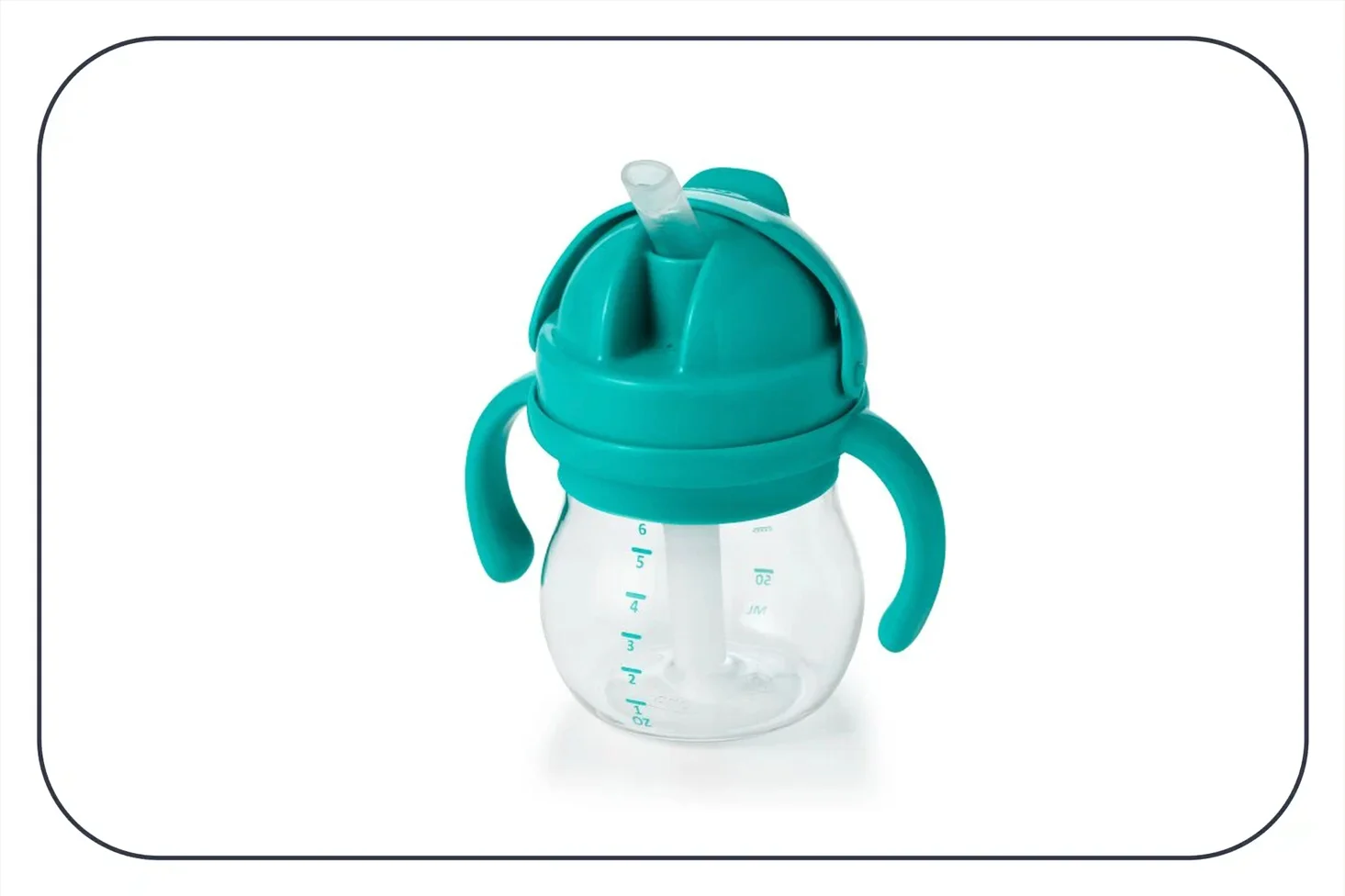
This cup comes in two sizes with a lid to keep the straw clean. Remove the handles so baby can learn to hold a standard cup, too! The straw is valved, but oval-shaped, which requires less pressure to release liquid.
Volume | Cup Material | Straw Material | Straw Type
| Handles | Squeezable | Spill-Proof | Dishwasher-Safe |
|---|---|---|---|---|---|---|---|
6 fl oz (180 ml) or 9 fl oz (270 ml) | Plastic | Silicone | Valve | Yes | No | Yes | Yes |
Munchkin Weighted Straw Trainer Cup
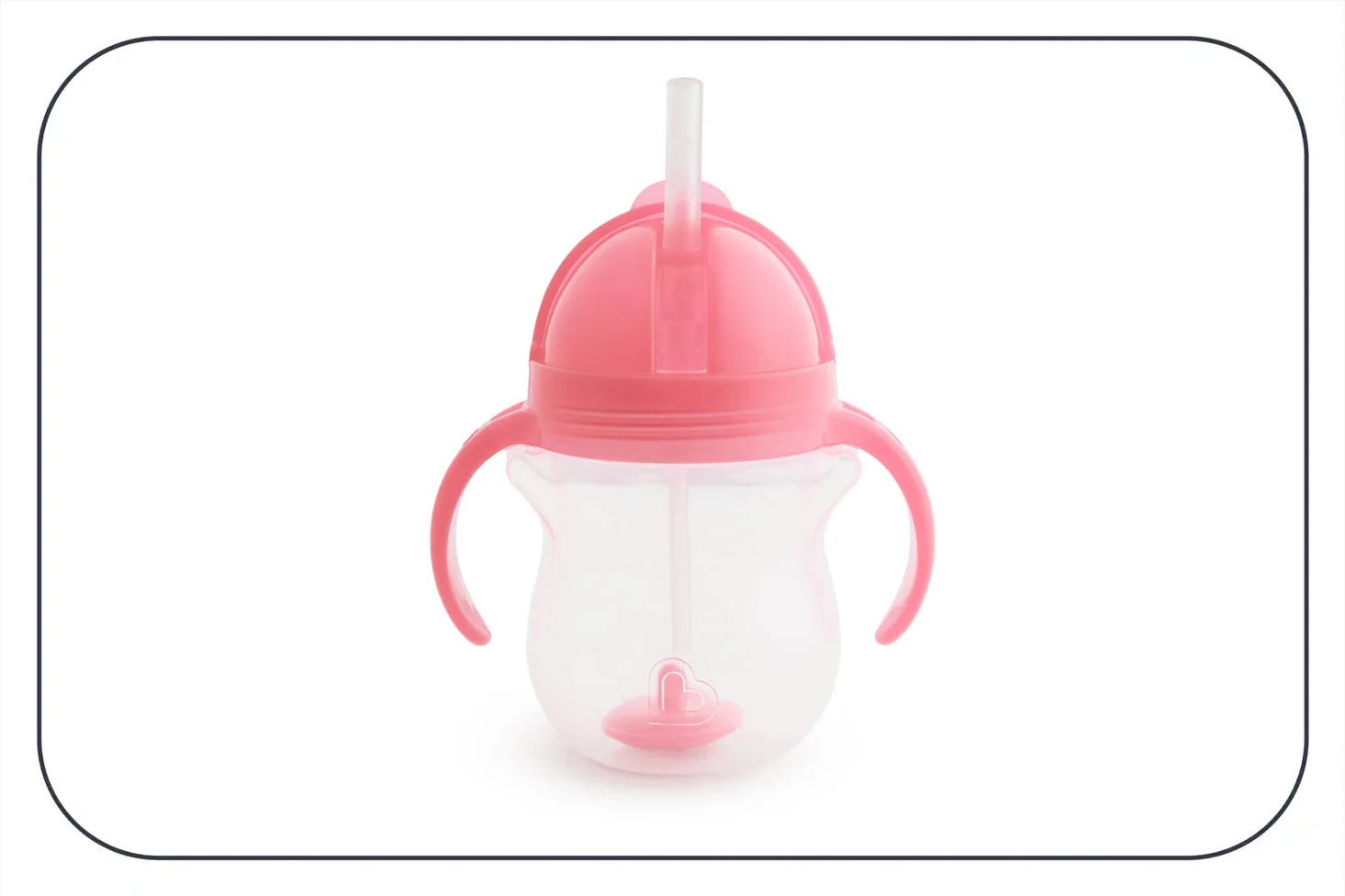
Two handles for easy holding with a flip top that covers the straw when on the go. The cup is easy to clean and comes with a straw brush. The weighted straw allows drinking when the cup is tilted or upside-down, however the narrow size and valve require biting or sucking very hard.
Volume | Cup Material | Straw Material | Straw Type
| Handles | Squeezable | Spill-Proof | Dishwasher-Safe |
|---|---|---|---|---|---|---|---|
7 fl oz (210 ml) | Plastic | Silicone | Valve | Yes | No | Yes | Yes |
Best unvalved straw trainer cups for babies
If your baby is having a hard time getting the hang of expressing liquid from a straw, a straw trainer can help. These are our favorite options, but keep in mind that they aren’t leak proof.
EZPZ Mini Cup + Straw
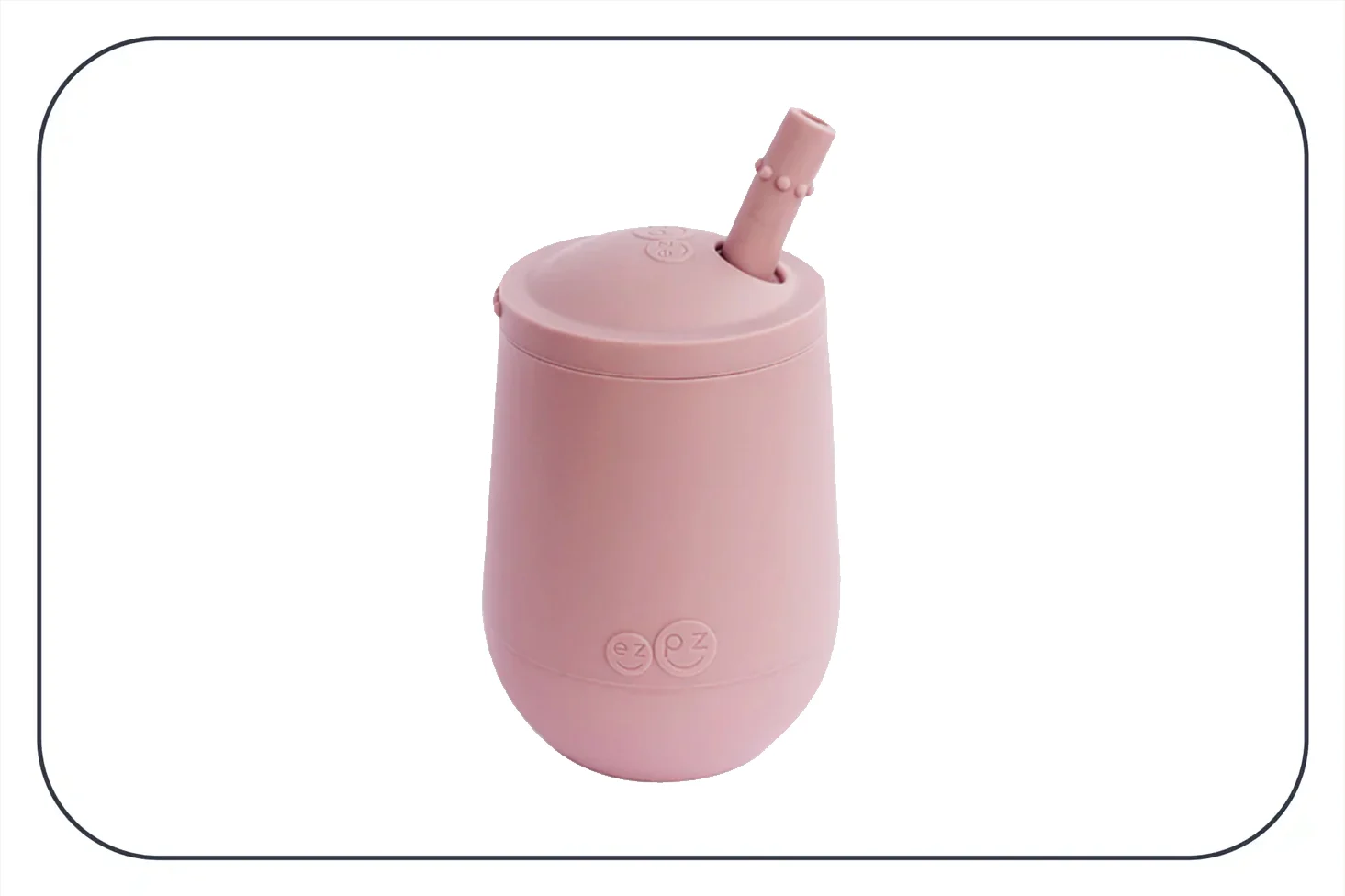
Use it as an open cup or a straw cup! Its slightly weighted bottom offers stability, and it is made of dishwasher-safe silicone that can be gently squeezed if baby needs a little help figuring out how the straw works. The straw has raised nubs to help position the lips when drinking.
Volume | Cup Material | Straw Material | Straw Type
| Handles | Squeezable | Spill-Proof | Dishwasher-Safe |
|---|---|---|---|---|---|---|---|
4 fl oz (120 ml) or 8 fl oz (240 ml) | Silicone | Silicone | No Valve | No | Yes | No | Yes |
Lalo Little Cup
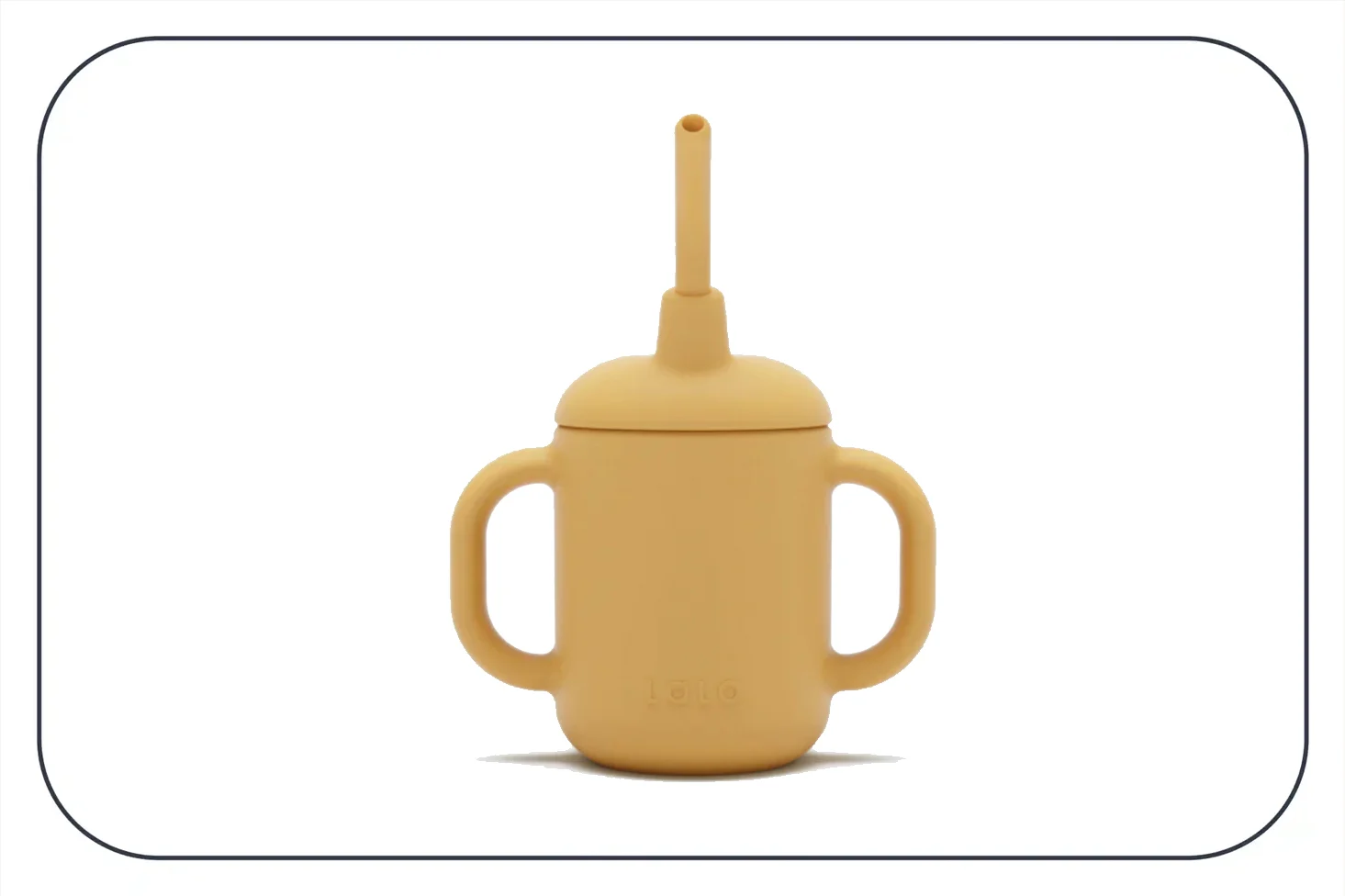
A great choice if you want a straw trainer cup with handles! The cup comes in two sizes, and it can be gently squeezed if baby needs a little help figuring out how the straw works. Bonus: this cup is slightly more resistant to spills as the lid fits very snuggly inside the cup.
Volume | Cup Material | Straw Material | Straw Type
| Handles | Squeezable | Spill-Proof | Dishwasher-Safe |
|---|---|---|---|---|---|---|---|
4 fl oz (120 ml) or 6 fl oz (180 ml) | Silicone | Silicone | No Valve | Yes | Yes | No | Yes |
Mushie Silicone Training Cup
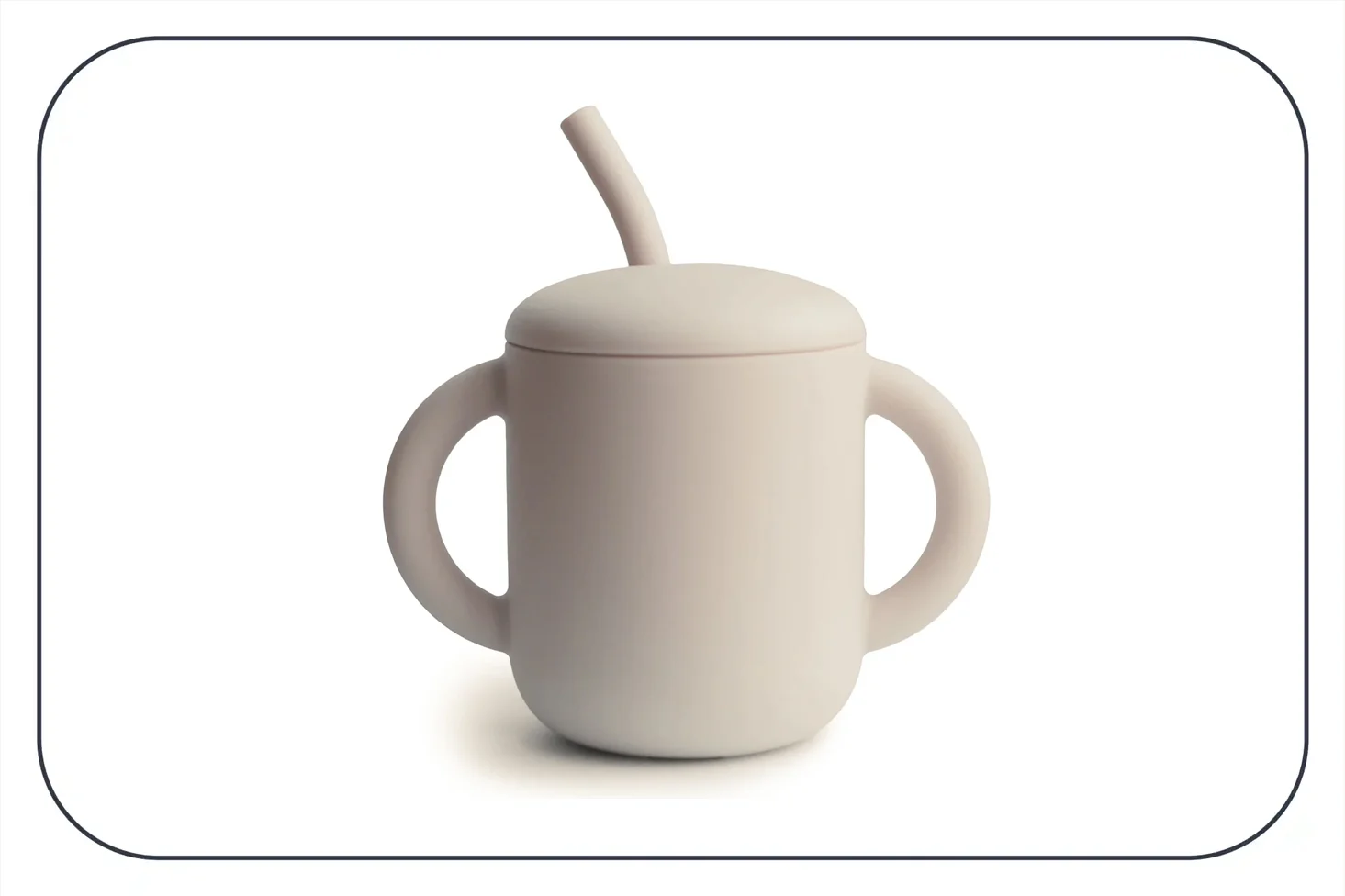
Very similar to the Lalo cup and similarly priced, this cup is easy to hold and can be gently squeezed if baby needs a little help figuring out how a straw works. We love how the lid fits snuggly in the cup to decrease spills.
Volume | Cup Material | Straw Material | Straw Type
| Handles | Squeezable | Spill-Proof | Dishwasher-Safe |
|---|---|---|---|---|---|---|---|
6 fl oz (180 ml) | Silicone | Silicone | No Valve | Yes | Yes | No | Yes |
Frequently Asked Questions
Babies can begin practicing with open cups as soon as they are ready to start solids, which is generally around 6 months of age. Remember: cups are for practice—not replacements for breast or bottle feeds, which provide nutrition until babies are able to eat a variety of solid foods.
If your baby is older than 6 months, start offering an open cup with a small amount of water, breast milk, or formula now. Babies between 6 and 12 months of age are naturally curious and quickly pick up new skills. Older babies and toddlers tend to be more competent and confident in their ability to drink from a bottle, which can make it more challenging to build cup drinking skills. If you’ve missed the 6- to 12-month window, all is not lost: your toddler is capable of building this skill with time, modeling, and lots of practice. Stay calm, supportive, and patient as they learn.
There is no need to decide between an open cup and a straw cup. In fact, we recommend introducing both right away because they teach different skills. You also don’t need to start with one style and wait until baby has learned how to drink from it before moving on to the other style. Begin with either an open cup or a straw cup, and mix up which style you offer at mealtimes. For example, offer an open cup at breakfast and a straw cup at lunch. This way, baby has plenty of opportunities to practice the different skills that open cups and straw cups help them build. If baby struggles after a few weeks of practice, choose a cup that they like most and stick with it until your baby is doing pretty well, then reintroduce the other.
There are many sippy cups on the market—soft spouts, firm spouts, with handles, or without handles. And, there is no clear evidence to say that any one sippy cup is better than another.
If you'd like to use a sippy cup, consider:
Quality: flow rate
Why It Matters: Multiple holes in the spout can result in a faster flow that is often too fast for a baby learning to use a cup
Quality: valved/unvalved
Why It Matters: Valved spouts can slow the flow, which helps baby manage the liquid and promote sucking
Quality: spill proof
Why It Matters: The main draw of a sippy cup. If not spill proof? Don’t bother! Choose a straw cup instead
Quality: Soft spout vs hard spout
Why It Matters: A personal preference, but pick one and stick with it–this can help decrease confusion for baby
As licensed pediatric feeding therapists who have worked with thousands of families, we have to say it: we don’t love sippy cups. Why? Sippy cups encourage your baby to learn a skill that doesn’t carry over for cup and straw drinking. Plus, as soon as your baby gets the hang of a sippy cup, it’s time to conquer more mature cup skills, which adds an unnecessary step (and expense) to the process.
BUT, if a sippy cup works for you and your family, keep using it. Sippy cups will not harm a child, and babies are incredibly capable of learning the skills to drink from an open cup or straw cup when you are ready to introduce it.
Not necessarily, although we recommend teaching baby to use unvalved straws first. If you prefer a valved straw (they are spill-proof, after all!) we recommend alternating between valved and unvalved straws when possible. Valved straws encourage baby to bite and suck hard to drink, which is fine and at times can help baby manage liquid more effectively. However, baby will need to learn how to drink from unvalved straws, which do not require biting or strong sucking.
They’re not necessary. Weighted straws help the end of the straw inside the cup naturally fall wherever the liquid in the cup is resting. As baby tilts the cup toward their mouth to drink, the same gravity that naturally moves the liquid to the front of the cup also pulls the heavy straw end to the front of the cup, making it easier for baby to be successful with drawing up the liquid when they suck. This can be helpful for a baby who is just getting started with straws, but it is not necessary. Most babies figure out how to problem solve to get what they want.
Completely optional! Some babies take really well to some of these features, but they are a personal preference. That said, we strongly recommend against using only one type of cup, especially one with distinct features that aren’t common in adult cups. Your baby will have to eventually learn to use an open cup without handles or rim that is angled or cut out. If you are using one of these styles of cup and baby likes it, there’s no harm done. Just make sure baby also gets lots of exposure to other styles of cups along the way.
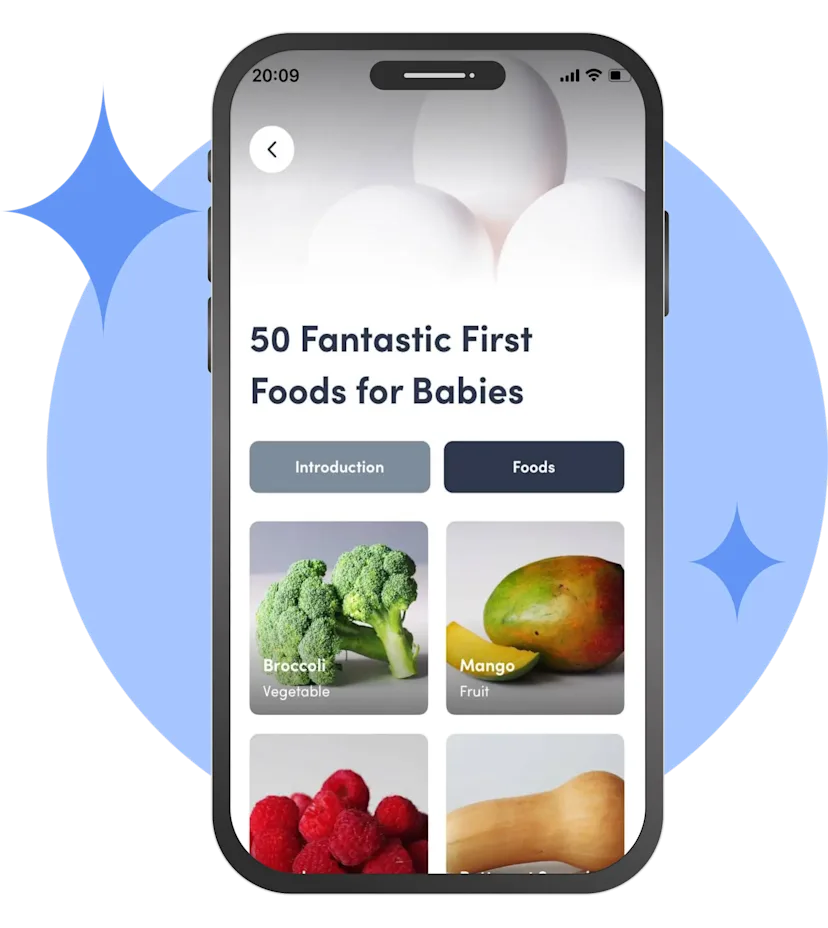
Start solids with confidence
- Guided Introduction to 100+ Foods
- Smart Tools to Simplify Mealtime
- Food Allergen 101
- 300+ Meal Ideas
- First Foods® Database
Start solids with confidence
- Guided Introduction to 100+ Foods
- Smart Tools to Simplify Mealtime
- Food Allergen 101
- 300+ Meal Ideas
- First Foods® Database