Baby Throwing Food on the Floor?
Dropping or throwing food on the floor is a normal part of babies learning about food and the world around them. Our feeding therapists explain why it happens and how to respond so the phase passes smoothly and (hopefully) quickly.
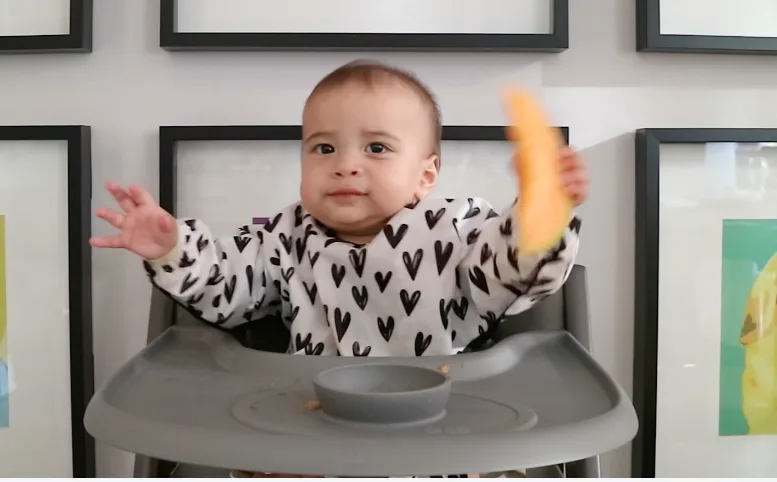
Key Points
Throwing food is normal, not a behavior problem
Babies drop and throw food as they build fine motor skills, test cause and effect, or signal they're overwhelmed. In the early months it's often an attempt at communication or an accident, not misbehavior.
A calm reaction is a powerful tool
If you give a big response, whether negative like yelling or positive like laughing, baby might learn that this is a way to get your attention. Stay neutral, calmly remind baby that "food stays on the table," and gently coach their hand back.
Expect it to take time, and keep everyone consistent
Food throwing can last for months and can shift as babies become toddlers. Setting the bar low, staying patient, and having every caregiver respond the same way helps the phase pass sooner.
Throwing is common and normal, but can feel so frustrating. When it comes to food throwing, there is good news and bad news.
The bad news: Food throwing is going to happen. A lot. For a long time. Prepare yourself.
The good news: You can minimize food throwing by coaching your child and controlling your reaction. And remember: it is truly just a phase.
Having problems with your toddler throwing food? Check out our How to Stop Food Throwing guide, which is also part of our full Toddlers bundle.
Why do babies throw or drop food on the floor?
Young babies tend to drop food. They aren’t exactly sure what to do with it, it’s not easy for them to pick up, it’s too slippery, or they are still getting the hang of their fine motor skills. If your 6-9 month old baby seems to be flinging everything off the table, first, consider this a mistake and that baby is learning.
For some younger babies and most who are 8 months and older, dropping and throwing food is simply an exploration of cause and effect. At this age, they are little scientists. There is so much to discover, test, and explore. Dropping or throwing food? Whoa, gravity!
Babies may also drop or throw food as a way to communicate. It’s important to chase the “why.” Let’s explore some of the common underlying reasons babies drop and throw food.
Common Issue No. 1: Baby doesn't know what to do
When you first bring baby to the table, they may not have any clue what they are supposed to do. Some babies may drop or throw the food at first as they think it’s a toy. Eat with baby, show them how you pick up the food and bring it to your mouth. Let baby learn to bring food to their mouth on their own by watching your model. Remember, self-feeding helps keep baby safe at the table.
Common Issue No. 2: Baby has a hard time picking up, holding, or chewing food.
Babies sometimes drop or throw food that is challenging to pick up, hold on to, or is challenging to chew. It’s hard work! Some babies thrive on a challenge, while others may lose interest quickly and clear the food to the floor out of frustration. Make sure you're considering safe food shapes and sizes to meet baby where they are at, and make sure it isn’t too slippery. You can also try a loaded utensil. Finally, provide opportunities for fine motor play away from the table (knob puzzles, flipping board book pages, pointing, grasping small items like straws).
Common Issue No. 3: Baby is not hungry, too hungry, or tired
If baby is not hungry, too hungry, or tired, they may not have the drive and motivation to participate much in the meal. Self-feeding is hard work! Remember it's totally normal for babies to not eat much solids when first starting out, and this is fine while babies are working on exploration and skill building. Throwing and dropping food in this instance may be baby communicating "this is too hard for me right now. Now's not a good time." And that's okay.
Common Issue No. 4: Baby feels overwhelmed by the sight, smell, touch, or taste of the food.
Food comes with a variety of different textures, sights, smells, and tastes presenting a new and unfamiliar experience for babies. Sometimes exposure to these sensations can be a bit uncomfortable right at first, which can prompt baby to throw or drop food as opposed to bringing it to their mouth. The idea here is: "I am not sure about this right now - out of sight, out of mind."
For more on how to navigate these scenarios, check out our tips for what to do when baby won't touch food.
What to do in the moment when your baby drops or throws food
Now that we’ve chased the why behind throwing food, let’s talk about what to do in the moment.
First, it’s important to create a positive experience when your baby starts solid foods. Try to let go of any stress about your baby eating or not eating the food you serve and approach behaviors like food throwing with calm confidence. Your baby can develop picky eating habits or refuse to sit in their highchair if they feel reprimanded, controlled, or pressured during meals.,,
1. Don’t react.
Leave the food on the floor for a minute. Let your baby realize that when they drop food, it goes away (cause and effect). After a minute, and without emotion, say, “Is your food on the floor? Let’s pick it up. Food belongs on the table.” (Using a splat mat here can be helpful).
2. Replace the food two or three times.
Pick up the food and replace it so your baby can try again. Verbally remind them in a calm and pleasant voice that food belongs on the table. Replace fallen food two or three times; anything more can cause your baby to feel pressured to eat or lead to the pattern game of “I drop, you pick it up..” Again, chase the “why” here. If your baby is dropping food, rubbing their eyes and appears tired, simply acknowledge, “Looks like you’re all done. Next time you can tell me, ‘all done’ ” Then pleasantly end the meal.
3. Show AND tell.
Some babies need to be shown and told. Stand next to your baby and gently “catch” their arm as it shoots to the side to drop the food and coach their muscle memory to bring the food back to the plate/table. Calmly add the line, “food belongs on the table” to help your baby connect the ideas. Remember to keep it gentle, so it’s a pleasant experience for your little one. If you see your baby repeat this motion, this is when you want to react: praise and reinforce the skills and behavior you want to see (placing food back on the table) as opposed to reacting at all to what you don’t want happening (throwing).
Bottom line on food throwing
Children learn by exploring. Playing with food, smashing it, squishing it, pouring it, and yes – throwing it. It’s up to you to decide how comfortable you are with what level of play. Set the rules and be consistent about reinforcing them.. Even if your baby seems too young to understand, remember that babies learn through consistency with your actions, and any words you use will be understood before baby is able to speak.
No matter what you do, remain calm and keep your eye on the long-term goals you want for your child and eating. Create a positive eating environment free from drama, shame, or punishment. When in doubt, put on your coaching hat and see what teachable moment is presenting itself. And remember, this phase will pass.
Frequently Asked Questions
So frustrating, but another game of cause and effect and/or catch with a caregiver! You can use the same techniques as you would when baby throws food (above), making sure you use language like “your cup stays on the table.” And/or “you’re telling me you don’t want your cup, all done.” It can also help to place a marker on the table to indicate where the item should go, as this can encourage a baby to put it where it should be. This could be a napkin, or even a drawn circle or square on a placemat. Point to the marker and say “put here.” Then place the item your baby has been throwing on that spot. Pick it up and hand to baby, “your turn!” This shows baby they can aim for a different target other than the floor!
Throwing can last into toddlerhood, though throwing as a toddler can be a different game altogether with more intention behind the communication they are aiming to convey. The good news? It won’t last forever! Need more guidance on navigating throwing in toddlerhood? Check out our guide on How to Stop Food Throwing, which is also part of our full Toddlers bundle.
Simple answer? Put the dog outside or in another room. Just as your dog can quickly learn that food is up for grabs during meal times, your baby will quickly learn the fun game of “feed the dog.” The simplest solution is taking the dog away from meal times to break this association. You can always let your pup back in the room for clean-up!
Unfortunately mess and some waste is pretty inevitable, regardless of how you start solids. Managing your own expectations can be helpful as it’s going to be messy whenever your baby starts to practice self-feeding, at whatever age. Consider serving small portions and offer more when those are consumed, and have a plan around food throwing communicated with all caregivers as consistency will go a long way. Keep in mind that the exposure to a variety of textures and flavors you are providing your baby now will pay off in dividends down the road in prevention of picky eating, which can prevent more food waste on a larger, longer-lasting scale. Learn more here.
Start solids with confidence
- Guided Introduction to 100+ Foods
- Smart Tools to Simplify Mealtime
- Food Allergen 101
- 300+ Meal Ideas
- First Foods® Database

Start solids with confidence
- Guided Introduction to 100+ Foods
- Smart Tools to Simplify Mealtime
- Food Allergen 101
- 300+ Meal Ideas
- First Foods® Database