10 DIY Toys for Babies
Babies love to use things they see YOU use day-to-day. Here are 10 DIY toys you can make from items at home that don't take a lot of time.
Key Points
Skip buying new stuff—you can turn everyday items into homemade baby toys
Babies are drawn to objects they see adults use every day, and many are safe for them to explore. Things like old wallets, tissue boxes, measuring cups, and cardboard boxes often beat store-bought toys for engagement and skill building.
DIY play builds the motor skills baby needs to eat
Activities like pulling fabric from a tissue box, dropping things into a paper towel tube, and scooping with measuring cups build the hand and body coordination they need to pick up food and bring it to their mouth.
DIY baby toys are safe but stay close in case they need help
It is important to monitor baby and keep them within your reach when they are playing with toys.
Sometimes, the best toys for babies are objects that you may already have at home. After all, babies and toddlers love to explore objects that they see their parents and caregivers use day-to-day. Here are 10 of our favorite do-it-yourself toys and activities for babies 6 months old and up that you can make or use from items that may be already in your house.
Old Wallet
Opening and closing an old wallet is an excellent way for baby to advance their fine motor skills. Better yet, fill the wallet with things that baby can practice taking out and putting back in, such as playing cards or business cards. Choose a cloth wallet over a leather one as most babies will decide to munch on the wallet at some point, and some older leather wallets may be sealed using chemicals that should not end up in baby’s mouth.
Empty Make Up Containers
Empty and thoroughly clean out an old makeup container that is large enough for baby to grab and hold, such as a face powder case or an eyeshadow palette, then show baby how to open and close it. Be sure that the case is large enough that it will not fit entirely in baby’s mouth, as smaller cases, such as lipstick tubes or an individual tub of eyeshadow, pose a risk of choking.
Tissue Pull
Babies often love to pull facial tissues from the box, and as a result, many toy companies have made specially designed “tissue pull” toys. But there is no need to buy another toy when you can make your own version at home. Instead of tissues, which can pose a higher risk of choking, use strips of old fabric. Simply tear or cut long, thick strips of fabric from an old blanket or tee, then stuff the fabric strips in an empty tissue box. This activity is a particularly great way to work on the developing pincer grasp (where the tips of the thumb and pointer finger meet), starting around 7 to 8 months of age.
Cardboard Tunnel
Make a short tunnel for baby to crawl through by opening up each end of a large box, such as old moving boxes, appliance boxes, or large diaper boxes. Crawling promotes shoulder stability and helps develop the muscles in baby’s hands and wrists, which help baby perform the refined movements of bringing food from the plate to the mouth.
Homemade Shaker
Pour a handful of uncooked rice or lentils into a large empty jar with a tight-fitting lid, and you’ve got yourself a DIY rattle or music maker. Shakers let baby learn how their hands grasp and pass objects between one another. They also teach cause and effect: as baby moves the shaker, it makes sound. Just make sure to supervise baby’s play to ensure that none of the rice or lentils spill out, as small, hard objects can pose a choking risk if baby puts them in their mouth.
Crinkle Paper
Cut pieces of parchment paper into squares and put the squares in a large sealable plastic bag. You can draw on the parchment paper with bright colors to make it more visually appealing. The act of crunching and crinkling the paper helps baby build the muscles in their hands and fingers.
Wool Balls
Large wool balls are an environmentally-friendly substitute for dryer sheets, and they also work well as DIY baby toys. The balls stimulate the senses as they bounce and as their wooly texture rubs against baby’s hands. Baby can also practice hand-eye coordination by dropping the balls into a large container. Try wide, shallow containers when baby is just getting started (so that baby can easily grab the ball from the container) and move to containers with narrower openings as baby’s motor skills advance.
Kitchen Measuring Cups
Show baby how to use a metal or plastic measuring cup to scoop tiny dry grains or legumes, such as lentils or rice, from one large bowl to another, then let baby try. To practice more refined movements, use measuring spoons. These toys also work well with water when baby is in the tub or playing outside. Just make sure to carefully supervise baby’s play, especially if baby is scooping small, hard objects that may pose a choking risk if baby puts some in their mouth.
Plastic Straw Pull
Pulling plastic straws out of a large container or bowl can help baby practice their pincer grasp, especially as baby nears the 7 to 8 month age range. Just be sure to use plastic straws, as paper straws are a common choking hazard.
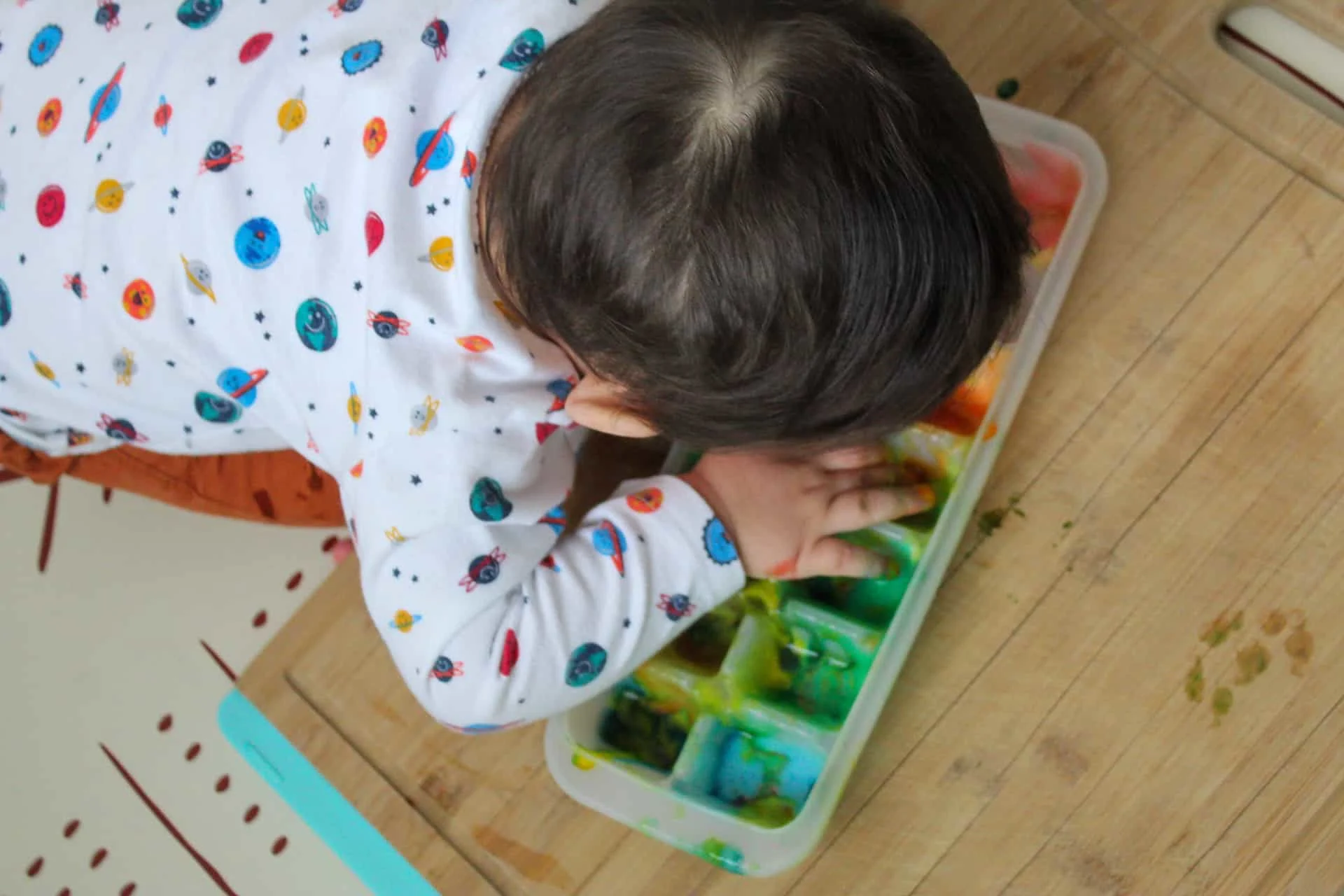
Edible Finger Paint
This is a great way to explore texture on the hands and also finger isolation. There are many recipes available, and you can always swap the traditional food coloring for natural versions (blackberries, beets, turmeric, etc.).
Frequently Asked Questions
These ideas are best for babies at least 6 months of age. They are great for helping babies get ready to start solids. They’re also great for babies who have already started solids and need help building skills away from the table.
Skip items with strings or cords (strangulation risk), anything that could break into pieces smaller (choking risk), and old painted items (possible lead paint). You should also avoid common non-food choking hazards like small magnets, marbles, balloons, water beads, and pen caps.
No, it’s normal. Mouthing on objects is how babies explore the world, especially between 6 and 18 months. It's how they learn about textures, temperatures, and shapes. The key is to make sure DIY toys are large enough that they cannot be stuffed in their mouth, sturdy enough that they will not break apart as they mouth on it, and made of non-toxic materials. Always supervise play and inspect homemade toys before each session for loose parts, sharp edges, or chewed-off bits.
Start solids with confidence
- Guided Introduction to 100+ Foods
- Smart Tools to Simplify Mealtime
- Food Allergen 101
- 300+ Meal Ideas
- First Foods® Database

Start solids with confidence
- Guided Introduction to 100+ Foods
- Smart Tools to Simplify Mealtime
- Food Allergen 101
- 300+ Meal Ideas
- First Foods® Database