¿Qué es el BLW?
BLW es un método para iniciar la alimentación complementaria donde se evitan los purés y se ofrece comidas que los bebés puedan alimentarse solos. Lee más sobre beneficios incluyendo independencia y desarrollo.
Puntos clave
Baby-led weaning skips the idea of “staged baby foods”
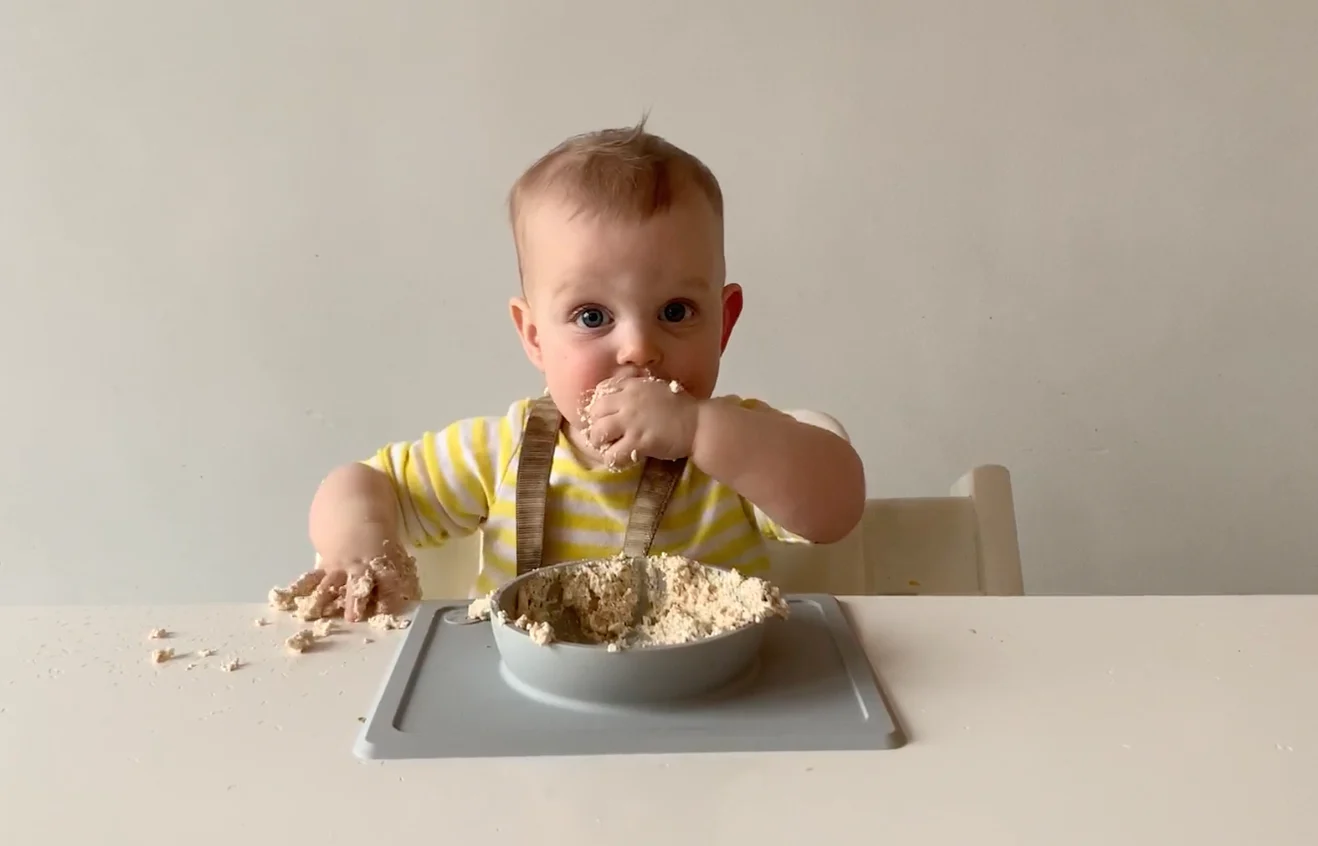
Baby-led weaning is a way of feeding an infant that lets them explore solid foods and practice feeding themselves a variety of food textures at their own pace.
Baby-led weaning lets babies practice feeding themselves
While families often choose to skip purees and offer finger foods from the start with baby-led weaning, you can offer purees, finger foods, or both—and let baby practice feeding themselves.
It’s safe to start solids with baby-led weaning around 6 months of age
It’s a myth that purees are safer than finger foods. Multiple studies have shown no greater risk of choking when babies explore finger foods prepared for their age and stage of development.
El BLW o alimentación autorregulada es un método de introducción de alimentos sólidos a los bebés, mediante el cual los purés y la alimentación con cuchara se omiten por completo en favor de bocados que el bebé se alimenta solo.
Acuñado por Gill Rapley, una ex enfermera de salud pública en el Reino Unido, el BLW (o alimentación autorregulada, como a veces se le conoce) ofrece a los(as) p/madres una forma de evitar por completo la idea de la “comida para bebés.” El BLW está creciendo en popularidad y es particularmente popular entre los p/madres que quieren evitar criar a niños(as) quisquillosos(as) con la comida, así como entre los p/madres que se suscriben a las filosofías de crianza tipo Montessori, en las que se anima a los(as) niños(as) a ser autosuficientes.
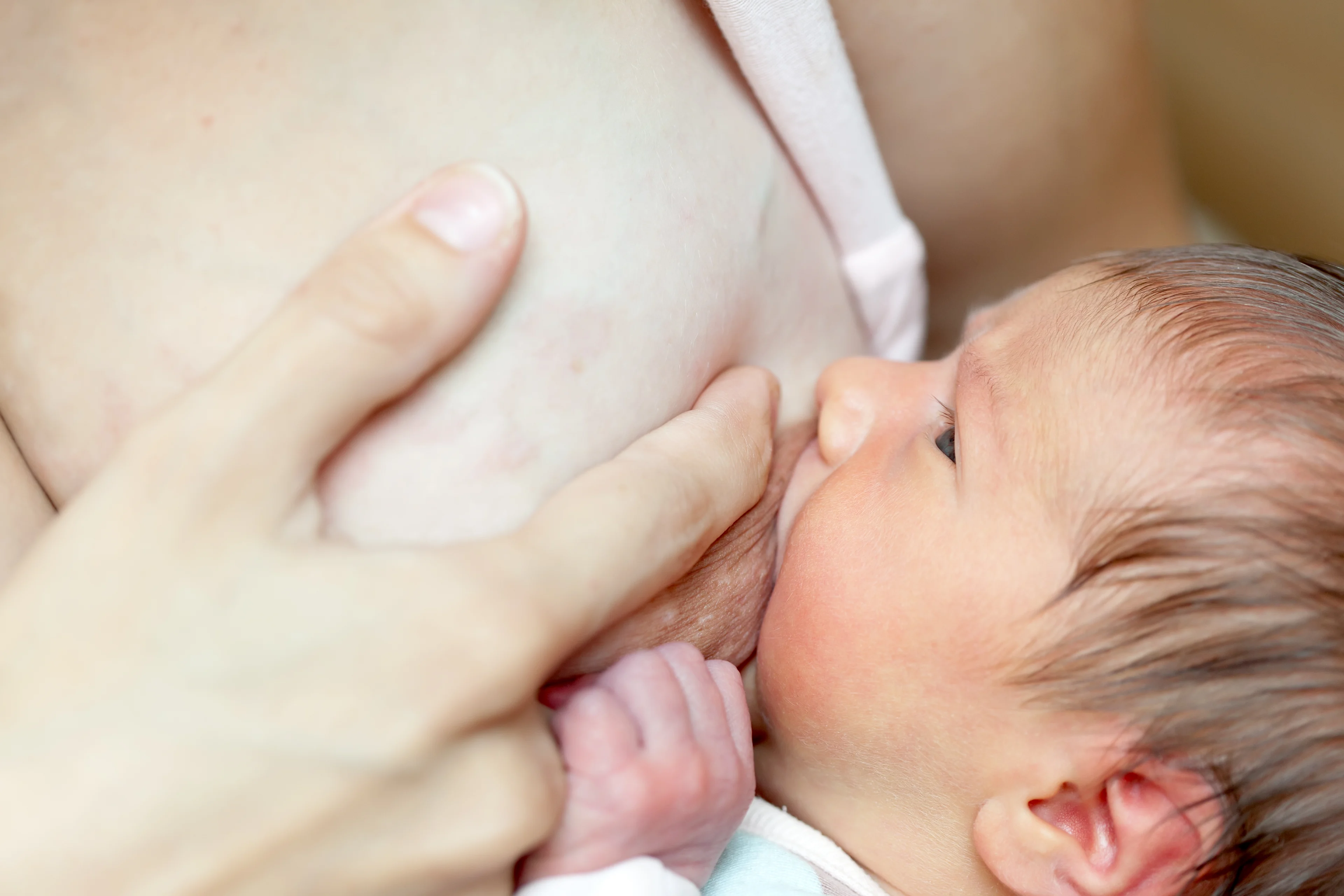
En esencia, el BLW enfatiza la independencia del/a bebé. Los padres y madres deben esperar a que su bebé muestre señales de estar listo(a) para comer y seguir las señales del/a bebé en todos los aspectos de la introducción de alimentos sólidos. Se lleva a los bebés a la mesa para las comidas familiares, se les anima a tomar la comida con sus propias manos y se les da la confianza de que coman tanto o tan poco como necesiten. Los bebés que comienzan la alimentación complementaria haciendo BLW también continúan con la lactancia materna o con biberón y se les permite determinar cuándo se deben reducir las tomas.
Beneficios del BLW
Las investigaciones recientes apenas están comenzando a analizar los impactos del BLW, pero sabemos que dejar que el./la bebé se alimente solo(a) tiene muchos beneficios.
Lo más importante es fomentar la independencia: con el BLW, el/la bebé aprenderá a comer solo(a) y tendrá control sobre lo que come y cuánto come. Nuestra experiencia es que los bebés a los que se les da este control sobre lo que comen desde temprano tienen menos probabilidades de desarrollar actitudes quisquillosas hacia la comida en los años de la infancia y más allá. Con el BLW, es menos probable que la comida se convierta en una lucha de poder en la relación entre p/madre-hijo(a) porque el/la niño(a) tiene el control desde el primer día de la alimentación complementaria.
Otros beneficios del BLW incluyen la oportunidad para que tu bebé practique habilidades motoras y orales críticas. Alimentarse por sí mismo(a) con una variedad de consistencias y texturas de alimentos le permite al/a bebé trabajar en los movimientos de la lengua, la fuerza de la mandíbula y la deglución, así como las habilidades motoras finas necesarias para recoger trozos de comida de diferentes tamaños con las manos y dedos.
Por último, las investigaciones actuales muestran que los(as) bebés que comienzan a comer los alimentos sólidos con bocados (o “BLW”) no tienen más probabilidades de ahogarse con la comida que los(as) bebés que se alimentan con cuchara.[1] [2]
Beneficios de dejar que el bebé se alimente por sí mismo
Independencia: el bebé aprende a comer de forma independiente y tiene el control total.
Desarrollo: El bebé practica habilidades motoras y orales críticas.
Control del apetito: el bebé está a cargo de cuánto comer y aprende a detenerse cuando está lleno.
Facilidad: el bebé (principalmente) come lo que tu comes. ¡Menos comidas especiales!
Variedad: el bebé puede comer una variedad de texturas y sabores, lo que puede reducir la alimentación quisquillosa.
Menos costoso: el bebé come comida real. No se requieren frascos, bolsas o licuadoras costosos.
Comidas familiares: el bebé es parte de la comida familiar y come contigo.
Comer fuera: es más fácil comer en restaurantes ya que el bebé puede comer una variedad de comidas.
¡Divertido! Los bebés disfrutan de tocar, inspeccionar y probar diferentes sabores y texturas.
Mientras que nuestro método preferido de introducir alimentos sólidos, bocados para los bebés, se basa en la sabiduría del BLW, ofrece un poco más de flexibilidad. Por ejemplo, puedes emplear una combinación de métodos de alimentación con un , con un énfasis en permitir que el/la bebé se alimente por sí mismo(a) con una variedad de texturas y sabores.
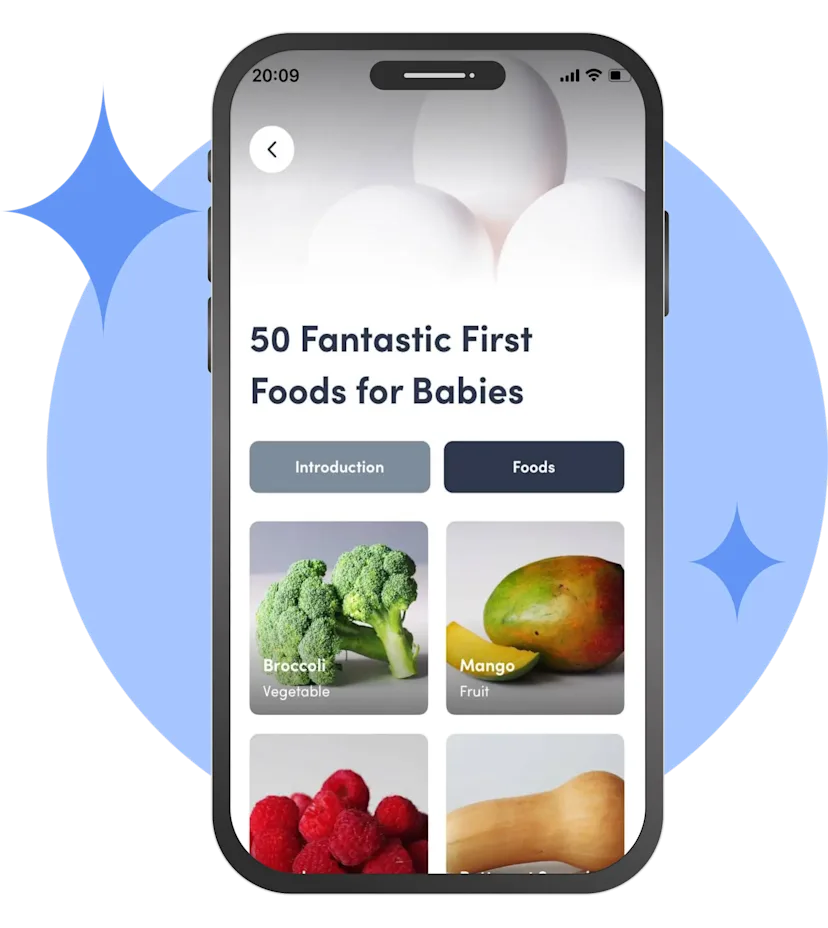
¿Necesitas ayuda para este proceso de comenzar sólidos? La Solid Starts App es nuestra experiencia guiada en la app que te ayuda a navegar las primeras probaditas de tu bebé y más. Comienza tu prueba gratis.
Esta página ha sido creada pensando en bebés y niños(as) con un desarrollo típico. La información aquí está generalizada para una audiencia amplia y solo tiene fines informativos. Tu hijo(a) es un(a) individuo(a) y puede tener necesidades o consideraciones más allá de las prácticas generalmente aceptadas. Si tu hijo(a) tiene diferencias médicas o de desarrollo subyacentes, que incluyen, entre otras, prematuridad, retraso en el desarrollo, hipotonía, diferencias en las vías respiratorias, anomalías cromosómicas, anomalías craneofaciales, diferencias gastrointestinales, enfermedad cardiopulmonar o diferencias neurológicas, te recomendamos enfáticamente y te alentamos a que hables sobre el plan de alimentación del/a niño(a) y cuándo y cómo comenzar a ofrecer alimentos sólidos y bocados con el/la médico(a), el/la proveedor(a) de atención médica o el equipo de terapia del/a niño(a). Un seguimiento cercano con un(a) especialista en alimentación y deglución puede proporcionar una guía segura para el proceso de alimentación del/a niño(a). Siempre busca el consejo de tu médico(a), proveedor de atención médica o equipo de terapia con cualquier pregunta que puedas tener sobre el desarrollo y la capacidad de tu hijo(a) para comenzar con los alimentos sólidos.
Material de referencia
Fangupo, L. J., Heath, A. M., Williams, S. M., et al. (2016). A baby-led approach to eating solids and risk of choking. Pediatrics, 138 (4), Article e20160772 https://doi.org/10.1542/peds.2016-0772
Harris, G., & Mason, S. (2017, April 29). Are There Sensitive Periods for Food Acceptance in Infancy? Current Nutrition Reports, 6(2), 190–196. https://doi.org/10.1007/s13668-017-0203-0
Start solids with confidence
- Guided Introduction to 100+ Foods
- Smart Tools to Simplify Mealtime
- Food Allergen 101
- 300+ Meal Ideas
- First Foods® Database
Start solids with confidence
- Guided Introduction to 100+ Foods
- Smart Tools to Simplify Mealtime
- Food Allergen 101
- 300+ Meal Ideas
- First Foods® Database