
Paced Bottle Feeding
Published: March 26, 2026
Updated: March 26, 2026
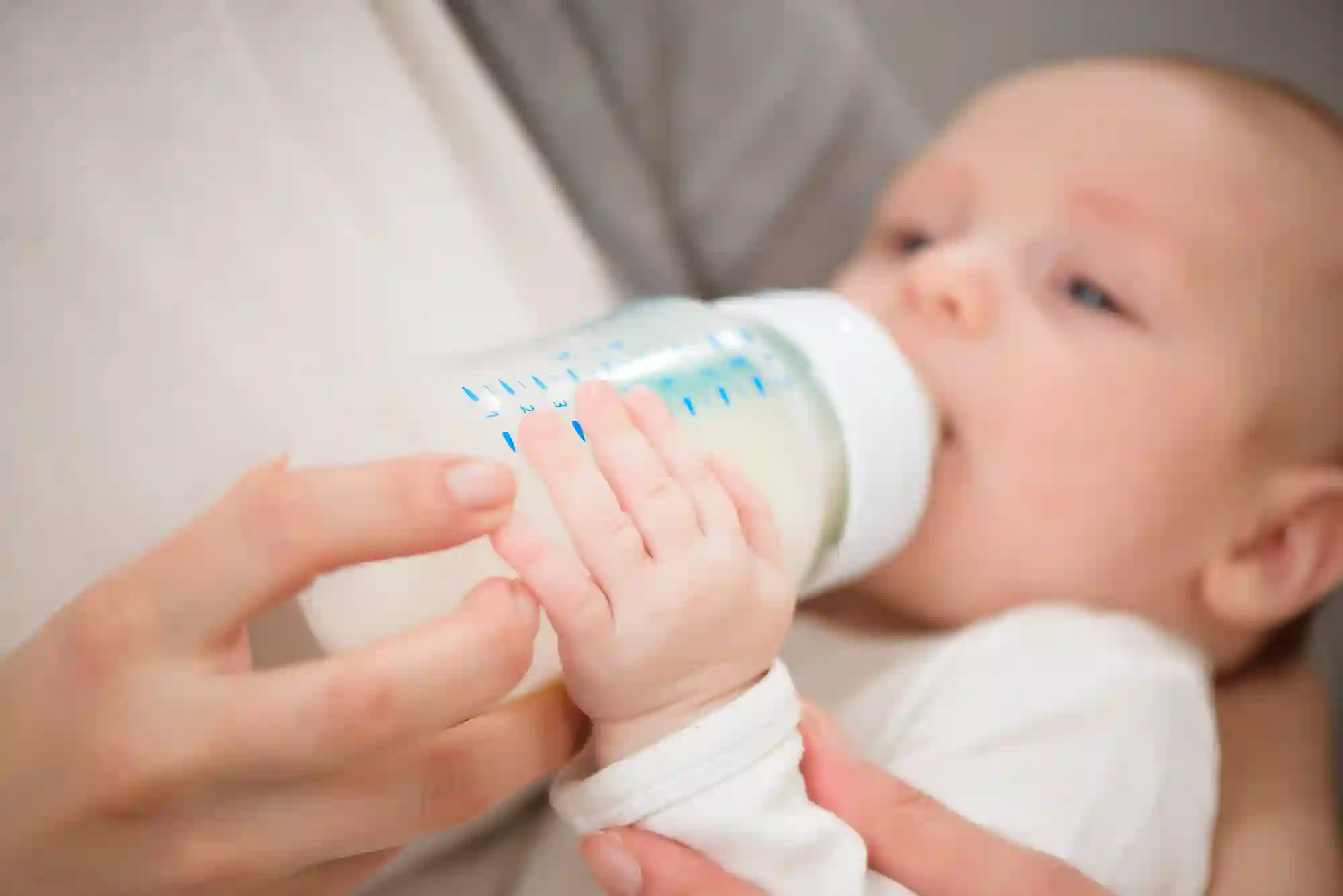
Paced bottle feeding lets babies follow their hunger and fullness cues by giving them more control when they’re eating. The pediatric pros at Solid Starts explain how paced bottle feeding works and why this strategy helps babies build a positive relationship with food.
The Solid Starts App can help you and your baby get ready for starting solids. Get started >
Key Points
✔ Paced bottle feeding lets baby take the lead
By slowing down the flow of milk and pausing for breaks, you create opportunities for baby to tune into their hunger and fullness cues and to take action based on how they feel.
✔ Pay attention and respond to baby’s cues
When you observe baby while eating you can spot signs that they want to keep going or stop. Honoring these cues helps avoid pressuring baby to eat more or less than they need.
✔ Paced bottle feeding has many benefits
Studies show paced bottle feeding makes it less likely that a baby will experience digestive discomfort from overeating. For babies who drink from the breast and bottle, paced bottle feeding minimizes the chances that they will prefer the bottle over the breast.
What Is Paced Bottle Feeding?
Paced bottle feeding mimics the ebb and flow of breastfeeding, which lets babies have more control than traditional bottle feeding in how much they eat. When offered a bottle without pacing, their sucking reflex kicks in, resulting in feeding until the bottle is removed—in many situations, not because they are still hungry, but because the flow of milk keeps coming.
With paced bottle feeding, you slow the flow from the bottle by positioning baby so they are a little more upright in your lap and adjusting the angle of the bottle to encourage them to actively suck. You also provide breaks during the feed so baby can tune into their belly, feel if they are still hungry or full, and decide to keep drinking or stop. Paced bottle feeding contrasts with traditional bottle feeding practices that encourage baby to feed at a fixed rate or finish a certain volume of breast milk or formula.
Paced bottle feeding is a type of responsive feeding, and responsive feeding is widely endorsed by the World Health Organization, the American Academy of Pediatrics, and feeding researchers as a foundational practice that shapes a child’s lifelong relationship with food. It is also a necessary feeding strategy for babies who have spent time in the NICU, or who have medical complexity affecting feeding such as prematurity, cardiac conditions, neurological differences, or a history of tube feeding.
Why Paced Bottle Feeding Matters
Paced bottle feeding closes the gap between breastfeeding and traditional bottle feeding. When breastfeeding, a baby must work to draw milk out of the breast. This helps them learn to suck, swallow, and breathe in the right order—which makes feeding safer. It also gives the baby's stomach time to send signals to the brain about when they're hungry or full. And instead of milk just pouring out of the bottle on its own, baby has the chance to be a more active participant in the feeding– taking breaks when needed and/or sucking when ready to eat.
Breastfeeding is not always possible, or desired, and many families choose to do both. Paced bottle feeding lets you reap some of the advantages of breastfeeding by mimicking the mechanics of nursing with the bottle. There is a large body of research that shows this type of responsive feeding in infancy has many benefits.
Benefits of Paced Bottle Feeding
Swallow coordination: Slower feeding with intermittent breaks decreases the likelihood of overwhelming baby and their ability to coordinate sucking, swallowing, and breathing. |
Self-regulation: Research consistently shows that infants have an innate ability to understand hunger and fullness that can be strengthened or undermined by how their caregiver feeds them. Paced bottle feeding supports the development of these abilities by allowing the infant—rather than the volume in the bottle—to determine when a feeding ends. |
Improved digestion: Slower feeding can lead to less reflux, gassiness, and other gastrointestinal symptoms. |
Less pressure: Research consistently shows that pressure to eat a certain amount or certain food often leads to refusal and more complicated feeding issues. Studies show that caregivers who use paced bottle feeding demonstrate greater responsiveness to baby’s communication, suggesting paced feeding may not only benefit infants, but also support caregivers in better reading their baby’s cues. |
Combo feeding: Mimicking the style of breastfeeding can prevent baby from beginning to prefer the faster, more consistent flow of the bottle. This can preserve their interest in breastfeeding. Families who are alternating between breast and bottle should understand that paced feeding is supportive but is not a guarantee against bottle preference. |
As clinicians, we want to underscore that, while much of the literature focuses on how paced bottle feeding can help one avoid obesity later in life, we are not recommending paced bottle feeding because it “limits” food or teaches a baby to eat less than they need to eat at mealtime. We recommend paced bottle feeding because it helps babies tune into their body’s signals, and this foundational skill—listening and responding to your hunger and fullness cues—helps shape a positive relationship with food in infancy, toddlerhood, and beyond.
How to Do Paced Bottle Feeding
Step 1: Begin with hunger cues
Begin feeding when they start showing signs of hunger. Note that crying is a sign that they may be overly hungry. Ideally, start feeding before they reach this point. Signs of hunger include:
Turning their head toward their hands or objects when they touch their face
Sucking on their fists
Puckering, smacking, or licking their lips
Clenched hands / tense body language
Step 2: Position them so their body is supported, not too cradled.
Hold them in a semi-upright or upright position with full head and trunk support. Avoid feeding when they are lying flat on their back or when they are cocooned in your arms with their neck flexed down towards their chest. A well-supported position supports breathing coordination, reduces the risk of ear infections, and gives the infant more control of the milk flow during the feed. Many babies also feed beautifully in an upright sidelying position, laying along a caregiver’s crossed leg.
Step 3: Invite the latch
Gently touch the nipple to their lips, then wait for them to open their mouth and root to the nipple. Do not insert the nipple until they show you they are ready for it by opening their mouth. This small step begins teaching baby that they have agency in the feeding.
Step 4: Control milk flow
Hold the bottle nearly horizontal so the nipple is only partially filled with milk. This reduces gravity-driven flow and requires them to actively suck rather than passively swallow. Use a slow-flow nipple appropriate for their age and skill level to support this further.
Step 5: Allow suck–swallow–pause
After they have sucked and swallowed a few times, pause by tipping the bottle down so the nipple is no longer full of milk, but still touching in their mouth. This creates a natural break that allows them to breathe, swallow, and re-engage with the nipple when they feel ready. If you are feeding them in a sidelying position, you can gently lean them forward, so the milk is no longer in the nipple.
For some infants, a bottle tilt alone may not provide a long enough break. In these moments, sucking on a pacifier can help. The pacifier creates an opportunity to reorganize, settle their breathing, and tune into their hunger and fullness cues. This well-established strategy helps them improve their suck-swallow-breathe coordination without fully ending their feeding session. Try the pacifier technique if baby:
is younger or a NICU graduate who is still developing feeding endurance
fatigues quickly mid-feed and needs more than a brief pause
shows stress (color changes, splayed fingers, hiccups, rapid breathing) while feeding
becomes fussy during mid-feed pauses and has difficulty re-engaging without the bottle
has reflux or GERD
Keep in mind that the pacifier is used as a regulated pause within the feed—not as a distraction or a tool to delay ending the feed when they are signaling fullness. If they are showing signs that they are full after a brief pacifier pause, that is a signal to end the feed.
Step 6: Respond to their cues
Observe continuously for behavioral cues.
If baby is relaxed, continues to suck, and stays latched on the bottle, continue feeding.
If baby shows signs of overwhelm (wide eyes, splayed fingers, spitting, coughing, or pulling off the bottle, give them a break.
When baby shows signs of fullness, remove the bottle and end the feeding no matter how much volume is left. Signs of fullness include:
Reflexed open hands
Slowed down their pace of drinking
Long pauses between bursts of sucking
Turning or shaking their head away from the nipple
Distracted or more interested in surroundings
Falling asleep
Step 7: Stop when they are full
Stop feeding when they show signs that they’re full, even if milk remains in the bottle. Resist the urge to push them to drink more. With most babies, the goal is to honor their cues, not to reach a target volume.
It is important to note that if your baby is working on weight gain and/or building feed skills, you may be aiming for target volumes or need to meet specific volumes. If struggling with this, talk to your pediatrician for support. Simple tweaks like smaller, more frequent feeds can do the trick.
Step 8: Burp and observe
Burp gently if needed and watch how they act after burping. If they show signs of hunger again, offer more, but if they appear disinterested, the feeding is over.
How to Tell When Baby Is Full
Babies show you that they are full when feeding by slowing down their pace, relaxing or falling asleep, and turning away or pushing the bottle, but these signs can be easy to miss. It is also easy to overfeed because babies continue to suck even when they are full, especially when milk is flowing fast from the bottle. Practicing paced bottle feeding can help, but it takes a bit of practice. You’ll know baby consumed too much milk when they show you signs of overfeeding during and after the feed.
Signs of Overfeeding in Infancy
During the Feed | After the Feed | Over Time |
Fingers splayed | Frequent or significant spit-up | Excessive weight gain |
Rigid body | Gassiness | Unsettled between feeds |
Arching back | Overly fussy | Gastrointestinal discomfort |
Glazed eyes | Consistently eats a lot | |
Turning head away | ||
Pushing tongue on nipple |
If you are worried about overfeeding, speak with your pediatrician. Doctors are typically happy to observe feeding and help you assess their signs afterwards to ease your mind.
Common Mistakes
Paced bottle feeding is one of the most valuable tools for supporting a baby's ability to self-regulate during feeding, but like any new skill, it takes practice to get right. Many families learn the basic technique and then unknowingly fall into habits that undermine what paced feeding is designed to do.
1. Schedule vs. cues
The mistake: Tipping the bottle every three sucks like clockwork, instead of following their cues
Why it matters:
Paced bottle feeding is a responsive practice. This means the pace should be driven by baby’s cues, not a timer or a counting system.
When pauses happen on a predetermined schedule rather than in response to the baby, the caregiver's attention shifts from the baby to the counting, which is the opposite of responsive feeding. Some babies need more frequent pauses; others can manage longer sucking bursts comfortably.
What to do instead:
Use counting as a rough starting guide, but pay attention to what they are doing. You should pause when you see signs that a break would be helpful, such as swallowing that sounds like it’s a lot of work, irregular breathing, eyes widening, or splayed fingers. Let their body tell you when to slow down, not the clock.
2. Controlling the nipple
The mistake: Removing the bottle nipple from their mouth to force a break
Why it matters:
Removing the nipple is a caregiver-driven pause, not an infant-driven one. It can interrupt the baby's natural suck rhythm, cause frustration, and create a feeding dynamic where the caregiver is controlling the experience rather than the baby. In NICU feeding therapy, clinicians specifically caution against pulling the nipple out as a pacing strategy precisely because it takes control away from the infant.
What to do instead:
Tip the bottle down so the nipple stays in the mouth but drains of milk. This lets the baby breathe and re-engage naturally because the nipple remains available, keeping them in control of when the next suck-swallow sequence begins.
3. Ignoring their slowing pace
The mistake: Trying to get them to keep eating by jiggling the bottle, twisting the nipple, or tapping their cheek when they slow their sucking pace
Why it matters:
A slowing sucking pace is often a baby’s way of communicating to you. It may mean the baby is getting full or tired, needs a longer break, or is processing how they feel. Stimulating them with the bottle overrides the signals their body is sending to them to stop. Studies show that regularly pushing babies to eat past the point of fullness can make it harder for them to recognize when they're full as they get older.
What to do instead:
When they slow their pace, pause and take note of what they do next. Is this a natural rest break, after which they re-engage readily? Or is this a fullness signal: relaxing hands, releasing the nipple, turning away? Honor their cues. If they re-engage, continue. If they don't, the feed is likely over.
4. Focusing on what’s left
The mistake: Encouraging a few more sips to empty the bottle because it seems wasteful to throw away the last ounce
Why it matters:
This is one of the most common bottle feeding mistakes and one of the most consequential. The amount left in the bottle at the end of a feed is irrelevant to whether the baby is full. How much they eat naturally varies from one feed to the next based on different factors, like how hungry or alert they are, the time of day, and where they are in their growth. Teaching them that the feed ends when the bottle is empty—rather than when they are satisfied—undermines their ability to tune into their belly and know when to keep eating and when to stop.
What to do instead:
Prepare bottles based on typical intake but accept that the baby may not finish. Discard unused milk after a feed. If consistently large amounts are being left, adjust the bottle preparation size. The goal is to honor the baby's fullness, not to reach a volume target.
5. Steep bottle angle
The mistake: Tilting the bottle upward so the nipple is completely full of milk through the feed
Why it matters:
When the bottle is held vertically or at a steep angle, gravity causes milk to flow continuously, giving them very little control over how much milk they are taking in. This replicates many of the problems of traditional bottle feeding—rapid flow, too much milk in the mouth at once, difficulty with suck–swallow–breathe coordination time.
What to do instead:
Hold the bottle nearly horizontal so the nipple is only partially filled with milk. This way, they have to actively suck to draw milk, which slows the pace and lets them control the flow. This works best with a slow-flow nipple that is appropriate for their age and skill level.
6. Positioning
The mistake: Feeding them in an unsupported cradled position or when they are lying down
Why it matters:
Feeding in a reclined or flat position lets gravity control the milk flow and decreases their control over their feed, which can make coordinating sucking, swallowing, and breathing more challenging and make it harder for them to signal that they’re done. It also increases the risk of milk pooling in the throat and ear canals, which can lead to ear infections.
What to do instead:
Hold them in a semi-upright or fully upright position with support of their head and trunk. Upright positioning helps them actively participate in the feed, lets gravity help them when they swallow, and makes it easier for you to observe and respond to cues.
7. Distractions
The mistake: Consistently scrolling on your phone, watching television, or engaging in other activities that pull your attention away from feeding
Why it matters:
Paced bottle feeding requires you to watch baby as they eat. Research has found that digital media use during infant feeding is associated with lower sensitivity to infant cues and less responsive feeding interactions. Missing subtle cues means missing the opportunity to pace responsively and potentially feeding past fullness.
What to do instead:
Treat feeding as a time to connect. Make eye contact, talk to them, and watch their face and body during the feed. This kind of engagement during feeding is itself a developmental benefit, separate from the mechanics of paced bottle feeding. It’s okay to check your phone or even watch a show while feeding baby on occasion but try to keep it to a minimum.
8. Restricting intake
The mistake: Using pacing as a strategy to intentionally limit how much they eat
Why it matters:
Paced bottle feeding is designed to help baby learn to self-regulate how much they eat—not to give the caregiver a tool to impose a maximum volume. When pacing is used restrictively, the feed can become a source of frustration and hunger for them.
What to do instead:
Let their cues determine pace and volume. Pacing should slow the feed down enough that they can tune into their hunger and fullness cues and take action based on what they feel. If you are concerned about how much they are eating or their weight gain, talk to your pediatrician rather than using restriction as a workaround.
9. One-size-fits-all
The mistake: Assuming that paced bottle feeding looks the same for every baby and following a prescriptive protocol instead of following your baby’s cues
Why it matters:
Every baby has a different feeding style, with different sucking strength, suck–swallow–breathe coordination maturity, endurance, and communication abilities. What looks like paced bottle feeding for a healthy 3-month-old baby may be insufficient for a 36-week preterm infant, and overly restrictive for a robust 5-month-old. Applying a one-size-fits-all strategy without paying attention to their cues can still lead to non-responsive feeding.
What to do instead:
Use paced feeding principles as a framework, not a rigid script. Observe how baby responds to pauses. How long do they need? How clearly do they signal readiness to continue? How quickly do they fatigue? For babies with complex feeding histories, including NICU graduates, individualized guidance from a feeding therapist is almost always the most appropriate path.
The goal of paced bottle feeding is not perfection. The goal is to help baby build a relationship with food and mealtime in which they feel safe, heard, and in control of how much food they eat. Families who are present, attentive, and willing to follow their baby's lead while feeding are already a step ahead. Paced bottle feeding techniques reinforce that foundation.
Frequently Asked Questions
What bottle is best for paced bottle feeding?
Look for a bottle with a slow-flow nipple (labeled “slow” or “1”) that doesn’t allow the milk to pour out on its own when turned upside down, and a shape that allows you to hold it horizontally. The technique matters more than the brand.
What is a slow-flow nipple?
A slow-flow nipple has a smaller hole, so milk comes out more slowly and baby has to suck to draw it out instead of the milk just pouring out. Check out the label: a slow-flow nipple is typically marketed as “slow” on the packaging.
How do I know the appropriate slow-flow nipple for age and skill level?
Observe baby during feeds. Signs the flow is too fast: gulping, coughing, milk spilling from the corners of the mouth, pulling off frequently, or seeming overwhelmed. Signs it's too slow: frustration, falling asleep before finishing, collapsing the nipple. Most breastfed babies do best staying on slow-flow longer than the packaging suggests.
How slow is too slow?
If baby is getting exhausted during feeding, frustrated, or taking much longer than 20 minutes to finish a feed, the flow may be too slow. Often times a baby will suck so hard on the nipple that it collapses on itself, which is a sign that it’s time to move up to the next flow.
How long should a paced bottle feed take?
About 15 to 20 minutes, which mirrors the length of a typical breastfeed. If baby is draining a bottle in 5 minutes, the flow is likely too fast.
When should I stop paced bottle feeding?
There’s no hard stop when it comes to a baby’s age. Many families continue the principles (pausing, following hunger cues, not rushing feeds) throughout the bottle-feeding period of life. The habits it builds around hunger and fullness awareness are worth keeping.
Does paced bottle feeding cause gas?
Typically no. Paced feeding actually tends to reduce gas because babies swallow less air when they're feeding more slowly and when they aren't gulping to keep up with the fast flow of milk from the bottle.
Does paced bottle feeding help with gas?
Yes, for many babies. Slowing the feed and pausing regularly gives babies time to manage the flow, which means less air swallowed and less gas overall.
Does paced bottle feeding help with reflux?
It can, yes. Smaller, slower feeds reduce the volume of milk hitting the stomach at once, which is one of the main triggers for reflux symptoms. It won't resolve reflux entirely, but many families notice a real improvement.
Should I use paced bottle feeding with a premature baby?
Yes, it's especially important. Preemies have less developed stamina and coordination for feeding, and a fast-flowing bottle can easily overwhelm them. Paced feeding gives them control over the pace and time to breathe, which makes feeds safer and less tiring. Always follow your NICU team's specific guidance.
Written By
K. Grenawitzke, OTD, OTR/L, SCFES, IBCLC, CNT, Pediatric Feeding & Swallowing Specialist
K. Rappaport, OTR/L, MS, SCFES, IBCLC, Pediatric Feeding & Swallowing Specialist
M. Suarez, MS, OTR/L, SWC, CLEC, PMH-C, Pediatric Feeding & Swallowing Specialist
Ready to get started?
Download the app to start your journey.
Get 10% Off
Sign up to save and get weekly tips, recipes and more.




Copyright © 2026 • Solid Starts Inc