Meal Ideas with Allergens
After introducing the common allergens, keep them in baby's diet with easy meal ideas — including no-cook ways to serve peanut, egg, dairy, wheat, and more.
Key Points
Once an allergen is introduced, keep serving it regularly
Just introducing an allergen once won’t help baby build tolerance to it. Aim to offer each common allergen at least once, and ideally twice, a week.
Small amounts count
Baby doesn’t need to consume a large amount of the food to “count” towards exposure. Plus, once you’ve safely introduced an allergen, multiple allergens can be mixed into everyday meals, so try for meals that can check the box for a few allergens at once.
Keep up exposure through the early childhood years
The immune system is still actively learning during the early years, which is why consistent exposure matters most during this window. After age 6, the risk of developing a new allergy to a food that's been regularly eaten drops significantly.
Once a food allergen is safely introduced, try to keep it in the diet on a regular basis, at least once (but ideally twice) a week. It is okay if you occasionally miss a week, or if your baby doesn’t eat much of the food when it is offered. The goal is steady exposure over time.
Once they are introduced, common food allergens do not need to be served on their own. They can be mixed into meals, and you can offer dishes that check the box for multiple food allergens at once, such as:
▶ energy balls (peanut, tree nuts)
▶ ground-up granola (peanut, tree nuts)
▶ pancakes (dairy, egg, wheat)
▶ peanut noodles (peanut, wheat)
▶ tofu egg scramble (egg, soy)
No-Cook Meals with Allergens
Once peanut and tree nuts are safely introduced, mixed nut butter and ground-up granola are convenient ways to maintain exposure to multiple food allergens at once.
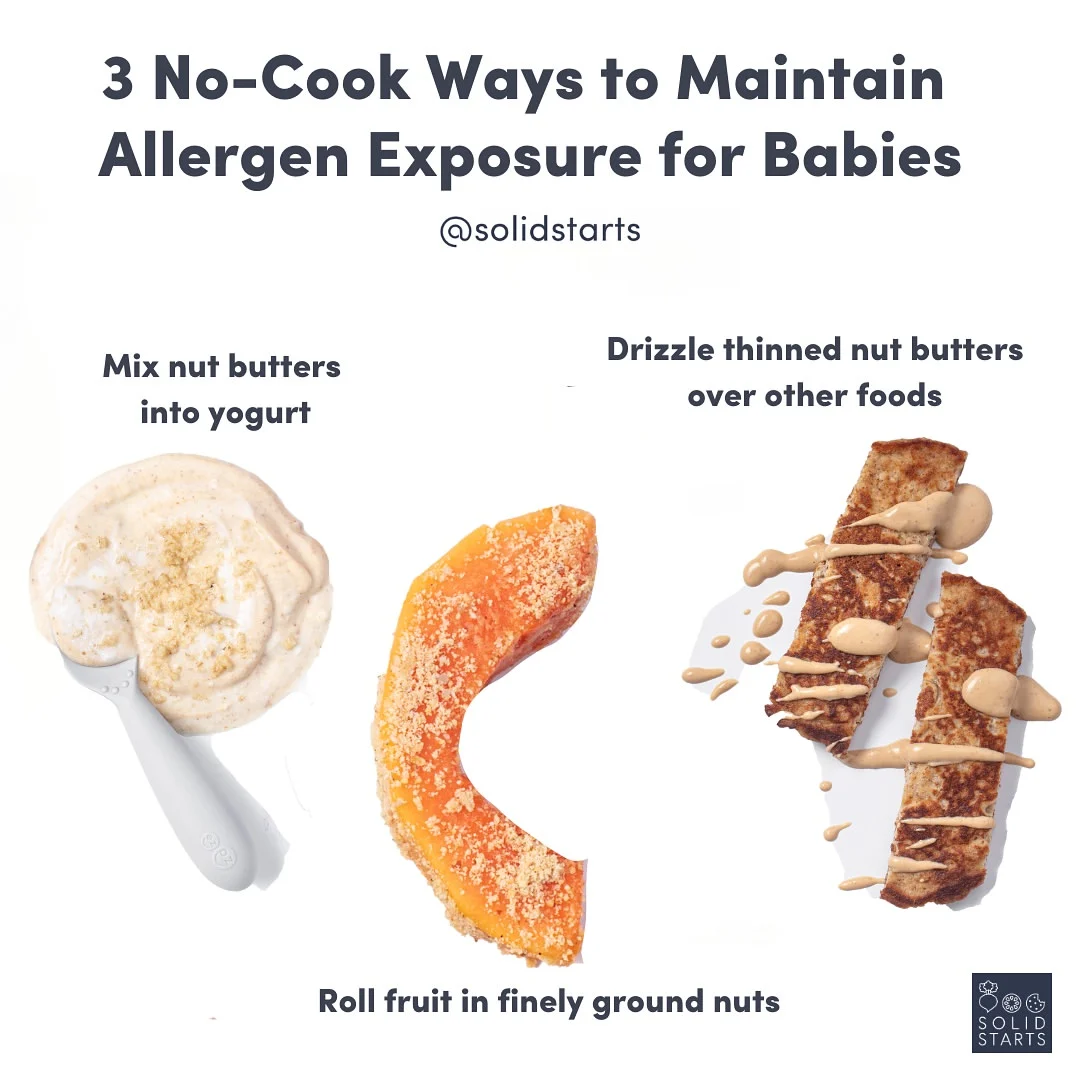
You can buy or make mixed nut butter or ground-up granola from scratch, and use them in meals in different ways. Got bread, fruit, and yogurt? Sprinkle a teaspoon of finely ground-up granola on fruit or yogurt one day, then spread some mixed nut butter on toast on another day, and you’re good to go for the week.
If you need meal ideas with just peanut or a specific tree nut, below are few ideas to try.
Peanut
swirl peanut butter into porridge
thinly spread peanut butter on toast
mix peanut butter and yogurt
sprinkle ground up peanuts on fruit
use peanut sauce to dress noodles
Almond
roll fruit or vegetables in almond flour
swirl almond butter into mashed fruit
make dip with almond butter and water
drizzle almond butter dip on a waffle
use almond meal in pancakes
Cashew
stir cashew butter into porridge
sprinkle ground-up cashew on fruit
try cashew cheese or cashew yogurt
mash cashew butter and vegetables
use cashew cream to dress pasta
Hazelnut
roll fruit or vegetables in hazelnut meal
mix ground-up hazelnuts into porridge
mash hazelnut flour with vegetables
blend hazelnut and vegetables into dip
use hazelnut meal in pancakes
Walnut
roll fruit spears in ground-up walnuts
mix ground-up walnuts into porridge
sprinkle ground-up walnuts on yogurt
mash walnut butter with vegetables
blend walnuts and vegetables into dip
Meal Ideas with Egg
mash hard-boiled egg with avocado
make scrambled eggs any time of day
toss egg noodles with a favorite sauce
make egg strips or egg cups to freeze
Meal Ideas with Dairy
spread cream cheese on toast
use milk instead to make oatmeal
whip ricotta cheese to make a dip
stir shredded cheese into vegetables
serve yogurt for meat or grains
Meal Ideas with Wheat
mix wheat pasta with sauce
cook wheat flour waffles to serve and freeze
make couscous mixed with mashed avocado
keep iron-fortified wheat cereal for quick breakfasts
serve naan or pita bread
Meal Ideas with Sesame
swirl tahini in porridge or yogurt
drizzle tahini on fruit, waffles, or toast
mix tahini and lemon to make a sauce
mash tahini with roasted vegetables
stock up on hummus
Meal Ideas with Soy
try soy yogurt and silken tofu
use soy milk to make porridge
mash tofu with scrambled eggs
crumble firm tofu into grains
prep some edamame mash to freeze
Meals with Fish & Shellfish
stock the pantry with canned sardines
add canned salmon to noodles
spread fish salad on a food teether
flake canned fish from into vegetables
make fish cakes to serve and freeze
Frequently Asked Questions
Once a common allergen is safely introduced, try to offer it at least once (but ideally twice) a week when possible. It is okay if you occasionally miss a week, or if your baby doesn’t eat all of the food allergen when it is offered. The goal is steady exposure over time.
The research suggests that baby eating 2 grams of the allergen protein (the specific part of the food that can trigger an allergic reaction) per week is ideal for allergen prevention. It may sound like a lot, but this is the equivalent of only 1.5 teaspoons of peanut butter, ⅓ of an egg, or 2 ounces of milk. However, the exact quantity isn’t as important as being consistent. Even small amounts (like a spoonful of yogurt, a smear of peanut butter, or a few bites of scrambled egg) can help maintain tolerance when they’re eaten on a regular basis.
No. Tolerance is built and maintained through regular, ongoing exposure over months and years. Short breaks are common. Babies and toddlers often go through phases of food refusal, and sometimes they take in more breast milk or formula than solid food when they are sick or tired. Taking a short break from eating common food allergens is not likely to reverse a child’s tolerance to that food once it has been established. Long gaps carry more risk. For example, if an allergen is completely avoided for many months due to dietary restriction, illness, or extended food refusal, there’s a greater chance that the child’s tolerance may go down, particularly in the early years. If your baby or toddler needs to skip an allergen for a week or two, simply reintroduce it when possible.
Keep up exposure through the first 6 years of life. This is when the immune system is still actively learning to recognize foods as safe. After age 6, the risk of developing a new IgE-mediated allergy to foods that have been eaten consistently is much lower, and maintaining allergens in the diet is helpful, but it doesn’t require the same level of careful tracking. As long as a child continues to eat these foods as part of their normal diet, they’re likely to keep up their tolerance.
Try different dishes that contain the allergen. Not all babies and toddlers take to all foods easily. Fortunately, many allergens can be incorporated into dishes and presented in many forms. There's nothing we can do to "make" a child eat, but we can control what foods get served, and we can get creative, model how we eat and enjoy foods, and continue to offer them with no pressure in the hopes that they will eventually give it a try.