
Weetabix (Weet-Bix)
Grain
- Age Suggestion
- 6 months
- Iron-Rich
- Yes
- Common Allergen
- Yes
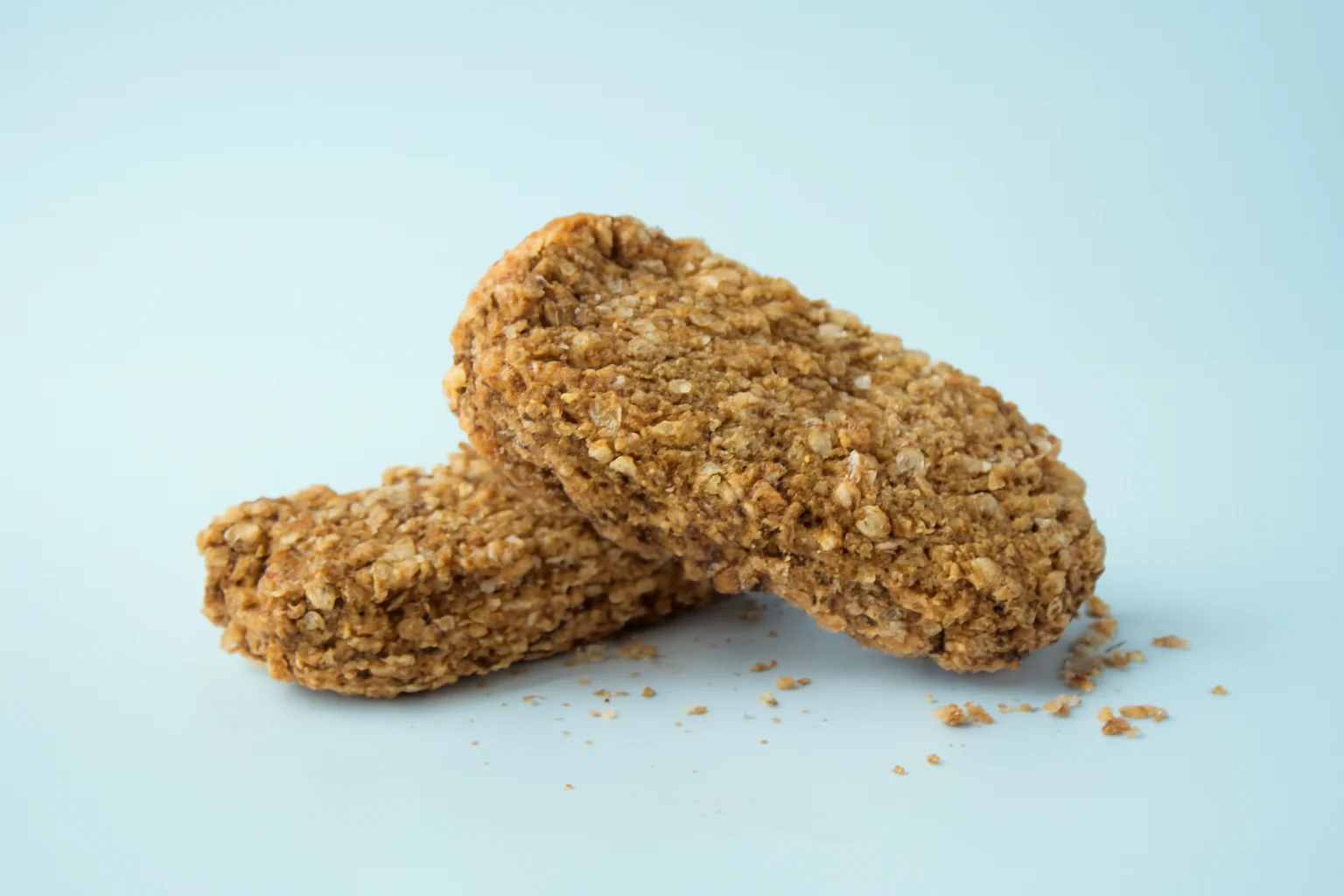
When can babies have Weetabix?
Weetabix may be introduced as soon as baby is ready to start solids, which is generally around 6 months of age. Weetabix is made with wheat, a common allergen, and may contain other common allergens, so take care when introducing.
Weet-bix was first made in Australia in the early 1900s and immediately gained popularity as an easy, shelf-stable breakfast food. The same founders of the company that produced Weet-bix also founded the company that would go on to create Weetabix, a very similar wheat-based cereal biscuit made in the United Kingdom in the 1930s. Both Weet-bix and Weetabix are made primarily from flakes of whole grain wheat and are often served crushed with milk or a milk alternative.
How do you serve Weetabix to babies?
Every baby develops on their own timeline, and the suggestions on how to cut or prepare particular foods are generalizations for a broad audience.
6 months old +:
Serve Weetabix that has been fully softened with breast milk, formula, or water to create a scoopable porridge texture. Offer on a pre-loaded spoon or let baby scoop with their hands. Weetabix can be served warm or cool; either is fine as long as it is fully soft and mashable. Feel free to stir in mashed fruit, a sprinkle of cinnamon or other spice, or a bit of cow’s milk, if it has been safely introduced. Alternatively, offer strips of toasted bread or muffins that have been made with Weetabix.
12 months old +:
Serve Weetabix that has been softened with water, milk, or a milk alternative in a bowl with a spoon. At this age, it’s okay for the Weetabix to still be slightly crispy–just make sure it’s been fully broken up with no large, firm chunks. Alternatively, mix crumbles of Weetabix into pancake or muffin batter, or into oatmeal bakes for added texture and nutrition.
18 months old +:
Offer softened Weetabix as a porridge, or serve crumbles of Weetabix as a topping on baked fruit, yogurt, or warm cereals. Continue to serve Weetabix as an ingredient in baked goods as desired.
Is Weetabix a choking hazard for babies?
Yes. Weetabix can be hard and challenging to chew, which are qualities that pose an increased risk of choking. To reduce the risk, prepare and serve Weetabix in an age-appropriate way as described in the How to Serve section. As always, make sure to create a safe eating environment and stay within reach of baby during meals.
Learn the signs of choking and more about choking first aid in our free guides, Infant Rescue and Toddler Rescue.
Does Weetabix contain common allergens?
Yes. Weetabix contains wheat and may contain other gluten-containing grains like barley or other common allergens. Read labels closely and wait to introduce Weetabix until all allergens in the food have been safely introduced.
Wheat (alongside other gluten-containing cereals grains) is classified as a common allergen and is one of the most common food allergens in children.[1] Fortunately, two-thirds of children outgrow the allergy by their 12th birthday.[1]
It is important to note that wheat allergy is not the same as celiac disease. While a wheat allergy may be outgrown, celiac disease requires a strict, lifelong gluten-free diet and lifestyle.[1] A gluten “allergy” is typically a misnomer, often in reference to celiac disease.[2]
While rare, some individuals have a condition known as wheat-dependent, exercise-induced anaphylaxis, which can result in a severe allergic reaction if the person exercises within a few hours after eating wheat. These patients should avoid eating wheat in the four hours before strenuous activity.[3]
Lastly, individuals with Oral Allergy Syndrome (also known as pollen food allergy syndrome) may be sensitive to wheat, particularly those who are allergic to grass pollen. Oral Allergy Syndrome typically results in short-lived itching, tingling, or burning in the mouth, and can also result in gastrointestinal distress (abdominal pain, cramping, bloating, or diarrhea) in some cases - especially if the grain was not properly digested and the proteins reach the lower GI tract intact. While uncomfortable, it is unlikely to result in a dangerous reaction.[4]
If you suspect baby is allergic to wheat, talk to a pediatric health care provider before introducing Weetabix at home. As you would when introducing any new food, start by offering a small quantity for the first few servings and watch closely for any signs of an allergic reaction. If there is no adverse reaction, gradually increase the amount over future meals.
Is Weetabix healthy for babies?
Yes. Weetabix is rich in carbohydrates, fiber, iron, zinc, B vitamins, and electrolytes like potassium and magnesium, with a touch of protein. Together, these nutrients help support energy levels, regular digestion, prevention of anemia, taste perception, electrolyte balance, and much more.
Some Weetabix or similar products contain small amounts of salt or sugar, which are fine for babies in moderation as part of a varied diet. Look for versions with less added salt or sugar if possible, but there’s no need to avoid a product just because it has a little added salt or sugar.
Can I mix Weetabix with cow’s milk for baby?
Yes. Weetabix can be made with cow’s milk for babies as long as dairy has been safely introduced and ruled out as an allergen. Cow’s milk can be used as an ingredient in solid food starting at 6 months, but should not be served as a drink until closer to 12 months of age so as to not displace breast milk or formula.
Can Weetabix help with constipation?
Sometimes. While constipation can be caused by various factors, Weetabix is high in fiber, which can support healthy digestion and bowel movements as part of a varied diet.

Reference Material
Food Allergy Research & Education. Wheat Allergy.
American College of Allergy, Asthma & Immunology. Wheat Allergy.
Feldweg AM. (2017). Food-Dependent, Exercise-Induced Anaphylaxis: Diagnosis and Management in the Outpatient Setting. J Allergy Clin Immunol Pract. 5(2):283-288. doi: 10.1016/j.jaip.2016.11.022. PMID: 28283153.
Start solids with confidence
- Guided Introduction to 100+ Foods
- Smart Tools to Simplify Mealtime
- Food Allergen 101
- 300+ Meal Ideas
- First Foods® Database

Start solids with confidence
- Guided Introduction to 100+ Foods
- Smart Tools to Simplify Mealtime
- Food Allergen 101
- 300+ Meal Ideas
- First Foods® Database
Expert Tips Delivered to Your Inbox
Sign up for weekly tips, recipes and more.