
Watercress
Vegetable
- Age Suggestion
- 6 months
- Iron-Rich
- No
- Common Allergen
- No
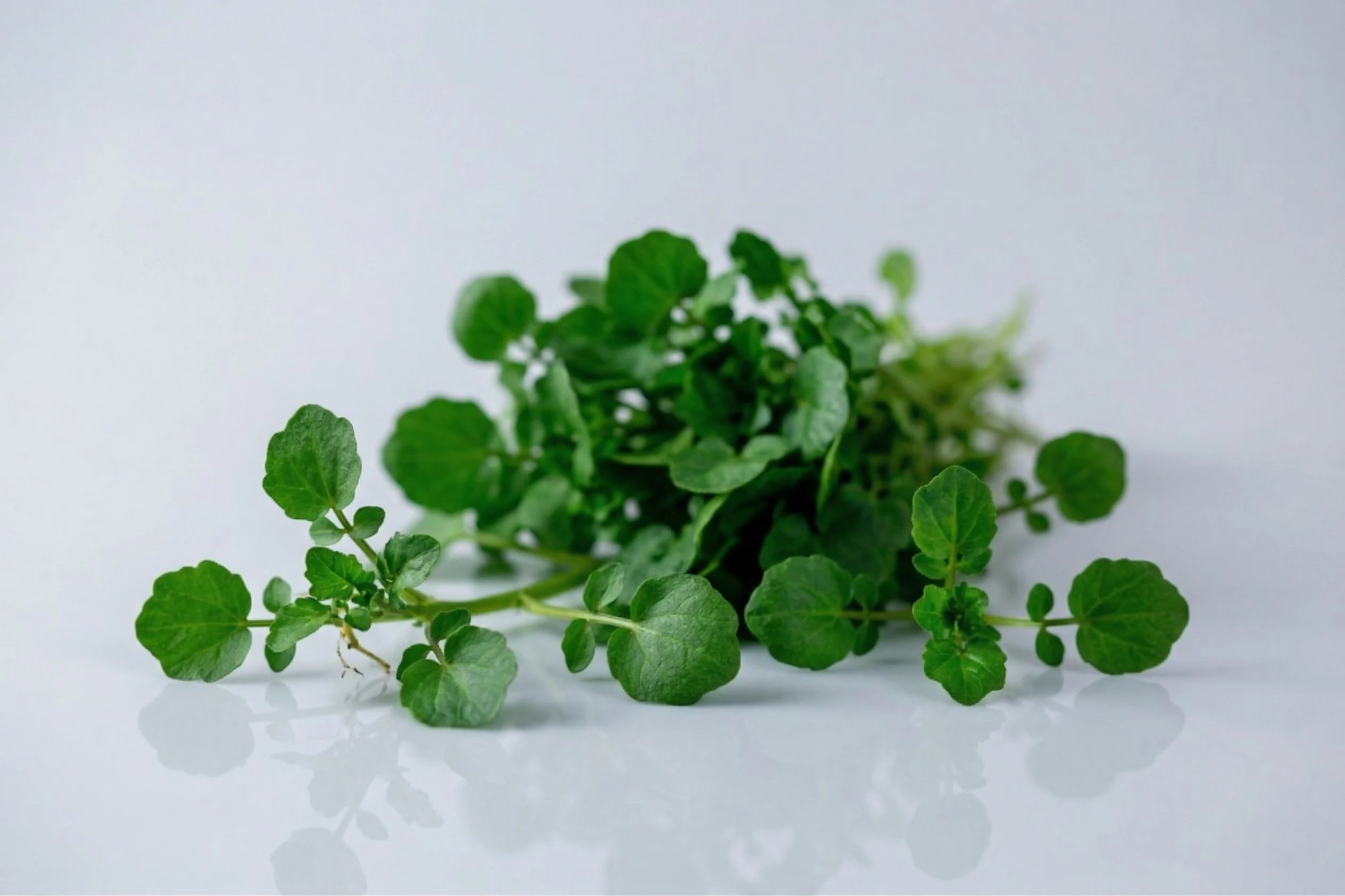
When can babies have watercress?
Watercress may be introduced as soon as baby is ready to start solids, which is generally around 6 months of age.
Watercress is a leafy green that grows along stream banks and in shallow, slow-moving water across much of the world and has been eaten by humans for thousands of years. It holds an especially prominent place in the cuisines of Britain and Ireland, where it was once sold by street vendors as a cheap, nutritious food for working-class communities and is still a classic ingredient in soups and sandwiches. Watercress also appears widely in Southeast Asian cooking; in Vietnamese, Cantonese, and Filipino kitchens, it is a common addition to soups and stir-fries.
How do you serve watercress to babies?
Every baby develops on their own timeline, and the suggestions on how to cut or prepare particular foods are generalizations for a broad audience.
6 months old +:
Offer finely chopped watercress mixed into other soft, scoopable foods like mashed avocado, cottage cheese, blended into a vegetable puree, or mixed into egg strips or porridge. When served this way, the watercress can be raw or cooked, either is fine for babies. Thin, soft stems can be chopped and served along with the leaves, but if there are any tough or woody stems, remove them before serving. Raw watercress has a more peppery flavor, and cooked watercress becomes more mellow. Alternatively, offer some blended watercress soup on a pre-loaded spoon or in an open cup.
9 months old +:
As baby develops a pincer grasp, the ability to pick up smaller pieces of food with their thumb and first finger, you can offer chopped raw or cooked watercress on its own or as part of a shared dish. Thin, soft stems can be chopped and served along with the leaves, but if there are any tough or woody stems, remove them before serving. Cooked, chopped watercress in soups, stir fries, or rice dishes is an easy way to include watercress in family meals at this stage. It’s normal to see some spitting as the child learns to manage the texture of the leaves in their mouth.
12 months old +:
Serve chopped watercress, cooked or raw, or offer whole for biting and tearing practice. Continue to expect some spitting, but you may start to see more swallowing and consumption around this age, especially as the molars come in to help the child grind more challenging textures. Offer watercress as part of salads, stir fries, and soups, and feel free to offer with a utensil. If the child needs help, pre-load the utensil with a piece of watercress and lay it next to the food for the child to pick up.
Is watercress a choking hazard for babies?
No. Watercress presents a low choking risk when safely prepared for a child's age and developmental ability, though, in theory, an individual could choke on any food. To reduce the risk, prepare and serve watercress in an age-appropriate way as described in How to Serve. As always, create a safe eating environment and stay within reach of baby during meals.
Learn the signs of choking and more about choking first aid in our free guides, Infant Rescue and Toddler Rescue.
Is watercress a common allergen?
No. Watercress is not a common food allergen. Watercress belongs to the Brassicaceae family, which includes other cruciferous vegetables like cabbage, mustard, and broccoli. Individuals with known allergies to other vegetables in the Brassicaceae family may also be sensitive to watercress.
Is watercress healthy for babies?
Yes. Watercress contains plenty of important nutrients for a developing child, including vitamins A, B6, C, and K, as well as calcium and potassium, and carotenoids like beta carotene, lutein, and zeaxanthin. These nutrients work together to support baby’s vision, metabolism, immunity, blood clotting, bone density, electrolyte balance, and more. Plus, it’s rich in antioxidants and polyphenols to support bodily resilience.[1]
Avoid non-culinary, supplemental uses of watercress, such as extracts, capsules, powders, as research on their safety is limited.[2]
Get watercress from a reputable source, such as the grocery store or farmers’ market. Eating watercress from the wild, particularly raw, is associated with serious foodborne illness.[3] [4] [5] [6]
Can babies eat raw watercress?
Yes, when served in an age-appropriate way and considerations for where it was sourced. Raw watercress can be finely chopped and mixed into scoopable foods as soon as baby is developmentally ready for solids. Importantly, note that eating watercress from the wild, particularly raw, has been associated with serious foodborne illness.[3] [4] [5] [6]
Is watercress too bitter for babies?
No. Watercress has a distinctive peppery bite, but bold and bitter flavors are safe for babies as soon as they are ready for solids. In fact, early and repeated exposure to a wide range of flavors actually supports a more varied palate over time. If baby makes a face, that is a normal response to a new flavor, not a sign that you need to stop serving the food.
Reference Material
Panahi Kokhdan, E., Khodabandehloo, H., Ghahremani, H., & Doustimotlagh, A. H. (2021). A Narrative Review on Therapeutic Potentials of Watercress in Human Disorders. Evidence-based complementary and alternative medicine : eCAM, 2021, 5516450. https://doi.org/10.1155/2021/5516450
Natural Medicines Database. Watercress.
CDC, Fascioliasis. https://www.cdc.gov/dpdx/fascioliasis/index.html
Start solids with confidence
- Guided Introduction to 100+ Foods
- Smart Tools to Simplify Mealtime
- Food Allergen 101
- 300+ Meal Ideas
- First Foods® Database

Start solids with confidence
- Guided Introduction to 100+ Foods
- Smart Tools to Simplify Mealtime
- Food Allergen 101
- 300+ Meal Ideas
- First Foods® Database
Expert Tips Delivered to Your Inbox
Sign up for weekly tips, recipes and more.