
Water Chestnut
Vegetable
- Age Suggestion
- 6 months
- Iron-Rich
- No
- Common Allergen
- No
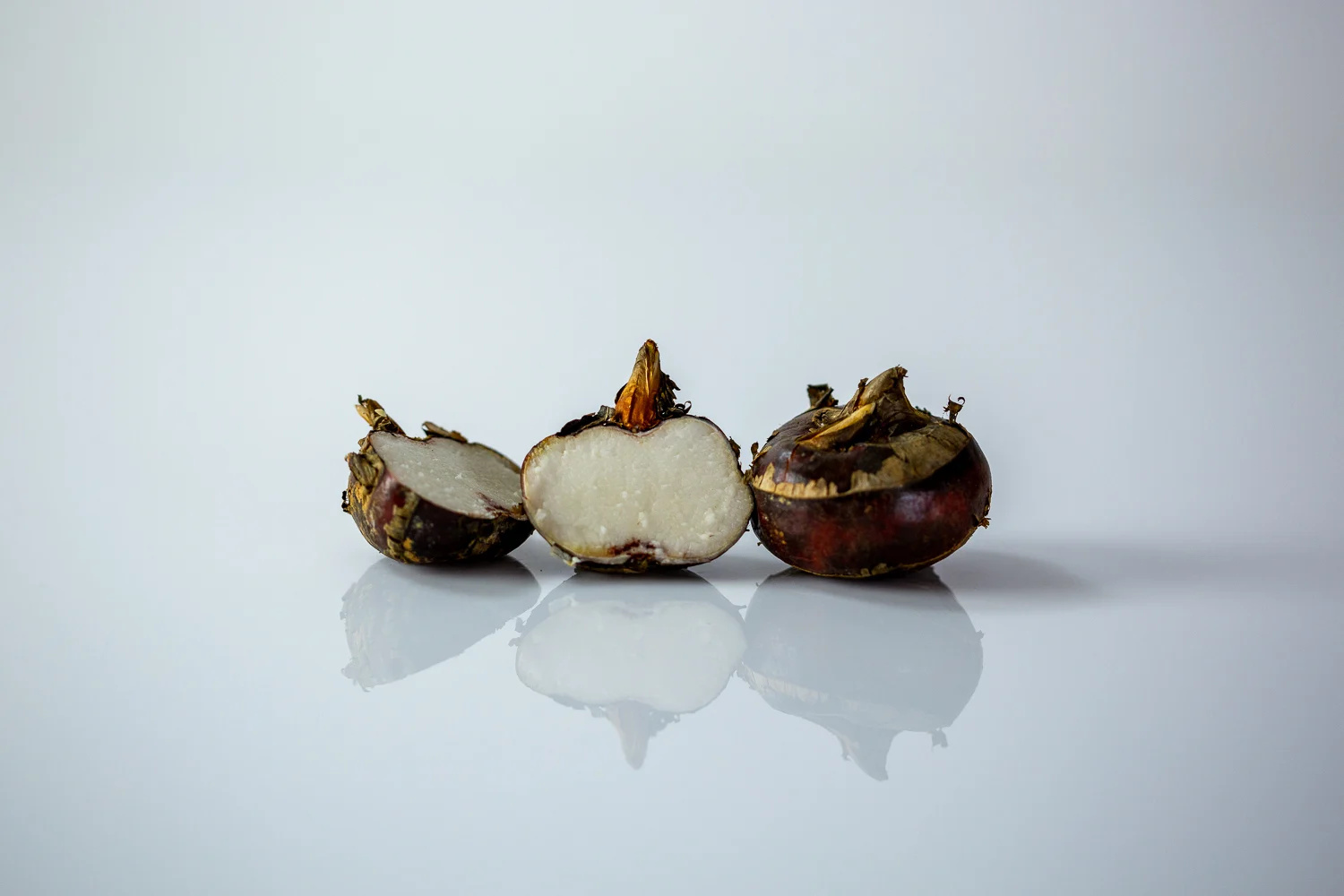
When can babies have water chestnuts?
Water chestnut may be introduced as soon as baby is ready to start solids, which is generally around 6 months old.
Despite its name and its subtly sweet, nutty flavor, the Chinese water chestnut is not a nut at all; it’s the edible corm of a grass-like plant cultivated in shallow ponds and flooded fields across East and Southeast Asia, as well as parts of Africa and Australia. Water chestnuts are a beloved ingredient across Chinese, Vietnamese, Thai, and Filipino cuisines, where they appear in stir-fries, dumplings, soups, congee, and festive dishes. Water chestnuts have a crisp texture that persists even after cooking, and they readily absorb the flavor of whatever sauce or seasoning they’ve been cooking in.
How do you serve water chestnuts to babies?
Every baby develops on their own timeline, and the suggestions on how to cut or prepare particular foods are generalizations for a broad audience.
6 months old +:
Serve cooked and finely chopped water chestnuts mixed into soft, scoopable foods like congee or mashed vegetables or incorporate into finger foods like rice balls or egg strips. You can also puree or mash cooked water chestnut and offer on its own or mixed into other foods. Even when mashed, water chestnut will have some texture to it, and that’s okay; just make sure there are no large, firm chunks. Canned water chestnuts have already been cooked as part of the canning process, so you don’t need to cook them again before serving.
9 months old +:
Offer thin slices of freshly cooked or canned water chestnut for the child to pick up with their developing pincer grasp. Serve them on their own or as part of stir fries and other mixed dishes. Or, continue to serve finely chopped or blended and mixed into other dishes like congee or egg strips. Avoid large, firm chunks of water chestnut due to increased choking risk. Canned water chestnuts have already been cooked as part of the canning process, so you don’t need to cook them again before serving.
18 months old +:
If the child is chewing well and not overstuffing their mouths, you can try offering a whole cooked water chestnut. Even cooked water chestnuts remain firm and crunchy, so consider modeling for the child how to take a bite from your own water chestnut and show how you chew the food thoroughly before taking another bite.
Is water chestnut a choking hazard for babies?
Yes. Even cooked water chestnut can be firm and slippery, qualities that increase the risk of choking. To reduce the risk, prepare and serve water chestnuts in an age-appropriate way as described in How to Serve. As always, create a safe eating environment and stay within reach of baby during meals.
Learn the signs of choking and more about choking first aid in our free guides, Infant Rescue and Toddler Rescue.
Is water chestnut a common allergen?
No. Allergies to water chestnut are uncommon, but have been reported.[1]
Water chestnuts (particularly canned versions) contain salicylates, a naturally-occurring compound that can trigger rashes, rhinitis, gastrointestinal distress, and lower respiratory symptoms in sensitive individuals. While not a true allergy, salicylate sensitivity can rarely result in severe reactions. Introduce with caution if you have a family history of sensitivity to salicylates in foods or medications (such as aspirin).
Are water chestnuts healthy for babies?
Yes. Water chestnuts are rich in vitamin B6, a vitamin that plays a role in over 100 functions in the body, as well as fiber for digestive health. They also contain potassium and small amounts of other B vitamins to support heart health, electrolyte balance, and a variety of metabolic processes.
Depending on where you live, fresh water chestnuts may be hard to come by. Canned water chestnuts are a convenient, accessible, and shelf-stable alternative.
Consider waiting until a child is older to offer raw water chestnut due to increased risk of foodborne illness.
Can babies have canned water chestnuts?
Yes, as long as the water chestnuts are prepared in an age-appropriate way to reduce the risk of choking, babies can have canned water chestnuts as soon as they are developmentally ready for solid food.
Is water chestnut flour safe for babies?
Yes. Water chestnut flour is a starchy powder made from dried, finely-ground water chestnuts and is used as a thickening agent and in traditional sweets and desserts such as water chestnut cake (mǎtí gāo). It is gluten-free, mild in flavor, and safe for babies from 6 months as part of a prepared dish. Always check that any other ingredients in a water chestnut flour-based dish are also appropriate for baby's age.
Reference Material
Zhuang, S-F., Zhan, S-M., Li, T-X. (2025). Severe mixed hypersensitivity reaction induced by antivenom: diagnostic challenges and precision management, QJM: An International Journal of Medicine, 118, 12: 943–945. DOI: 10.1093/qjmed/hcaf197
Start solids with confidence
- Guided Introduction to 100+ Foods
- Smart Tools to Simplify Mealtime
- Food Allergen 101
- 300+ Meal Ideas
- First Foods® Database
Start solids with confidence
- Guided Introduction to 100+ Foods
- Smart Tools to Simplify Mealtime
- Food Allergen 101
- 300+ Meal Ideas
- First Foods® Database
Expert Tips Delivered to Your Inbox
Sign up for weekly tips, recipes and more.