
Tostones
Prepared
- Age Suggestion
- 24 months
- Iron-Rich
- No
- Common Allergen
- No
When can babies have tostones?
Tostones may be introduced once a toddler has had substantial practice chewing challenging foods and is taking appropriate-sized bites, which is often around 24 months of age, although some children may be ready a little earlier or a little later.
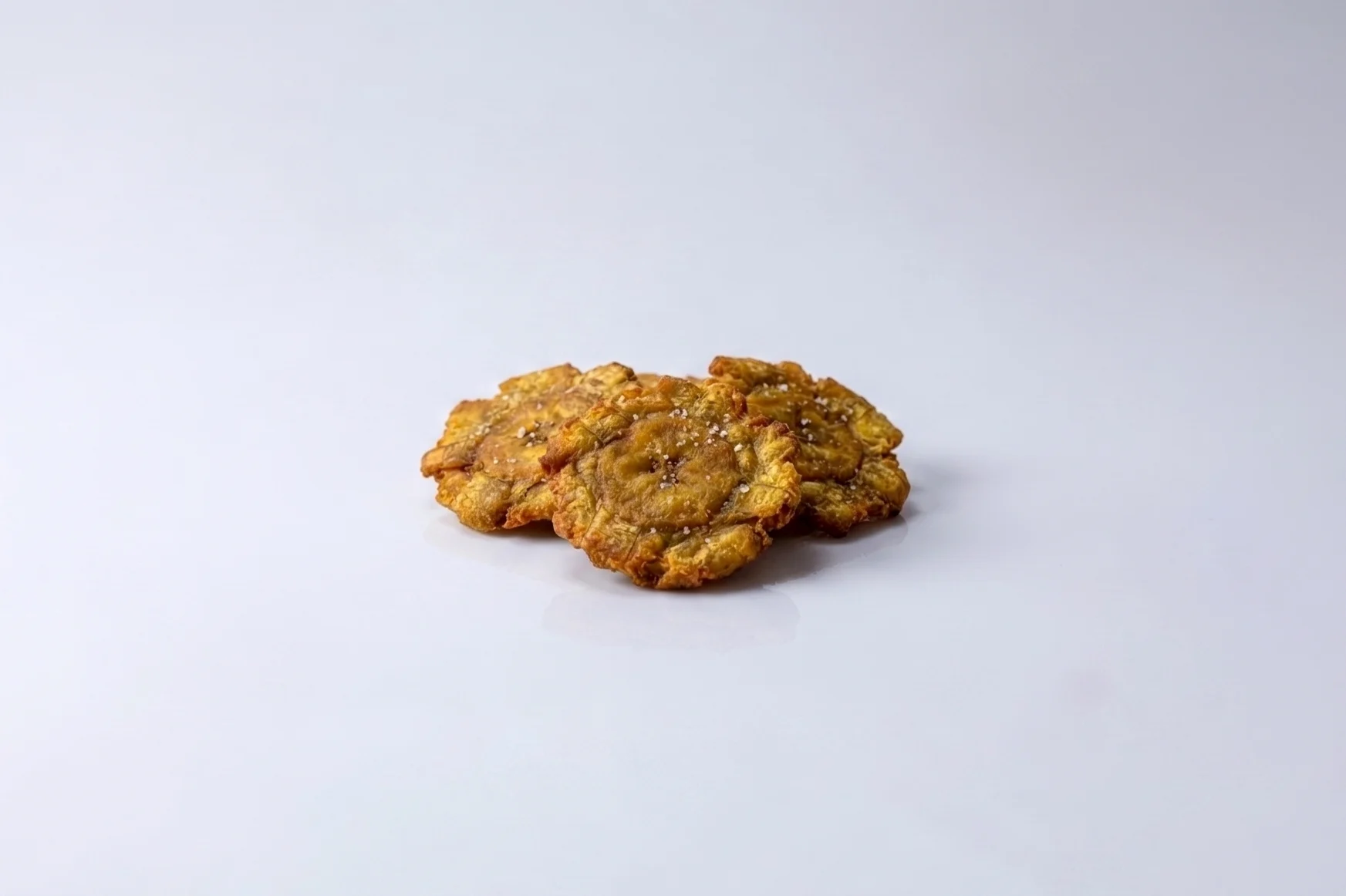
Tostones—twice-fried, flattened discs of green plantain—are a cornerstone dish across the Caribbean, South and Central America, and Latin communities around the world, where they are also known as patacones (in Colombia, Venezuela, Ecuador, Panama, and Costa Rica) and bannann peze in Haiti. Made from unripe green plantain, tostones are starchy, savory, and mildly flavored, with a crispy exterior. They are typically salted and served alongside rice and beans, meat, or fish, or eaten as a snack with dipping sauces like mojo.
How do you serve tostones to babies?
Every baby develops on their own timeline, and the suggestions on how to cut or prepare particular foods are generalizations for a broad audience.
6 months old +:
Hold off on serving tostones at this age due to increased choking risk. Instead, try cooking green plantain until completely soft and mashable and serve in a bowl for baby to scoop with their hands or eat from a pre-loaded spoon. Learn more about serving Plantain.
24 months old +:
Around this age, you can try serving tostones, if desired, as most toddlers have a full set of primary molars and the jaw strength and chewing skill to handle firmer textures. Show the child how to take bites from the tostones and chew the piece of food thoroughly before taking another bite. If you’re making your own tostones at home and you would like them to be a bit softer, you can try briefly covering the pan while cooking to allow some steam to soften the interior. Serve with whatever dips or sides your family enjoys.
Are tostones a choking hazard for babies?
Yes. Tostones are firm, dense, and typically served in thick discs that require lots of chewing to break down, qualities that increase the risk of choking. To reduce the risk, prepare and serve tostones in an age-appropriate way as described in How to Serve. As always, create a safe eating environment and stay within reach of a child during meals.
Learn the signs of choking and more about choking first aid in our free guides, Infant Rescue and Toddler Rescue.
Are tostones a common allergen?
No. Plantains are not a common allergen, although individuals with ragweed allergy or latex allergy may be sensitive to plantains, and tostones do not typically contain common allergens.[1] [2] Read the label on store-bought versions of tostones, which may contain common allergens, and check that any common allergens in dips or sauces have been safely introduced before serving with tostones.
Are tostones healthy for toddlers?
Yes, with some considerations. Green plantains—the base of tostones—are a good source of resistant starch and complex carbohydrates, which provide energy and support digestive health. They also offer potassium, vitamin C, and vitamin B6, nutrients that support healthy growth, immune function, and brain development.
Tostones can be high in sodium, but sharing meals, even if those meals contain some salt, involves a child in their family food culture, which has other benefits. Family meals are opportunities for children to explore a wide variety of food, practice eating food with different colors, flavors, and textures, and get comfortable with food that you like to eat. Learn more about salt.
Can toddlers eat fried food?
Occasional fried foods are fine for toddlers as part of a varied diet. The concern with fried foods is less about the cooking method itself and more about overall dietary balance. A toddler who eats a wide variety of vegetables, proteins, and whole grains can absolutely enjoy tostones among other fried foods sometimes.
Can I make tostones in an air fryer for toddlers?
Yes. You can make tostones in an air fryer, which can result in a slightly less oily product, though the texture may differ from traditionally fried ones.
What can I serve with tostones for a toddler?
Tostones pair well with a wide range of foods. Black beans—whole, mashed, or as a dip—add protein and fiber. Avocado or guacamole adds healthy fats. Traditional dips and sauces like mayo-ketchup or garlic mojo are fine for toddlers too.
Reference Material
American Academy of Allergy Asthma & Immunology. Oral Allergy Syndrome (OAS) or Pollen Fruit Syndrome (PFS). Retrieved August 31, 2022
Anaphylaxis Campaign. (2018). Banana. Retrieved October 27, 2020.
Start solids with confidence
- Guided Introduction to 100+ Foods
- Smart Tools to Simplify Mealtime
- Food Allergen 101
- 300+ Meal Ideas
- First Foods® Database
Start solids with confidence
- Guided Introduction to 100+ Foods
- Smart Tools to Simplify Mealtime
- Food Allergen 101
- 300+ Meal Ideas
- First Foods® Database
Expert Tips Delivered to Your Inbox
Sign up for weekly tips, recipes and more.