
Tortellini
Prepared
- Age Suggestion
- 6 months
- Iron-Rich
- No
- Common Allergen
- Yes
When can babies have tortellini?
Tortellini may be introduced as soon as a baby is ready to start solids, which is generally around 6 months of age. Note that tortellini typically contains common allergens, such as dairy, egg, and wheat.
Tortellini are a type of ring-shaped stuffed pasta originating from the Emilia-Romagna region of Italy. Local legends playfully suggest the distinctive shape was modeled after the navel of the goddess Venus. Traditionally, tortellini are filled with a mixture of meats (like pork loin and prosciutto) and Parmigiano-Reggiano cheese, and served floating in a warm, rich broth (tortellini en brodo). Today, they are enjoyed worldwide with a wide variety of fillings, including ricotta, spinach, and squash, and are often served with cream or tomato sauces.
How do you serve tortellini to babies?
Every baby develops on their own timeline, and the suggestions on how to cut or prepare particular foods are generalizations for a broad audience.
6 months old +:
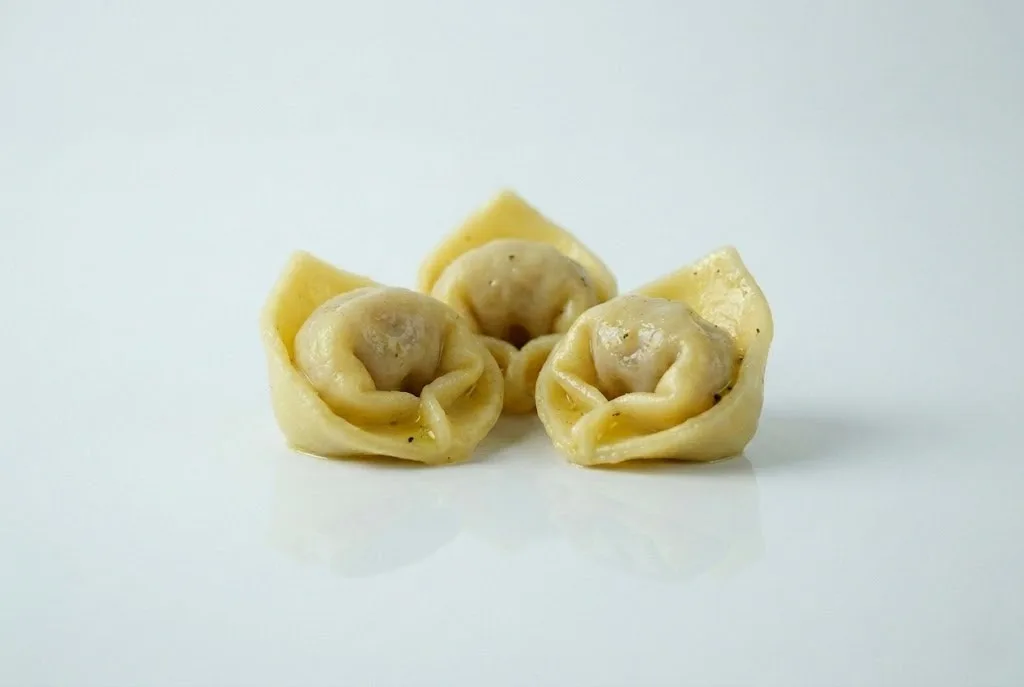
If you have very large tortellini (sometimes called tortelloni) with a soft, mashable filling, you can offer one whole for baby to explore and munch on. Make sure the tortellini is large enough that baby can't put the whole thing in their mouth at once. Young babies may not have the biting skill needed to pierce the outside dough, and that’s okay.
For smaller tortellini, finely chop or mash the cooked tortellini and mix it into a scoopable food like ricotta cheese or tomato sauce, or simply scoop out the soft filling to serve on its own. Ensure all common allergens (wheat, egg, dairy) have been safely introduced first.
9 months old +:
Offer whole tortellini as long as they are large and soft. Baby may be able to tear open or take bites of the outside dough more easily at this age. It is normal to see baby spit out pieces of the dough as they practice managing the texture. Alternatively, serve the tortellini cut in half or quarters for baby to pick up with their developing pincer grasp. Ensure any fillings that are springy, slippery, or firm are finely chopped or thoroughly mashed.
12 months old +:
Serve whole, soft tortellini for the child to practice tearing and biting, or with an age-appropriate fork for utensil practice. The resistive texture of the pasta makes for great practice with these skills. You can also serve tortellini cut into bite-sized pieces, halves, or quarters. Continue to make sure that any fillings that pose an increased choking risk are mashed or finely chopped.
Are tortellini a choking hazard for babies?
No. Soft, cooked tortellini typically present a low risk when safely prepared for a child’s age and developmental ability, although small or undercooked tortellini certainly can pose an increased risk. To reduce the risk, prepare and serve tortellini in an age-appropriate way as described in How to Serve. As always, create a safe eating environment and stay within reach of baby during meals.
Learn the signs of choking and more about choking first aid in our free guides, Infant Rescue and Toddler Rescue.
Do tortellini contain common allergens?
Yes. Tortellini often contain dairy, egg, and wheat, which are common food allergens, and may contain other common allergens, depending on the ingredients and filling. Prior to sharing tortellini with baby, it is important to introduce any relevant common allergens on their own and rule them out as allergies before serving them together in a prepared food. This way, you’ll be able to identify which allergen is responsible if baby has a reaction. Then, when you are ready to offer tortellini, you will be confident that they have already safely eaten any common food allergens in the dish.
Are tortellini healthy for babies?
Yes. The nutritional profile of tortellini depends on the filling and the dough used. They generally offer carbohydrates from the pasta dough for energy, and varying amounts of protein, fat, and fiber depending on whether they are filled with cheese, meat, or vegetables. These nutrients provide necessary building blocks for growth and development.
Tortellini and their accompanying sauces can be high in sodium. Sharing meals, even if those meals contain some salt, brings baby into their family food culture as soon as they are ready to start solids, which also has benefits. Family meals are opportunities for baby to explore a wide variety of food, practice eating food with different colors, flavors, and textures, and get comfortable with food that the rest of the family likes to eat.
Can babies eat cheese tortellini?
Yes, as long as the cheese used in the filling is pasteurized (which is standard for almost all commercially produced tortellini) and dairy has been safely introduced as an allergen.
Can babies have storebought tortellini?
Yes, when served in an age-appropriate way. Storebought, frozen, or refrigerated tortellini can be higher in sodium than homemade versions, but sharing the occasional high-sodium meal is not a cause for concern. Always check the ingredient list for common allergens before serving.
Start solids with confidence
- Guided Introduction to 100+ Foods
- Smart Tools to Simplify Mealtime
- Food Allergen 101
- 300+ Meal Ideas
- First Foods® Database
Start solids with confidence
- Guided Introduction to 100+ Foods
- Smart Tools to Simplify Mealtime
- Food Allergen 101
- 300+ Meal Ideas
- First Foods® Database
Expert Tips Delivered to Your Inbox
Sign up for weekly tips, recipes and more.