
Tarragon
Herb/Spice
- Age Suggestion
- 6 months
- Iron-Rich
- No
- Common Allergen
- No
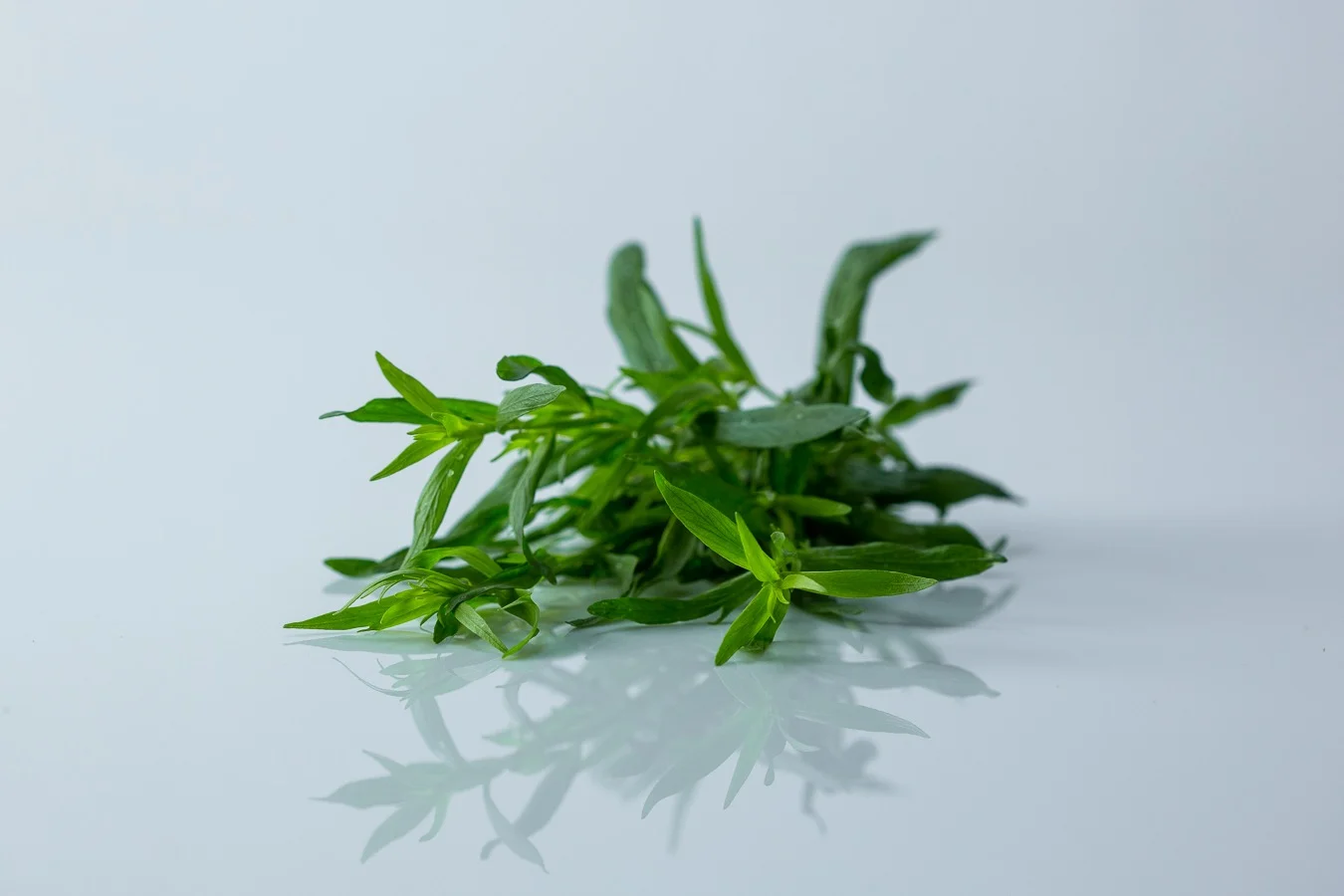
When can babies have tarragon?
Tarragon may be introduced as soon as baby is ready to start solids, which is generally around 6 months of age.
Tarragon first grew wild in Asia and has been used to season food for centuries, although today, the most commonly consumed type is a cultivated variety known as French tarragon. Prized for its aromatic and slightly licorice-like flavor, tarragon is a key ingredient in sauces like béarnaise in France or stews like chakapuli in Georgia and is often used to season meats, sauces, and vegetables. It also lends its strong, slightly sweet, herbal taste to vinegars, teas, and even soda.
How do you serve tarragon to babies?
Every baby develops on their own timeline, and the suggestions on how to cut or prepare particular foods are generalizations for a broad audience.
6 months old +:
Finely chop fresh tarragon leaves and mix them into age-appropriate dishes, like mashed vegetables or stew. You can also blend the leaves with some oil into a sauce for meat or cooked vegetables. Alternatively, use dried tarragon or powdered tarragon to flavor food.
12 months old +:
Use fresh, dried, or powdered tarragon as you normally would in meals, including whole fresh tarragon leaves. If you’ve left a large, woody sprig of tarragon in a dish to flavor it as it cooks, remember to remove it before serving to reduce the chance of discomfort if it ends up in the toddler’s portion of the meal.
Is tarragon a choking hazard for babies?
No. Both fresh and dried tarragon present a low risk when safely prepared for a child’s age and developmental ability, though, in theory, an individual could choke on any food. To reduce the risk, prepare and serve tarragon in an age-appropriate way as described in the How to Serve section. As always, create a safe eating environment and stay within reach of baby during meals.
Learn the signs of choking and more about choking first aid in our free guides, Infant Rescue and Toddler Rescue.
Is tarragon a common allergen?
No. Allergies to tarragon are not common. Note that certain dried herb blends that feature tarragon may contain common food allergens, so make sure to read labels thoroughly if your child has food allergies.
Is tarragon healthy for babies?
Yes. Tarragon offers small amounts of a variety of vitamins, minerals, and fiber. It also contains a number of plant compounds like phenolic acids and flavonoids, which may offer anti-inflammatory, antimicrobial, and antioxidant properties.[1] [2]
Avoid tarragon as a supplement and tarragon essential oils, teas, and other non-culinary forms, as their safety and potency has not been sufficiently studied in children.[3]
What utensils do I need to get started?
None! Put solid food directly on baby’s tray, plate, or bowl, then let baby explore with their hands. If you like, keep a baby spoon or fork nearby to help familiarize the child with utensils, but the skills to use them are not expected until early toddlerhood.
What do I do if baby won't eat?
End the meal and follow up with a breast or bottle feed. Never pressure a baby or child to eat; it will only worsen food refusal in the long run. Babies refuse food for different reasons, such as teething, illness, sleepiness, or lack of energy or interest in learning a new skill. For information on why baby may refuse to eat, see our guide, Handling Food Refusal.
Reference Material
Ekiert, H., Świątkowska, J., Knut, E., Klin, P., Rzepiela, A., Tomczyk, M., & Szopa, A. (2021). Artemisia dracunculus (Tarragon): A Review of Its Traditional Uses, Phytochemistry and Pharmacology. Frontiers in pharmacology, 12, 653993. DOI: 10.3389/fphar.2021.653993
Raeisi, M., Tajik, H., Razavi, R. S., Maham, M., Moradi, M., Hajimohammadi, B., Naghili, H., Hashemi, M., & Mehdizadeh, T. (2012). Essential oil of tarragon (Artemisia dracunculus) antibacterial activity on Staphylococcus aureus and Escherichia coli in culture media and Iranian white cheese. Iranian journal of microbiology, 4(1), 30–34.
Natural Medicines Database. Tarragon.
Start solids with confidence
- Guided Introduction to 100+ Foods
- Smart Tools to Simplify Mealtime
- Food Allergen 101
- 300+ Meal Ideas
- First Foods® Database
Start solids with confidence
- Guided Introduction to 100+ Foods
- Smart Tools to Simplify Mealtime
- Food Allergen 101
- 300+ Meal Ideas
- First Foods® Database
Expert Tips Delivered to Your Inbox
Sign up for weekly tips, recipes and more.