


Access our First Foods® Database in the Solid Starts App.
Learn moreTamarillo (Tree Tomato)
Fruit
Age Suggestion
6 months
Iron-Rich
No
Common Allergen
No
When can babies have tamarillo?
Tamarillo may be introduced as soon as baby is ready to start solids, which is generally around 6 months of age.
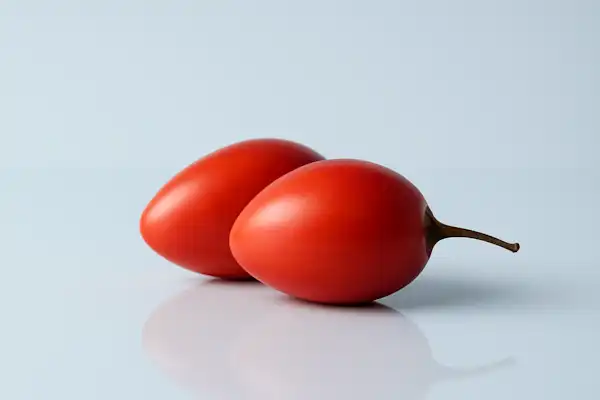
Tamarillo, also known as chilltu, tree tomato, and tomate de árbol, among other names, is a small, egg-shaped fruit native to the Andes region of South America, where it has been cultivated for centuries. It later spread globally to tropical and subtropical regions, including New Zealand and parts of Asia. Tamarillo’s tangy, sweet-tart flesh and deep red or orange skin make it a striking fruit that’s enjoyed in juices, chutneys, salsas, desserts, and more.
How do you serve tamarillo to babies?
Every baby develops on their own timeline, and the suggestions on how to cut or prepare particular foods are generalizations for a broad audience.
6 months old +:
Offer a large, ripe, soft tamarillo half with the skin removed for baby to munch on. Alternatively, peel the fruit and mash the flesh inside with a fork, and let baby scoop with their hands or spread the mashed fruit onto toast strips or mixed into foods like yogurt. You can also finely chop the fruit and make salsa or other sauces. The skin is edible, but very bitter and tough for babies to chew, so make sure to remove before serving. The seeds do not pose an increased choking risk, and there’s no need to remove them, although you can if you’d like to.
9 months old +:
Serve bite-sized pieces of ripe, soft tamarillo with the skin removed for baby to pick up with their developing pincer grasp. Because ripe tamarillo can be quite soft and slippery, err on the side of larger bite-sized pieces so baby can more easily pick them up. Or, you can continue to offer mashed, chopped, or large halves of soft, ripe tamarillo with the skin removed for baby to munch on and practice taking bites from. The skin is edible, but very bitter and tough for babies to chew, so make sure to remove before serving. The seeds do not pose an increased choking risk, and there’s no need to remove them, although you can if you’d like to.
12 months old +:
Offer soft, ripe tamarillo as desired: in large or small pieces on its own, or mixed into salsas, dips, or desserts. The skin is edible, but very bitter and tough to chew, so consider removing before serving.
Videos
Is tamarillo a choking hazard for babies?
Yes. Tamarillo, especially when underripe, can be slippery and firm, qualities that increase the risk of choking. To reduce the risk, prepare and serve tamarillo in an age-appropriate way as described in the How to Serve section. As always, create a safe eating environment and stay within reach of baby during meals.
Learn the signs of choking and more about choking first aid in our free guides, Infant Rescue and Toddler Rescue.
Is tamarillo a common allergen?
No. Allergies to tamarillo are not common, although reactions have been reported. What is quite common with acidic foods like tamarillo, however, is a harmless contact rash around the mouth or skin that the barberries come into contact with, such as the mouth and diaper areas. Applying a thin layer of barrier ointment—such as pure petroleum jelly or a plant-based oil/wax balm—to baby’s face and bottom prior to mealtime can help prevent contact rashes.
Is tamarillo healthy for babies?
Yes. Tamarillo is packed with antioxidants, phenols, and flavonoids. It also offers key nutrients such as vitamin C to support the immune system and iron absorption, fiber for regular digestion, vitamin A for visual health, and a bit of iron for healthy red blood cells.
Can I cook tamarillo for baby?
Yes. Offer soft, ripe, fresh tamarillo or cook it as desired. Roasting or stewing tamarillo enhances its sweetness and softens the tart flavor, making it an excellent addition to purées or sauces.
Our Team
Written by

Dr. Sakina Bajowala
Pediatrician & pediatric allergist/immunologist

Kim Grenawitzke
Pediatric occupational therapist, feeding & swallowing specialist, international board-certified lactation consultant

Venus Kalami
Pediatric registered dietitian & nutritionist
Get 10% Off
Sign up to save and get weekly tips, recipes and more.




Copyright © 2026 • Solid Starts Inc