
Sour Cherry
Fruit
- Age Suggestion
- 6 months
- Iron-Rich
- No
- Common Allergen
- No
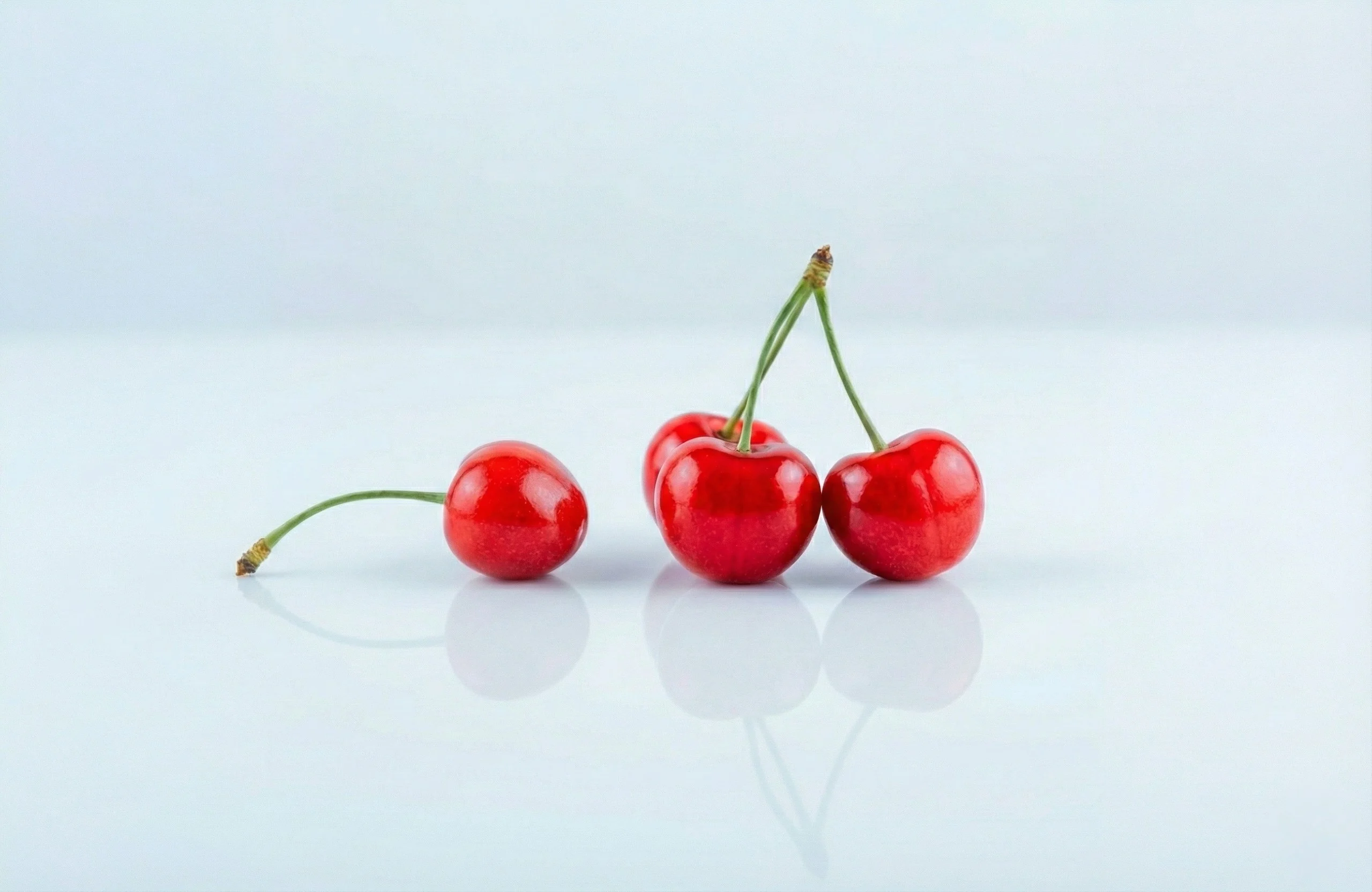
When can babies have sour cherries?
Sour cherries may be introduced as soon as baby is ready to start solids, which is generally around 6 months of age.
Sour cherries, also known as tart cherries, have a long culinary history throughout Central and Eastern Europe and parts of Western Asia. Unlike sweet cherries, sour cherries are rarely eaten raw and are instead prized for their bright acidity in cooked dishes. They appear in foods such as meggyleves, a Hungarian cherry soup, Persian rice dishes, stews throughout the Mediterranean region, and European pastries and preserves.
How do you serve sour cherries to babies?
Every baby develops on their own timeline, and the suggestions on how to cut or prepare particular foods are generalizations for a broad audience.
6 months old +:
Cook fresh or frozen pitted sour cherries until they’re completely soft and burst, then serve the cooked cherries on their own or stirred into other foods, or finely chop pitted cherries and mix into a scoopable food. If you have a dish with sweetened sour cherries in it, it’s fine to share a taste with baby. Just mash or chop the cherries thoroughly and hold off on serving regularly until a child is older. If you’d like to share a dish with dried sour cherries, make sure they have been fully rehydrated in warm water until completely softened, then chop and mix into scoopable foods.
9 months old +:
Serve pitted sour cherries that have been smashed into flat discs or chopped into quarters for baby to pick up with their developing pincer grasp. You can also continue serving cooked or chopped pitted cherries that have been mixed into scoopable foods or stews. Lastly, to serve dried sour cherries, make sure they have been fully rehydrated in warm water until completely softened, then serve on their own or mix into other foods.
12 months old +:
If you feel the toddler is ready, try offering whole, pitted, de-stemmed sour cherries that have been smashed into flat discs. If you are finding the child is spitting a lot of the fruit out, try cutting the discs in half to make them smaller, or offering quartered pieces of ripe, pitted cherries. Continue offering finely chopped or cooked pitted cherries as desired.
24 months old +:
Around the second birthday, many toddlers may have the molars and the chewing skills needed to eat unmodified dried sour cherries. To model how to eat whole dried cherries, start by telling the child: "This is a hard one. Watch me." Show how you move the food to your molars with your tongue. Chew with your mouth open (you can even demonstrate by opening and closing your hands at the same time). Once you have chewed the fruit well, open your mouth to show the toddler how it has been broken down. Say, "I moved it to my big strong teeth to chew it. It needs a lot of chewing." Demonstrate a couple of times before offering a dried cherry to the toddler. Consider serving only one or two at a time at first to pace the practice.
3 years old +:
If the child is taking accurate-sized bites, not stuffing their mouth with food and able to follow instructions, they may be ready to learn how to work with an entire pitted cherry. While whole cherries are a choking hazard, it is our professional opinion that there are enormous benefits in teaching toddlers to take bites from challenging foods and how to safely eat them. If you feel the child is ready and you’re okay taking the risk, consider serving a whole cherry, first modeling how to take bites from the whole cherry yourself. Bite into the fruit, tearing off one half. Say, “My teeth hit the hard pit.” Turn the fruit around to show the pit to the child. Tap it and explain, “Look, there’s a hard pit in there.” Then, pull the pit out and show it to them, saying, “We don’t eat this part.” Dramatically toss the pit into the trash. Offer a whole cherry to the child and say, “You try”. You can try to hold onto the fruit while they take their first bite, but know they may get the whole fruit in their mouth anyway.
If the child inadvertently puts a pit in their mouth, step one: do not panic. Remember that a pit can be safely swallowed whole, or may produce a strong enough gag reflex to move it forward and out of the mouth. Kneel next to the child and demonstrate sticking your tongue out, then say “Spit that out please.” Put your hand under their chin. If needed, put a pit in your own mouth, show it on your tongue, then demonstrate spitting it into your own hand.
Are sour cherries a choking hazard for babies?
Yes. Sour cherries are firm, round, and slippery, and contain a hard pit, which are qualities that pose an increased risk of choking. Dried sour cherries also pose an increased risk, as they are small and challenging to chew. To reduce the risk, prepare and serve sour cherries in an age-appropriate way as described in How to Serve. As always, make sure you create a safe eating environment and stay within an arm’s reach of baby during meals.
Learn the signs of choking and more about choking first aid in our free guides, Infant Rescue and Toddler Rescue.
Are sour cherries a common allergen?
No. Sour cherry is not considered to be a common food allergen, although allergic reactions have been reported, some of which are severe.[1] Individuals who are allergic to the pollen from birch trees or who have Oral Allergy Syndrome (also called pollen food allergy syndrome) to other foods in the Rosaceae or stone fruit family may be sensitive to sour cherries.[2] Oral Allergy Syndrome typically results in short-lived itching, tingling, or burning in the mouth and is unlikely to result in a dangerous reaction. Cooking and peeling the fruit can help to minimize the reaction. However, sour cherries can be difficult to peel due to their small size.
Are sour cherries healthy for babies?
Yes. Sour cherries are packed with nutrition, and offer significant amounts of fiber, and vitamins A, B6, C, E, and K, as well as important carotenoids like beta carotene, lutein, and zeaxanthin. Plus, they offer flavonoids and polyphenols which may offer antioxidant and anti-inflammatory properties.[3] [4] [5] Together, these nutrients help support baby’s developing gut microbiome, vision, metabolism, iron absorption, immunity, normal blood clotting, and more. Research also suggests that they may help support restful sleep and recovery.[6]
Some forms of sour cherry are very high in sugar or salt. Hold off on serving these preparations regularly until a child is older, but occasional tastes of salted or sweetened sour cherries served in an age-appropriate way are not a cause for concern.
When can babies drink tart cherry juice?
Small amounts of cherry juice may be shared as a drink after 12 months of age. That said, it can be beneficial to wait for when a child is older to regularly share juice and other sugary drinks, even sour ones like tart cherry juice. Research suggests that regular intake of juice and other sweet drinks tends to increase the risk of dental cavities and take up space in the belly, which may decrease a child’s motivation to eat other foods at mealtime and may negatively affect the child’s growth over time.[7] [8] However, occasional servings of juice after one year of age generally isn’t a cause for concern. Learn more about serving juice to babies and toddlers.
Can babies have dried cherries?
Yes, but only after the dried cherries have been rehydrated in hot water until fully softened to reduce choking risk. Hold off on serving unmodified dried cherries until sometime after the second birthday, when the child has molars for chewing more challenging textures and is consistently chewing well and not stuffing their mouth with food, as dried fruit is challenging to chew and a potential choking hazard.
Reference Material
Escribano MM, Munoz FJ, Velazouez E, Gonzalez J, Conde J. (1996). Anaphylactic reaction caused by cherry ingestion. Allergy, 51(10):756-7.
American Academy of Allergy Asthma & Immunology. Oral Allergy Syndrome (OAS) or Pollen Fruit Syndrome (PFS).
Minich D. M. (2019). A Review of the Science of Colorful, Plant-Based Food and Practical Strategies for "Eating the Rainbow". Journal of nutrition and metabolism, 2019, 2125070. DOI: 10.1155/2019/2125070
Start solids with confidence
- Guided Introduction to 100+ Foods
- Smart Tools to Simplify Mealtime
- Food Allergen 101
- 300+ Meal Ideas
- First Foods® Database

Start solids with confidence
- Guided Introduction to 100+ Foods
- Smart Tools to Simplify Mealtime
- Food Allergen 101
- 300+ Meal Ideas
- First Foods® Database
Expert Tips Delivered to Your Inbox
Sign up for weekly tips, recipes and more.