
Sofrito
Prepared
- Age Suggestion
- 6 months
- Iron-Rich
- No
- Common Allergen
- No
When can babies have sofrito?
Sofrito may be introduced as soon as baby is ready to start solids, which is generally around 6 months.
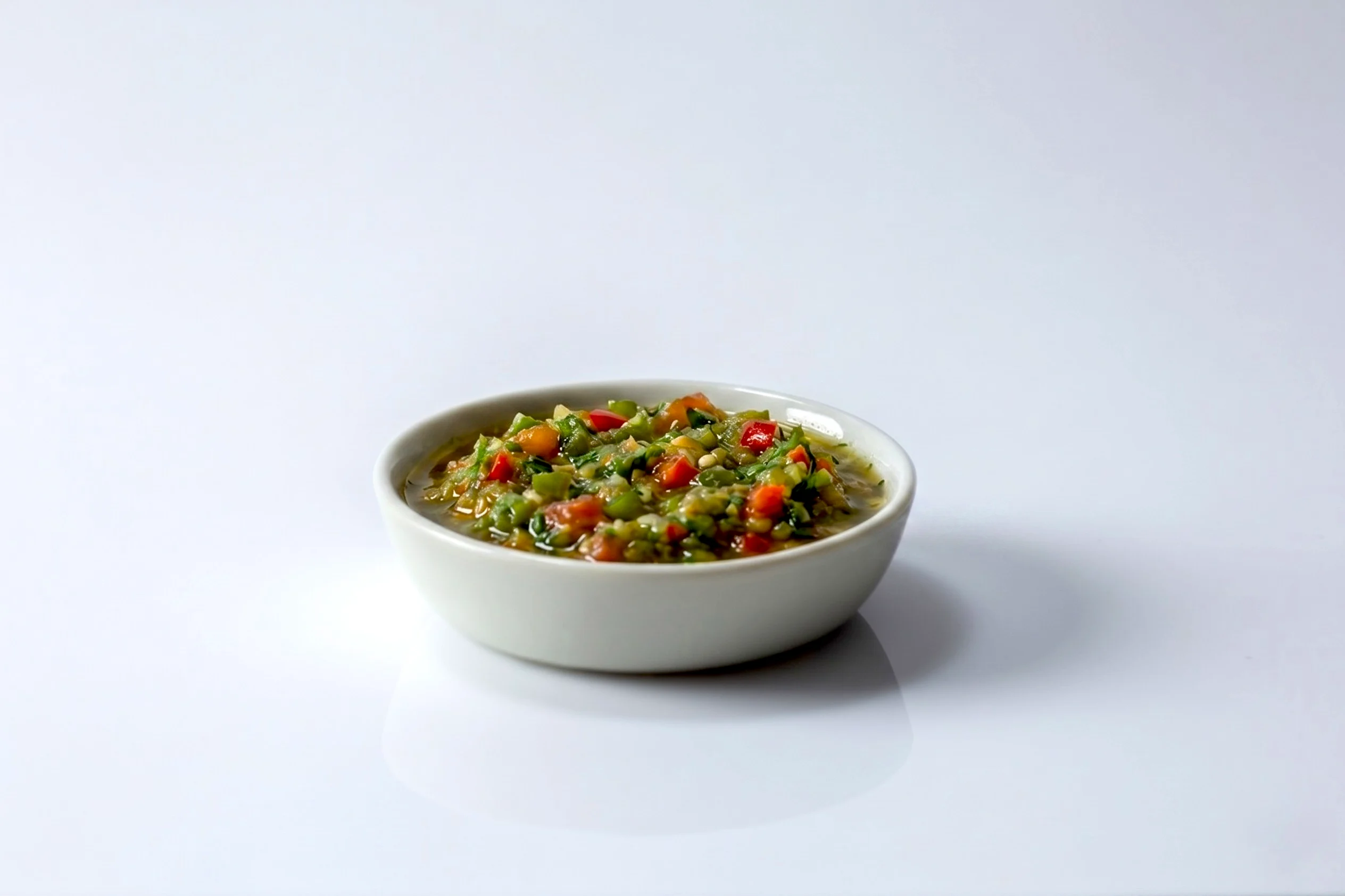
Sofrito is not a single dish but a culinary concept: vegetables, herbs, and fat that are cooked (or in some traditions, blended raw) and used to build flavor as the foundation of countless dishes. The word derives from the Spanish and Italian verbs meaning "to lightly fry," and versions of this technique appear across diverse regions. In Spain, sofrito typically means a slow-cooked purée of tomato, onion, and garlic in olive oil. In Puerto Rican and other Caribbean cooking, sofrito is a raw, blended paste built around culantro, ají dulce, onion, garlic, and sometimes tomato.
How do you serve sofrito to babies?
Every baby develops on their own timeline, and the suggestions on how to cut or prepare particular foods are generalizations for a broad audience.
6 months old +:
Cook sofrito into soft, scoopable foods like stewed lentils, mashed vegetables, or stews that baby can scoop with their hands or eat from a pre-loaded spoon. You can also offer finger foods that have been cooked in sofrito such as soft shredded meat or strips of well-cooked egg or fish. There is no need to dilute the flavor; a full, aromatic sofrito-based dish is appropriate for babies from 6 months.
9 months old +:
At this age, babies are developing their pincer grasp and can begin to pick up smaller pieces of food, such as rice and flattened beans seasoned with sofrito. Continue to offer sofrito cooked into soft, scoopable foods like stewed lentils, mashed vegetables, or stews that baby can scoop with their hands or eat from a pre-loaded spoon, and as finger foods like soft, shredded meat or strips of well-cooked egg or fish.
12 months old +:
Offer family meals cooked with sofrito as desired, continuing to modify or remove any parts of the meal that pose an increased choking risk like firm chunks of chicken. Toddlers can share arroz con pollo, habichuelas guisadas, sofrito-based pasta sauces, rice dishes, and stews, as long as the individual components are age-appropriate textures.
Is sofrito a choking hazard for babies?
No. Sofrito presents a low choking risk when safely prepared for a child's age and developmental ability, though, in theory, an individual could choke on any food. To reduce the risk, prepare and serve sofrito in an age-appropriate way. Sofrito is always cooked into or blended with other foods, so make sure the rest of the dish is age-appropriate before serving. As always, create a safe eating environment and stay within reach of baby during meals.
Learn the signs of choking and more about choking first aid in our free guides, Infant Rescue and Toddler Rescue.
Does sofrito contain common allergens?
It depends on the preparation. In most traditions, sofrito does not contain common allergens, although the finished dish for which sofrito acts as the base certainly may.
It is important to introduce common food allergens individually and rule out a food allergy before offering baby prepared foods that contain multiple potential food allergens. This way, when you are ready to share a dish with sofrito, you will be confident that baby has already safely eaten any common food allergens in it. This approach can also help you quickly identify potential culprits in the unlikely event that baby experiences an allergic reaction after eating a meal that contains sofrito.
Is sofrito healthy for babies?
Yes. The nutritional profile of sofrito varies depending on its ingredients and preparation, but it generally offers fiber, as well as a variety of vitamins, minerals, and beneficial plant compounds. Tomatoes, for example, are a good source of vitamin C and lycopene, a carotenoid with antioxidant properties that becomes more bioavailable when eaten with fat. Onion and garlic contain quercetin and prebiotics that support gut health and immune function. Olive oil and other cooking oils provide unsaturated fats that support brain development and fat-soluble vitamin absorption.
Jarred and frozen sofrito can be high in sodium, but usually only a small amount is used to flavor a meal as it cooks, and the amount of sodium that babies typically take in tends to be low as they learn the skills to feed themselves. Some sodium is important for supporting baby’s electrolyte balance, hydration, and movement. While many health organizations recommend holding or reducing salt in food shared with baby, recent reviews of literature suggest that this may not be necessary.[1] Furthermore, sharing family meals, even if they contain salt, has its benefits: baby has opportunities to explore a wider variety of food, share their family food culture, and practice eating a variety of textures.[2] [3] [4] [1]
Can I use store-bought sofrito in baby's meals?
Yes, with attention to the sodium content. Commercial sofrito products, often jarred or frozen, are a convenient option, but they can be high in sodium. Consider using only a small amount of store-bought sofrito when cooking a dish you intend to share with baby.
Can I freeze homemade sofrito for convenience?
Yes. Homemade sofrito—whether blended raw in the Caribbean tradition or cooked in the Spanish tradition—freezes very well. Spoon it into an ice cube tray, freeze until solid, then transfer the cubes to a freezer-safe container for storage up to three months.
Reference Material
Yang, S., Wang, H. (2023). Avoidance of added salt for 6-12-month-old infants: A narrative review. Archives de pediatrie : organe officiel de la Societe francaise de pediatrie, S0929-693X(23)00156-2. Advance online publication.
Strazzullo P, Campanozzi A, Avallone S. Does salt intake in the first two years of life affect the development of cardiovascular disorders in adulthood?. Nutr Metab Cardiovasc Dis. 2012;22(10):787–792. doi:10.1016/j.numecd.2012.04.003
Soloway, R.A. (2013). Sodium: Too Much of a Good Thing. National Capital Poison Center.
Start solids with confidence
- Guided Introduction to 100+ Foods
- Smart Tools to Simplify Mealtime
- Food Allergen 101
- 300+ Meal Ideas
- First Foods® Database
Start solids with confidence
- Guided Introduction to 100+ Foods
- Smart Tools to Simplify Mealtime
- Food Allergen 101
- 300+ Meal Ideas
- First Foods® Database
Expert Tips Delivered to Your Inbox
Sign up for weekly tips, recipes and more.