


Access our First Foods® Database in the Solid Starts App.
Learn moreScallion (Green Onion)
Vegetable
Age Suggestion
6 months
Iron-Rich
No
Common Allergen
No

When can babies have scallions?
Scallions may be introduced as soon as baby is ready to start solids, which is generally around 6 months of age.
Scallions are part of the family of allium plants that includes chives, garlic, leeks, shallots, and other onions. Scallions are commonly called green onions and spring onions, and they are typically used as a seasoning. The denser white portion near the root offers a stronger onion flavor while the green tops add mild grassy taste to food.
How do you serve scallions to babies?
Every baby develops on their own timeline, and the suggestions on how to cut or prepare particular foods are generalizations for a broad audience.

6 months old +:
Finely chop scallions (raw or cooked) and mix them into soft, scoopable foods like congee, mashed vegetables, or yogurt. Alternatively, mix finely chopped scallions into finger foods like egg strips or pancakes. Chutney, relish, salsa verde, and other sauces made with scallions are another great option at this age. If you’d like, you can offer a whole raw scallion as a food teether, with just the roots removed. Try handing it over with the white bulb side up, as that end may be easier for baby to manage and can elicit more chewing. If baby has teeth, they may be able to scrape some small pieces of onion off, but it’s likely that baby will just spit these out.
9 months old +:
When you see signs of the developing pincer grasp (where the tips of the thumb and pointer finger meet), offer bite-sized pieces of scallion egg strips or scallion pancakes for baby to practice picking up. You can also offer bite-sized pieces of cooked scallions on their own, although they may be a bit tricky for baby to pick up and may require a bit of chewing, so be prepared for baby to spit out the food.
18 months old +:
Offer finely chopped or bite-sized pieces of raw or cooked scallion on their own or mixed into foods. Once a child is able to take accurate bites, tear with the teeth, and follow directions, you can offer longer sections or whole cooked scallions. Let them try to take bites from the scallion, or cut up the vegetable, as needed.
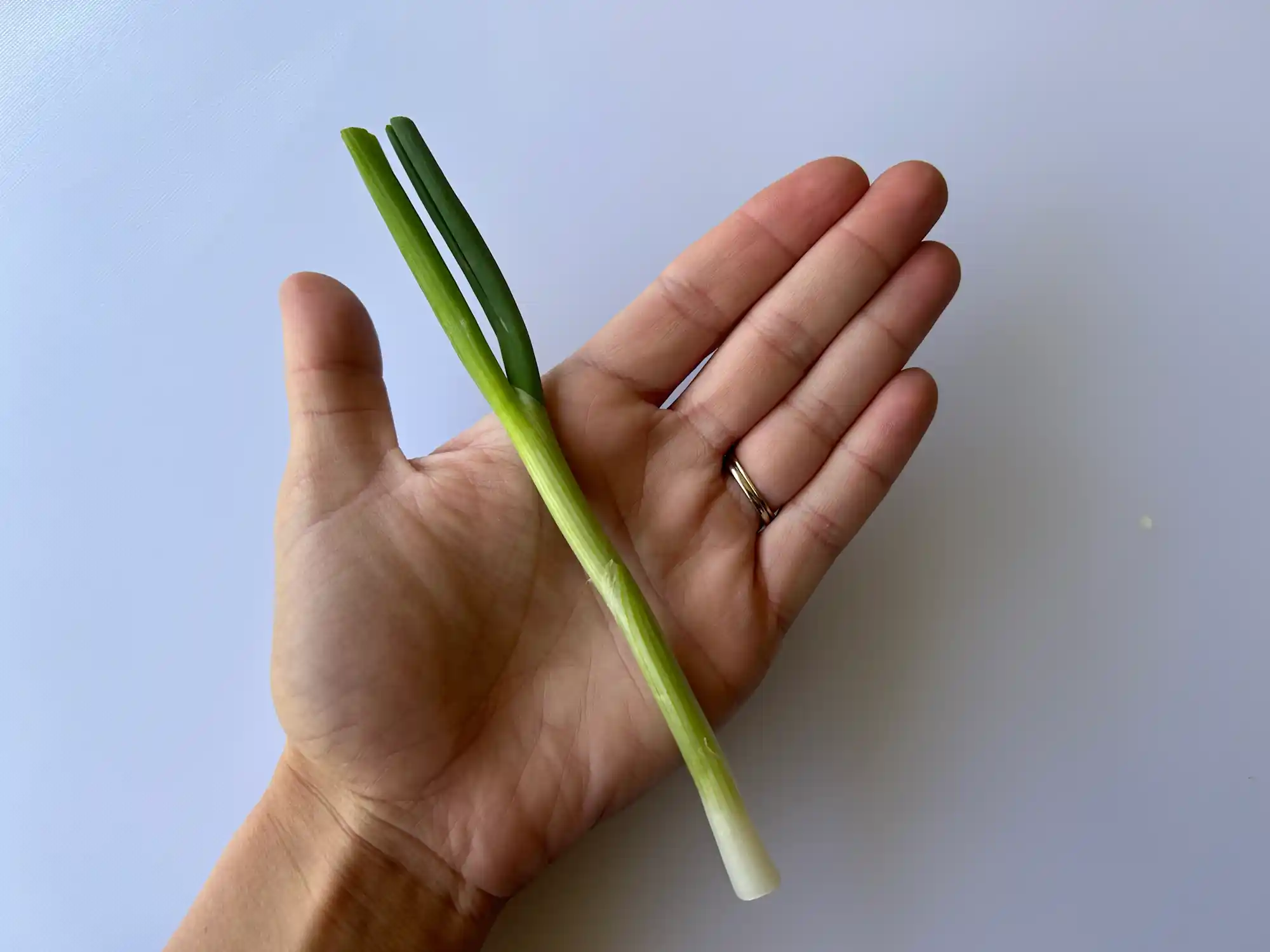
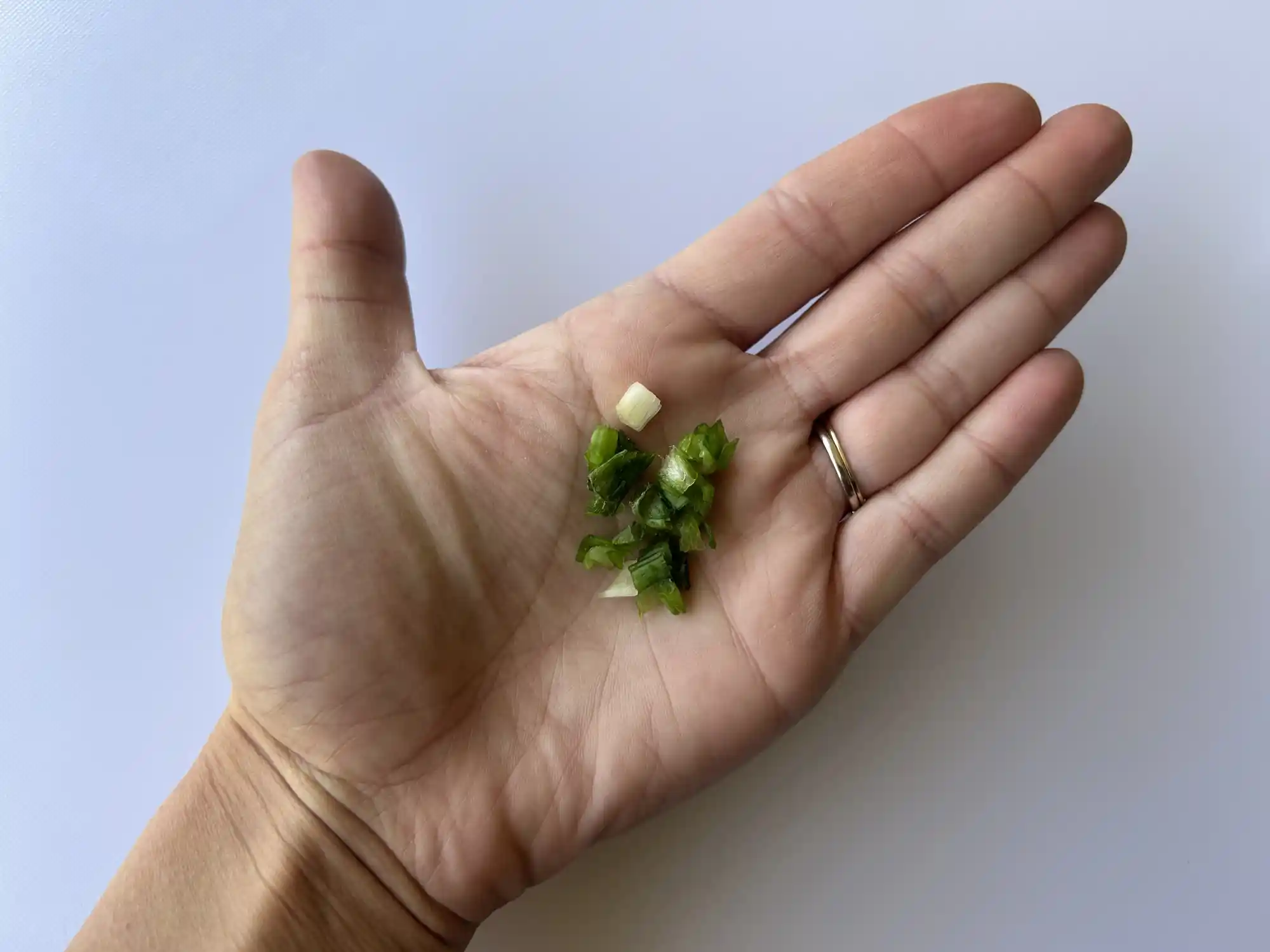
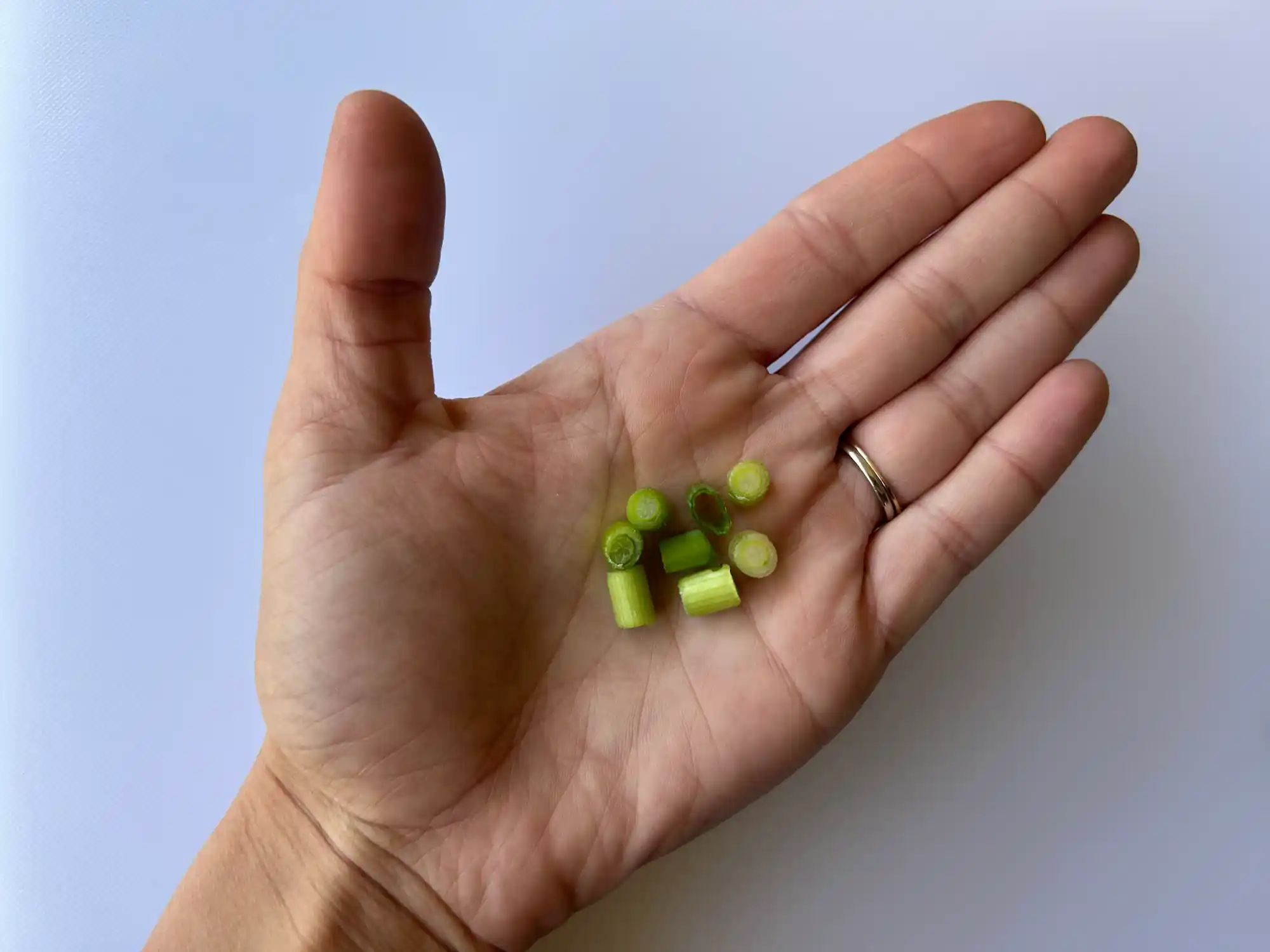
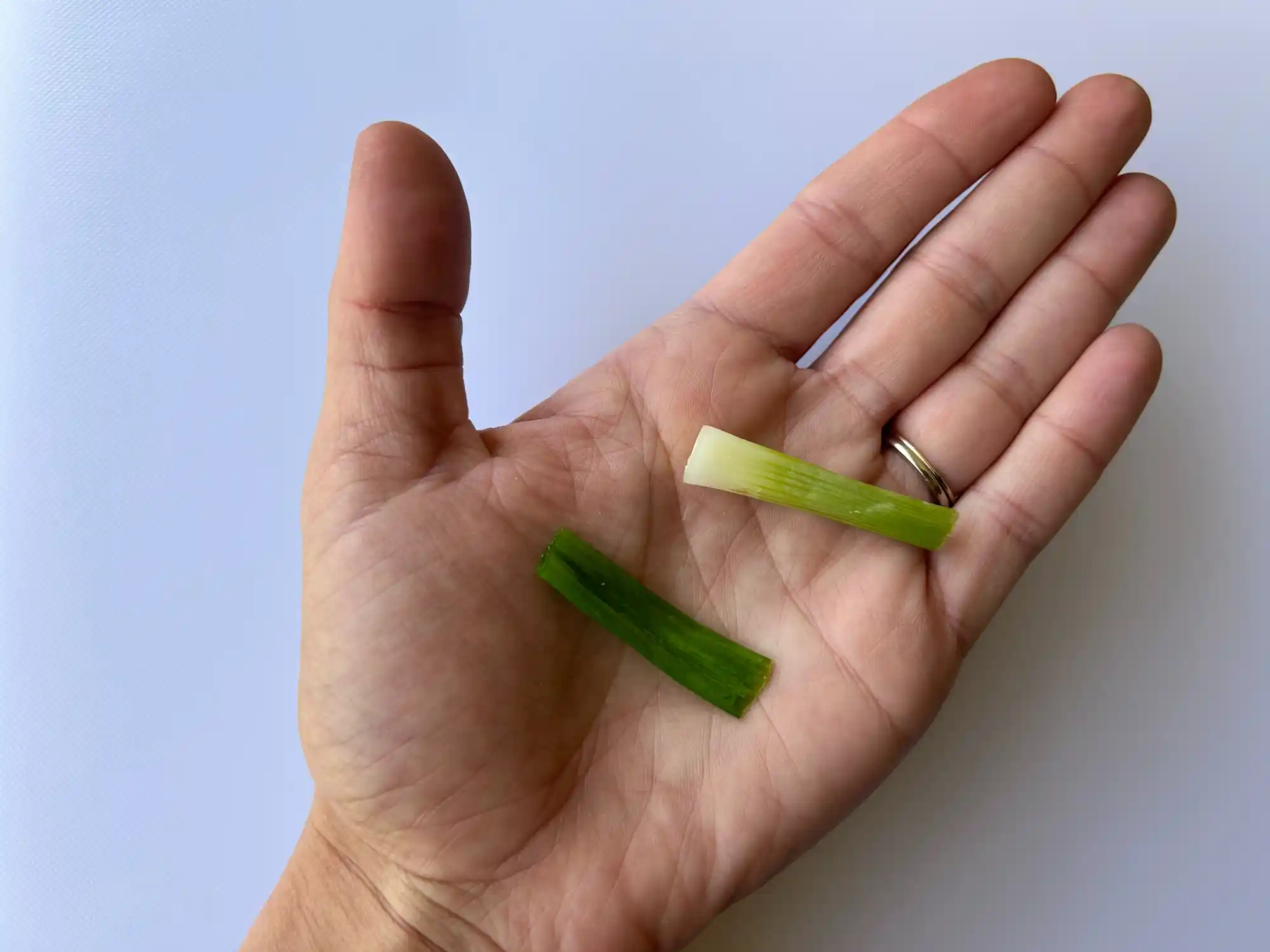
Videos
Are scallions a choking hazard for babies?
No. Scallions present a low risk when safely prepared for a child’s age and developmental ability, though, in theory, an individual could choke on any food. To reduce the risk, prepare and serve scallions in an age-appropriate way. As always, make sure you create a safe eating environment and stay within an arm’s reach of baby during meals.
Learn the signs of choking and gagging and more about choking first aid in our free guides, Infant Rescue and Toddler Rescue.
Are scallions a common allergen?
No. Allergic reactions to scallions are rare, but possible allergies to other members of the onion family have been reported. People who are sensitive to garlic or onions may also be sensitive to scallions as they are members of the same family of plants, the lily family. Additionally, individuals who are sensitive to mugwort and birch pollen and/or foods in the Apiaceae family (such as carrot, fennel, and celery) may be sensitive to scallions, something called mugwort-celery-spice syndrome. While information on Oral Allergy Syndrome and scallions is limited, individuals with Oral Allergy Syndrome (also called pollen food allergy syndrome), and in particular, those with sensitivities to grass pollen or mugwort pollen (a weed), may also be sensitive to other vegetables within the lily family. Oral Allergy Syndrome typically results in short-lived itching or burning in the mouth and is unlikely to result in a dangerous reaction. Cooking scallions may help minimize the reaction.
As you would when introducing any new food, start by offering a small quantity for the first few servings. If there is no adverse reaction, gradually increase the quantity over future meals.
Are scallions healthy for babies?
Yes. Scallions contain fiber, folate, and vitamins A, C, and K, as well as trace amounts of calcium, copper, and iron. It also contains an amazing plant compound called kaempferol, which may have anti-cancer properties, amongst many other beneficial phytonutrients such as carotenoids, polyphenols, and more.
What do I do if baby won't eat?
End the meal and follow up with a breast or bottle feed. Never pressure a baby or child to eat; it will only worsen food refusal in the long run. Babies refuse food for different reasons, such as teething, illness, sleepiness, or lack of energy or interest in learning a new skill. For information on why baby may refuse to eat, see our guide, Handling Food Refusal.
How much food should I serve to baby?
When first getting started, offer a small amount and trust that baby knows how to show interest in wanting more by grunting, pointing, or reaching out. Keep in mind that most babies between 6 and 9 months of age do not consume much solid food at first. For babies between 10 and 12 months of age, work toward what a balanced adult meal would look like, just with smaller portions than what you might have. Follow the child’s lead: when baby indicates “more”, offer more food. When baby shows signs that they are finished, stop offering food.
Our Team
Written by

Dr. Sakina Bajowala
Pediatrician & pediatric allergist/immunologist

Kim Grenawitzke
Pediatric occupational therapist, feeding & swallowing specialist, international board-certified lactation consultant

Venus Kalami
Pediatric registered dietitian & nutritionist
Expert Tips Delivered to Your Inbox
Sign up for our newsletter for feeding tips, updates, and more.




Copyright © 2026 • Solid Starts Inc