
Saffron
Herb/Spice
- Age Suggestion
- 6 months
- Iron-Rich
- No
- Common Allergen
- No
When can babies have saffron?
Saffron may be introduced as soon as baby is ready to start solids, which is generally around 6 months of age. A little goes a long way; only a tiny pinch is needed for flavor and color.
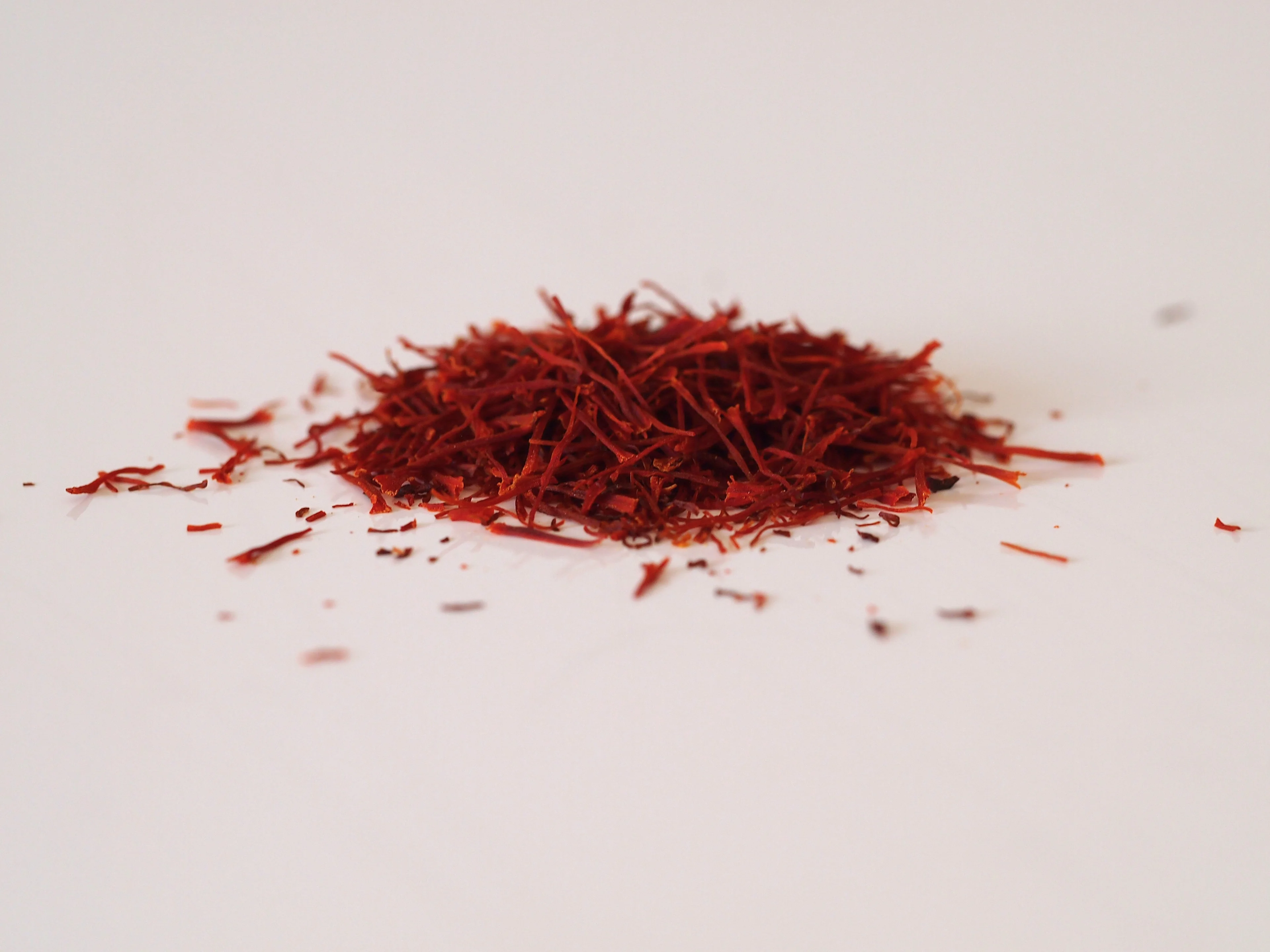
Saffron comes from the thread-like stigmas of the crocus flower and has been cultivated for thousands of years in Southwest Asia as a source of food, medicine, and dye. It’s often expensive, as it takes thousands upon thousands of flowers to produce even one pound of saffron, and the flowers must be carefully picked by hand. Saffron is widely used in dishes in France (like bouillabaisse), Iran (such as tahchin), India (like biryani and kheer), Spain (paella), and across North Africa and the Mediterranean.
How do you serve saffron to babies?
Every baby develops on their own timeline, and the suggestions on how to cut or prepare particular foods are generalizations for a broad audience.
6 months old +:
Even babies new to solids can have spices like saffron. Dissolve a tiny pinch of saffron threads (1-2 strands) in a spoonful of warm water or breast milk or grind the threads into a dry powder. Then, mix the saffron into soft foods like mashed sweet potato, rice, yogurt, or lentils. You can also steep the threads in a sauce or porridge to infuse with flavor and color. Just keep the amount very small, as saffron has a powerful flavor and using too much can easily overpower a dish.
12 months old +:
Dissolve a small pinch of saffron threads (1-2 strands) in a spoonful of warm water or other liquid, or grind the threads into a dry powder. Then incorporate saffron as desired into meals like porridge, puddings, or family dishes like rice or stew. At this age, you can offer small amounts of saffron milk or other saffron-based drinks, if desired.
Is saffron a choking hazard for babies?
No. Saffron presents a low risk when safely prepared for a child’s age and developmental ability, though, in theory, an individual could choke on any food. To reduce the risk, prepare and serve saffron in an age-appropriate way as described in the How to Serve section. As always, make sure to create a safe eating environment and stay within reach of baby during meals.
Learn the signs of choking and more about choking first aid in our free guides, Infant Rescue and Toddler Rescue.
Is saffron a common allergen?
No. Allergies to saffron are rare, but have been reported in isolated cases, typically related to high doses or occupational exposure.[1] [2]
Even in the absence of allergy, many spices can cause reactions similar to allergic symptoms. For example, inhaling a puff of powdered saffron can irritate the nasal passageways and trigger sneezing and coughing, but may not be triggered by an allergic reaction.[3] Additionally, certain spices, like saffron, may cause contact rashes (especially around the mouth) due to potentially skin-irritating components in the food, but not necessarily result due to an allergic reaction.[3] [4] Talk to your baby’s doctor about applying a thin layer of barrier cream or ointment—such as pure petroleum jelly or a plant-based oil/wax balm—to baby’s face before meals. This layer of protection will help prevent contact rashes and serve as a barrier between the skin and the potentially irritating components of food.
Note that certain spice blends that feature saffron may contain common food allergens, so make sure to read labels thoroughly if your child has food allergies.
Is saffron healthy for babies?
Can babies have saffron milk?
Yes, as an ingredient in solid food, but wait until after the first birthday to regularly offer saffron milk or kesar milk as a drink so it does not displace breast milk or formula, which offer important nutrition that baby needs to grow and thrive.

Reference Material
Wüthrich, B., Schmid-Grendelmeyer, P., & Lundberg, M. (1997). Anaphylaxis to saffron. Allergy, 52(4), 476–477. DOI: 10.1111/j.1398-9995.1997.tb01034.x
Feo, F., Martinez, J., Martinez, A., Galindo, P. A., Cruz, A., Garcia, R., Guerra, F., & Palacios, R. (1997). Occupational allergy in saffron workers. Allergy, 52(6), 633–641. DOI: 10.1111/j.1398-9995.1997.tb01042.x
Kids with Food Allergies. Spices and food allergy.
Start solids with confidence
- Guided Introduction to 100+ Foods
- Smart Tools to Simplify Mealtime
- Food Allergen 101
- 300+ Meal Ideas
- First Foods® Database
Start solids with confidence
- Guided Introduction to 100+ Foods
- Smart Tools to Simplify Mealtime
- Food Allergen 101
- 300+ Meal Ideas
- First Foods® Database
Expert Tips Delivered to Your Inbox
Sign up for weekly tips, recipes and more.