
Roti
Grain
- Age Suggestion
- 6 months
- Iron-Rich
- No
- Common Allergen
- Yes
When can babies have roti?
Roti may be introduced as soon as baby is ready to start solids, which is generally around 6 months of age. Note that roti is typically made with wheat, a common allergen.
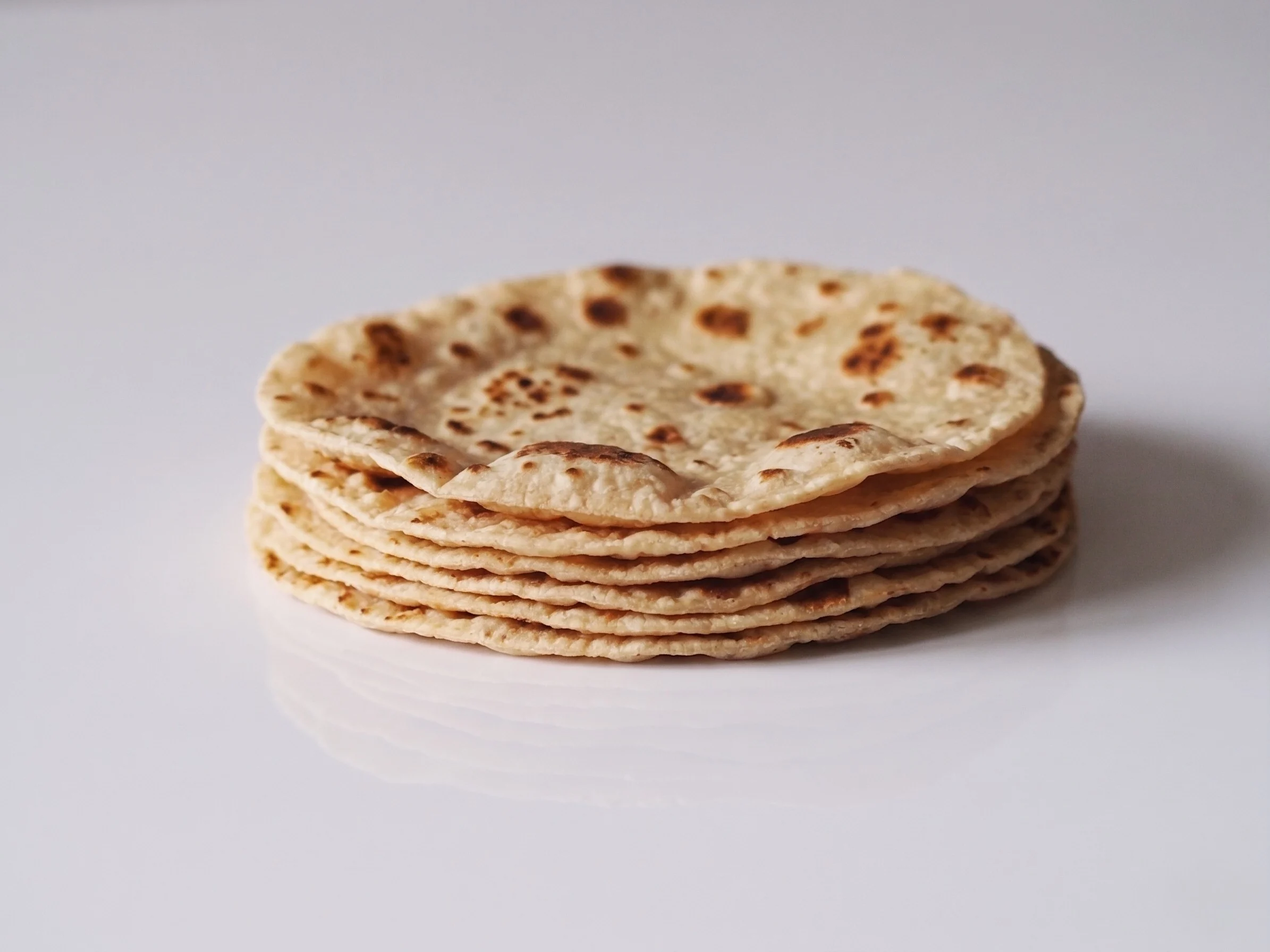
Roti is a thin, unleavened flatbread cooked on a flat griddle and eaten across South Asia and the South Asian diaspora worldwide. Made from whole wheat flour mixed with water, it is one of the most fundamental everyday foods in Indian, Pakistani, Bangladeshi, and Nepali cooking, served at virtually every meal alongside dal, sabzi, curry, and yogurt. Its close relative the chapati is often used as a synonym. Roti differs from paratha, which is layered with fat during rolling, and from Caribbean roti, which is a thicker, stuffed preparation.
How do you serve roti to babies?
Every baby develops on their own timeline, and the suggestions on how to cut or prepare particular foods are generalizations for a broad audience.
6 months old +:
Offer a strip of roti about the size of two adult fingers pressed together for baby to grab and munch on. Briefly warming the roti in a pan can make it a bit more resistive and less likely to gum up in baby’s mouth. Roti works well as a vehicle for other foods: dip it in dal, yogurt, or a soft curry before handing it to baby, or spread a thin layer of ghee, dal, or mashed vegetable on the roti before serving. Baby likely won’t consume much of the roti, but holding and munching still help build baby’s eating skills. If you’d like to increase consumption, mix torn bits of roti into dal, yogurt, or other scoopable foods.
9 months old +:
With a developing pincer grasp (where the thumb and first finger meet), babies can now pick up smaller torn pieces of roti, or continue to offer longer strips for biting and tearing practice. Briefly warming the roti in a pan can make it a bit more resistive and less likely to gum up in baby’s mouth. Offer roti as part of a shared meal, like torn pieces alongside dal for dipping, layered with soft sabzi, or spread with a bit of dal or ghee.
18 months old +:
Offer roti as the rest of the family is having it, including with dals and yogurt, and encourage eating roti the way the family eats it. At this age, a child is more likely to follow your lead and tear pieces from their own whole roti for eating and using to scoop other foods.
Is roti a choking hazard for babies?
No. Roti presents a low choking risk when safely prepared for a child's age and developmental ability, though, in theory, an individual could choke on any food. To reduce the risk, prepare and serve roti in an age-appropriate way as described in How to Serve. As always, create a safe eating environment and stay within reach of baby during meals.
Learn the signs of choking and more about choking first aid in our free guides, Infant Rescue and Toddler Rescue.
Does roti contain common allergens?
Yes. Most roti contains wheat, a common food allergen. Roti may also be served with foods that contain other common allergens, such as ghee (dairy).
It is important to introduce common food allergens individually and rule out a food allergy before offering baby prepared foods that contain multiple potential food allergens. This way, when you are ready to share roti, you will be confident that baby has already safely eaten any common food allergens in it. This approach can also help you quickly identify potential culprits in the unlikely event that baby experiences an allergic reaction after eating roti.
Is roti healthy for babies?
Yes. Whole wheat roti provides complex carbohydrates for sustained energy, along with dietary fiber, B vitamins, and small amounts of non-heme iron, magnesium, and zinc. Serving with a vitamin C–rich food such as tomato, lemon juice squeezed over a dish, or a vegetable like bell pepper, can support absorption of the non-heme iron present in both the roti and any legumes or greens served alongside it.
Roti made with ghee—clarified butter brushed on after cooking—adds fat that babies need for brain development and growth.
Can I use store-bought roti for babies?
Yes. Store-bought and frozen roti are convenient and nutritionally comparable to homemade. Check that the roti is soft, and warm it briefly before serving so it is pliable. Check the ingredient list for common allergens and make sure that any allergens have been safely introduced before serving.
Can babies eat roti with dal?
Yes. Roti and dal together are a nutritionally complete and age-appropriate meal for babies. Dal provides protein, iron, and fiber; roti provides complex carbohydrates and additional fiber; and the combination eaten together improves the overall amino acid profile of the meal compared to either food alone. See Yellow Lentils for guidance on serving dal.
Start solids with confidence
- Guided Introduction to 100+ Foods
- Smart Tools to Simplify Mealtime
- Food Allergen 101
- 300+ Meal Ideas
- First Foods® Database
Start solids with confidence
- Guided Introduction to 100+ Foods
- Smart Tools to Simplify Mealtime
- Food Allergen 101
- 300+ Meal Ideas
- First Foods® Database
Expert Tips Delivered to Your Inbox
Sign up for weekly tips, recipes and more.