
Radicchio
Vegetable
- Age Suggestion
- 6 months
- Iron-Rich
- No
- Common Allergen
- No
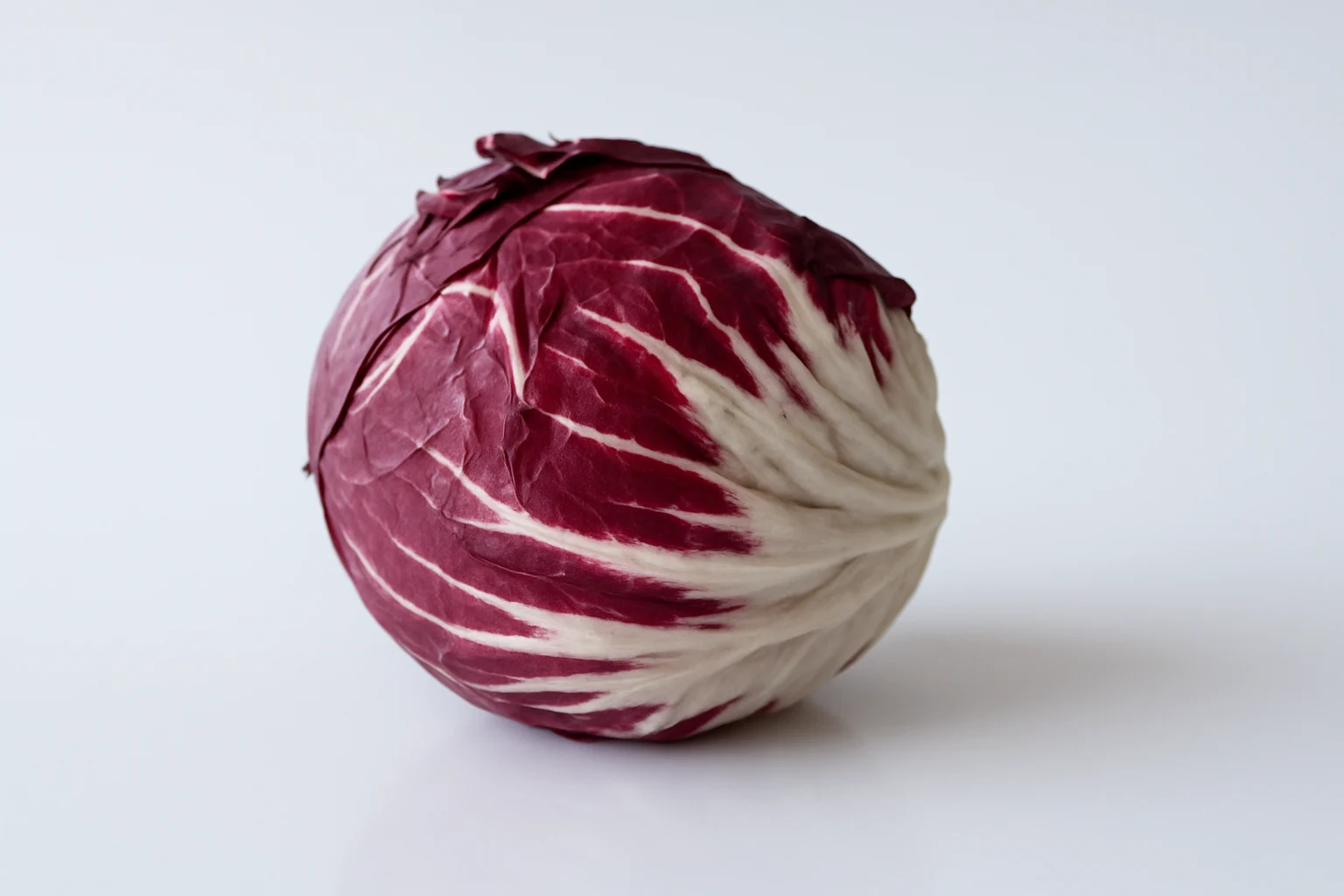
When can babies have radicchio?
Radicchio may be introduced as soon as baby is ready to start solids, which is generally around 6 months of age.
Radicchio is a leafy vegetable from the chicory family, with a distinctive reddish-purple color and white veins. It has been cultivated for centuries, especially in its native land of Italy, where different varieties such as Rosso di Chioggia and Rosso di Treviso Precoce are prized for their flavor and appearance. Its bitterness is often mellowed by grilling, roasting, or sautéing.
How do you serve radicchio to babies?
Every baby develops on their own timeline, and the suggestions on how to cut or prepare particular foods are generalizations for a broad audience.
6 months old +:
Offer grated or finely minced radicchio, raw or cooked, that has been mixed into a scoopable food like mashed potato or porridge to make it easier to eat.
9 months old +:
Serve thin shreds of raw or cooked radicchio for baby to pick up with their developing pincer grasp. Expect some spitting with the smaller shreds, particularly if it’s raw, as raw leafy greens are a challenging texture for babies to break down in the mouth. At this age, you can also offer chopped pieces of cooked radicchio; just know that the pieces may stick to baby’s tongue or the inside of their mouth which can cause harmless gagging.
12 months old +:
Offer cooked radicchio as desired in chopped pieces, shreds, strips, or even whole leaves. For raw radicchio, continue with offering shredded or finely chopped. Continue to expect some spitting as the child learns to manage the texture of the raw leaf in their mouth.
18 months old +:
Serve cooked radicchio as you like. As for raw radicchio, many toddlers at this age are able to manage more roughly chopped raw radicchio in most shapes and sizes, including large wedges.
Is radicchio a choking hazard for babies?
Yes, thick pieces of raw radicchio can be firm and hard to chew, qualities that can increase choking risk. To reduce the risk, prepare and serve radicchio in an age-appropriate way as described in the How to Serve section. As always, create a safe eating environment and stay within reach of baby during meals.
Learn the signs of choking and more about choking first aid in our free guides, Infant Rescue and Toddler Rescue.
Is radicchio a common allergen?
No, radicchio is not a common allergen. Allergies to radicchio are rare, but have been reported.[1][2] Individuals with Oral Allergy Syndrome (also called pollen food allergy syndrome), and in particular, those with sensitivities to certain tree pollens, may also be sensitive to radicchio.[3] Oral Allergy Syndrome typically results in short-lived itching, tingling, or burning in the mouth and is unlikely to result in a dangerous reaction. Cooking radicchio may help minimize and even eliminate the reaction.
Is radicchio healthy for babies?
Yes. Radicchio contains plenty of fluid and important nutrients for a developing child, including folate, potassium, vitamins C and K, lutein, zeaxanthin, antioxidants and a dash of fiber. In tandem, these nutrients work to support neurodevelopment, heart health, iron absorption, blooding clotting, bone health, vision, digestive processes, and more.
Radicchio is rich in vitamin K, an important nutrient for blood clotting that can interact with certain medications. Certain children may take medications that impact blood clotting, so check with your doctor if your child is on any medications before offering radicchio regularly.
Reference Material
AAAAI. (2020). Lettuce Anaphylaxis.
P. Cadot, A.-M. Kochuyt, R. van Ree, J.L. Ceuppens (2003). Oral Allergy Syndrome to Chicory Associated with Birch Pollen Allergy. Int Arch Allergy Immunol, 131 (1): 19–24. https://doi.org/10.1159/000070430
American Academy of Allergy Asthma & Immunology. Oral Allergy Syndrome (OAS). Retrieved June 1, 2021.
Start solids with confidence
- Guided Introduction to 100+ Foods
- Smart Tools to Simplify Mealtime
- Food Allergen 101
- 300+ Meal Ideas
- First Foods® Database
Start solids with confidence
- Guided Introduction to 100+ Foods
- Smart Tools to Simplify Mealtime
- Food Allergen 101
- 300+ Meal Ideas
- First Foods® Database
Expert Tips Delivered to Your Inbox
Sign up for weekly tips, recipes and more.