


Access our First Foods® Database in the Solid Starts App.
Learn morePumpkin Seed
Seed
Age Suggestion
6 months
Iron-Rich
Yes
Common Allergen
No
When can babies have pumpkin seeds and pumpkin seed butter?
Pumpkin seeds may be introduced as soon as baby is ready to start solids, as long as the seeds are finely ground or blended into smooth pumpkin seed butter (and then thinned out with breast milk, formula, water or yogurt to reduce the choking risk).
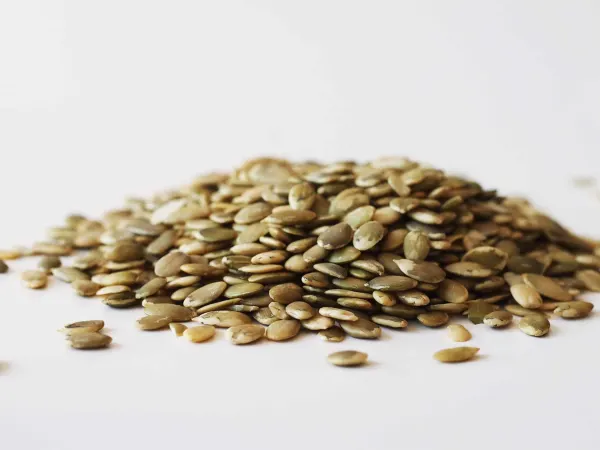
Pumpkins and other members of the squash family originated in Central America, where they have been grown by Indigenous people for thousands of years, and today they are cultivated all over the world. Pumpkin flesh is dense and slightly sweet, and pumpkin seeds have a mild flavor that deepens when roasted. The seeds of one variety of pumpkin are small, mossy green in color, and grow without a shell or hull, making them a bit more tender than some other seeds and nuts.
How do you serve pumpkin seeds to babies?
Every baby develops on their own timeline, and the suggestions on how to cut or prepare particular foods are generalizations for a broad audience.

6 months old +:
Grind shell-less pumpkin seeds (small, green seeds, sometimes labeled as pepitas) in a food processor until completely fine and no large pieces remain. If you do not have a food processor, you can pound the seeds in a cloth with a hammer, a mortar and pestle, or the end of a wine bottle. To serve the ground seed, sprinkle some on yogurt, rice, quinoa, squash, or warm cereal. You can also roll slippery foods like sliced fruit in the ground seed, which adds texture that makes it easier for baby to pick up. Alternatively, thin out smooth pumpkin seed butter (honey-free) with water, breast milk, formula, or purees like applesauce and serve on its own or mix into other soft, scoopable foods like porridge or yogurt. You can also spread the thinned-out pumpkin seed butter very thinly on toast strips. Try serving with a drink in an open cup to help wash down any sticky pieces of food.
12 months old +:
Serve finely ground shell-less pumpkin seeds sprinkled onto yogurt, warm cereals, and other scoopable foods. You can also roll slippery foods like sliced fruit in the ground seed, which adds texture that makes it easier for the child to pick up. At this age, you can serve smooth pumpkin seed butter without thinning it out first; just make sure it’s thinly spread on other foods or thoroughly mixed into other foods, with no big clumps. Hold off on serving a spoonful of seed butter on its own, as thick globs of seed butter are sticky and difficult for young toddlers to manage in the mouth, qualities that can increase choking risk.
24 months old +:
Sometime after the second birthday, a child may be ready for whole, shell-less pumpkin seeds or pepitas if they have their first molars, developed advanced chewing and swallowing skills and are able to sit calmly and follow directions. To reduce choking risk, make sure the child is in a safe eating environment, seated, and engaged in the task of practicing. Start with one pumpkin seed at a time. Demonstrate placing the seed on your own molars and chew in a very exaggerated fashion. Explain to the child how your big, strong teeth are breaking down the seed. You can even open your mouth before swallowing to show them how it looks after being broken down. Coach the child to do the same.
If the child has had substantial practice with shell-less pumpkin seeds or other similarly challenging foods, you can consider serving other kinds of pumpkin seeds, which have a white shell encasing the seed. These are even more challenging to break down with the molars, so offer one at a time at first and make sure to only serve them when a child is seated, still, and not distracted.
Videos
Are pumpkin seeds a choking hazard for babies?
Yes. Pumpkin seeds are small, firm, and smooth, and pumpkin seed butter can get sticky and hard to manage in the mouth, qualities that increase choking risk. To reduce the risk, prepare and serve pumpkin seeds and pumpkin seed butter in an age-appropriate way as described in the How to Serve section. As always, make sure you create a safe eating environment and stay within an arm’s reach of baby during meals.
Learn the signs of choking and gagging and more about choking first aid in our free guides, Infant Rescue and Toddler Rescue.
Are pumpkin seeds a common allergen?
No. Allergy to pumpkin seeds is rare.
As you would when introducing any new food, start by offering a small quantity for the first few servings. If there is no adverse reaction, gradually increase the amount over future meals.
Are pumpkin seeds healthy for babies?
Yes. Pumpkin seeds, as well as pumpkin seed butter, are rich in protein, fat, and fiber. They also offer iron, magnesium, and zinc, in addition to antioxidants. Together, these nutrients help provide the building blocks baby needs for growth, development, and energy to play and explore. Plus, they also help support regular digestion, healthy red blood cells, electrolyte balance, taste perception, and immunity.
Are seeds from Halloween/carving pumpkins okay to eat?
Yes, the seeds from decorative pumpkins and pie pumpkins are edible, although they pose a high choking risk for babies and young toddlers. Unlike small, green, shell-less pepitas, the seeds of decorative and pie pumpkins have an off-white “hull” or shell that is edible, but very challenging to chew. Only offer these shelled pumpkin seeds once a child has their molars for grinding firm foods and substantial experience with eating challenging textures, often sometime after the second birthday.
Our Team
Written by

Dr. Sakina Bajowala
Pediatrician & pediatric allergist/immunologist

Kim Grenawitzke
Pediatric occupational therapist, feeding & swallowing specialist, international board-certified lactation consultant

Venus Kalami
Pediatric registered dietitian & nutritionist
Get 10% Off
Sign up to save and get weekly tips, recipes and more.




Copyright © 2026 • Solid Starts Inc