
Pickles
Vegetable
- Age Suggestion
- 6 months
- Iron-Rich
- No
- Common Allergen
- No
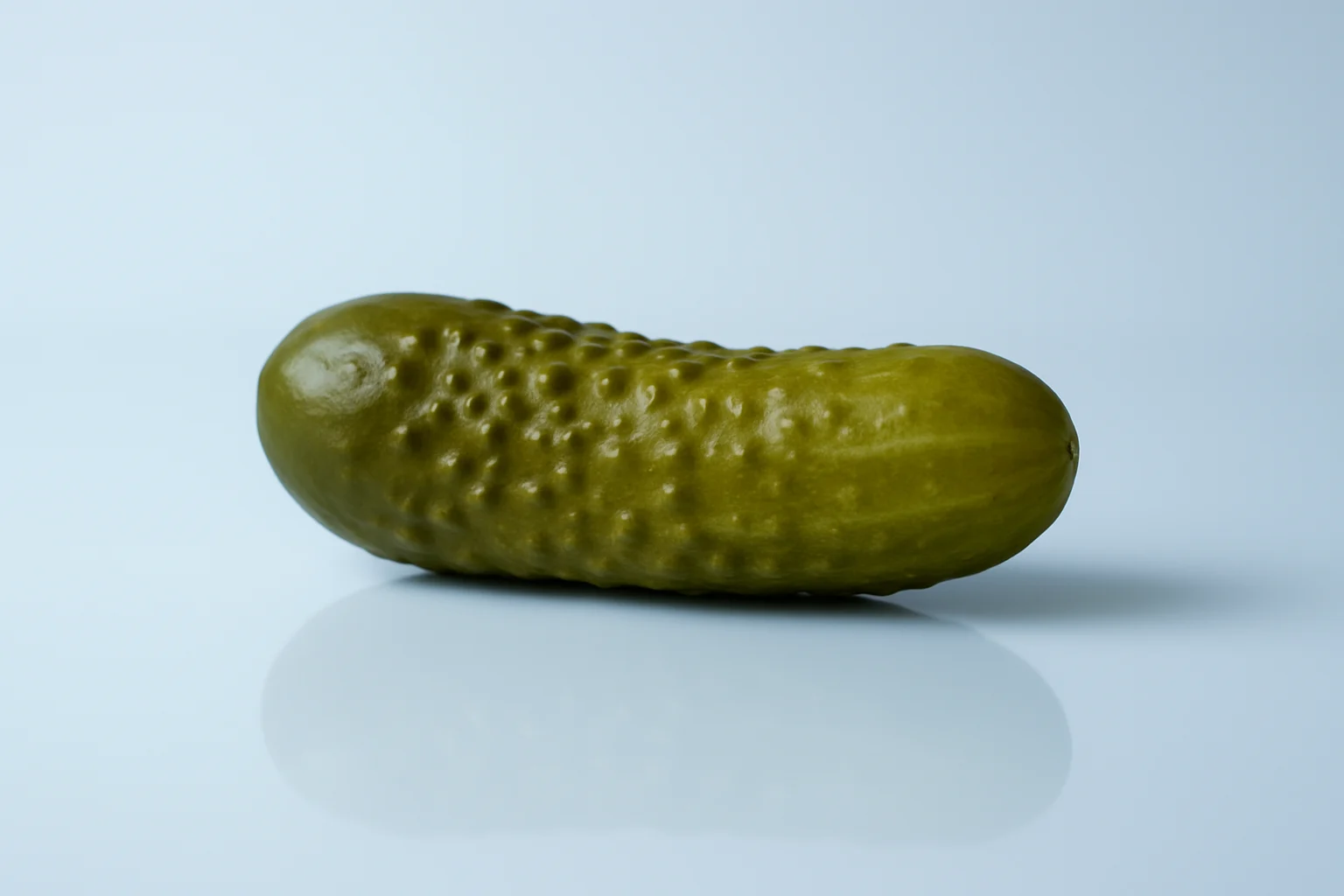
When can babies have pickles?
Pickles may be introduced as soon as baby is ready to start solids, which is generally around 6 months of age.
Pickling vegetables is an ancient preservation method practiced around the world, from cucumbers in Eastern Europe to radishes in Korea (kkakdugi), mangoes in India (achar), and cabbage in Germany (sauerkraut). Cucumbers are the most common pickle in Western cuisine, often brined in vinegar or fermented in salt water. Pickles add a tangy crunch to meals and carry deep cultural importance in many culinary traditions.
How do you serve pickles to babies?
Every baby develops on their own timeline, and the suggestions on how to cut or prepare particular foods are generalizations for a broad audience.
6 months old +:
Offer a whole large pickle with the tapered ends removed for baby to hold and munch on. The pickle should be large enough that baby cannot put the whole piece of food in their mouth at once. While baby is not likely to get much food in the belly this way, the pickle’s shape and tangy flavor offers lots of sensory feedback in the mouth, which can help develop baby’s eating skills. You can also offer large, flat slices of whole pickle (these are sometimes sold as “sandwich slices”). Alternatively, offer relish or any kind of pickle finely chopped and serve on its own or mixed into a soft, scoopable food.
9 months old +:
Serve flat pickle slices: either large slices for baby to practice taking bites from or small ones for baby to pick up with their developing pincer grasp. You can also continue to offer finely chopped pieces mixed into soft foods like egg salad, yogurt dips, or mashed beans. Avoid serving cubes or chunks of pickle, as these pose an increased choking risk.
12 months old +:
Continue to serve long or bite-sized flat slices of pickle, as well as chopped pickles as desired. You can also offer whole, large pickles or pickle halves for practice taking bites.
18 months old +:
Serve pickles as desired, and at this age, you can also offer small pickles like gherkins or long pickle spears. Just make sure the child is safely seated while eating them and encourage them to take bites of the food to reduce choking risk.
Are pickles a choking hazard for babies?
Yes. Pickles can be firm, slippery, and often cut into rounds, which are qualities that pose an increased risk of choking. Depending on how they were prepared, pickles can vary in how firm they are. To reduce the risk, prepare and serve pickles in an age-appropriate way as described in the How to Serve section. As always, create a safe eating environment and stay within reach of baby during meals.
Learn the signs of choking and more about choking first aid in our free guides, Infant Rescue and Toddler Rescue.
Are pickles a common allergen?
No. Pickles are typically made with cucumbers and vinegar, as well as various herbs and seasonings like garlic, mustard seed, and dill. These ingredients are not common food allergens globally, but may be classified as common allergens in some parts of the world. Read the label carefully before serving and make sure any common allergens in the food have been safely introduced.
Allergies to cucumbers are rare, though individuals with Oral Allergy Syndrome who are allergic to ragweed may be sensitive to cucumber.[1] Oral Allergy Syndrome typically results in short-lived itching, tingling, or burning in the mouth and is unlikely to result in a dangerous reaction.
Allergic reactions to vinegar are also rare. However, vinegars are commonly preserved with sulfites. While sulfites are not a common allergen, certain individuals, particularly those with asthma, can have allergy-like reactions to added sulfites.[2] If sulfites are a concern, avoid ingredients such as sulfur dioxide, potassium bisulfate, potassium metabisulfite, sodium bisulfite, sodium metabisulfite, and sodium sulfite to name a few.[2]
Vinegar is naturally high in histamine and can also promote the release of histamine from white blood cells in your tissues.[3]In sensitive individuals, excessive intake of high-histamine foods can result in symptoms similar to those of an allergic reaction, such as rashes and gastrointestinal discomfort. If you find that baby is sensitive to foods that are high in histamine, symptoms may be alleviated by offering the food in smaller quantities.
Although not an allergic reaction, acidic foods like pickles can cause contact skin rashes. If this occurs, consider applying a thin layer of a barrier ointment, such as pure petroleum jelly or a plant-based oil/wax combination, to baby’s skin before meals and clean up shortly after eating to minimize the reaction. Acidic foods can also cause or worsen diaper rash when consumed in excess. If this occurs, apply a thick barrier cream or ointment to the diaper area and limit prolonged contact with a wet/dirty diaper. As always, talk to your pediatric healthcare professional for individualized guidance and care.
Are pickles healthy for babies?
Yes, as part of a varied diet. Pickled cucumbers are rich in water, fiber, and contain small amounts of vitamin K and potassium. When cucumbers are pickled through natural fermentation, they can also provide beneficial probiotics that support gut health and digestion. Vinegar-based pickles do not contain live probiotics, but both types are nutritious for babies.
Some pickles can be high in sodium, sugar, or both, but a taste here and there as part of a varied diet is not a cause for concern. If you want to reduce the sodium in a pickle, you can rinse it before serving, although this is not necessary.
Are fermented pickles healthier than vinegar pickles?
Not necessarily, both are healthy options to share with babies and toddlers. Fermented pickles can provide probiotics that may support gut health, while vinegar-pickled vegetables do not. Both types are typically high in sodium, so aim to serve in moderation as part of a varied diet.
Reference Material
American Academy of Allergy Asthma & Immunology. Oral Allergy Syndrome (OAS) or Pollen Fruit Syndrome (PFS). Retrieved April 21, 2021
Cleveland Clinic. (2020). Sulfite sensitivity. Retrieved November 3, 2021.
Kacik J, Wróblewska B, Lewicki S, Zdanowski R, Kalicki B. Serum Diamine Oxidase in Pseudoallergy in the Pediatric Population. Adv Exp Med Biol. 2018;1039:35-44. doi: 10.1007/5584_2017_81. PMID:
Start solids with confidence
- Guided Introduction to 100+ Foods
- Smart Tools to Simplify Mealtime
- Food Allergen 101
- 300+ Meal Ideas
- First Foods® Database
Start solids with confidence
- Guided Introduction to 100+ Foods
- Smart Tools to Simplify Mealtime
- Food Allergen 101
- 300+ Meal Ideas
- First Foods® Database
Expert Tips Delivered to Your Inbox
Sign up for weekly tips, recipes and more.