
Pepperoni
Meat
- Age Suggestion
- 12 months
- Iron-Rich
- No
- Common Allergen
- No
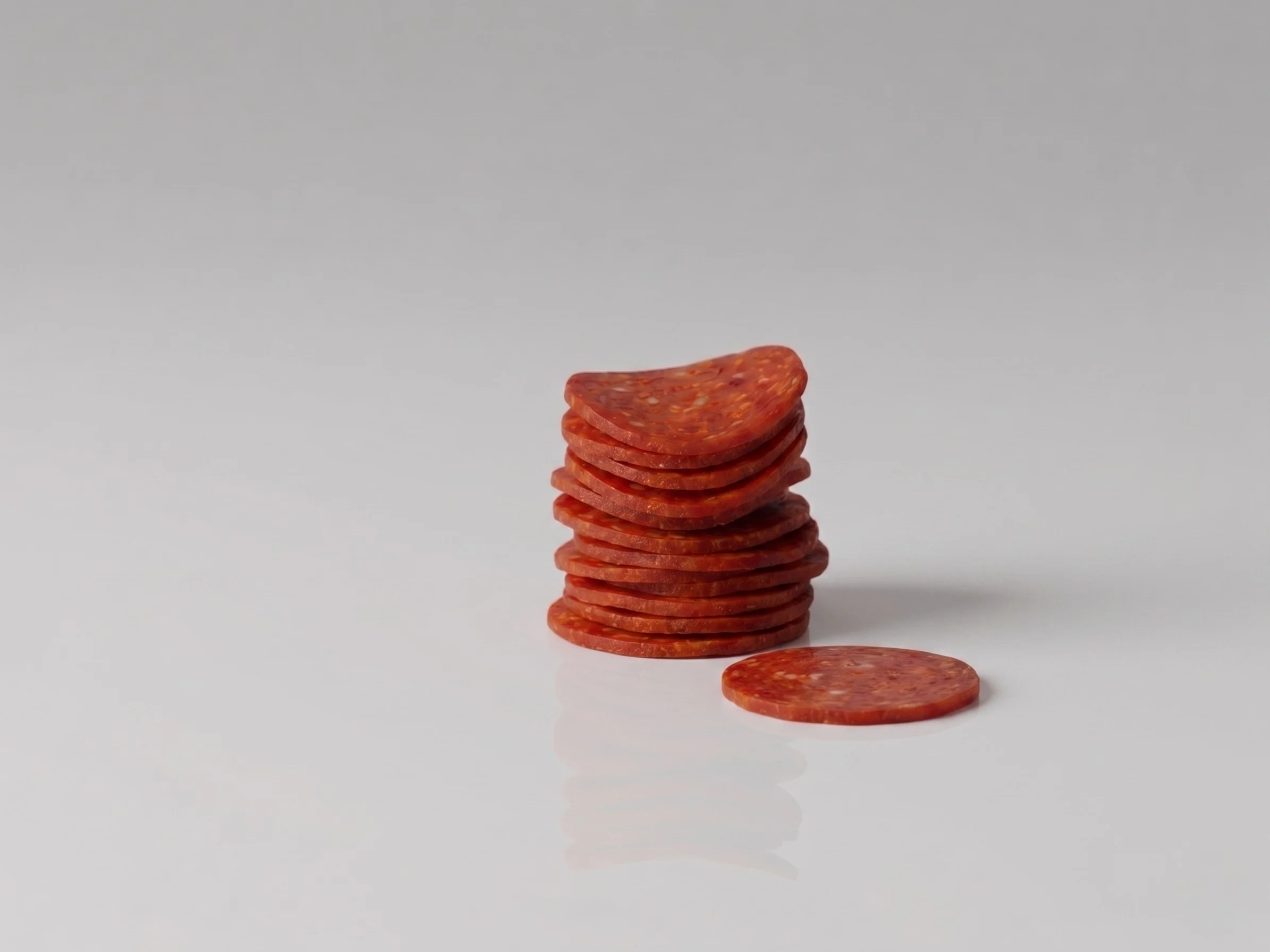
When can babies have pepperoni?
Hold off on serving pepperoni until at least after the child’s first birthday. Pepperoni carries an increased risk of foodborne illness (which can affect babies and those with weakened immune systems more severely).
Pepperoni is an American creation born in Italian immigrant butcher shops in early 20th-century New York City. Italian American artisans blended centuries-old Southern Italian salami-making traditions with locally available ingredients like smoked paprika and chili spices to produce something new. The name comes from the Italian word peperone, meaning bell pepper, and notably, in Italy the word still refers to bell peppers, not cured meat. Pepperoni became the best-selling pizza topping in the United States as pizza culture spread across the country through the 1950s and 60s.
How do you serve pepperoni to babies?
Every baby develops on their own timeline, and the suggestions on how to cut or prepare particular foods are generalizations for a broad audience.
6 to 11 months old :
Consider waiting due to the risk of foodborne illness. If you do decide to share a taste with baby, heat up the pepperoni until steaming first, which can reduce the risk of foodborne illness; just let it cool before offering to baby. Finely chop pepperoni and mix into a soft, scoopable food.
12 months old +:
Offer pepperoni in whole thin slices or chopped or torn by hand, including served on a slice of pizza. But note that young toddlers with no molars will likely spit out more pepperoni than they consume.
Remember that, even after the first birthday, pepperoni is not without risk of foodborne illness, so consider the context of the individual child before offering. Heating up the pepperoni until steaming can reduce the risk of foodborne illness; just let it cool before offering. Keep in mind that pepperoni tends to be high in sodium, so it works best as part of a varied diet rather than an everyday food. Avoid serving pepperoni sticks or thick slices or chunks of pepperoni due to choking risk.
24 months old +:
Serve thin slices of pepperoni, either on their own or as part of meals like pizza, pasta, or frittatas. Keep in mind that pepperoni tends to be high in sodium, so it works best as part of a varied diet rather than an everyday food.
When a child is regularly showing mature chewing skills (taking small bites, moving food to the side of the mouth to be chewed and chewing thoroughly, and not stuffing too much food in their mouth), they may be ready to practice eating pepperoni sticks in a safe, supervised setting. Pepperoni sticks pose a high choking risk because of their shape and firm texture, so offer them when a child is seated, engaged in eating, and when you can supervise mealtime closely.
Serve whole, long pepperoni sticks rather than cutting one into small pieces. Biting into a larger piece of food prepares the brain for safe chewing and swallowing, while bite-sized pieces may be more likely to be shoveled in the mouth and chewed less thoroughly. When sharing a pepperoni stick for the first time, we suggest demonstrating chewing with the molars prior to offering the food: open your mouth, place the stick on your back teeth and explain, “I am using my strong back teeth to crush this food, and I have to chew it A LOT.” You may want to consider holding the pepperoni stick for your child to practice biting—hold at the corner of their mouth and allow your child to close their teeth on the food. Coach your child to push hard to break through the chewy texture.
Is pepperoni a choking hazard for babies?
Yes. Pepperoni's rubbery, chewy texture can make it difficult for babies and young toddlers to break down and swallow safely and some are served in thick, round slices, both qualities that increase the risk of choking. To reduce the risk, prepare and serve pepperoni in an age-appropriate way as described in How to Serve. As always, make sure to create a safe eating environment and stay within reach of a child during meals.
Learn the signs of choking and more about choking first aid in our free guides, Infant Rescue and Toddler Rescue.
Does pepperoni contain common allergens?
No. Pepperoni is made primarily from pork and beef, which are not common allergens. That said, pepperoni is a prepared food and its ingredients vary by brand; some varieties contain wheat, soy, or milk as fillers or in flavorings, so check the label before serving.
It is important to introduce common food allergens individually and rule out a food allergy before offering baby prepared foods that contain multiple potential food allergens. This way, when you are ready to share pepperoni, you will be confident that baby has already safely eaten any common food allergens in it. This approach can also help you quickly identify potential culprits in the unlikely event that baby experiences an allergic reaction after eating pepperoni.
Pepperoni may cause a harmless rash around the mouth while baby eats or may cause or worsen diaper rash. If this occurs, try applying a thin layer of barrier cream or ointment—such as pure petroleum jelly or a plant-based oil/wax balm—to baby's face and diaper area to help prevent contact rashes.
Is pepperoni okay for toddlers?
Generally, yes. That said, even after 12 months of age, pepperoni is not without risk of foodborne illness, so consider the context of the individual child before serving. In addition, pepperoni can be a choking hazard and is typically high in sodium, so if it is a food your family enjoys, aim to share it with children in moderation.
When can babies eat pepperoni on pizza?
After around 12 months of age. The baking process heats pepperoni thoroughly, which reduces the foodborne illness risk associated with ready-to-eat cured meats. Keep in mind that pepperoni tends to be high in sodium, so it works best as part of a varied diet rather than an everyday food.
What is the difference between cured and uncured pepperoni?
Conventional pepperoni is cured with sodium nitrite, a preservative that is added directly to the meat. Uncured pepperoni does not have sodium nitrite added, but it is typically preserved with celery powder or cultured celery juice, both of which are naturally high in nitrates that convert to nitrites during processing. In practice, both types contain nitrites—they just come from different sources.
Start solids with confidence
- Guided Introduction to 100+ Foods
- Smart Tools to Simplify Mealtime
- Food Allergen 101
- 300+ Meal Ideas
- First Foods® Database
Start solids with confidence
- Guided Introduction to 100+ Foods
- Smart Tools to Simplify Mealtime
- Food Allergen 101
- 300+ Meal Ideas
- First Foods® Database
Expert Tips Delivered to Your Inbox
Sign up for weekly tips, recipes and more.