
Pepino Melon
Fruit
- Age Suggestion
- 6 months
- Iron-Rich
- No
- Common Allergen
- No
When can babies have pepino melon?
Pepino melon may be introduced as soon as baby is ready to start solids, which is generally around 6 months of age.
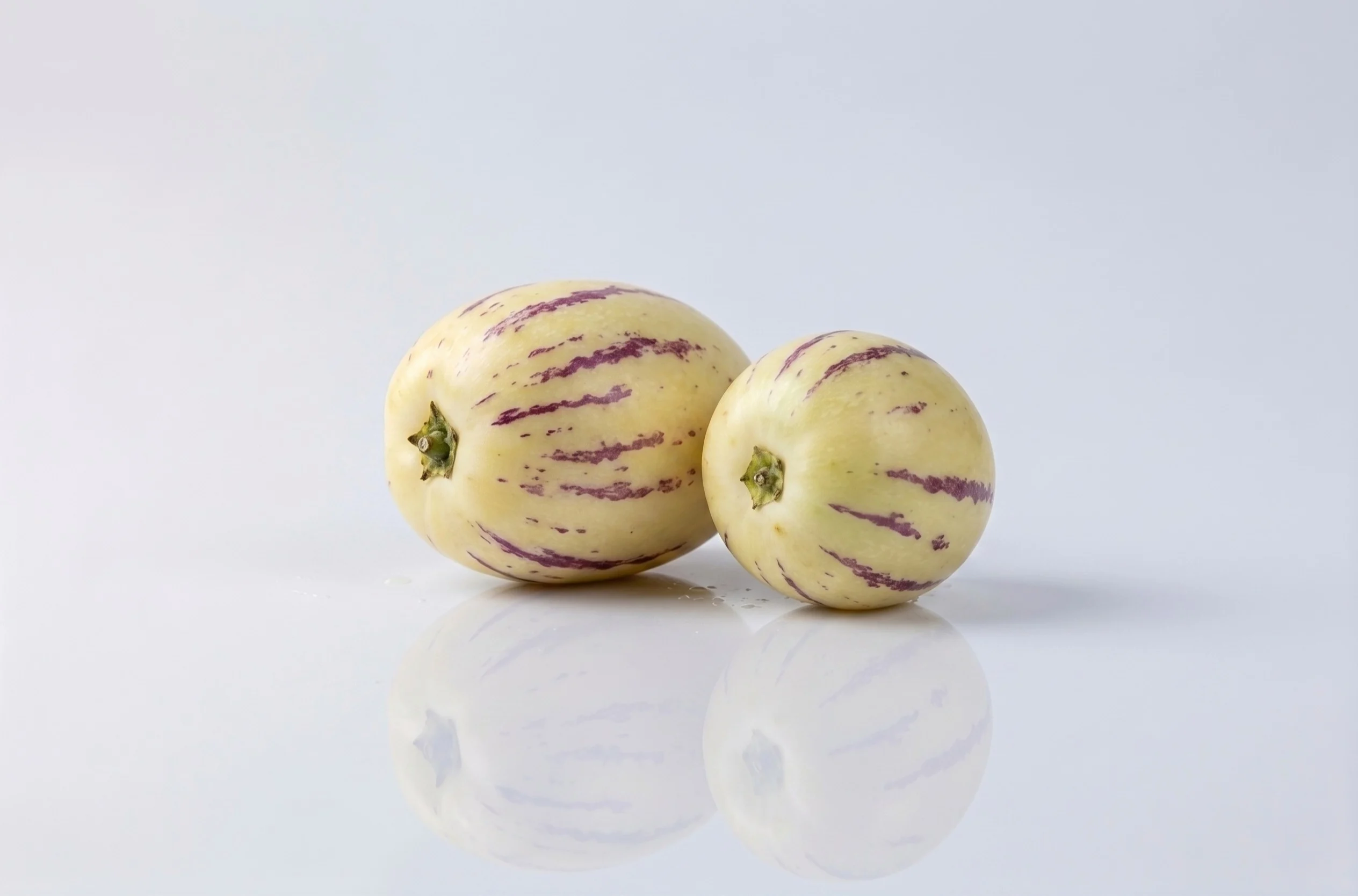
Pepino melon, also known as pepino dulce or melon pear, is a fruit native to the Andes of South America, where it has been cultivated for thousands of years by indigenous peoples. Its name comes from the Spanish word for cucumber, pepino, a nod to its similar flavor, though it is more closely related to tomatoes and eggplant. A ripe pepino melon has smooth, pale yellow skin with distinctive purple streaks, and its flesh is juicy and subtly sweet, often described as a cross between honeydew, cucumber, and a very ripe pear.
How do you serve pepino melon to babies?
Every baby develops on their own timeline, and the suggestions on how to cut or prepare particular foods are generalizations for a broad audience.
6 months old +:
Mash or finely chop ripe pepino melon flesh, with skin removed, and serve on its own or stirred into yogurt, mixed with other purees, or spread on toast strips.
9 months old +:
As baby develops a pincer grasp–the ability to pick up smaller pieces of food with the thumb and first finger–you can start offering flat slices of pepino melon with skin removed. While the skin is edible, it can be tough to chew and a bit bitter on larger fruits. Hold off on serving pepino melon in bite-sized pieces unless the fruit is very soft and mashable. Pepino melon can be a bit firm, even when ripe, and bite-sized pieces or chunks can pose more of a choking risk than longer, flat slices. You can also continue to serve mashed pepino melon for baby to scoop with their hands or a spoon.
12 months old +:
Serve ripe, soft pepino melon in flat slices or large wedges for the child to take bites from, or continue to serve it mashed or finely chopped.
18 months old +:
Offer ripe, soft pepino melon as desired, either on its own or in salads and salsas. You can also blend pepino melon into smoothies and offer a small amount in an open cup. You can continue to remove the skin and seeds, or you can start leaving the skin on the fruit, as it is edible, just challenging to chew.
Is pepino melon a choking hazard for babies?
Yes. Pepino melon can be firm and slippery, qualities that can increase the risk of choking. To reduce the risk, prepare and serve pepino melon in an age-appropriate way as described in How to Serve. As always, create a safe eating environment and stay within reach of baby during meals.
Learn the signs of choking and more about choking first aid in our free guides, Infant Rescue and Toddler Rescue.
Is pepino melon a common allergen?
No. Pepino melon is not a common allergen, although allergies have been reported. Individuals with oral allergy syndrome (also known as pollen food allergy syndrome), especially those with known sensitivity to grass or ragweed pollen, may develop symptoms after eating the fruit. Oral allergy syndrome typically results in short-lived itching, tingling, or burning in the mouth and is unlikely to result in a dangerous reaction. Peeling the fruit helps to minimize the reaction.
The juice of pepino melon may cause a harmless rash around the mouth while a child eats, or may cause or worsen diaper rash.[1] Try applying a thin layer of barrier ointment (such as pure petroleum jelly or a plant-based oil/wax balm) to the child’s face and diaper area before mealtime to help prevent contact rashes.
Is pepino melon healthy for babies?
Yes. Pepino melon is packed with antioxidants, phenols, and flavonoids to support bodily resilience. It also offers key nutrients such as vitamin C to support the immune system and boost iron absorption, fiber for healthy digestion and the gut microbiome, and vitamin A for visual and skin health.[2] [3] [4]
How do you know when pepino melon is ripe?
When ripe, pepino melon has yellow or golden skin with purple streaks, a sweet, fragrant aroma at the stem end, and flesh that gives slightly when gently pressed, similar to a ripe peach or pear. Avoid fruit that is still mostly green, has no fragrance, or feels very firm. Pepino melons purchased at the store are often slightly underripe, but they will ripen if left at room temperature for a few days.
Reference Material
Fruit Juice in Infants, Children, and Adolescents: Current Recommendations. From the American Academy of Pediatrics. https://publications.aap.org/pediatrics/article/139/6/e20170967/38754/Fruit-Coconut water-in-Infants-Children-and-Adolescents
Herraiz, F. J., Villaño, D., Plazas, M., Vilanova, S., Ferreres, F., Prohens, J., & Moreno, D. A. (2016). Phenolic Profile and Biological Activities of the Pepino (Solanum muricatum) Fruit and Its Wild Relative S. caripense. International journal of molecular sciences, 17(3), 394. DOI: 10.3390/ijms17030394
Sudha, G., Priya, M. S., Shree, R. B., & Vadivukkarasi, S. (2012). Antioxidant activity of ripe and unripe pepino fruit (Solanum muricatum Aiton). Journal of food science, 77(11), C1131–C1135. DOI: 10.1111/j.1750-3841.2012.02944.
Start solids with confidence
- Guided Introduction to 100+ Foods
- Smart Tools to Simplify Mealtime
- Food Allergen 101
- 300+ Meal Ideas
- First Foods® Database
Start solids with confidence
- Guided Introduction to 100+ Foods
- Smart Tools to Simplify Mealtime
- Food Allergen 101
- 300+ Meal Ideas
- First Foods® Database
Expert Tips Delivered to Your Inbox
Sign up for weekly tips, recipes and more.