


Access our First Foods® Database in the Solid Starts App.
Learn morePeach
Fruit
Age Suggestion
6 months
Iron-Rich
No
Common Allergen
No
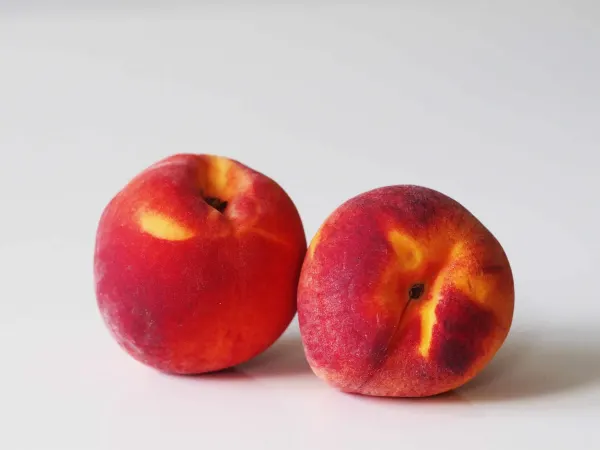
When can babies have peaches?
Peaches may be introduced as soon as baby is ready to start solids, which is generally around 6 months of age, as long as the fruit is very soft and ripe or cooked until soft.
Peaches originated in East Asia, where the fruit trees have influenced art, literature, medicine, and spirituality for thousands of years. Today the juicy fruits are farmed in temperate climates around the world. Peaches often represent the peak of summer along with cherries, plums, and nectarines—the smooth-skinned sibling of the fuzzy peach.
How do you serve peaches to babies?
Every baby develops on their own timeline, and the suggestions on how to cut or prepare particular foods are generalizations for a broad audience.
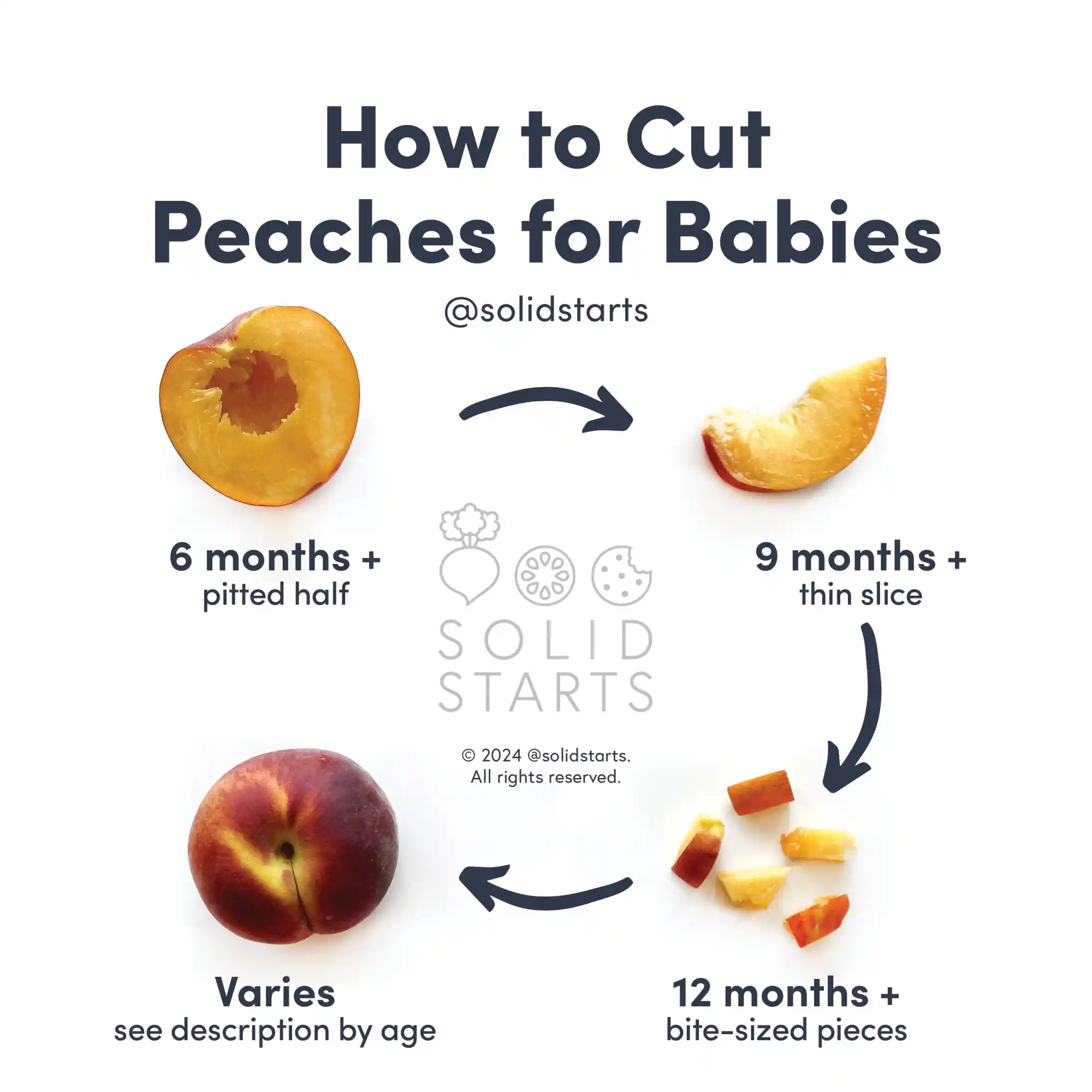
6 months old +:
Offer baby a very ripe pitted peach cut in half with the skin on. The fruit should be soft enough that it mashes readily when gently pressed between your thumb and pointer finger. Leaving the skin on helps baby grip the slippery fruit, but if the skin makes you nervous, peel it and roll the peach half in shredded coconut or finely ground-up nuts or seeds to reduce slipperiness and to add grip. If baby bites off a big piece of peach, take a deep breath and refrain from sticking your fingers in baby’s mouth. Instead, kneel down in front of baby, encouraging them to look down at you and allowing gravity to help move the food out of their mouth. Alternatively, mash the peach and mix into a soft, easy-to-scoop food like porridge or yogurt. If you feel comfortable, you can offer a whole peach, as long as the fruit is larger than baby’s mouth and very ripe and soft. If baby eats enough of the fruit to expose the pit, feel free to take the food away and offer something else, or remove the pit and give back the rest of the peach for baby to munch on.
9 months old +:
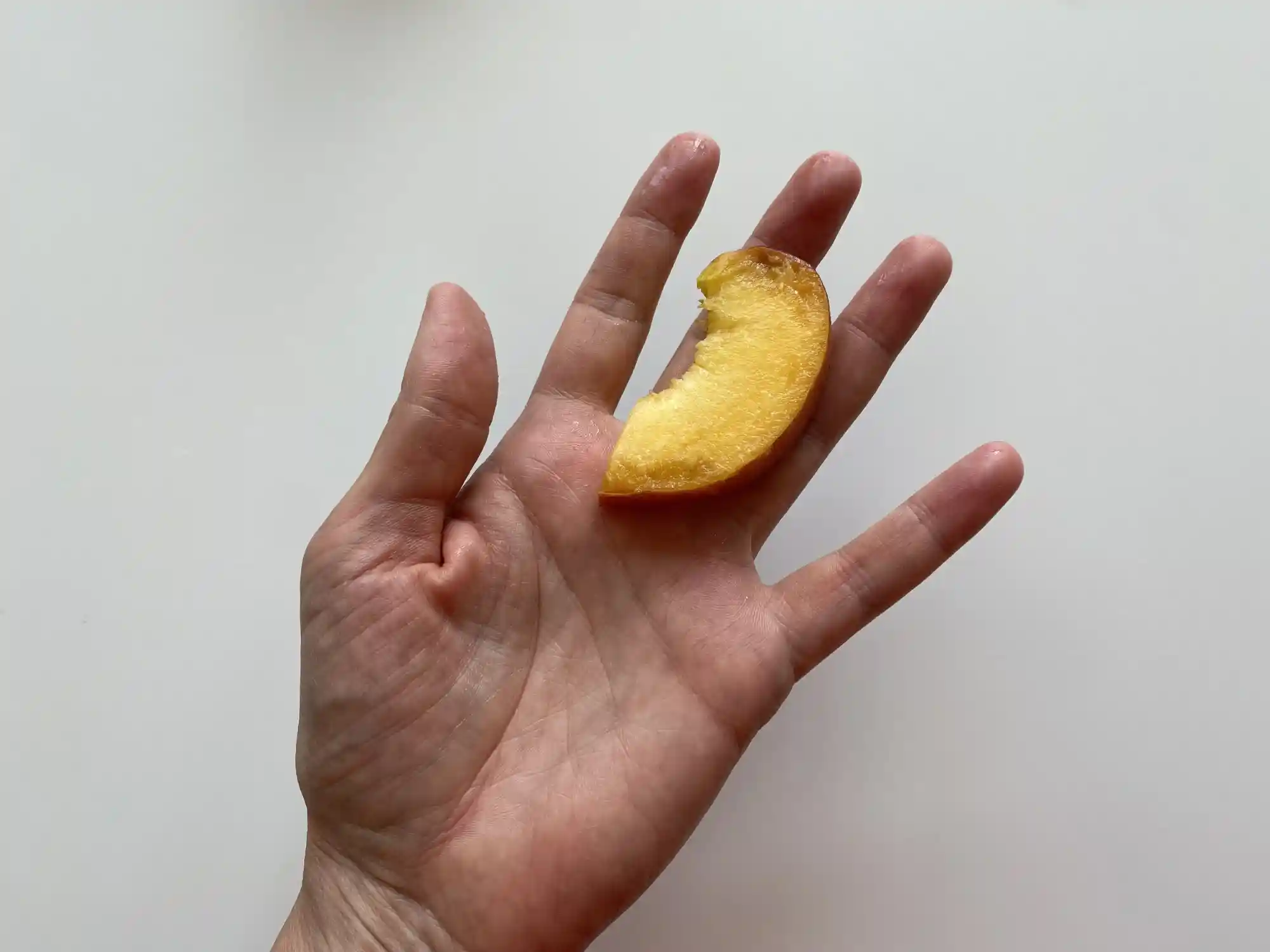
Offer thin slices of soft, ripe peach with the skin on or off. The fruit should be soft enough that it mashes readily when gently pressed between your thumb and pointer finger. If baby is not ready to pick up slices of peach, continue offering pitted peach halves with the skin on or peeled. Because peaches are so slippery, bite-sized pieces of peach may be too challenging for baby to pick up, but you can also try rolling small pieces in shredded coconut or finely ground-up nuts.
12 months old +:
Continue with ripe thinly-sliced peaches or halved, pitted peaches for biting practice. Alternatively, cut ripe peach into bite-sized pieces to pre-load on a fork.
18 months old +:
If you feel comfortable, consider offering the toddler a whole, ripe peach. We recommend you eat one at the same time to demonstrate biting into the peach and how to avoid the pit. Take a few bites and then show the toddler the hard pit on the inside. Tap it with your finger and tell them, “I am eating around this hard part.” If the toddler tries to put the whole pit in their mouth, simply remove the pit for them and let them continue with the fruit flesh. If the child accidentally ends up with a pit in their mouth, try not to panic. Remember that a pit can produce a strong gag reflex to move it forward and out of the mouth. Kneel next to the toddler and tell them in a calm voice: “Spit that out please. Pits are not for eating.” Put your hand under their chin while you demonstrate spitting. If needed, put a pit in your own mouth, show it on your tongue, and demonstrate spitting it into your own hand.
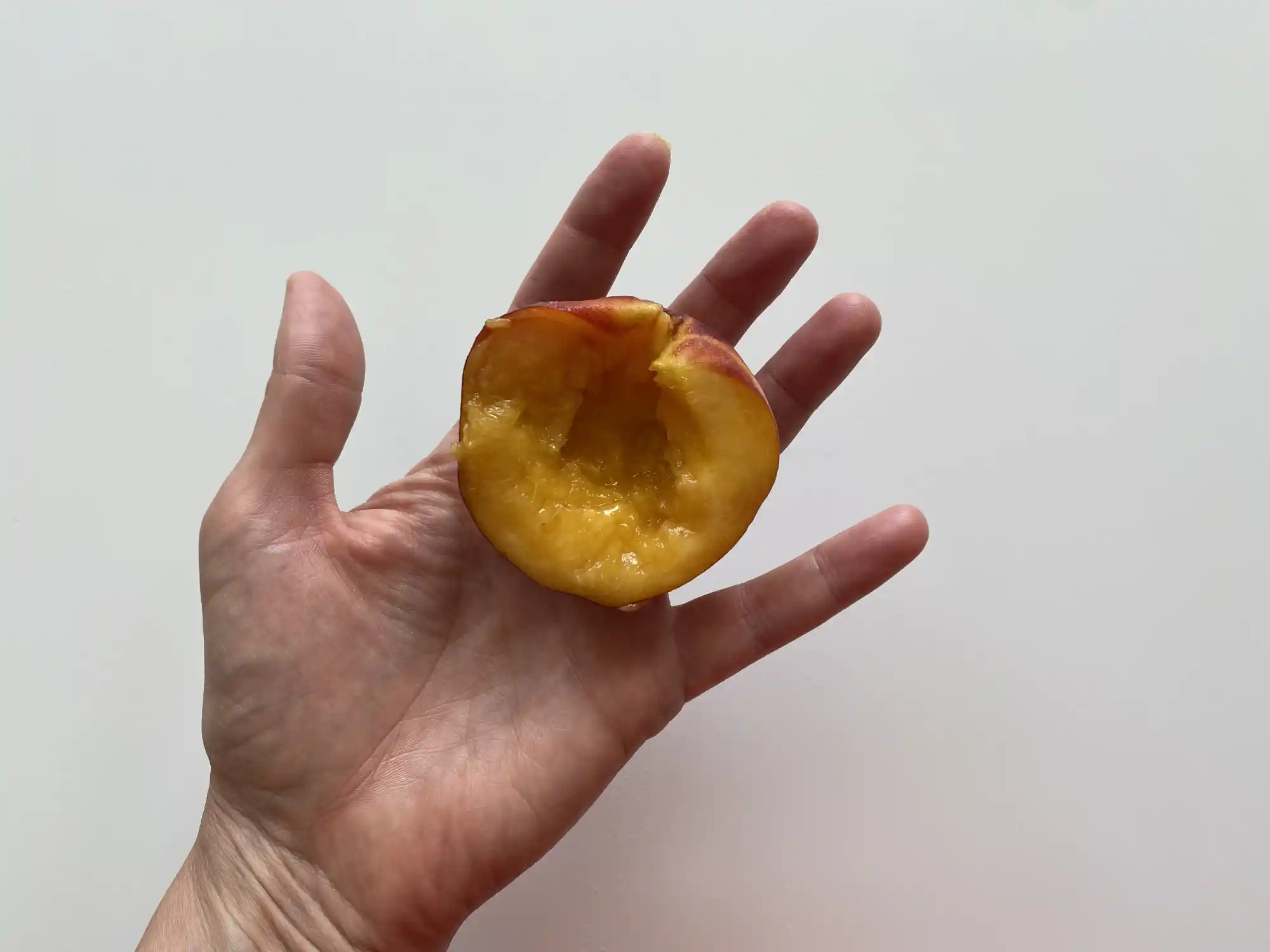
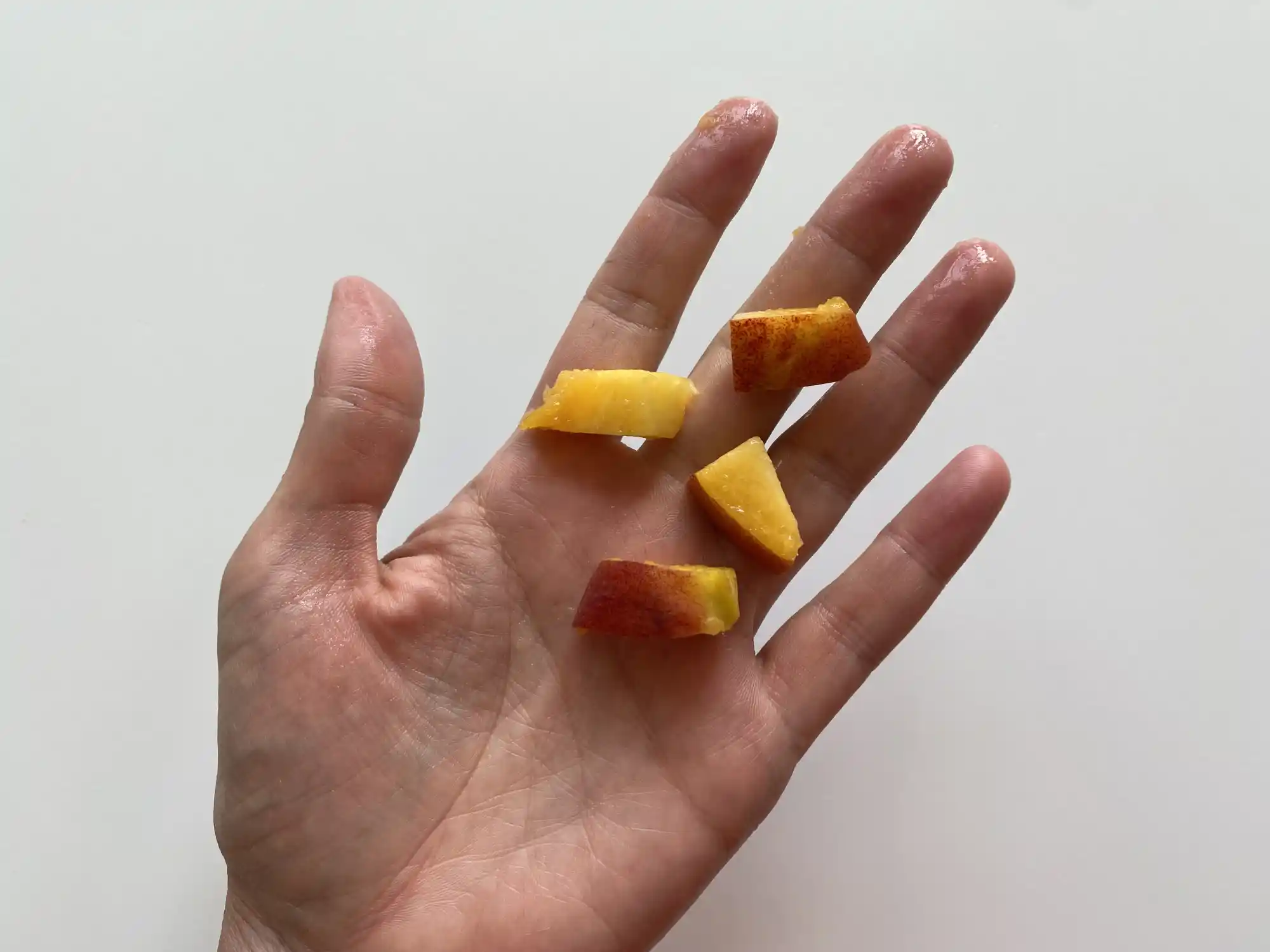
How to prepare peaches for babies 6 months+
How to prepare peaches for babies 9 months +
Incorporate new meals into your morning routine with our guide 50 Breakfasts for Babies & Toddlers.
Videos
Are peaches a choking hazard for babies?
Yes. Peaches, especially when underripe, are slippery and can be firm, qualities that increase the risk of choking. To reduce the risk, prepare and serve peaches in an age-appropriate way. As always, make sure you create a safe eating environment and stay within an arm’s reach of baby during meals.
Learn the signs of choking and gagging and more about choking first aid in our free guides, Infant Rescue and Toddler Rescue.
Are peaches a common allergen?
No. Allergies to peaches are uncommon. Individuals with Oral Allergy Syndrome (also known as pollen food allergy syndrome), and particularly those with sensitivities to birch tree and/or certain grass pollens, may be sensitive to peaches. Individuals sensitive to other fruits of the Rosaceae family, such as apricots, almonds, nectarines, and plums, may also have a similar experience with peaches.
Oral Allergy Syndrome typically results in short-lived itching, tingling, or burning in the mouth and is unlikely to result in a dangerous reaction. Cooked, canned, or peeled peaches can help minimize and even eliminate the reaction.
As you would when introducing any new food, start by offering a small quantity on its own for the first few servings. If there is no adverse reaction, gradually increase the quantity over future meals.
Are peaches healthy for babies?
Yes. Peaches offer carbohydrates, fiber, and fluid, in addition to potassium and vitamins A, C, E, and K. Together, these nutrients help provide energy to fuel crawling and exploration, support the digestive system, and keep baby hydrated. They also help to support electrolyte balance, skin health, vision, iron absorption, immune function, and blood clotting. Peaches are among the fruits that are particularly helpful for babies struggling with constipation.
When can babies drink peach juice?
Wait to serve peach juice as a drink until after 12 months of age. Note that it can be beneficial to wait until sometime after a child's second birthday to regularly share juice and other sugary drinks. Research suggests that regular intake of juice and other sweet drinks tends to increase the risk of dental cavities and take up space in the belly, which may decrease a child’s motivation to eat other foods at mealtime and may negatively affect the child’s growth. However, occasional, small servings of juice after one year of age generally isn’t a cause for concern. Learn more about serving juice to babies and toddlers.

Our Team
Written by


Dr. Rachel Ruiz
Pediatrician & pediatric gastroenterologist

Dr. Sakina Bajowala
Pediatrician & pediatric allergist/immunologist

Kary Rappaport
Pediatric occupational therapist, feeding & swallowing specialist, international board-certified lactation consultant

Kim Grenawitzke
Pediatric occupational therapist, feeding & swallowing specialist, international board-certified lactation consultant

K. Tatiana Maldonado
Speech-language pathologist, feeding & swallowing specialist
Get 10% Off
Sign up to save and get weekly tips, recipes and more.




Copyright © 2026 • Solid Starts Inc