
Oat Milk
Grain
- Age Suggestion
- 12 months
- Iron-Rich
- No
- Common Allergen
- No
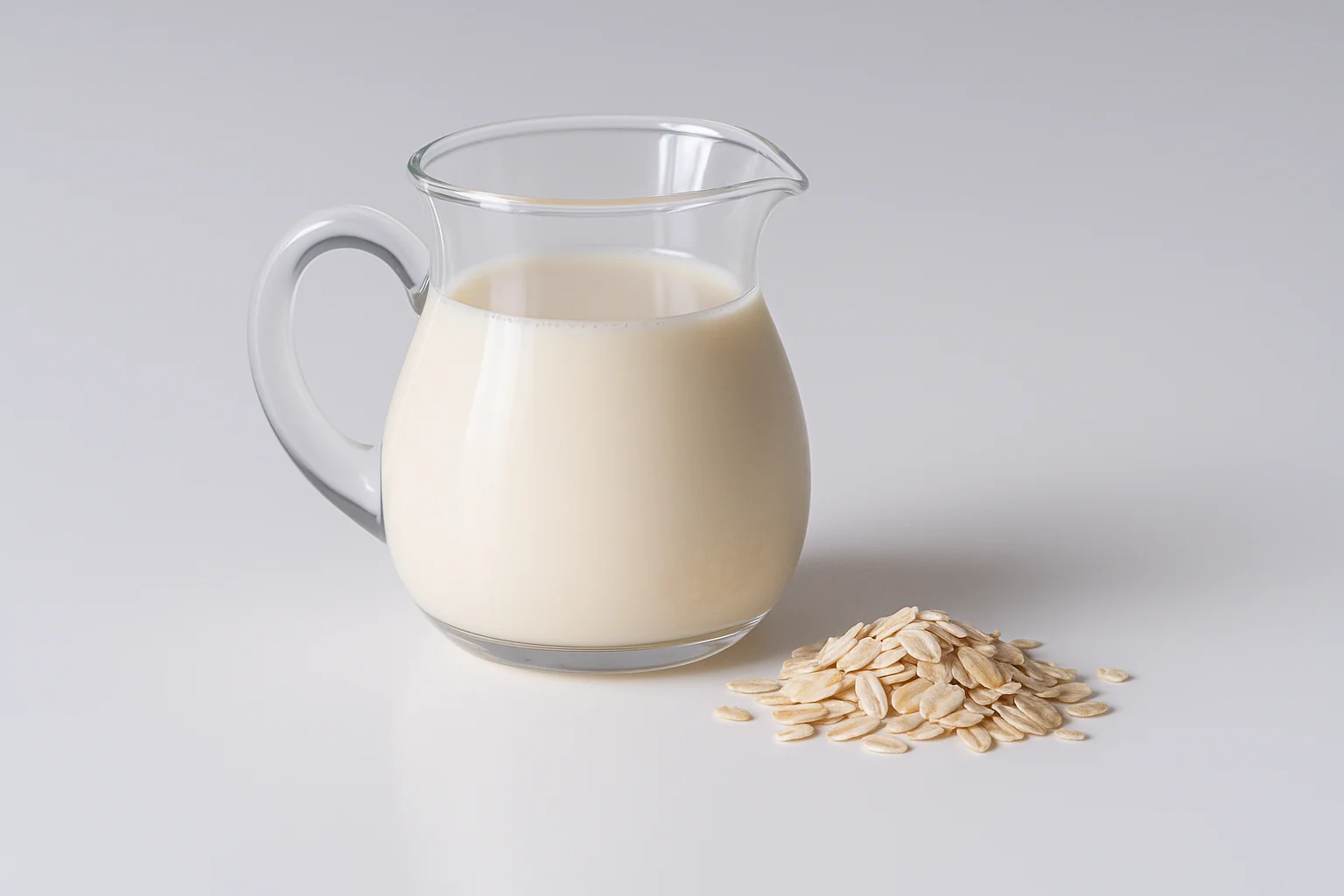
When can babies have oat milk?
Oat milk can be introduced as an ingredient in solid food (but not as a drink) as soon as baby is ready to start solids. Hold off on oat milk as a drink until after baby’s first birthday so as not to displace breast milk and formula intake in the first year of life.
Oats have been cultivated for thousands of years, particularly in Northern Europe where they thrived in cool, wet climates. The practice of soaking and blending oats with water to create a creamy drink began only a few decades ago in Sweden. From there, oat milk spread globally, gaining popularity for its mild, slightly sweet flavor and creamy texture.
How do you serve oat milk to babies?
Every baby develops on their own timeline, and the suggestions on how to cut or prepare particular foods are generalizations for a broad audience.
6 to 11 months old:
Oat milk may be added as an ingredient to solid foods like porridges and mashes, but not served as a drink. Breast milk and formula are baby's main drinks to provide important nutrition in the first year of life.
11 to 12 months old:
At this age, it is okay to offer small sips of oat milk in an open cup to practice feeding skills and accustom baby’s palate to the new taste. That said, it is also completely fine to not serve any kind of milk as a drink and continue focusing on breast milk or formula.
12 months old +:
At this age, oat milk may be offered as a drink. Some children love drinking milk, so aim to keep milk intake at or below 16 oz (~480 mL) per day, so the child has appetite for a variety of other nourishing foods. It is not necessary to offer any kind of milk as a drink, as the nutrients in oat milk can be found in many foods. If the child drinks a lot of oat milk, consider choosing a fortified kind.
Is oat milk a choking hazard for babies?
No. Oat milk presents a low risk when safely prepared for a child’s age and developmental ability, though, in theory, an individual could choke on any food. To reduce the risk, prepare and serve oat milk in an age-appropriate way as described in the How to Serve section. As always, create a safe eating environment and stay within reach of baby during meals.
Learn the signs of choking and more about choking first aid in our free guides, Infant Rescue and Toddler Rescue.
Is oat milk a common allergen?
No, oat milk is made with oats, and oats are not a common cause of IgE-mediated allergies, although reactions to oats have been reported, particularly when the grains are applied to the skin of sensitive individuals.[1]
Oats and other oat products are a known trigger of food protein-induced enterocolitis syndrome, also known as FPIES. FPIES is a delayed allergy to food protein which causes the sudden onset of repetitive vomiting and diarrhea to begin a few hours after ingestion of the food trigger. Left untreated, the reaction can result in significant dehydration.[2][3] Fortunately, most cases resolve completely by early childhood. To learn more about FPIES, read our post on Food Allergens and Babies.
If baby has celiac disease, be sure to read product labels and make sure the oat milk is made with gluten-free oats. Despite oats being naturally gluten-free, many oats and oat products can be cross contaminated with gluten-containing grains (such as wheat, barley, and rye), rendering them no longer gluten-free.[4][5][4][5] Celiac disease requires a strict, lifelong gluten-free diet and lifestyle.[6] A gluten “allergy” is typically a misnomer, often in reference to celiac disease.[7]
Is oat milk healthy for babies?
Yes, although it does not provide the same complete nutrition that breast milk and formula offer to growing babies, so only use oat milk as an ingredient in solid food under 12 months of age. Hold off on oat milk as a drink until after baby’s first birthday so as not to displace breast milk and formula intake in the first year of life.
Oat milk tends to provide small amounts of protein, fiber, and healthy fats. Fortified varieties also tend to contain calcium, vitamin D, and B12, which are important for growth and bone development.
What are some great first foods for babies?
There are many wonderful options. Look for foods that are easy for baby to feed to themselves, that are low in choking risk, and that offer nutrients babies need, such as iron. A few of our favorite first foods include cooked broccoli, oatmeal, and mango pits.
Do I need to start solids with purees?
You can if you’d like, but there's no developmental need to start with textureless food. Babies can be served modified versions of what you eat. Use our First Foods Database to find how to safely serve any food.
Reference Material
Boussault, P., Léauté-Labrèze, C., Saubusse, E., Maurice-Tison, S., Perromat, M., Roul, S., Sarrat, A., Taïeb, A., & Boralevi, F. (2007). Oat sensitization in children with atopic dermatitis: prevalence, risks and associated factors. Allergy, 62(11), 1251–1256. DOI: 10.1111/j.1398-9995.2007.01527.x. Retrieved June 30, 2022
Blackman, A. C., Anvari, S., Davis, C. M., & Anagnostou, A. (2019). Emerging triggers of food protein-induced enterocolitis syndrome: Lessons from a pediatric cohort of 74 children in the United States. Annals of allergy, asthma & immunology : official publication of the American College of Allergy, Asthma, & Immunology, 122(4), 407–411. DOI: 10.1016/j.anai.2019.01.022.
Mehr, S., & Campbell, D. E. (2019). Food protein-induced enterocolitis syndrome: guidelines summary and practice recommendations. The Medical journal of Australia, 210(2), 94–99. DOI: 10.5694/mja2.12071.
Start solids with confidence
- Guided Introduction to 100+ Foods
- Smart Tools to Simplify Mealtime
- Food Allergen 101
- 300+ Meal Ideas
- First Foods® Database
Start solids with confidence
- Guided Introduction to 100+ Foods
- Smart Tools to Simplify Mealtime
- Food Allergen 101
- 300+ Meal Ideas
- First Foods® Database
Expert Tips Delivered to Your Inbox
Sign up for weekly tips, recipes and more.