
Noodles
Prepared
- Age Suggestion
- 6 months
- Iron-Rich
- No
- Common Allergen
- Yes
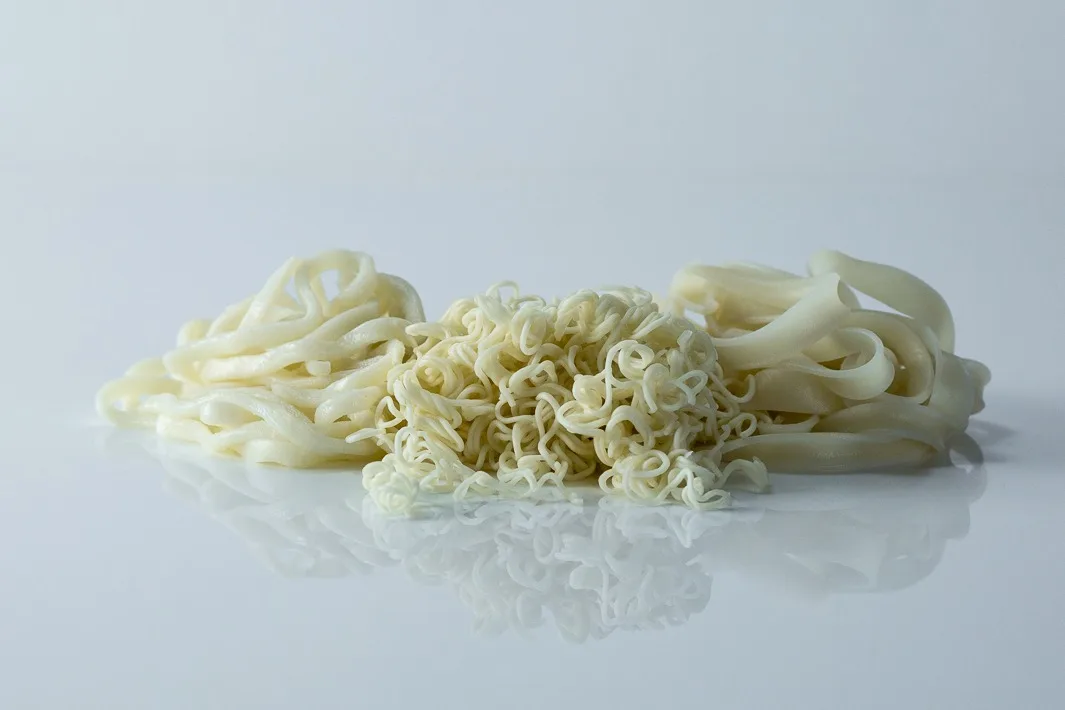
When can babies eat noodles?
Noodles may be introduced as soon as a baby is ready to start solids, which is generally around 6 months of age. Note that some noodles may contain common food allergens such as egg and wheat, so make sure that these allergens have been introduced safely and read labels carefully.
How do you prepare noodles for babies with baby-led weaning?
Every baby develops on their own timeline, and the suggestions on how to cut or prepare particular foods are generalizations for a broad audience.
6 months old +:
You can serve cooked noodles without modification, just know that they can elicit a strong gag reflex. Offering the noodles in a bowl (instead of directly on the tray or table) can help the child scoop up the food. Chopping noodles into sections no longer than a few inches (up to 8 cm) or coating the noodles in a sauce or a bit of cooking oil can help reduce gagging and make the pieces of food easier for baby to manage in the mouth.
12 months old +:
At this age, toddlers may be more adept at working with long noodles of various kinds without any modifications, although you can certainly continue to cut the noodles into smaller strands as needed. Model how to pick up noodles with a fork or chopsticks, then let the toddler try with an age-appropriate utensil. Don’t worry if the child still prefers to scoop noodles with their hands: consistent and accurate utensil use tends to come sometime after 24 months of age.
Are noodles a common choking hazard for babies?
No. Cooked noodles present a low risk when safely prepared for a child’s age and developmental ability, though, in theory, an individual could choke on any food. Note that noodles can cause a fair amount of gagging, especially when served plain, without a sauce, as they tend to stick. To make them easier to manage in the mouth, serve noodles with a sauce or toss them in a bit of oil. As always, make sure to create a safe eating environment and stay within an arm’s reach of baby during meals. For more information on choking, visit our section on gagging and choking and familiarize yourself with the list of common choking hazards.
Do noodles contain common allergens?
They can. Depending on the type, noodles may contain egg, wheat, or other common food allergens. Read the product label before serving noodles to baby, and ideally, wait to serve noodles until any relevant food allergies have been ruled out. Have a wheat or egg allergy on your hands already? Studies show about 80% of children outgrow egg allergy around school age, and wheat allergies are often outgrown by adolescence.[1] [2] [3]
As you would do with any new allergen, introduce noodles by serving a small quantity and watch closely. If there is no adverse reaction during the first few servings, gradually increase the amount served over future meals.
Are noodles healthy for babies?
Yes—with some types offering more nutrition than others. Generally, most types of noodles offer ample carbohydrates to energize a baby’s growing body, and when made from whole grains, also offer fiber to support baby’s gut microbiome. Enriched noodles or noodles made from legumes have important nutrients like iron and certain B vitamins, like folate to support healthy blood and overall development.[4]
Reference Material
Kim J. H. (2019). Clinical and Laboratory Predictors of Egg Allergy Resolution in Children. Allergy, asthma & immunology research, 11(4), 446–449. DOI:10.4168/aair.2019.11.4.446.
Leonard, S.A., Sampson, H.A., Sicherer, S.H., Noone, S., Moshier, E.L., Godbold, J., Nowak-Wȩgrzyn, A. (2012). Dietary baked egg accelerates resolution of egg allergy in children. The Journal of Allergy and Clinical Immunology, 130(2), 473–480.e1. DOI: 10.1016/j.jaci.2012.06.006.
American College of Allergy, Asthma & Immunology. Wheat Allergy.
Start solids with confidence
- Guided Introduction to 100+ Foods
- Smart Tools to Simplify Mealtime
- Food Allergen 101
- 300+ Meal Ideas
- First Foods® Database
Start solids with confidence
- Guided Introduction to 100+ Foods
- Smart Tools to Simplify Mealtime
- Food Allergen 101
- 300+ Meal Ideas
- First Foods® Database
Expert Tips Delivered to Your Inbox
Sign up for weekly tips, recipes and more.