
Nigella (Black Cumin)
Herb/Spice
- Age Suggestion
- 6 months
- Iron-Rich
- No
- Common Allergen
- No
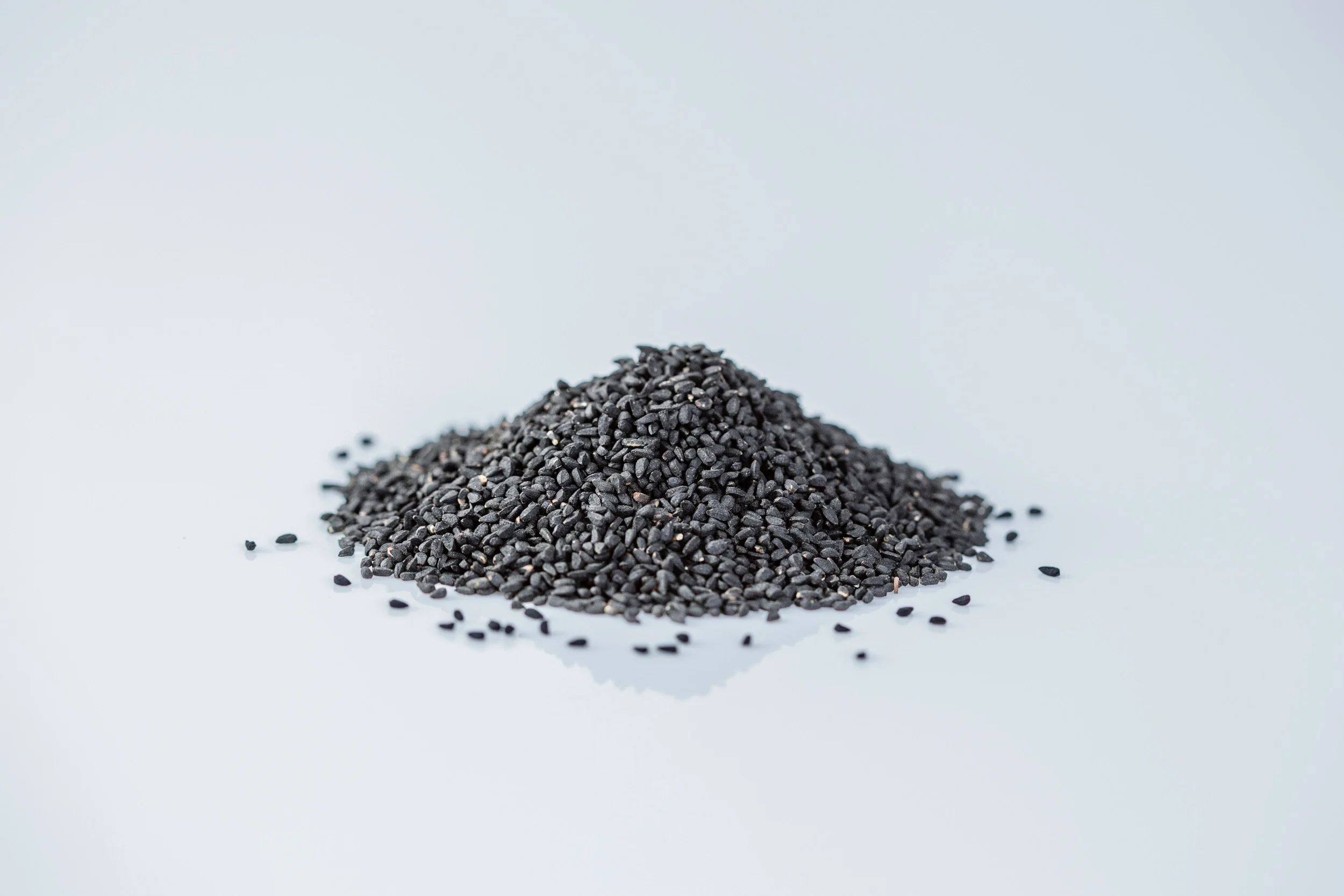
When can babies have nigella seeds?
Nigella seeds may be introduced as soon as baby is ready to start solids, which is generally around 6 months of age.
Nigella seeds are also known as black cumin, black caraway, and kalonji, among other names, and have a warm, slightly peppery, and onion-like flavor. Despite the nickname black cumin, they are botanically unrelated to cumin or caraway. Nigella has been cultivated for millennia across South Asia and the lands around the Mediterranean Sea, where it plays a central role in both culinary and medicinal traditions. Nigella is part of the spice blend called panch phoron, common in parts of India and Bangladesh, and is also often sprinkled over breads, cheeses, and pastries.
How do you serve nigella seeds to babies?
Every baby develops on their own timeline, and the suggestions on how to cut or prepare particular foods are generalizations for a broad audience.
6 months old +:
Add a pinch of nigella seeds–either whole or finely ground–to soft foods such as mashed vegetables, lentils, yogurt, or rice dishes. You can also offer toasted strips of breads or flatbreads that have nigella seeds baked into them. Whole nigella seeds are tiny and generally pose a low choking risk when mixed thoroughly into food. Just avoid serving loose spoonfuls of the seeds on their own.
12 months old +:
Serve foods seasoned with whole or finely ground nigella seeds as part of family meals—curries, rice dishes, roasted vegetables, or baked breads. Most toddlers will handle whole seeds just fine when they’re mixed into cooked dishes. Just avoid serving loose spoonfuls of the seeds on their own.
Are nigella seeds a choking hazard for babies?
No. Nigella seeds present a low risk when safely prepared for a child’s age and developmental ability, though, in theory, an individual could choke on any food. To reduce the risk, prepare and serve nigella in an age-appropriate way as described in the How to Serve section. As always, make sure to create a safe eating environment and stay within reach of baby during meals.
Learn the signs of choking and more about choking first aid in our free guides, Infant Rescue and Toddler Rescue.
Are nigella seeds a common allergen?
No. Allergies to nigella seeds are rare, but have been reported, particularly to the essential oil when either ingested or applied topically to the skin, and less commonly to the seeds when consumed in food.[1] [2] [3] Note that certain spice blends that feature nigella seeds may contain common food allergens, so make sure to read labels thoroughly if your child has food allergies.
Interestingly, despite case reports of nigella seed oil causing allergic reactions, nigella seed supplementation has also been demonstrated in adult studies to improve allergic asthma control and biomarkers.[4] [5]
That said, spices can also cause reactions similar to allergic symptoms. For example, inhaling a puff of powdered nigella seeds can irritate the nasal passageways and trigger sneezing and coughing, but may not be triggered by an allergic reaction.[6] Additionally, certain spices, like nigella seeds, may cause contact rashes due to potentially skin-irritating components in the food, but not necessarily result due to an allergic reaction.[6] [7] [8]
Are nigella seeds healthy for babies?
Yes. Nigella seeds offer small amounts of some vitamins, minerals, and phytochemicals like thymoquinone and anethole that may offer anti-inflammatory, antimicrobial, antioxidant, and anticancer properties.[9] [2] [10]
Avoid nigella seed essential oil, as limited research is available on its safety for babies.[11]
Can babies eat foods with panch phoron or other spice blends containing nigella?
Typically, yes. Note that some blends may include common allergens like mustard or sesame, so make sure any common allergens have been safely introduced on their own before serving mixed together in a spice blend.
Reference Material
Fargeas M, Calugareanu A, Ben-Said B. (2022). Drug reaction with eosinophilia and systemic symptoms (DRESS) syndrome after topical use of Nigella sativa (black cumin) oil. Contact Dermatitis. 87(2):203-204. doi: 10.1111/cod.14127. Epub 2022 May 30. PMID: 35419842; PMCID: PMC9545020.
Memorial Sloan Kettering Cancer Center. (2023). Nigella sativa.
Ali, B. H., & Blunden, G. (2003). Pharmacological and toxicological properties of Nigella sativa. Phytotherapy research : PTR, 17(4), 299–305. DOI: 10.1002/ptr.1309
Start solids with confidence
- Guided Introduction to 100+ Foods
- Smart Tools to Simplify Mealtime
- Food Allergen 101
- 300+ Meal Ideas
- First Foods® Database
Start solids with confidence
- Guided Introduction to 100+ Foods
- Smart Tools to Simplify Mealtime
- Food Allergen 101
- 300+ Meal Ideas
- First Foods® Database
Expert Tips Delivered to Your Inbox
Sign up for weekly tips, recipes and more.